
Ken Sehested
Prelude. “Transfiguration.” —Vasari Singers, music by Jeremy Filsell and David Briggs
Call to worship. There is almost always a discordant cacophony—confusion, disorientation,  turbulence—in the transition from unreflective innocence to the revivifying and reorienting presence of the Spirit’s inaugurating disclosure of Heaven’s intent for Earth’s reclamation.
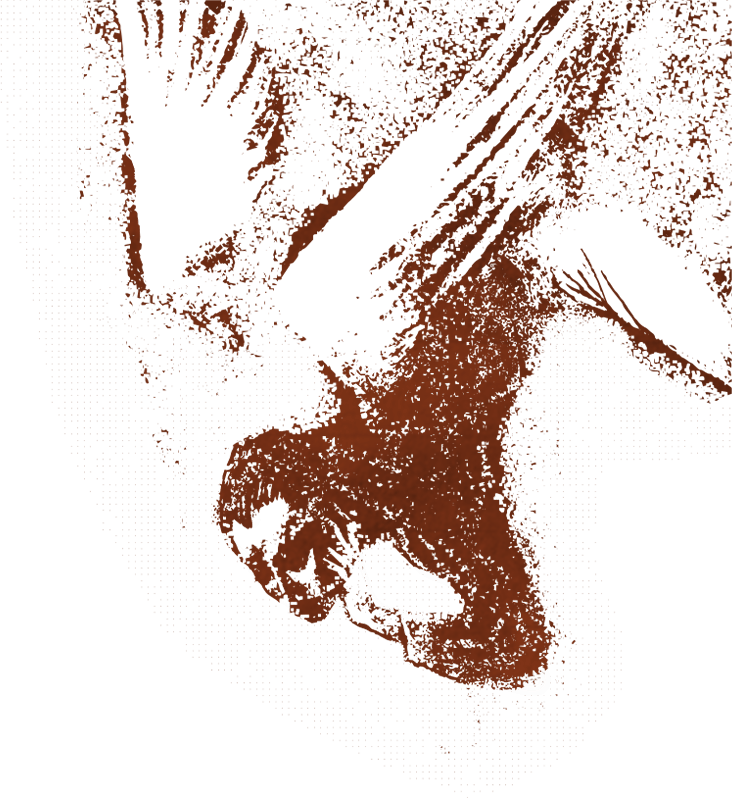
Right: “Transfiguration,” by Sócrates Magno Torres
Don’t recoil from this bewilderment, for God is bewilding the world, shaking off its conformity to the Deceiver’s constricting and toxic lies. Trust yourself to the hands that turn the world upside down and inside out, however unnerving it may feel. Even if wounding, it is in the end for your healing (Hosea 6:1). —kls
§ § §
A litany for worship
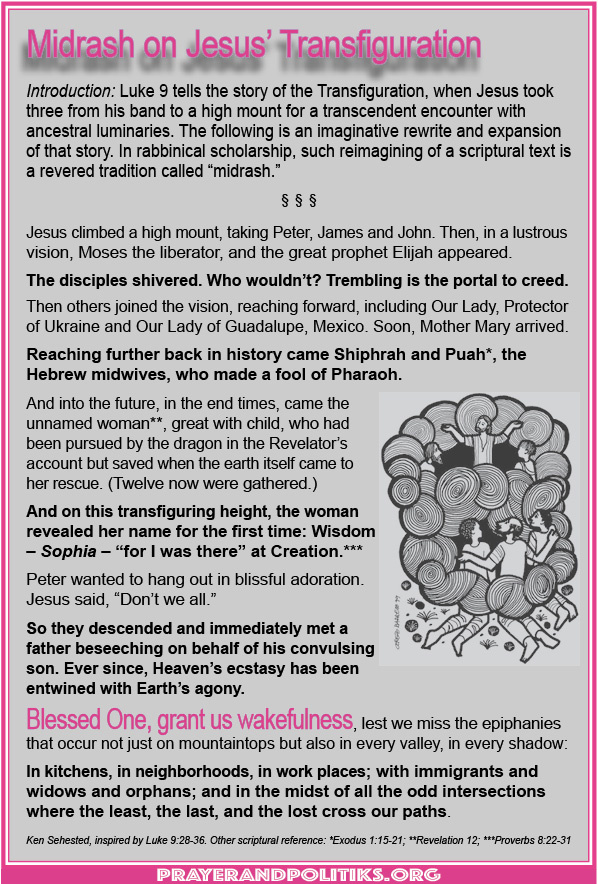
Introduction: Matthew (17:1-8) tells the story of the Transfiguration, when Jesus took his tres amigos to a high mount for a transcendent encounter with ancestral luminaries. The following is an imaginative rewrite and expansion of that story. In rabbinical scholarship, such reimagining of a scriptural text is a revered tradition called “midrash.”
JESUS CLIMBED A HIGH MOUNT, taking Peter, James and John. Then, in a lustrous vision, Moses the liberator, and the great prophet Elijah appeared.
The disciples shivered. Who wouldn’t? Trembling is the portal to creed.
Then others joined the vision, reaching forward, including Our Lady, Protector of Ukraine, and Our Lady of Guadalupe, Mexico. Soon, Mother Mary arrived.
Reaching further back in history came Shiphrah and Puah*, the Hebrew midwives, who made a fool of Pharaoh.
And into the future, in the end times, came the unnamed woman**, great with child, who had been pursued by the dragon in the Revelator’s account but saved when the earth itself came to her rescue.
Twelve now were gathered.
And on this transfiguring height, the woman revealed her name for the first time: Wisdom – Sophia – “for I was there” at Creation.***
Peter wanted to hang out in blissful adoration. Jesus said, “Don’t we all.”
So they descended and immediately met a father beseeching on behalf of his convulsing son. Ever since, Heaven’s ecstasy has been entwined with Earth’s epilepsy.
Blessed One, grant us wakefulness, lest we miss the epiphanies that occur not just on mountaintops but also in every valley, in every shadow:
In kitchens, in neighborhoods, in work places; with immigrants and widows and orphans; and in the midst of all the odd intersections where the least, the last, and the lost cross our paths.
—kls, inspired by Matthew 17:1-9. Other scriptural reference: *Exodus 1:15-21; **Revelation 12; ***Proverbs 8:22-31
§ § §
Confession. “Hiroshima Song.“ —Pete Seeger
§ § §
 ¶ “The atomic bomb [referencing Hiroshima and Nagasaki] was no great decision. It was merely another powerful weapon in the arsenal of righteousness.” —President Harry S. Truman
¶ “Seven minutes past midnight on March 9, 1945, nearly 300 American B-29s thundered into the skies over Tokyo. Their payloads of incendiaries ignited a more than 1,800-degree firestorm that liquefied asphalt and vaporized thousands; sixteen square miles of the city were flattened and more than 100,000 men, women, and children were killed.
Black Snow is the story of this devastating operation, orchestrated by Major General Curtis LeMay, who famously remarked: “If we lose, we’ll be tried as war criminals.”
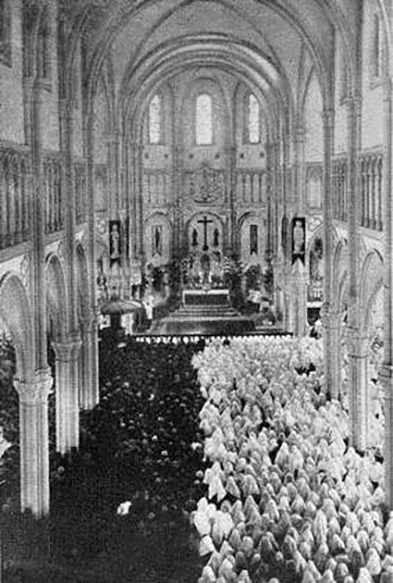
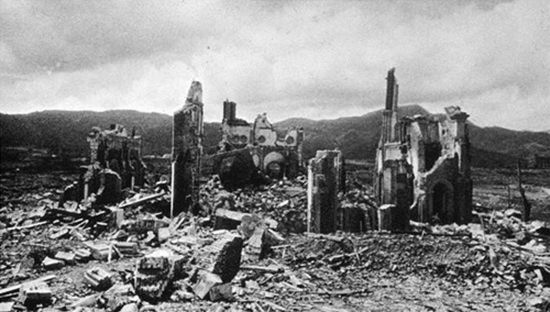 Right: Urakami Cathedral, before bombing (top) and after bombing (bottom).
James M. Scott reconstructs in granular detail that horrific night, and describes thedevelopment of the B-29, the capture of the Marianas for use as airfields, and the change in strategy from high-altitude daylight “precision” bombing to low-altitude nighttime incendiary bombing.
Most importantly, the raid represented a significant moral shift for America, marking the first-time commanders deliberately targeted civilians―which helped pave the way for the atomic bombing of Hiroshima and Nagasaki five months later.” — “Black Snow: Curtis LeMay, the Firebombing of Tokyo, and the Road to the Atomic Bomb” (emphasis added)
¶ LeMay later said of the incendiary bombing of Tokyo (and 60-65 other large Japanese cities), designed to unleash firestorms in neighborhoods where most structures were made of highly flammable wood and paper:
“There are no innocent civilians. It is their government and you are fighting a people, you are not trying to fight an armed force anymore. So it doesn’t bother me so much to be killing the so-called innocent bystanders.” —Alex Remnick, “The Most Notorious General You’ve Probably Never Heard Of”
¶ These bombing campaigns killed somewhere between 241,000-900,000 Japanese civilians.
¶ The atomic bomb that struck Nagasaki on 9 August 1945 exploded during mass near the Urakami Cathedral, the largest Catholic church in East Asia.
§ § §
Postlude. “Hiroshima Nagasaki Russian Roulette.” —Christy Moore (scroll down to see lyrics)
# # #