

Editor’s introduction. US President Donald Trump has repeatedly declared (as recently as a week ago) his intent to “take Cuba” after crushing Venezuelan sovereignty and attempting the same to Iran. Stan Dotson, along with his spouse, Kim Christman, have lived in Cuba for the past 12 years. They serve as associate pastors at Ebenezer Baptist Church in Havana. Dotson’s sermon is based on Jesus’ declaration, “I am the way and the truth and the life.” (See the bottom of this sermon for more context regarding US-Cuba relations.)
Sermon by Stan Dotson
Circle of Mercy Congregation
May 3, 2026
Text: John 14:1-14
§ § §
Prelude. “I’m an ordinary man / from the place where the palms grow / and before I die I want / to sing out the verses of my soul.” —English translation of the first verse of “Guantanamera,” the Cuban unofficial national hymn, performed Compay Segundo
§ § §
(Singing) I am, I said. I am, I cried.
“I am, I said.” Those are the opening words of the in-flight movie I streamed when I
flew from Cuba to Des Moines a few weeks ago. The movie had me both boo-hooing
and belly-laughing all the way through. Maybe that was because I was already feeling
intensely emotional and vulnerable, given that we had arrived at the Havana airport that
morning accompanied by two close friends from Ebenezer Baptist who were supposed
to be our traveling companions, only to find that ICE had revoked their visas for no
apparent reason, and they were not allowed to board. So as you might imagine, by the
time I buckled into my seat I had a lot of pent-up feelings, and needed a cathartic
experience. The movie “Song Sung Blue” gave it to me.
The film starts with a middle-aged guy with long, stringy hair trying to tune his guitar;
the camera zooms in so that his face fills the screen, and he gives what sounds like a
monologue:
“I am, I cried. . . I am. . . an entertainer. When I’m not doing engine work or oil changes, I’m
the lead guitar with the Dog Night Specials at the Red Dragon Lounge. . . I sing all types,
I got Mellencamp, Elvis, Bon Jovi. And oh, for these occasions, I have created a
persona. It’s like a superhero of rock and roll. I mean, I got no cape or nothing, I got no
mask, but I got this. . . .”
The character turns and shows a lightning bolt embossed on the back of his jacket,
and the scene goes on:
“You know why I got a lightning bolt? ‘Cause they call me Lightning. Oh yeah, Lightning’s
a star. . . He’s like Chuck Berry, Barry Manilow, and the Beatles all rolled into one. Oh
yeah. He’s singing the songs people love to hear. The songs people need. The songs I
need. . . Yeah, the songs I need to keep going. ‘Cause when the song’s over, and the
applause stops, I’m not Lightning anymore. I’m just another drunk.”
The camera pans out, and you see that Lightning has been addressing about a dozen
people seated in a circle, in an AA meeting. “My name’s Mike,” he says, “and I’m an
alcoholic.” The circle greets him, “hello Mike,” and then he goes on to explain that this
is a very special day; it’s his sobriety birthday. He has not taken a drink in 20 years, and
every year, on this day, he treats his AA community with a song from his favorite singer,
“Song Sung Blue” by Neil Diamond. Cue the music, and the movie goes on.
That opening monologue kept coming back to my mind as I reflected on the well-worn
verse from the lectionary text for today, “I am the Way, the Truth, and the Life.” Jesus
may not have had a lightning bolt on the back of his cloak, but he did have the
gumption on another occasion to say to his circle of followers, “I am… the Light of the
World!” And after his death and superhero-like resurrection, those followers created a
persona; they became the Body of Christ. After all, Jesus had told them that they, too,
were the light of the world, and they believed him, showing up like chain lightning all
over the Roman world.
For the first three centuries of the history of this circle of Jesus followers, the
community was something like a group of teetotalers living in a virtual distillery of
intoxicating spirits, spirits of power and privilege and excess prosperity. The Romans,
especially the Caesars, pretty well stayed high as a kite on those spirits. And they
tended to be mean drunks, at least to the people who refused to be enablers, people
like those Jesus followers who resisted co-dependence.
But then, sometime in the fourth century, the Body of Christ got its first taste of
privilege. What none of those first-century Caesars had been able to do with their
cruelty, namely, debilitate that pesky band of Jesus followers, the fourth-century
emperor Constantine was able to do with his enticing invitation to join him for cocktail
hour and take a swig of intoxicating privilege. The church started imbibing, bellying up
to the bar of imperial power, and before you knew it, when their song was over and the
applause stopped, they woke up hungover, their heads spinning, and they staggered
out into their role as a bona fide world religion.
You can read the last 1600 years of church history as that of one recovery period after
another—recoveries led by sober mentors such as St Francis of Assisi and Teresa of
Ávila and Menno Simons and others. The church as a whole bears the scars of many
falls off the wagon, when the temptation to power and privilege and prosperity was just
too much to resist.
One of the things that has long fascinated me about the church in Cuba, that particular
manifestation of the Body of Christ, is that it has not taken a swallow of the world’s
wine in over six decades. It was on April 16, 1961, to be exact, a few days after his
victory at the Bay of Pigs, when Fidel Castro publicly declared the Revolution to be
atheist in nature, and people of faith were disinvited from the party. Suddenly, those
triple shots of power and privilege and excess prosperity that the Church had acquired
such a taste for, they were no longer available.
Castro’s declaration was a sobering blow to the church, especially so for young
leaders like our friend Raúl Suárez who had risked life and limb in defending the
Revolution. They had to re-learn how to embody the persona of Jesus of Nazareth,
who was now persona non grata. And learn they did, so much so that one of the
repeated phrases we hear from church folks who visit Cuba for the first time is that to
enter into the faith community there is like being transported back to the early church.
So, two weeks ago, on the anniversary of Castro’s famous declaration, if you had been
at one of their meetings, you might have heard the circle of Jesus followers singing
their own song of celebration, marking the Cuban church’s 65th sobriety birthday.
Throughout those six decades they have continued to “work the program” as they say,
living one day at a time, praying the serenity prayer. Twelve 12 years ago, when Kim
and I pulled up roots and relocated to Cuba, it felt like we were being admitted into
detox, with the Fraternity of Baptist Churches acting as our spiritual Betty Ford Clinic.
When Mac Dennis, pastor of First Baptist Asheville, gave a report about his visit to their
sister church in Las Tunas, he said it felt like he had been pulled up by the nape of the
neck and plopped down in the midst of the first century church. He had to scrap the
sermon he had planned to preach there, and start from scratch, because suddenly he
was hearing the words of Jesus in a totally different way.
I could relate to Mac, as I continue to encounter Jesus in a different way, hearing words
from the sober-as-a-judge Jesus instead of the three-sheets-to-the wind Jesus who so
often acts as a convenient cover for our culture of conspicuous consumption.
So, what might the clear-headed Christ be saying in this audacious “I Am” statement
from John? That is, what might we hear the embodied Jesus in Cuba saying? Let’s
break it down:
First, I am the way.
A couple of popular hymns in the Cuban church include a line from the Spanish poet
Antonio Machado, Caminante no hay camino. Se hace camino al andar. “Traveler,
there is no way. The way is made by walking.” So what if Jesus was not referencing a
fixed way, a road laid out on a map, but was instead calling his followers to get a
move on and start making the way?
What if Jesus was essentially saying, I am the Movement? What if he was offering a
radical challenge to every fixed establishment that tries to harness and direct the “light
of the world” toward its own purposes? The world’s empires and their attendant
systems of religious control spend great time and energy putting up roadblocks,
detaining all who don’t fit the mold, trying to immobilize every mobilization for justice.
And then comes Jesus, forever on the move, creating a “motion picture” out of the still
life of this world.
So if we are to understand what it means to embody Jesus of Nazareth in our world, it
would do us good to spend time studying movements, familiarizing ourselves with the
resistance movements that have cropped up over the centuries. I mean, we have
studied and learned from the Civil Rights Movement, right? But how many of us are
familiar with the strategies of the Young Christian Workers Movement in Belgium? Or
the Catholic Workers Movement in the U.S.? Or the Landless Workers Movement that
is still going full throttle in Brazil?
Ken—I’m not sure you realize just how prophetic you were when you named what
might be the longest-running ministry of the Circle: “Mercy Movers.” That title speaks
to a whole lot more than moving furniture from one home to another. The Circle really is
moving mercy through this merciless world of ours. So much so that I wouldn’t be
surprised if one day those resistance leaders in Belgium and Brazil started saying to
their people, “It would do us good to spend some time studying that movement over in
Asheville, North Carolina, the Mercy Movers!
While we’re moving, let’s move on to the second part of Jesus’ bold identity statement:
I am the truth.
At the beginning of my in-flight movie, the opening credits informed me that “Song
Sung Blue” is based on a true story. What if, when Jesus said “I am the truth,” he was
not referring to deadening conceptualizations of faith or credal correctness? What if
instead he was telling his followers, “This movement of ours, it’s based on a true
story . . . I am that true story.”
In making such a bold proclamation, could it be that Jesus was challenging all the
competing stories that claimed to make meaning in people’s lives? It’s easy enough to
contrast the truth of Jesus’ life with the dominant false narratives of his time.
Throughout the first century the communities of faith suffered mightily under one reign
of terror after another, administrations marked by narcissistic egos, excessive force, and
a ruthless suppression of all who didn’t bow the knee and comply. That was the running
story of all the Caesars, and they stuck with it.
But my Cuban friends are teaching me not to be satisfied to hear Jesus’ words simply
as a denunciation of the most extreme examples of excessive imperial idolatry; there’s
nothing particularly prophetic about challenging such blatantly false and outlandish
claims to power. There are armchair prophets on every corner voicing those
complaints.
But what if Jesus was doing something different? What if his real aim was to challenge
 the false narratives of his own tribe, reminding them of a
truer story on which to base their lives? Think about the
iconic stories Jesus grew up hearing: stories with titles
we’re all familiar with: the Exodus, the Promised Land,
Solomon’s Temple.
Do you really think Jesus came to verify the truth of a
liberation story that portrays God equipping the liberator
with weapons of biological warfare (euphemistically called
plagues) and then commissioning a death angel to
assassinate the first born child of every family in an entire
nation? Can you imagine that scenario ringing true for
Jesus?
Do you think Jesus came to verify the truth of a settlement
story where God commands the faithful to breach the walls
of a city and slaughter everything that has breath with the
edge of the sword, young and old and animal alike? Can
you imagine that scenario ringing true for Jesus?
Do you think Jesus came to verify the truth of a Temple
story that involves an infamous sexual predator with hundreds of enslaved women at his
beck and call, claiming that God was blessing and inspiring him to construct a lavish center
of governance, a gold- plated Temple that would come to function as a center of command
and control over the marginalized poor? I can’t imagine any of those core stories, neither
Solomon’s gilded Temple nor Joshua’s battle of Jericho nor Moses’ death-ridden liberation
narrative, ringing true for Jesus. He was calling people to live and find meaning from a truer
story, the true story that he embodied.
If that is true, then Jesus’ words call us to go farther in our prophetic complaint, farther
than a simple denunciation of the most outlandish false claims to power of our day:
After all, calling out the daily deceptions coming out of the White House is easy
enough, we don’t need Jesus for that. But what if he’s calling us to dig deeper in the
well of truth, to critically examine the foundational premises of our own tribe?
What if, here as we approach the 250th anniversary of our empire’s founding, we hear
Jesus’ claim to be truth as a challenge to our own sacred stories, the narratives that
serve as pillars of our own civil religion: tall tales that we all know well by their titles:
democracy, free market, life, liberty and the pursuit of happiness, all made possible by
superior military might?
What if the state of affairs of our current gilded age is not an aberration, but the logical
conclusion of a society built on false premises? Can you imagine our settlement story
ringing true for the Christ embodied in indigenous peoples whose lands were stolen?
Can you imagine our democracy story ringing true for the Christ incarnate among
African peoples captured and enslaved to build the nation? Can you imagine our free
market story ringing true for the Christ present in Latin American peoples whose
resources continue to be looted and pillaged for our pleasure?
What if we have ears to hear Jesus telling us that there is a truer story, that he is the
truer story? Sisters and brothers of the Circle of Mercy: I believe you’ve heard that
story, and I believe you’re claiming it as your own. So much so that I can imagine a day
when Garreth Higgins convinces one of his director friends to make a movie about the
Circle—can’t you see Hugh Jackman as Stan Wilson and Kate Hudson as Mary
Elizabeth? And as the opening credits roll, the viewers will read the words on the
screen, “What you are about to see is based on a true story.” Cue the music!
Now we come to Jesus’ third claim:
I am the life.
What if Jesus here was essentially saying something like this: “I am the Sumak
Kawsay“? Now there’s a phrase most folks in our culture are not likely to be familiar
with, even the Spanish speakers. Sumak Kawsay. It’s a phrase I encounter with
frequency in workshops at the Martin Luther King Center, but it’s not Spanish; it’s an
indigenous Quechua phrase, sometimes translated as pura vida (pure life) or buen vivir
(good living). It’s a philosophy of the plentiful life that prioritizes harmony between
human beings, their community, and the natural world, focusing on collective wellbeing
rather than individual accumulation. Sumak Kawsay is a popular notion in Latin
America; it’s even embedded in the constitutions of countries like Bolivia and Ecuador.
When I’ve heard people in Cuba talk about Sumak Kawsay, they sometimes will riff on
some words that we are familiar with: “standard of living.” They talk about how that
phrase is understood in the developed world, with Merriam Webster defining “standard
of living” as “the minimum of necessities, comforts, and luxuries . . . held essential to
maintaining a person in customary or proper status.” But what if we examine the
gospels and come away with a different definition? What if Jesus is the standard of
living? What if the lifestyle of Jesus is the measure of the good life?
One of the things I love about the Circle, is that it feels to me that this principle of
Sumak Kawsay is embedded in our very constitution as a community of faith. We may
not always measure up, but buen vivir, good living, isn’t that what we are reaching for?
“I am,” Jesus said. “I am,” Jesus cried. “I am the movement, I am the true story, I am
the standard of living.”
If we are going to assume the persona of Jesus, this Body of Christ, then, when we are
at our best, we, too will tune up our guitars and sing, whether in sanctuaries or saloons
or Target stores; we’ll sing the songs people need.
And when we’re not singing, we’ll be faithful to work the program—going to meetings,
and oh, for people like us, in recovery, remember it’s super important for us to secure a
good sponsor. Circle of Mercy—we have the perfect sponsor at hand; we have pastor
Waldemar and the church in Oliva!* Wouldn’t they be great sponsors as we strive to stay
sober and abstain from the world’s intoxicating power and privilege and excess?
And remember that we’re a circle of mercy, so we need not be overly discouraged or
beat ourselves up if we occasionally fall off the wagon. After all, we do live and move
here in our own virtual distillery of those spirits of injustice. So any time we fall and find
ourselves with the blind staggers, losing our way, trusting the wrong story, striving for
the wrong standard of living, we can simply call up Waldemar and sing our own song
sung blue:
“Show me the way to go home. I’m tired and I want’a go to bed. I had a little drink just an
hour ago, and it went right to my head. . . .”
Show me the way to go home. Waldemar and the Oliva folks will show us, and they’ll
remind us that we have a better theme song. They’ll remind us that we are the light of
the world, and we have our own multi-lingual “I am, I said” song; it’s the song people
need to hear; it’s the song we need to hear to keep going: Siyahamba ekukhanyeni
kwenkos . . . Caminamos en la luz de Dios . . . We are walking in the light of God.
Amen.
§ § §
Postlude. “And we will walk into the world with faith and living in hope / Celebrating, singing, smiling, and struggling for life.” —English translation of lyrics to “Y Andaremos Por El Mundo,” performed by the Circle of Mercy Band (with a few guest musicians)
# # #
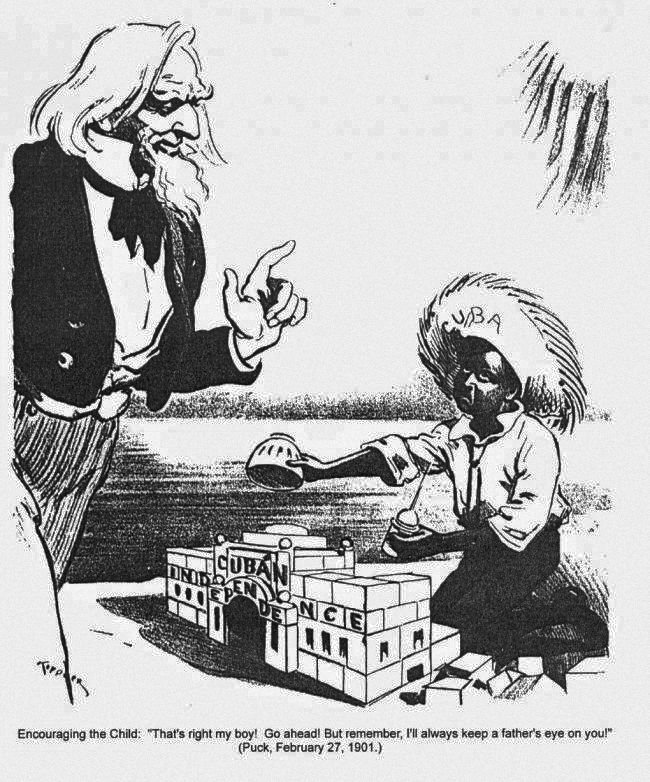
Context. US President Donald Trump’s intention of “taking” Cuba doesn’t surprise those who know the history of our countries’ relations. Following the Spanish American War (1898), the US oversaw the writing of Cuba’s first constitution. Two of the most important provisions of that document gave rights, in perpetuity, to the US of the Guantanamo Naval Base on the island’s eastern edge, and granted to the US the right to invade Cuba at any time. (Which we did, four times, not to mention dozens of attempts at assassinating Fidel Castro.)
Current restrictions on travel to Cuba are authorized by the Trading with the Enemy Act of 1917, which grants the power to prohibit financial transactions in time of war.
In the earliest days of our republic, Thomas Jefferson, primary author of the “Declaration of Independence,” wrote that the US, “at the first possible opportunity,” should “take Cuba.” And Secretary of State John Quincy Adams suggested there is such a thing as “political gravity” and that Cuba “can gravitate only towards the North American Union.”
We are currently in the seventh decade of the US embargo of Cuba, applying an economic chokehold designed to slowly suffocate that island nation’s resolve to remain outside the US domination of the western hemisphere. (That’s what the 1823 “Monroe Doctrine” was designed to do. And now, with the blockade of Cuban oil purchases from other countries—an action explicitly named in international law as an act of war—we now have Trump’s “Donroe Doctrine.”)
*Circle of Mercy Congregation’s partner church in Cuba is Juan Naranjo Baptist Church, pastored by Rev. Waldemar Murguido, in the small village of Oliva.
# # #
Below: Stan Dotson and Kim Christman performing in Matanzas, Cuba.