What are we to make of our nation’s semiquicentennial?
Ken Sehested, Circle of Mercy Congregation, 5 July 2026
Text: Zechariah 9:9-12
(“Return to your stronghold, you prisoners of hope”)
Prelude. “One bright sunny morning in the shadow of the steeple / By the Relief Office I saw my people — / As they stood hungry, I stood there wondering if / This land was made for you and me.” —“lost” verse to Woody Guthrie’s “This Land Is Your Land”
§ § §
Your cartoon for the day: A couple, sitting in their living room. One says to the other, “It seems wrong to celebrate America’s birthday while it’s on life support.” We today asked ourselves, “Is our nation’s historic anniversary the occasion for celebration or lamentation?” Or both?
I’m breaking a cardinal rule in preaching, which dictates that you give only one image for the congregation to ponder. Today I’m giving you three, because I think these three interact with each other, and each impacts and reshapes the other.
The first image comes from Woody Guthrie, from his song, “This Land Is Your Land.” He wrote the 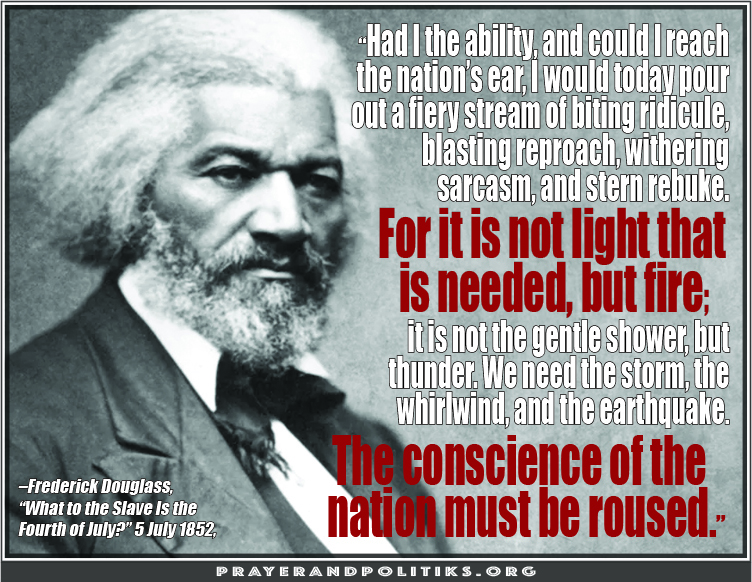 song as a protest to the familiar patriotic hymn, “God Bless America.”
One of Guthrie’s verses is rarely listed when his lyrics are printed. That verse reads “One bright sunny morning in the shadow of the steeple, / By the relief office I saw my people. / As they stood hungry, I stood there wondering / if God blessed America for me.” It is a not-so-subtle critique of the church, as an agency complicit in the structure forces of poverty.
The second image is to imagine a tussle between Uncle Sam and Lady Liberty, our two patriotic icons. Given the condition of our republic, you might think there’s a case of domestic violence going on.
The third image is excerpted from the text for today: “Return to your stronghold you prisoners of hope.” What exactly is our stronghold? And are we really imprisoned by hope, against our will? Is the yoke of Jesus merely the transference of one form of bondage for another?
Chances are you can recite from memory the eloquent lines from the Declaration of Independence, whose adoption we observed yesterday: “We hold these truths to be self-evident, that all men are created equal, that they are endowed by their Creator with certain unalienable Rights, that among these are Life, Liberty and the pursuit of Happiness. That to secure these rights, Governments are instituted among Men, deriving their just powers from the consent of the governed. . . .”
But of course, the self-evident truth of “all men are created equal” did not intend what it says. “All men” did not include women, or slaves, much less Native Americans, whose very existence the Declaration repudiated later in that document. And by “equal,” it did not mean the right for all to vote—not even for all men. You had to be a white, property-owning male to vote in those early elections. It 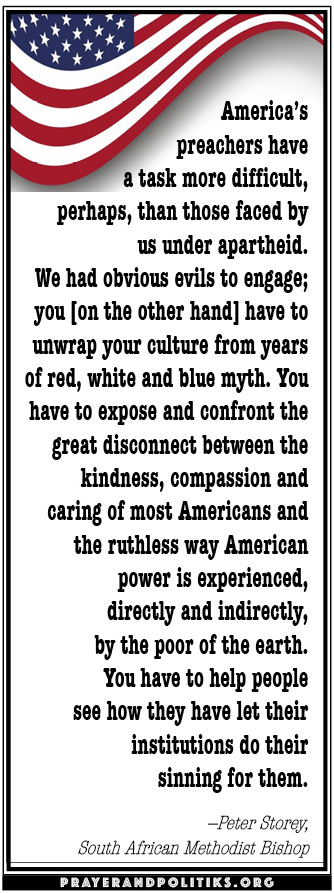 would be 52 years before the popular vote was a factor in presidential elections.
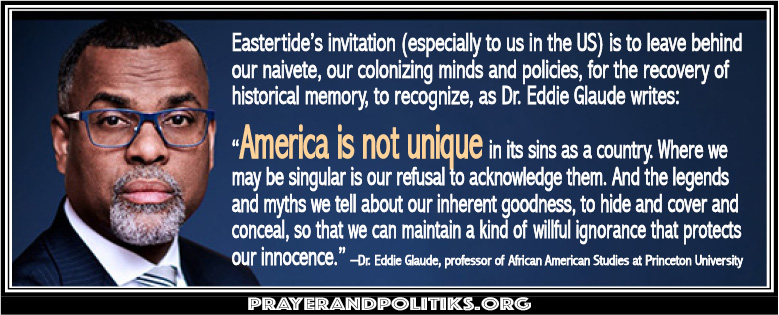
Today, though, we observe another semiquincentennial—from America’s first major prophet, the remarkable abolitionist Frederick Douglass (1818–1895). On 5 July 1852, Douglass gave his famous speech—“What, to the American slave, is your Fourth of July”—to a gathering of the Rochester, NY Ladies Anti-Slavery Society.
“I answer:” Douglass declared, “[this is] a day that reveals to [the slave], more than all other days in the year, the gross injustice and cruelty to which he is the constant victim. To him, your celebration is a sham; your boasted liberty, an unholy license; your national greatness, swelling vanity; your sounds of rejoicing are empty and heartless; your denunciations of tyrants, brass-fronted impudence; your shouts of liberty and equality, hollow mockery; your prayers and hymns, your sermons and thanksgivings, with all your religious parade, and solemnity, are, to him, mere bombast, fraud, deception, impiety, and hypocrisy—a thin veil to cover up crimes which would disgrace a nation of savages. There is not a nation on the earth guilty of practices, more shocking and bloody, than are the people of these United States, at this very hour. . . .”
National Baptist leader Nannie Helen Burroughs (1879–1961) viewed white Christianity as a contradiction of true identity because of its support for segregation and lynching. She rejected America’s Christian identity, saying “but it is the most lawless and desperately wicked nation on the globe.” Lynching, she insisted, was “no superficial thing . . . it is in the blood of the nation. And the process of eliminating it will be difficult and long.”
Ouch! And again, ouch!
Without a doubt, slavery was the original sin of our country. While it’s true that this abominable practice is as old as written history, the modern African slave trade was far by the most extensive in history. Worse than that, the only way our ancestors in the US could bear the shame of this exploitation was to literally invent the notion of “race” to justify the practice—invented a novel moral code—that dark-skinned people were less than fully human. The signatories of our Declaration of Independence and Constitution were so conscious of this blasphemy that, in the latter document, they could not bring themselves to use the word “slave.” Instead, they chose the euphemism of “other persons.”
Jefferson himself, the chief architect of the Declaration’s soaring words of liberty, was owner of a large contingent of slave, and sired at least six children with one of those. Today he would be called a serial rapist.
Yet his original draft of the Declaration included a 168-word section condemning the slave trade as an “execrable commerce” and a “cruel war against human nature.” The other five men in the drafting group immediately scratched out that section.
Also, we should not forget that at the time of the Declaration’s proclamation, all 13 colonies permitted slavery. The reason the South developed its “peculiar institution” was not because the Northerns were predominantly abolitionists. Rather, slavery was profitable as a tool of industrial scale agriculture—whereas the Northerners developed industrial scale manufacturing. Late in his life, Douglass wrote that the “wage slavery” of Northern industry was almost as brutal as chattel slavery of the South. And wage slavery is still a thing.
In case you haven’t noticed, the chain now laying at the Statue of Liberty’s feet can barely be seen. We’ve largely forgotten that the statue’s French architect, Frédéric Auguste Bartholdi, the chain was meant to be in the hands of Lady Liberty as a celebration of the defeat of slavery. But the US financiers of the statue’s pedestal didn’t want to be reminded of that horrible conflict. So only a few links can be seen under the Lady’s skirt, and is only visible from above.
The famous poem by Emmas Lazarus, a Jewish immigrant to the US, penned those memorable lines—”Give me your tired, your poor, your huddled masses yearning to breathe free”—was added later, declaring our nation’s willing welcome of immigrants. In these days, those lines have been suppressed by the forces of nativism, xenophobia, and unabashed cruelty.
Slavery was certainly the cause for our Civil War. But not as a human rights issue—it was a war between competing industrial policies.
So, yes, Uncle Sam’s notion of liberty and freedom is locked in a White House lawn cage fight with Lady Liberty’s ideal. And right now, the Lady is being pummeled.
We sometimes forget that words and ideas can change over time. Uncle Sam’s notion of liberty means 800 US military bases outside the borders of the US. As former US Secretary of State Henry Kissenger famously said, “The US has no friends; only interests.’
“Freedom” in the US—and not just recently—has come to mean the freedom of our economy to 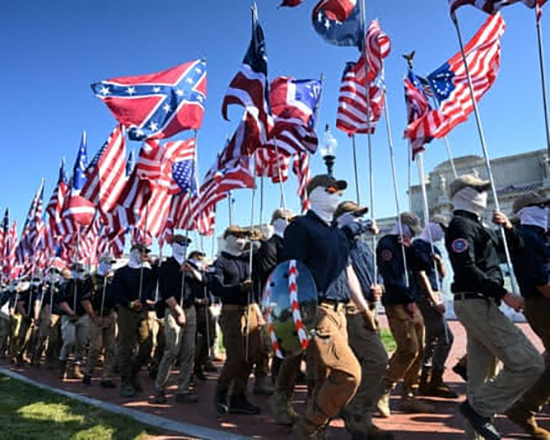 penetrate and subjugate the economies of other countries. (It’s called “free enterprise.”) Domestically, freedom has established wealth as moral stature; and when money is god, to be poor is a sin.
Right: Hundreds of the white supremacist group Patriot Front march in Washington, DC, on July 4, carrying US and Confederate flags.
And in the church, “freedom” has come to mean “don’t expect me to make any commitments.” Freedom as personal autonomy, with no covenant bonds, no vows, no friends, only interests. Reminds me of what Bill Ramsey, a former member, said several years ago in a Lenten prayer group, when the question was asked: Give a brief characterization of the church. Bill replied: “We are a community of consequences!” Membership has implications.
But it is beauty, not duty, which embraces us—though not the beauty of Milan’s fashion runway or Miss America contests or even a gymnast’s perfectly scored routine. The beauty which has a hold on us is that of a beatific vision, of the day when all tears are dried and death itself is vanquished.
Given the shifts over the last 10 years, a significant slice of the Christian community is itself vehemently opposed to Douglass’ claims. Our nation has always had its share of what we now call “white Christian nationalism,” but in this century it has developed into a prominent political force, with frequent and insistent calls that the US has always been a “Christian” nation, that Christians should be in charge, and that all our institutions, from the military down to the local school district, should prominently feature this perspective.
We have, for much of our history, consulted a flattering mirror like the Evil Queen in “Snow White”: “Mirror, mirror on the wall, who’s the fairest of them all?” The mirror’s response to our national vanity’s query provides the basis for manifest destiny, national exceptionalism, America-first assumptions.
I would caution you, though, not to assume it’s only the right-wingers who believe these things. Progressive political currents meant something similar, though they used different terminology. “Manifest destiny” and “exceptionalism” were common terminology.
In his 2012 commencement address at the US Air Force Academy, then-President Barack Obama said the United States is exceptional, and will always be, [quote] “the one indispensable nation in world affairs.”
The phrase “indispensable nation” was first coined in 1996 by an aide to President Bill Clinton, who later used it in a speech outlining the rationale for the NATO’s intervention in Bosnia. Then-US Secretary of State Madeleine Albright used that word in a 1998 interview on NBC’s “The Today Show” defending the US role in enforcing an embargo on Iraq after the first Gulf War in 1991: “If we have to use force, it is because we are America. We are the indispensable nation. We stand tall. We see further into the future.”
James Baldwin put his finger on our problem when he wrote, “For those innocent [white] people have no other hope. They are, in effect, still trapped in a history which they do not understand; and until they understand it, they cannot be released from it.”*
The Declaration of Independence is a remarkable document. In its day, in the age of kings and monarchs and imperial despots, it declares a truly radical political idea, that governing power derives “from the consent of the governed.” Regardless of how you define “the governed,” that notion on its own is historically distinct in political philosophy. That is something we can celebrate and commemorate and cherish.
By the way, I support democracy because it is the most common way we practice nonviolence.
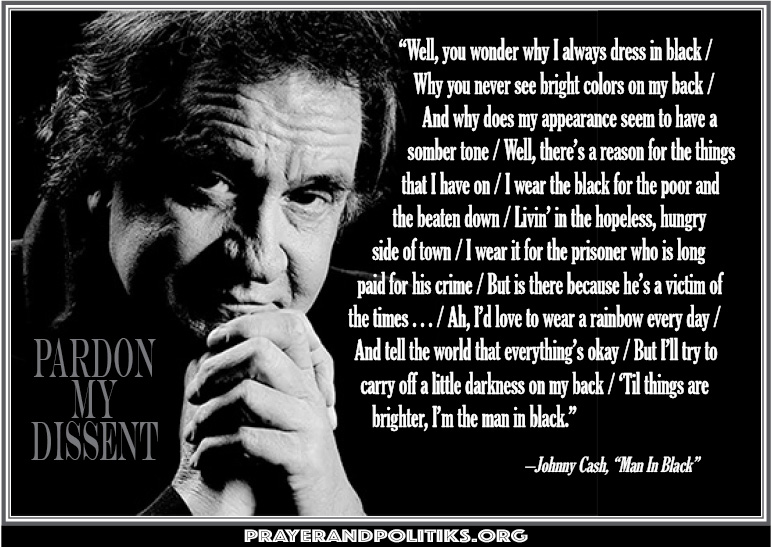
Our nation’s steeples—both conservative and liberal—have been and are now implicated in policies of injustice, in legacies of institutional trauma, in justification of slavery and Jim Crow and patterns of generational poverty and the blessing of wealth . . . and on and on.
There has been and is now a massive struggle between Uncle Sam and Lady Liberty. And it is, I believe, the church’s duty both to publicly denounce these faults and to put our shoulders—however small in relation to the enormity of the task—to the wheel of repentance and repair, of healing and restitution and, ultimately, of hope. As has been said, “the moral arc of the universe is long but it bends toward justice.” And has also been said, that arc doesn’t bend on its own. Bending it has consequences for those of us on the Jesus Road, and we do so in the company of people of other faiths and conscience.
What, then, is the stronghold to which the prophet Zechariah calls? And is the hope we profess (and call others to) simply another form bondage, an alternative form master-slave relations? Is hope nothing more than “a tease designed to keep us from accepting reality,” as Violet Crawly, played by Maggie Smith, said in an episode of “Downton Abbey”?
No. No. No. No. No And no.
We are prisoners of hope because we are head-over-heels in love with the promise of mountains being humbled and low places raised. Of nourishment appearing as manna in the desert and water flowing from sheer rock. Of the day when lions and lambs lie peacefully together. Of swords beaten into plowshares.
We are prisoners only in the sense that our minds are being decolonized—literally freed from its bondage to death—which is a modern way of saying what the Apostle Paul said when he called for the “righting of our minds,” righting in the sense of recognizing a horizon beyond the prevailing dogma that might makes right, that the strong take what they can, the weak suffer what they must. Of the day when the poor will have plenty to eat, the powerful dethroned, the rich sent away, the land itself restored to its ecological prime.
There are many, many beautiful things about our land and its people. Of the ugliest is what is currently referred to as Christian Nationalism.
Is our republic on life-support? Maybe. I’m not sure. There are a number of reasons to think the fever now gripping our nation is decreasing. But fevers can create long term damage. It will be a while before we can make any reliable predictions.
And so we pray, “Blessed One, on this dramatic date of commemoration, help us to distinguish between the beautiful and the abominable—and be ready for the consequences—as we discern the times in which we live.”
Amen.
* James Baldwin in “My Dungeon Shook: Letter to My Nephew on the One Hundredth Anniversary of the Emancipation,” The Fire Next Time
§ § §
Benediction. Hear this benediction from the closing remarks of Douglass’ speech: “Allow me to say, in conclusion, notwithstanding the dark picture I have this day presented, of the state of the nation, I do not despair of this country. There are forces in operation which must inevitably work the downfall of slavery. ‘The arm of the Lord is not shortened,’ and the doom of slavery is certain. I, therefore, leave off where I began, with hope. While drawing encouragement from the Declaration of Independence, the great principles it contains. . . .”
Postlude. “Come on and raise your voice above the raging seas / We can’t hold our breath forever / When our brothers cannot breathe / Come on and raise your voice above the raging seas / We can’t hold our breath forever / When our sisters cannot breathe.” —“All Good People,” Delta Rae
Bonus tracks
• “Let America Be America Again.” —Langston Hughes poem, spoken word by James Earl Jones
• “I Too Sing America.” —Langston Hughes poem, visual representation by William Sexton, spoken word by Denzel Washington
• Five young descendants of Frederick Douglass’ read excerpts (6:59) from his “What Is the Fourth of July to the Slave” speech.
# # #