by Ken Sehested
“The [US] rationale is embarrassingly circular—we must remain in
the Middle East to protect against terrorists who hate America
because we are in the Middle East.”
—Jeff Faux, “Why Are We in the Middle East?”
Read more ›


The difference between an admirer and a follower still remains, no matter where you are. The admirer never makes any true sacrifices. He always plays it safe. Though in words, phrases, and songs he is… — Søren Kierkegaard
by Ken Sehested
“The [US] rationale is embarrassingly circular—we must remain in
the Middle East to protect against terrorists who hate America
because we are in the Middle East.”
—Jeff Faux, “Why Are We in the Middle East?”
Read more ›
by Ken Sehested
 Worried about increasing US-Iran tensions? You should be. The stakes are high, Trump is recklessly impulsive and currently in need of a public distraction from the Mueller investigation. It’s not likely to be an all-out war, but some limited strike—maybe backing Israel to do so, as it did in 2007—that would further escalate belligerence.
(Remember: This year is the 100th anniversary of the end of World War I which began with one assassination, in a country few US citizens had heard of, igniting what was then the deadliest war in history, due to a complex web of international alliances, planting the seeds of World War II, then the Cold War, and on and on.)
Read more ›by Ken Sehested
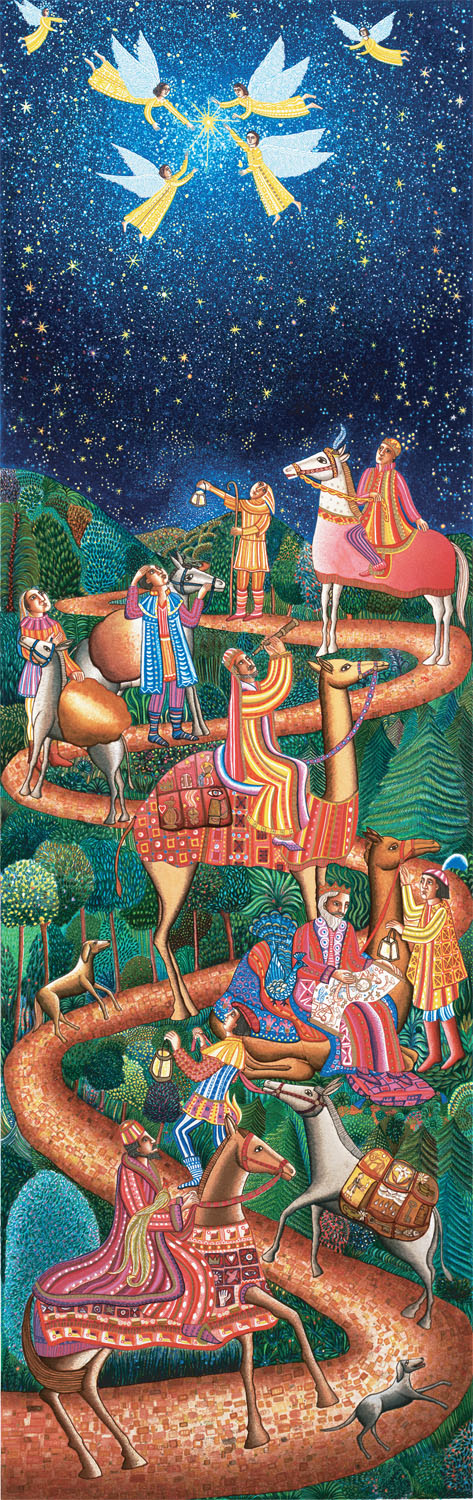 There are three versions of what Epiphany (“Manifestation”) is meant to commemorate in the church’s calendar. One of those traditions is to celebrate Jesus’ baptism on January 6. Another tradition—Eastern Orthodox, using the Julian calendar—observes Christmas on January 7. Yet another tradition celebrates Epiphany as marking the arrival of the magi—of “We Three Kings” fame, the figures played in every Christmas play by children dressed in bathrobes. Yet the common element in each is the inauguration of a confrontation between God’s Only Begotten and those in seats of power.
As a baptismal occasion, this Manifestation inspired Jesus’ first sermon in the temple at Nazareth. The gathered crowd was so perturbed at his message of deliverance that the text says they “were filled with wrath” and attempted to launch him headlong over a cliff.
Read more ›by Ken Sehested
(From "Feasting on the Word: Year C, Volume 1," David L. Bartlett and Barbara Brown Taylor, editors. Westminister John Knox Press, 2009)
Although the Apostle doesn’t use epiphany (“manifestation”) in this text, he likely had something similar on his mind. Something new has happened in Jesus. Better yet, the Word—God’s “eternal purpose” (v. 11)—can now be “seen” (v. 9) in ways previously unimagined. This “mystery” is news even to the heavenly hosts (v. 10). There is something of a Copernican Revolution underway. The entire universe of God’s Providence has been revised: not only in the context of a Roman imperial venue (the Apostle is again writing from jail) but also in the redemptive story centered in Israel’s promise.
Read more ›Signs of the Times • 13 December 2019 • No. 203
¶ Processional. This young drummer, Silas, is a member of Jesus the Redeemer Church in Kapenguria, Kenya, accompanying a praise song, “Sing With Joy, Jehovah Has Given Us Eternal Life.” (Thanks Boaz.)
by Ken Sehested
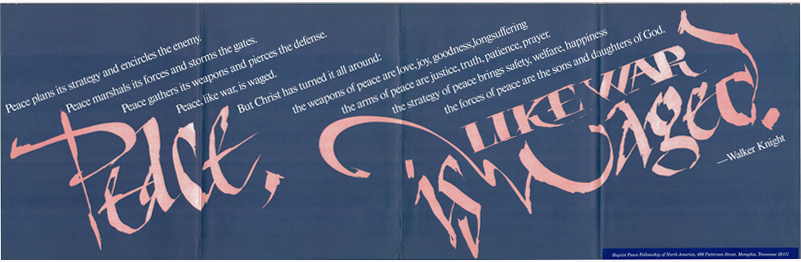
My mentor-cum-friend Walker Knight has died. It wasn’t a surprise—his health has been poor for several years. For him, and his family, it is likely merciful.
Read more ›Signs of the Times • 25 December 2018 • No. 180
Abbreviated edition
¶ Processional. The annual Christmas entrance into Bethlehem from the Latin Patriarch church. (3:11 video. Thanks, Loren.)

by Ken Sehested
The disciples of John came to Jesus saying, “Dude, what’s up with this? John’s in prison, and you’re out here lollygagging in the boondocks! John wants to know when the revolution is getting underway. Are you the Man-in-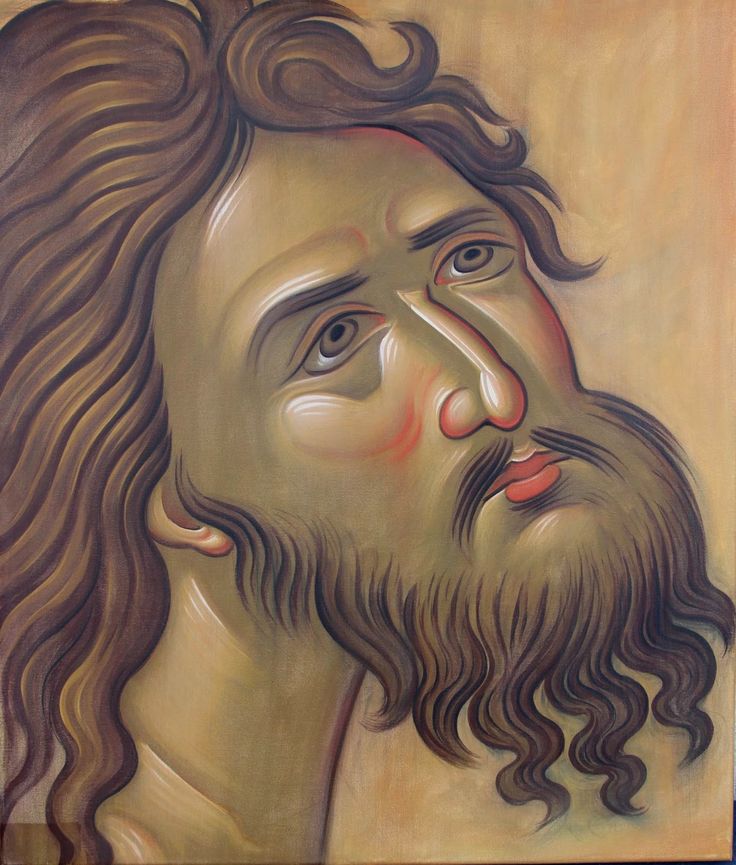 Charge or not?!”
Jesus said to them, “Go tell John what you see and hear.”
Read more ›by Ken Sehested
At first glance, through modernity’s eyes, Mary’s encounter with the angel’s natal announcement—and her annunciating response—appears to be a form of self-subjugation.
Is Luke’s story a case of a colonized mind? Did she actively concede to her own binding and bonding? Should we 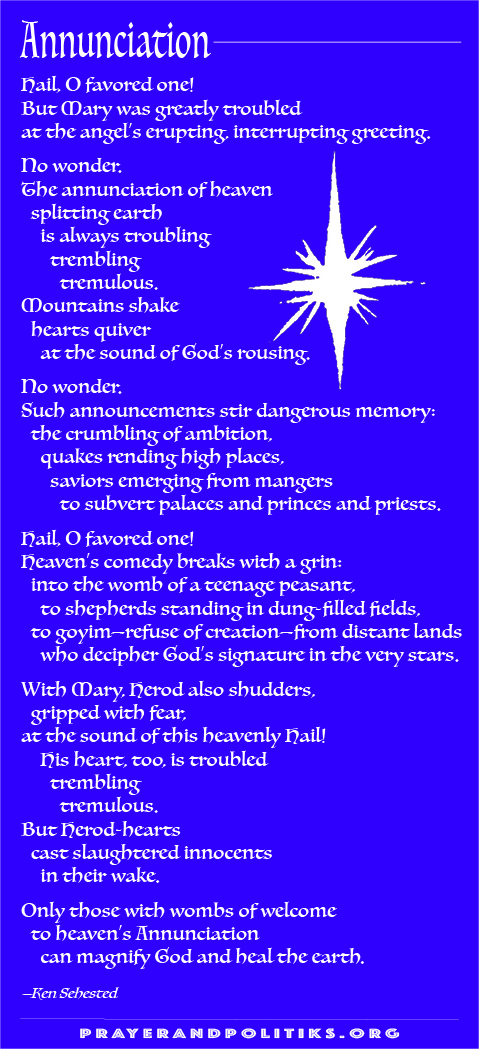 insist on a more assertive, individuated figure to front the Christmas story?
Subscribers receive full access to the entire prayer&politiks site. It’s free. Each week you will receive an automated email with a link to the new edition of the Signs of the Times column. All you provide is you name, email address and city, state or province, and country. This information is never shared with any other party. The only other agreement you make is to receive two solicitation letters per year, one in the spring, the other in the fall. (Which you are free to ignore. Your subscription is still free, and you may “unsubscribe” at any time.) This is our modern begging-bowl. Contributions are our sole source of support.