Recent

Senator McCain

Long live the mavericks

by Ken Sehested
26 August 2018

I have disagreed with US Sen. John McCain on a whole range of issues over many years. We see the world in profoundly different ways. (And I say this without the slightest hint of having a fraction of his stature.)

However, he is numbered in a rare breed of politicians of his generation—or mine, or any in my memory—who has displayed more character and integrity, the willingness to be guided, more often than not, by moral principle rather than profit or political expediency.

Which is why he has the reputation of being a political maverick. (And, likely, why he has requested that our current president not attend his funeral.)

The testimony of his life is an instruction, to me, in humility. Namely, there are people as intelligent and/or compassionate and/or convicted as me (maybe more) with whom I differ on important matters.

This does not mean I double-clutch my convictions. It simply means there will always remain a bit of slippage between my vision and God’s.

The implication is that the conclusion of the human drama is not in my hands. The presumption that any are anointed to make history turn out right is the source of all violence, and it is the devil’s own lie.

Long live the mavericks.

#  #  #

©ken sehested @ prayerandpolitiks.org

Plastic Jesus

A Lenten meditation on plastic

by Ken Sehested

        My wife’s eyebrows first raised, then furrowed, when I answered her question, “What’s your column focus for this week?

        “Plastic,” I said.

        I knew immediately from her response that I needed to do some explaining as to why, in the middle of Lent, plastic is a relevant topic. [For more on this, see the 1 March 2018 edition of “Signs of the Times.”]

§  §  §

“I don't care if it / Rains or freezes / As long as I've got my / Plastic Jesus /
Ridin' on the dashboard / Of my car. . . . / When I'm in a traffic jam / He don't
care if I say damn / I can let all my curses roll / 'Cos Jesus' plastic doesn't hear /
'Cos he has a plastic ear / The man who invented plastic / Saved my soul.”
—Gal Holiday and the Honky Tonk Revue, “Plastic Jesus"

§  §  §

        It was a serendipitous decision, one of those streaking-star flashes of inspiration that came after stumbling on several news stories.

        The first reported on Rio de Janeiro’s Carnival celebrations, where glitter-streaked faces are common in street parades. Turns out, glitter is environmentally harmful, made as it is from tiny bits of plastic which, when washed away, travels from sewer and sanitation pipes to the ocean. [See Dom Phillips, “Brazil carnival revelers warned that all that glitters is not good for the planet,” The Guardian]

Right: Carnival reveler Rio de Janeiro Brazil. Photo by Leo Correa/AP.

        Scientists now estimate that every square mile of ocean contains about 46,000 pieces of floating plastic. The deepest parts of the oceans, along with tap water in countries around the world (including at the US Environmental Agency’s headquarters) now contain microplastic particles. [See Damian Carrington, “Plastic fibers found in tap water around the world,” The Guardian.] In 2008, a sperm whale beached on a California shore was found to have 48.5 pounds of plastic in its stomach.

        Eco-friendly glitter is available, but at a cost of hundreds of times more. “It is just one more thing to make the lives of Brazilians more difficult,” complained one party-goer when told of the environmental hazard. “I think they are making it up.” A parallel story, from New Orleans, reports that city workers cleaned 93,000 pounds of plastic beads—the ubiquitous kind thrown from Mardi Gras parade floats—from storm drains. [See “New Orleans Finds 93,000 Pounds Of Mardi Gras Beads In Storm Drains,” NPR.]

        The next article I found reported on Parity, a faith-based LGBTQ-focused network of over 200 churches who offer Ash Wednesday forehead impositions combining traditional palm frond ashes with glitter.

        Rev. Marian Edmonds-Allen, Parity’s executive director, said the Glitter Ash Wednesday events were meant to be acts of love and resistance at a time when members of the LGBTQ community feel especially vulnerable to discrimination.

        “Glitter is serious business for queer people,” said Episcopal priest Rev. Elizabeth M. Edman. “Glitter is how we have long made ourselves visible, even though becoming visible puts us at risk.” [See Anya M. Galli Robertson, “Mixing glitter and protest to support LGBTQ rights,” The Conversation,  and Jessica Roiz, “Churches Are Supporting LGBTQ Christians With the ‘Glitter Ash Wednesday’ Movement,” MSN.]

§  §  §

“There's really no such thing as the 'voiceless.'
There are only the deliberately silenced, or the preferably unheard.”
—Arundhati Roy

§  §  §

            I confess to two immediate and opposite reactions to this latter story. Neither had anything to do with whether mixing ashes with glitter on Lent’s inaugural day is sacrilegious. Though highly conversant with, and committed to, tradition, I am not a traditionalist. There’s a big difference.

            One reaction was something like you-go-girl!, of making room for the full participation of, and affirmation for, the queer community in the life of believing communities. And also (this is important) of addressing the profound theological misconception of Ash Wednesday’s ritual as a form of self-abasement and groveling, as if God were a sadist who enjoys our belittling postures. [For more about the recovery of penitential language, see “The Ties That Bind: The Integrity of Penitence, on the 50th Anniversary of the Massacre at My Lai.”]

            If there be no god but such god, count me among the ungodly.

            I believe the promise of sparkle is real—though Lenten ashes acknowledge that Easter’s herald is everywhere contested and opposed. The odds of verifiable evidence are stacked against the prospect of rolled stones on Resurrection morning.

            The objection that simultaneously accompanies an affirmation of glitter ashes is this: Can such a ritual sidestep the glitterization of faith? In a culture committed to comfort, convenience, and security, can sparkly ash speak to the discomfort, inconvenience, and unsecured terms of Nachfolge Christi (“Following Christ,” which was the original title of Dietrich Bonhoeffer’s book, The Cost of Discipleship)?

            The entire logic of Lenten observance is not to banish delightful, fruitful life. Mardi Gras’ festivity is incorporated in the first doctrine of Scripture: Genesis’ account of creation’s conclusion is declared delightful. Sabbath is one part fiesta, one part siesta.

            But something went terribly wrong; and a certain kind of purging must occur before we can don our dancing shoes, because we have become so plasticized—so molded and conformed—to the mechanisms of humiliation and degradation which now inflict God’s verdant creation. A certain decolonizing—of both social structures and of the heart—must be pursued in our search for the Beloved Community.

            Or as Ursula K. Le Guin puts it, in words beyond that of traditional faith language, “The mental and moral shift from denial of injustice to consciousness of injustice is often made at very high cost.” To love is to suffer with.

§  §  §

“When the city bus paused for a few minutes outside the Woolworth store,
I rushed in to get a coca-cola and a few unnecessary plastic objects.”
—Nanci Griffith, in her brief monologue before singing “Love At the Five and Dime

§  §  §

            As things now stand, it’s hard to imagine life without plastic or the host of other fossil-fuel products. Whether you are the parent of an infant, a medical professional, a backpacking enthusiast, or merely sitting at a computer like I’m doing right now, plastics impinge. Not only the “unnecessary plastic objects”—the doodads for which cultural elites hold in contempt the mobile home crowd—but also things that make life more enjoyable.

            At present I cannot see and articulate a comprehensive plan of action to get from where we are to where we need to be, inexplicably trapped as we are in a system whose excesses threaten the ecosystem itself. And yet, as Edmund Burke said, nobody made a greater mistake than those who did nothing because they could only do a little.

            Thankfully, there are people smarter than me who are leading the way forward. Few of the solutions will be comfortable, convenient, or risk-free. The things needing to be done require attention to way more than one person, one movement, or even one era can accomplish. Most of the initial steps toward lasting change will be incremental: whether it’s a commitment to recycling or to participating in acts of civil disobedience against the plague of fossil fuel industries. The thoughtful, persistent habits of daily divergence from the grip of marketeers is no less heroic than breaching the barricades of unjust legal norms.

§  §  §

“For grace to be grace, it must give us things we didn’t know
we needed and take us to places where we didn’t want to go.”
—Kathleen Norris

§  §  §

            The way will not open until we begin walking. We more often live our way into new thinking than we think our way into new living.

            Make a commitment that builds on what you are already doing. Mix these concrete actions into a commitment to do fuller analysis of cause-and-effect relations as well as a deeper life of prayer. The capacity for risk is always in proportion to the capacity for reverence.

          Then knead all this into conscious and disciplined collaboration with a larger community of conviction, to further sharpen perception, sustain inspiration, and magnify engagement.

            This learning process—the comprehensive work of spiritual formation, of recognizing to Whom we belong, to what Purpose we are called, and by what Promise we are sustained—is called discipleship.

            Leave aside every plastic, gerrymandered jesus, whose principal function is little more than that of a mascot for the empire. Dare to go for the real thing. Lent’s wilderness showdown with the Confuser is a call to come home, where the prospect of morning’s joy will sustain through every night’s sorrows.

#  #  #


©ken sehested @ prayerandpolitiks.org

News, views, notes, and quotes

Signs of the Times  •  16 August 2018 •  No. 168

Special issue
GOOD NEWS STORIES

and in commemoration of the life and legacy of Aretha Franklin, “Queen of Soul,” whose lineage
included being raised singing Gospel music in the New Bethel Baptist Church,
Detroit, Michigan, where her father, Rev. C. L. Franklin, was pastor

Processional. “O Happy Day,” Aretha Franklin & Mavis Staples.

Invocation. “…You can trust the promise of this opening; / Unfurl yourself into the grace of beginning / That is at one with your life’s desire. / Hold nothing back, learn to find ease in risk; / Soon your will be at home in a new rhythm, / For your soul senses the world that awaits you.” —John O’Donohue

Call to worship. “No kind action ever stops with itself. One kind action leads to another. Good example is followed. A single act of kindness throws out roots in all directions, and the roots spring up and make new trees. The greatest work that kindness does to others is that it makes them kind themselves.” —Amelia Earhart

Hymn of praise. “None shall sleep, / None shall sleep! . . . / Vanish, O night! / Set, stars! Set, stars! / At dawn, I will win! / I will win! / I will win!” (English translation)  —Aretha Franklin, who at the last minute substituted for famed tenor Luciana Pavarotti at the 1998 Grammy Award ceremony, performing “Nessum Dorma

Small-scale agriculture as spiritual practice

How people of faith and conscience are recognizing that growing food
and tending nutrition is far more than producing sufficient (and cheaper) calories.

Right: A rural farm and church in Vermont, photo by Sean Pavone/iStock

¶  “The Movement to Turn Church Land into Farmland. A nascent movement of faith leaders, conservation experts, and food advocates are joining forces to connect young farmers to the vast quantity of land owned by churches. . . . In March, 35 leaders from across the U.S. who are ‘working at the intersection of faith, ecological stewardship, and farming’ gathered for the inaugural FaithLands event at Paicenes Ranch in California’s Central Valley.” Leilani Clark, Civil Eats

Learn more about a new church start in North Carolina organized around farming. —Brooks Berndt, “Farm Church as Embodied Spirituality: An Interview with Sarah Horton-Campbell,” United Church of Christ

¶ “On a warm weekend in early May, Reverend Heber Brown of Pleasant Hope Baptist Church in Baltimore led a delegation of his members on a tour of Browntown Farms in Warfield, Virginia and the Coalition for Healthier Eating food hub in Bethel, North Carolina. For Brown, the founder of the Black Church Food Security Network (BCFSN), the day trip was a concrete step toward solidifying strong relationships between Black residents of East Coast cities and Black farmers in the rural south.” Leilani Clark, Civil Eats

Imagine a 2-acre farm that produces 300 kinds of vegetables. In the middle of Detroit. (See photo at left.) It’s called an “agrihood,” short for agricultural neighborhood, which puts food production at its center. And it’s a growing trend. (2:54 video. Thanks Lamar.)

Words of assurance.Blessed Assurance,” Aretha Franklin.

Confession. “I've spent a lot of time in gun-country, God-fearing America. There are a hell of a lot of nice people out there, who are doing what everyone else in this world is trying to do the best they can to get by, and take care of themselves and the people they love. When we deny them their basic humanity and legitimacy of their views, however different they may be than ours, when we mock them at every turn, and treat them with contempt, we do no one any good. . . . We should be breaking bread with each other, and finding common ground whenever possible. I fear that is not at all what we've done.” —for more see Tyler Durden, “Anthony Bourdain Slams 'Privileged' Liberals For Their 'Utter Contempt" Of Working-Class America,' ZeroHedge

Passing the Peace. One day, when the congregation is instructed to “greet each other with the Peace of Christ,” this is gonna break out. And the Book of Revelation’s concluding promise that one day “every tear will be dried” will also say “and every leg will know how to dance.” (2:00 video. Thanks Wendy.)

Hymn of supplication.Precious Lord Take My Hand,” Aretha Franklin

¶ “10 years ago Grace Covenant Presbyterian Church in Asheville [NC] turned their lawn into a garden. (See photo at right.) It was an early "food and faith" connection on my vocational path. Stopped by for a visit today. (BTW, I love that their garden is right next to McDonalds. I've always seen it as an act of defiance.)” —Leah McCullough, Facebook

Professing our faith. “When I think about the changes I want to see in the world, it's easier . . . to snipe from the edges than to enter the space between the comfort of home and the risks of the world.” —Gareth Higgins, The Porch magazine

Eliada Homes has been serving children since 1903, but is now recovering a significant part of its agricultural mission—not simply to save money on food but also as a means of enhancing emotional healing and building social skills for the 600 children it serves annually in its residential treatment programs, foster care services, and traditional childcare.

        Located on 320 acres on the edge of Asheville, NC, the renewed subsistence farming operation focuses on food as part of holistic therapy. Many of the children have been traumatized by some form of abuse. “It’s going to be dynamic in the sense that it involves the community, but also in the sense that it takes the children here and gives them a learning center where they can interact with mother nature,” according to Farms Manager Brook Sheffield. —for more see Mackensy Lunsford, “Eliada revives farming to help heal, feed children,” Asheville Citizen-Times

Hymn of resolution.Precious Memories,” Aretha Franklin, with Rev. James Cleveland & the California Community Choir.

Short story. “When the news reporter approached me, I was milling about in the grass, adjusting my pastoral stole, preparing to be present with some of our local teachers at a press conference.

        “He wanted to know why I was there. I answered with a simple affirmation of our public schools and the teachers that serve in them.

        “But he was asking a different question, and he persevered: but why? Why are you here, as a faith leader, in support of public education?

        “I stared at him for a moment, summoning all of those things that are true about public schools and God’s children, young and old, who gather there. As stories about community and brokenness, wealth and poverty, injustice and restoration, passion and exhaustion, the love of discovery and the lack of paper, and the provision of care for the least of these swarmed, fighting for the spot on the tip of my tongue, I wondered if I might ought to simply say: because of Jesus. 

        “Because of Jesus. . . .” —continue reading Mary Elizabeth Hanchey’s “Because of Jesus,” written after participating in a public school teachers’ rally in Raleigh, NC. Hanchey is Program Associate for Legislative Advocacy and Interfaith Outreach for the NC Council of Church.

Hymn of intercession.A Change Is Gonna Come,” Aretha Franklin.

¶ “Why Mister Rogers’ Message of Love Is Good for Your Health. Evidence has mounted that he was on to something—people who express love and kindness really do regularly lead healthier lives.”

        The “Won’t You Be My Neighbor?” documentary on Fred Rogers and his “Mister Rogers Neighborhood” is now making it’s way to your local theatre. See this 2:55 trailer. Richard Gunderman, Yes! Magazine

This is a hopeful trend. “Candidates across the country and allied outside groups are seizing on the gun debate in advertising this election cycle, but with a twist: More spots now promote gun control than oppose it.” Nicole Gaudiano, USA Today

When only the blues will do.Ain’t No Way,” Aretha Franklin.

Short take: Remembering an unheralded saint. “Bob Fletcher, a former California agriculture inspector who, ignoring the resentment of neighbors, quit his job in the middle of World War II to manage the fruit farms of Japanese families forced to live in internment camps, died in 2003 in Sacramento at age 101.” William Yardley, New York Times

Good-but-overlooked electoral news. There was virtually no reporting on recent primary elections in the US that including this gem: Voters in Ohio approved a measure that will curtail gerrymandering in the state’s congressional districts—by 75%!

        In 2012 Republicans garnered only 52% of the vote in Ohio, but won 12 of 16 congressional races. Fran Korten, Yes! Magazine

        States where legislation or citizen initiatives to curb gerrymandering electoral districts may be on the ballot in November, including Michigan, Missouri, Ohio, Oklahoma, Oregon, Utah, and Colorado, Pennsylvania, and Illinois. Alexis Farmer, Brennan Center for Justice

Preach it. “The best criticism of the bad is the practice of the better.” —Fr. Richard Rohr

Inspiring news. Watch this brief (1:00) video about 83-year-old Antonio Vicente (pictured at right), a Brazilian, who restored 76 acres of clear-cut forest to its previous condition. 60 Second Docs (Thanks Rachel.) 

Call to the table. “Be not dismayed whatever betide / God will take care of you / Beneath His wings of love abide / God will take care of you.” —Aretha Franklin, “God Will Take Care of You

Best one-liner. “There are three things that are real: God, human folly, and laughter; the first two things are beyond our comprehension, so we must do what we can with the third.” —former US President John F. Kennedy

For the beauty of the earth. This is wondrous: “The Most Detailed Map of the Universe to Date.” (3:40 video. Thanks Larry.)

Altar call. “When my soul was in the lost and found / You came along to claim it / I didn't know just what was wrong with me / Till your kiss helped me name it / Now I'm no longer doubtful, of what I'm living for / And if I make you happy I don't need to do more.” —Aretha Franklin, “Natural Woman

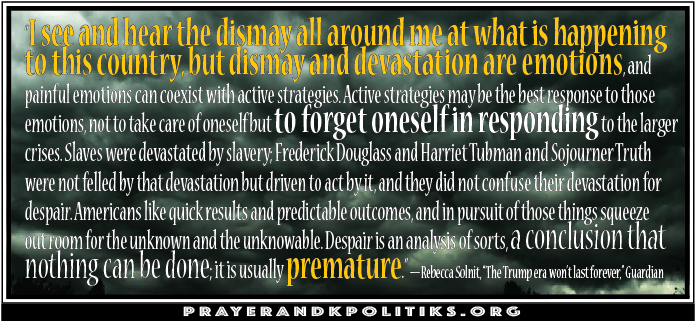
Benediction. “To be truly radical is to make hope possible, rather than despair convincing.” —Raymond Williams
Recessional. “I wanna wear a diamond gem / In the new Jerusalem / I wanna walk the street of gold / In the homeland of the old / I'm going to view the host in white / Who travel both day and night / Coming up from every nation / On the way to the great carnation.” —Aretha Franklin, “How I Got Over

Barack and Michelle Obama released a statement remembering Aretha Franklin, saying “For more than six decades since, every time she sang, we were all graced with a glimpse of the divine.” For more background on Aretha Franklin, watch this short (4:34) video recollection, “Remembering Aretha Franklin” and/or read Farah Jasmine Griffin’s “Aretha Franklin—Musical Genius, Truth Teller, Freedom Fighter,” The Nation

Lectionary for this Sunday. “. . . my heart and my flesh sing for joy to the living God.” —Psalm 84:2

Lectionary for Sunday next. “By the Word of Truth we are nursed and nestled. We are cradled, caressed, and sanctified. . . . But know this: Doing the Truth may raise blisters on your feet, calluses on your hands, sweat running down from forehead to finger.” —“By the Word of Truth,” a litany for worship inspired by James 1:17-27

Just for fun. What brilliant engineers do in their spare time. (3:21 video. Thanks Wendy.)

More fun. When you need a hug from a furry friend who expects nothing in return. Animals Are Family (2:59 video. Thanks Lori.)
#  #  #

Featured this week on prayer&politiks

By the Word of Truth,” a litany for worship inspired by James 1:17-27

• “We must be prepared: A brief meditation for the living of these days

• “Sweet surrender,” a litany for worship inspired by Psalm 15
 
Other features

• “The latest US-Iran dust-up: Reckless baiting . . . again,” an essay

• “Where do you put your anger? Anger and the animating presence of God,” an essay
 

©Ken Sehested @ prayerandpolitiks.org. Language not otherwise indicated above is that of the editor, as are those portions cited as “kls.” Don’t let the “copyright” notice keep you from circulating material you find here (and elsewhere in this site). Reprint permission is hereby granted in advance for noncommercial purposes.

Feel free to copy and post any original art on this site. (The ones with “prayer&politiks.org” at the bottom.) As well as other information you find helpful.

Your comments are always welcomed. If you have news, views, notes or quotes to add to the list above, please do. If you like what you read, pass this along to your friends. You can reach me directly at kensehested@prayerandpolitiks.org.


Breathing Places

A story from prison

by Nancy Hastings Sehested

It wasn’t the blood on the stairs that sent me racing back down the hallway, or the repeated cries of “Oh, my god!” that turned me away. It was simply this: I couldn’t breathe. I needed air. Air that was not saturated with pepper spray. With eyes burning, I coughed and sputtered my way back to where I could breathe again. After ten years at the prison, I knew where to go for breathing places.

Two nurses and six officers bolted down the main corridor to the housing unit where the assault happened. No one invited me to go along, of course. They were the first responders, not me. They had retractable batons, pepper spray, and handcuffs; they could stop the flow of blood or patch a gash of flesh. But me? I was useless. “Non-essential staff.”

It was 7:30 on a Sunday morning. I prepared for the morning worship service, oriented our new assistant chaplain, and checked on the forty volunteers who were leading a weekend spiritual retreat for forty-two inmates. As I walked through the lobby, the sergeant in Master Control announced “Code 4. Code 4.” Inmate-to-inmate assault. Then “Code Red. Code Red.” Medical emergency.

Staff materialized from all directions. I raced with them down the central hallway with the urgency of an ambulance driver. But unlike them, I made a quick U-turn at the red-stained stairwell and parked myself against a wall where I could gulp in air and watch from a distance.

An officer came down the hallway, bent over and gasping for breath. He waved for the control room to pop the outside door so he co­uld let in some fresh air. It wasn’t enough. He stepped outside, threw up in the grass, and returned to duty. “I’ve never seen so much blood,” he said. “I don’t know if the guy will make it. Blood was spurting everywhere.”

A nurse accompanied by several officers swiftly pushed the victim in a wheelchair toward the gatehouse and the incoming ambulance. When he passed by me, he was still conscious, pressing bloody towels against his neck. I recognized this large muscular man. I couldn’t imagine anyone messing with him. Who was the Goliath who attacked him, I wondered?

I didn’t know what to do or say. I flung out a prayer. “Luther, God is with you. Mercy to you!”

I heard a faint “Thanks, Chap,” as I watched door after door being opened for him and the emergency crew.

Left: Cross necklace made by inmate using plastic bags.

The lieutenant walked toward me and held out a blade about the size of a box cutter with a small plastic handle melted around it. “Chap, this is what sliced him open around his neck and face. It’s bad. Real bad.”

“Who did it?”

“A guy named Barton. That’s all I know.”

“Barton? There must be more than one Barton. I can’t imagine the Barton I know doing this. He’s one of the pipe-bearers for the Native American circle.”

“You just never know. Anything can set these guys off.”

The prison was immediately put on lock-down. The assistant chaplain, one week on the job, went home with his un-preached sermon tucked under his arm. Our volunteers were allowed to complete the retreat with the inmates. They called it a miracle that Luther was alive and prayed that his life be spared.

One day later I saw Luther through his solitary confinement cell window. He showed me his stitches. Almost 200 trailed down his face and neck. He said he felt lucky to be alive. I agreed that he was truly fortunate and asked him what happened.

“Barton jumped me. That’s all I know.”

That was not all he knew, I was sure of it—and maddening to think I might never know.

I was given permission to see Barton. He was no Goliath, more like an average-sized man in the middle years of his life. He was fully shackled and was led into the conference room by three officers. He slowly eased down into the plastic chair at the far end of the table from me. Chaplain confidentiality permitted me to see an inmate alone, but officers watched closely through the large glass window in the door.

Barton spoke first, sitting up straight in his chair, dignified. He thanked me for coming to see him and apologized for messing up the retreat and the Sunday programs. “I’m truly sorry about that,” he said.

“What? You’re sorry about the retreat and the Sunday programs? What about Luther?”

He didn’t answer. “I couldn’t believe it when I heard you attacked him. What happened?”

Still no answer. I reminded him about his words to his brothers at the pipe ceremonies: “Be careful how you act. What you do reflects back on all of us.”

“I know. Please tell the circle how sorry I am.”

“The circle? That’s it?” I snapped. I pointed out he just earned at least five years in seg [solitary confinement]. And how could he, I asked, be the same man who the week before had carved a beautiful treasure box out of soap, a work of art that must have taken hours to create. “Only a few days later, you almost killed a man. It makes my head spin.”

“I know, Chap. But I just couldn’t let some things go on.”

“So this was about defending your honor, your reputation?”

“I was defending more than that. I was defending my life.” He spoke calmly. “This is my house for the rest of my life. I’ve got to live with these guys side by side, in this prison or the next one or the one after that, shipped all over this state, one year after another. This is my life, Chap. I had no other choice.”

I was a calamity of emotions. No matter what reason Barton gave me, I wouldn’t have found it reasonable. I took a deep breath, placed my folded hands on the table and leaned over the chasm between us.

“Barton, those are some of the saddest words ever spoken, ‘I had no other choice.’” I slammed a hand on the table. “That can’t be true. It just can’t be.” An officer immediately opened the door and asked if I was okay. “Yes, fine,” I said confidently. The door closed as the eyes of the officers remained on us.

We stared down at the table through an uneasy silence. The chain around Barton’s waist and wrists clanged as he shifted his weight in the chair. “I guess there was a choice. I guess there was.”

#  #  #

Rev. Nancy Hastings Sehested, co-pastor of Circle of Mercy Congregation in Asheville, NC, was for 14 years a prison chaplain, most of that time in a maximum security facility. ©prayerandpolitiks.org


Joy’s ascendance

This stuff could get you in trouble

by Ken Sehested

“For Jesus, there are
no countries to be conquered,
no ideologies to be imposed,
no people to be dominated.
There are only children,
women and men to be loved.”
—Henri Nouwen

Yes. This. Of course. No doubt about it.
I stake everything on this claim.

However, some employ this credo
as warrant for quietude and passivity
in the face of threat:
      when conquering stalks the land;
      when imposition is frequent and flagrant;
      when domination is the organizing
            principle of public policy making;
      when fortune’s rise depends on
            squalor’s increase.

In such an age
(ours is hardly the first, nor will be the last),
truthful words are hitched to connivance;
trustworthy ideas are poached and sold on corrupt
markets as collector trinkets; righteousness is
muzzled and paraded in circuses for the glitterati;
faith is traded on Wall Street’s big board.

In such an age,
a certain kind of insolence is required.
A scrupulous disrespect is called for.
A principled nuisance needs be made.
A distinct discord sown,
      a discomforting voice raised,
      a troubling undertaken,
      a disturbing cry wailed.

Levitation from history is not an option.
None are exempt from making painstaking
choices amid contested and morally-
ambiguous terrain.

This stuff could get you in trouble.
Faith in the Manner-of-Jesus does
not cultivate placid circumstances
but insurrection against the world’s
disarray, informed by and conformed
to the beatific vision of the Creator’s
purpose, the Resurrector’s promise,
and the Animator’s presence.

The Beloved’s intent strikes terror
in the hearts of every merchant of misery.
They will not retreat without a struggle.
Travel through the narrow gate, along
the rugged road, is beset with bandits and
desperadoes armed with pious impunity.
Hardened hearts invent gods to match.

But sustenance is promised; manna will
descend; thirst will be slaked by water
springing from barren rock. Beauty will be
disclosed in our scars; healing, from our
wounds;  direction, from our dismay.
In that Day-to-Come, every creature,
mount and meadow, sea and fountain
—human and humus alike—
will rejoice and disclose Earth’s
exaltation at the news of Heaven’s
betrothal with Incarnation’s yearning.

The Word to people of the Way is to
abandon love-in-general in favor of
compassion-in-particular—to move
from history’s rhetorical grandstands,
from courts of impartiality and generic
prescriptions—turning instead into
unsettled circumstances with (potentially
and personally) hazardous results.

The night of crying endures, and the storm’s
dark turbulence may continue for as far as
mortal flesh can tell. But joy’s ascendance
(admittedly, at times, sorely dark and faint)
provides buoyancy and guidance for those
      with eyes to see,
      with ears to hear,
      with hearts large enough to shelter an
      other outside one’s own kin and skin.

As ancient Isaiah exhorted: Go out in joy and
be led back in peace, the hills bursting in song,
the trees in applause.* The only Adoni worthy
of adulation is approached in the darkness, is
encountered in the storm. For God is the storm,
and has incendiary designs for the storehouses
of human arrogance and greed. Cling to this
blessed assurance despite brutal prospects.
Oh, what a foretaste of Glory divine.


*55:12
©ken sehested @ prayerandpolitiks.org

We must be prepared

A brief meditation for the living of these days

by Ken Sehested

We must be prepared.
Things are likely to get worse
before they get better. We
must listen to the news,
from a variety of sources.
But we must not draw our
bearings from that news.
Ours is a larger horizon.

We must be prepared to
take emergency action, to
go completely out of our
comfort zones, in resisting
the Powers-and-Principalities’
sway over current events.

In the meantime, however,
we must not neglect
our common duties:

• to care for those close,
especially our young ones,
in guiding them toward a
life commitment to empathy,
simultaneously brave and humble;

• to care for neighbors, for
friends and acquaintances
and co-workers—no less
than for the earth itself.

• to be faithful in communities
of faith, in whatever form that
takes, to listen for and proclaim
the Word’s invitation and direction;

• to building a culture of peace
in the zip codes, the watersheds,
the time zones, in which we live
and with special attention to and
advocacy for those who presently
have no seat at the table of bounty;

• to risk the status we have been
given in the world as is present
on behalf of the world that is promised.

In light of these and an endless
list of other similar commitment,
       we plead:
Lord have mercy on our frail
appeal; and grant what we need
for the living of these days.

©ken sehested @ prayerandpolitiks.org
16 July 2018

News, views, notes, and quotes

Signs of the Times  •  12 July 2018  •  No. 167

Special edition
ANGER

Commentary and a collection of quotes

Introduction

        Few topics are as ambiguous for people of faith as anger. All of us get angry from time to time. But something inside us tells us we’re not supposed to be angry—even though sometimes it feels right.

        The Bible itself seems to be ambiguous. Jesus appears to forbid it when he says “every one who is angry with his brother shall be liable to judgment.” (Matthew 5:22—although a textual note adds: “Other ancient authorities insert ‘without cause’ in this verse. The rest of this text involves Jesus’ warning about insulting behavior.)

        God surely gets angry. A lot. How come God gets to, and we don’t? The Psalms, in particular, are packed full of angry statements., though we almost never read those. (For more on this, see “Angry words in the Psalms: A collection of texts.”)

        One Saturday evening a church member called my wife about worship the next morning. She had assigned him a Scripture reading.

        “I made a mistake and wrote down Psalm 109,” he said.

        “That’s the one,” Nancy said.

        “Are you sure?” he replied, “This one’s not very nice—and you want me to read this in church?!

§  §  §

        Sometimes we muster the will power to “swallow” our anger. Doing that, however, is like swallowing a mouth-full of nails. It usually produces serious digestive problems. (Have you ever heard someone described as “eaten up with anger”?)

        Psychologically speaking, swallowing anger leads either to depression (when internalized) or aggression. I am convinced we can no more stamp out anger than we can destroy energy. It simply assumes another form.

§  §  §

        I probably have as many questions about anger as anyone. I know four things for sure.

        1. If you’re never angry, you’re not paying attention. Conflict is constitutive to life as we know it, and envisioning and practicing redemptive response is the heart of faith.

        2. Anger is the appropriate response to every form of abuse and injustice. It is, in fact, the animating presence of God; for life as we know it is not finally fated to destruction and will be transformed. This is the promise on which faith is formed and engaged.

        3. Yet anger’s sway easily becomes a cover to act out our own fears and self-centeredness—and is especially brutal when invoking religious identity and divine blessing. Truth be told, the only way to God is through unwelcomed, unruly neighbors. (See Matthew 5:23-24.)

        4. As with all such weighty matters, talking about the appropriate use of anger is immeasurably easier than practicing it. We remain acquainted with failure; it is risky; and sometimes bruising. But such is the stuff of glory. —continue reading “Where do you put the anger? Anger and the animating presence of God


A collection of quotes

§ “But I say to you that if you are angry with a brother or sister, you will be liable to judgment. . . .” —Matthew 5:22a

§ “Be angry but do not sin; do not let the sun go down on your anger, and do not make room for the devil.” —Ephesians 4:26-27

§ “Hope has two beautiful daughters. Their names are anger and courage: anger at the way things are and courage to see that they do not remain the way they are.” —Saint Augustine

§ “Anger, used, does not destroy. Hatred does.” —Audre Lorde

§ The truth will set you free but first it will piss you off.” —Joe Klaas

§ “Give in to your anger. With each passing moment, you make yourself more my servant.” —Emperor Palpatine in the “Star Wars” movies

§ "If it were all so simple! If only there were evil people somewhere insidiously committing evil deeds, and it were necessary only to separate them from the rest of us and destroy them. But the line dividing good and evil cuts through the heart of every human being. And who is willing to destroy a piece of his own heart?" —Aleksandr Solzhenitsyn

§ “Grab the broom of anger and drive off the beast of fear.” —Zora Neale Hurston

§ "Beneath the shouting, there’s suffering. Beneath the anger, fear. Beneath the threats, broken hearts. Start there and we might get somewhere." —Parker Palmer

§ One Saturday evening a church member called my wife about worship the next morning. She had assigned him a Scripture reading.
        “I made a mistake and wrote down Psalm 109,” he said.
        “That’s the one,” Nancy said.
        “Are you sure?” he replied, “This one’s not very nice—and you want me to read this in church?!

§ “Do not be quick to anger, for anger lodges in the bosom of fools.” —Ecclesiastes 7:9

§ “Anger is an acid that can do more harm to the vessel in which it is stored than to anything on which it is poured.” ―Mark Twain

§ “Declare your jihad on thirteen enemies you cannot see—egoism, arrogance, conceit, selfishness, greed, lust, intolerance, anger, lying, cheating, gossiping and slandering. If you can master and destroy them, then you will be read to fight the enemy you can see.” ―Abu Hamid al-Ghazali

§ “Men in rage strike those that wish them best.―William Shakespeare, Othello

§ “The best answer will come from the person who is not angry.” —Arabic proverb

§ “Anger as soon as fed is dead– / 'Tis starving makes it fat. ” ―Emily Dickinson

§ “Not the fastest horse can catch a word spoken in anger.” —Chinese proverb

§ "Jesus does not weep in anger or in indignation or with any satisfaction. He weeps in profound grief for this gift of God that has died." —Walter Brueggemann

§ “The fiercest anger of all, the most incurable, / Is that which rages in the place of dearest love.” ―Euripides

§ “Anger is the prelude to courage.” ―Eric Hoffer

§ “Before you embark on a journey of revenge, dig two graves: one for the enemy, one for yourself.” —Confucius

§ “At the heart of all anger, all grudges, and all resentment, you'll always find a fear that hopes to stay anonymous.” ―Donald L. Hicks

§ “How much more grievous are the consequences of anger than the causes of it.” —Marcus Aurelius

§ “You will not be punished for your anger; you will be punished by your anger.” —Gautama Buddha

§ “Hatred bounces.” —e.e. cummings

§ “Talk to us about reconciliation / Only if you first experience / the anger of our dying. / Talk to us about reconciliation / Only if your living is not the cause / of our dying.” —excerpt from a poem by Filipino author Justino Cabazares

§ “No matter how hot your anger is, it cannot cook yams.” —Nigerian proverb

§ “Every war already carries within it the war which will answer it. Every war is answered by a new war, until everything, everything is smashed.” —Käthe Kollwitz

§ “I have learned through bitter experience the one supreme lesson: to conserve my anger, and, as heat conserved is transmitted into energy, even so our anger controlled can be transmitted into a power which can move the world." —Mahatma Gandhi

§ “Anger makes us all stupid.” —Johanna Spyri

§ “If I have learned anything in my life, it is that bitterness consumes the vessel that contains it.” —Rubin “Hurricane” Carter

§ “If you are patient in one moment of anger, you will escape a hundred days of sorrow.” —Chinese proverb

§ “Conquer anger by love; conquer evil by good; conquer the miser by liberality; conquer the liar by truth.” —Gautama Buddha

§ “Do not be overcome by evil, but overcome evil with good.” —Romans 12:21

§ “Let us not be afraid to protect the weak because of the anger of the strong, or to defend the poor because of the power of the rich.” —Brazilian theologian Rubem Alves

§ “What Christians call discipleship is nothing less than organizing people for another way of life that deals with the inequalities, the frustrations, the anger, and the hopelessness of their times in constructive ways.” —Joerg Rieger

§ “For what we Christians lack is not psychology or literature . . . we lack a holy rage—the recklessness which comes from the knowledge of God and humanity. The ability to rage when justice lies prostrate on the streets, and when the lie rages across the face of the earth . . . a holy anger about the things that are wrong in the world. To rage against the ravaging of God's earth, and the destruction of God's world.” —Kai Munk, Danish pastor killed by the Gestapo in 1944

§ “Holding on to anger is like drinking poison and expecting the other person to die.” —Gautama Buddha

§ The seven deadly sins: Luxuria (extravagance, later lust), Gula (gluttony), Avaritia (greed), Acedia (sloth), Ira (wrath, more commonly known as anger), Invidia (envy), and Superbia (pride).

§ “What do you think we ought to do with the anger and the yearning for vengeance that is so powerful among us? I proposed in [Praying the Psalms] that what the lament psalms do is show Israel doing three things. First, you must voice the rage. Everybody knows that. Everybody in the therapeutic society knows that you must voice it, but therapeutic society stops there. Second, you must submit it to another, meaning God in this context. Third, you then must relinquish it and say, ‘I entrust my rage to you.’” —Walter Brueggemann

§ “A Cherokee elder sitting with his grandchildren told them, ‘In every life there is a terrible fight—a fight between two wolves. One is evil: he is fear, anger, envy, greed, arrogance, self-pity, resentment, and deceit. The other is good: joy, serenity, humility, confidence, generosity, truth, gentleness, and compassion.’ A child asked, ‘Grandfather, which wolf will win?’ The elder looked him in the eye. ‘The one you feed.’” —Cherokee parable

#  #  #

©Ken Sehested @ prayerandpolitiks.org. Language not otherwise indicated above is that of the editor, as are those portions cited as “kls.” Don’t let the “copyright” notice keep you from circulating material you find here (and elsewhere in this site). Reprint permission is hereby granted in advance for noncommercial purposes.

Feel free to copy and post any original art on this site. (The ones with “prayer&politiks.org” at the bottom.) As well as other information you find helpful.

Your comments are always welcomed. If you have news, views, notes or quotes to add to the list above, please do. If you like what you read, pass this along to your friends. You can reach me directly at kensehested@prayerandpolitiks.org.

 

Angry words in the Psalms

A collection of texts

Introduction by Ken Sehested

Years ago, in putting together a special issue of Baptist Peacemaker on the topic of anger, I asked two friends (thanks again, Steve & Marion) to do a bit of research. Read through the Psalms, I asked, and compile a list of verses that speak about anger and its various synonyms—expressions of hatred, longing for vengeance, threat of retaliation, etc.

Needless to say, there is a lot there; and it’s actually shocking that the believing community’s prayer book contains such a level of vile and violent accusations and bequests. (This material is formally referred to as the imprecatory psalms.)

In his Praying the Psalms, biblical scholar Walter Brueggemann says this material reveals ancient Israel doing three things. “First, you must voice the rage. Everybody knows that. Everybody in the therapeutic society knows that you must voice it, but therapeutic society stops there. Second, you must submit it to another, meaning God in this context. Third, you then must relinquish it and say, ‘I entrust my rage to you.’”

#  #  #

How much longer, Lord, will you forget about me? Will it be forever? How long will you hide? How long must I be confused and miserable all day? How long will my enemies keep beating me down? • My God, my God, why have you deserted me? Why are you so far away? Won’t you listen to my groans and come to my rescue? I cry out day and night, but you don’t answer, and I can never rest. • I have no more strength than a few drops of water.  All my bones are out of joint; my heart is like melted wax. My strength has dried up like a broken clay pot, and my tongue sticks to the roof of my mouth. • You, God, have left me to die in the dirt. • God despises evil people, and he will wipe them all from the earth, till they are forgotten. • Get angry, Lord God! Do something! • Don’t let those proud and merciless people kick me around or chase me away. Look at those wicked people! They are knocked down, never to get up again. • Fight my enemies, Lord! Attack my attackers! Shield me and help me.  Aim your spear at everyone who hunts me down, but promise to save me. • Chase away and confuse all who plan to harm me. Send your angel after them and let them be like straw in the wind. Make them run in the dark on a slippery road, as your angel chases them. I did them no harm, but they hid a net to trap me, and they dug a deep pit to catch and kill me. • Surprise them with disaster! Trap them in their own nets and let them fall and rot in the pits they have dug.  • I have stumbled, and worthless liars I don’t even know surround me and sneer.  Worthless people make fun and never stop laughing. But all you do is watch! When will you do something? • Disappoint and confuse all who are glad to see me in trouble, but disgrace and embarrass my proud enemies who say to me, “You are nothing!” • Proud and violent enemies, who don’t care about you, have ganged up to attack and kill me.  • Do something, God! Defend yourself.  Remember how those fools sneer at you all day long. Don’t forget the loud shouts of your enemies. • Each of those nations sneered at you Lord. Now let others sneer at them, seven times as much. • You have ignored me! So pay close attention or I will tear you apart. • In his anger, God told them, “You people will never enter my place of rest.” • You have put me in the deepest and darkest grave; your anger rolls over me like ocean waves. You have made my friends turn in horror from me. I am a prisoner who cannot escape, and I am almost blind because of my sorrow. • Your anger is like a flood! And I am shattered by your furious attacks that strike each day and from every side. My friends and neighbors have turned against me because of you, and now darkness is my only companion. • God don’t keep silent! Destructive and deceitful lies are told about me, and hateful things are said for no reason. I had pity and prayed for my enemies, but their words to me were harsh and cruel.  For being friendly and kind, they paid me back with meanness and hatred. My enemies said, “Find some worthless fools to accuse him of a crime. Try him and find him guilty! Consider his prayers a lie. Cut his life short and let someone else have his job. Make orphans of his children and a widow of his wife. • You shot me with your arrows, and you struck me with your hand. My body hurts all over because of your anger. Even my bones are in pain and my sins are so heavy that I am crushed. • My days disappear like smoke, and my bones are burning as though in a furnace. I am wasting away like grass, and my appetite is gone. My groaning never stops, and my bones can be seen through my skin. I am like a lonely owl in the desert or a restless sparrow alone on a roof. My enemies insult me all day, and they use my name for a curse word. Instead of food, I have ashes to eat and tears to drink, because you are furious and have thrown me aside. My life fades like a shadow at the end of day and withers like grass. • Show how much you love me by destroying my enemies. • In heaven the Lord laughs as he sits on his throne, making fun of the nations. The Lord becomes furious and threatens them. His anger terrifies them. • Be smart all you rulers, and pay close attention . . . the Lord might become furious and suddenly destroy you. • Come and save me, Lord God! Break my enemies’ jaws and shatter their teeth. • Make your teaching clear because of your enemies. Nothing they say is true! They just want to destroy. Their words are deceitful like a hidden pit, and their tongues are good only for telling lies. Punish them, God, and let their own plans bring them downfall. Get rid of them! Attack my furious enemies. See that justice is done. • Evil people are trapped by their own evil deeds. The wicked will go down to the world of the dead to be with those nations that forgot about you.  • Make his children beg for food and live in the slums. • Now break the arms of all merciless people. Punish them for doing wrong and make them stop. • The Lord will send fiery coals and flaming sulfur down on the wicked, and they will drink nothing but a scorching wind. • Won’t you chop off all flattering tongues that brag so loudly? • I am innocent, Lord! Won’t you listen as I pray and beg for help? • You made my enemies run, and I killed them. They cried out for help, but no one saved them; they called out to you, but there was no answer. I ground them to dust blown by the wind, and I poured them out like mud in the streets. • May the Lord bless everyone who beats your children against the rocks. • With your mighty arm, Lord, you will strike down all of your hateful enemies. They will be destroyed by fire once you are here, and because of your anger, flames will swallow them. You will wipe their families from the earth, and they will disappear. All their plans to harm you will come to nothing. You will make them run away by shooting your arrows at their faces. • Good people will be glad when they see the wicked getting what they deserve, and they will wash their feet in their enemies’ blood. • The wicked kill with swords and shoot arrows to murder the poor and needy and all who do right, but they will be killed by their own swords, and their arrows will be broken. • Everyone the Lord curses will be destroyed. • Your vicious waves have swept over me like an angry ocean or a roaring waterfall. • Wake up! Do something, Lord! Why are you sleeping? Don’t desert us forever. • Send your sharp arrows through enemy hearts and make all nations fall at your feet. • My enemies are liars! So let them be trapped by their boastful lies. • Make their table a trap for them and their friends. Blind them with darkness and make them tremble. Show them how angry you are! Be furious and catch them. Destroy their camp and don’t let anyone live in their tents. • Do something, God! Judge the nations of the earth; they belong to you. • Our God, don’t just sit there, silently doing nothing! Your hateful enemies are turning against you and rebelling. • Babylon, you are doomed! I pray the Lord’s blessings on anyone who punishes you for what you did to us. • Don’t let the wicked succeed in doing what they want, or else they might never stop planning evil. They have me surrounded, but make them the victims of their own vicious lies. Dump flaming coals on them and throw them into pits where they can’t climb out. Chase those cruel liars away! • My Lord is at your right side, and when he gets angry he will crush the other kings. He will crack their skulls, leaving piles of dead bodies all over the earth. • Let trouble hunt them down. • Praise God with songs on your lips and a sword in your hand. Take revenge and punish the nations. Put chains of iron on their kings and rulers. Punish them as they deserve. • God will destroy you forever! He will grab you and drag you from your home. You will be uprooted and left to die. • Do I not hate them that hate you, O Lord?

#  #  #

Ken Sehested @ prayerandpolitiks.org

How do you deal with anger?

Pastoral commentary

by Ken Sehested

Introduction

Many years ago a friend wrote to ask about how to handle anger, naming a specific incident regarding
her congregation’s skewed budget habits. Of course, the incident is not unique, and the question
of what to do with anger stretches across a wide range of personal and public contexts.
Below is her question and commentary, then my response.

Dear Ken,

I have a question on which I would really appreciate your thoughts: what is the role of human anger in God's work?

At the moment I am working through some issues surrounding anger. On one hand I often see it as part of the passion to do God's work—as a response to injustices, thus a force that gets one to work for change. However, I am also aware that people get burned in the process of (my) anger—hmm, not likely a God objective.

Our congregation’s annual meeting is on Sunday. This is the time where money decisions get made. I am angry that our congregation has, and likely will continue, to focus on maintaining our building and not take on work outside the walls of the church. There are many issues here: the congregation's lack of vision of substantial work other than bricks and mortar, the failure of the spiritual leaders of the congregation (clergy and lay) to name this and act upon it, a lack of development and feeding of spiritual issues with the congregation.

The list goes on. I will speak on Sunday to the budget and name the shortfalls I see in it, but this is something I am really angry about. I think this is a ball of tangled thread I need to unwind. I think in the process I will separate the multiple issues of anger, including the force of God's presence, acting on the side of the oppressed, and being a catalyst for change.

How have you dealt with the anger, which I assume you feel and have felt over situations of injustice and willing blindness?

Chris

§  §  §

Dear Chris,

You ask a great question, about anger. From what you've described, I'd say your instincts about the appropriateness of anger are much the same as mine. I’m not sure I have anything to say which you don’t already know; but we all need reminding of what we know, so let me make a few comments.

As you note yourself, anger is always the appropriate response to injustice. I would go so far as to say that in such circumstances, it is evidence of the work of the Holy Spirit. (You've probably heard this quote from St. Augustine: "Hope has two beautiful daughters. Their names are anger and courage: anger at the way things are and courage to see that they do not remain the way they are.")

Unfortunately, I suspect that you and I were both reared in a religious culture that strongly discouraged the expression of anger. (Typically, females have been more repressed than males, for reasons of gender.) And we don't have many good models on appropriate expression of anger.

On the face of it, Scripture seems contradictory at this point. Jesus warned that "every one who is angry with his brother shall be liable to judgment" (Matthew 5:22). Yet Jesus himself is pictured as expressing anger, particularly when he overthrew the tables in the temple. On the other hand, Paul wrote what I think is the pivotal text: "Be angry, but sin not" (Ephesians 4:26).

How do we do that? How do we avoid sin in the midst of anger?

Like you, I have had numerous experiences where I was very clear of the truth of my convictions, in the course of discussion or debate (in church contexts, in particular). What I have to constantly do is make a crucial distinction between the power of the Truth and the power of my argument.

I am well aware, in times past, when I was advocating for a particular position (not unlike the one you describe, re: the church's self-absorption with its own building), that part of the agitation I felt stemmed from fear—fear that I wasn't going to win the argument. When that happens, the fear in me gets expressed as aggression and enmity toward those with whom I'm debating; and it often provokes a response in kind: they become defensive and respond with hostility (often masked with piety, of course—which is the worst kind of hostility).

It's this latter kind of "anger" which, I believe, is sin. It's rooted in our own insecurities—ultimately, in our own shaky confidence in the power of the Gospel itself. (i.e., If we don't win the argument, evil will prevail—the attitude from which, in the extreme, wars develop.)

This is why the notion of nonviolence is so central to my theology and is slowly but surely impacting my actual behavior! Our tendencies to violence, like ground-in dirt, often takes a lot of “soaking” to loosen their grip on the fabric of our lives.

For each of us, I think, the true power of the Gospel gets expressed in the refusal to coerce, to insist that my conviction be upheld over alternative convictions. In other words, in the ability to "lose" without "losing it" (i.e., without getting angry in a sinful way). This confidence, ultimately, rests in our confidence in the Resurrection: that not even death, finally, can take away anything of essential value; for God is at the Center; that "while the moral arm of the universe is long, it bends toward justice" (one of M.L. King's favorite sayings, quoting Carlisle).

But be very clear at this point: This confidence is no justification for passivity or withdrawal. We will do our very best to speak the truth, as compassionately, as powerfully, as strategically, and as intelligently as possible.

In the end, though, even with this commitment to nonviolence, you can't help but make some people mad. Trying to always be "nice" (i.e., behaving so that no one is unhappy with you) is itself a form of self-absorption and self-preoccupation. It didn't happen for the prophets, for Jesus, for the disciples—why should you think you could do it if they failed?!

We do everything possible not to make people mad, of course—including taking on unmerited suffering without retaliation. But even at this point (as my wife is fond of saying), there's a difference between taking up the towel and basin of water (to wash feet) and being a doormat for people to wipe their feet on. The latter is never, ever a form of righteousness.

Of course, even when we already know these things (as I know you do), learning about how to "be angry, but sin not" comes from practice. Unfortunately, experience is a hard teacher because she gives the test first, the lesson afterwards.

So, be angry, dear sister . . . but sin not.

Ken

©ken sehested @ prayerandpolitiks.org

Being Good and Doing Good

Martin Marty, Fortress, 1984

reviewed by Vern Ratzlaff

This is an old treatment of ethics by a veteran theologian and historian, and it’s significant that its relevance remains constant still.  An interesting perspective is Marty’s identification of a literary basis for being ethical.  ‘Let a text speak to us and present a horizon through imagination and emotional acts’ (p 57); this is an alternative to the rational arguments for ethical discourse and action.  The final two chapters deal with how we live:  the public sphere where the individual is linked with fellow believers as well as non-believers in the whole world of human beings, and the personal sphere, various areas of private life that also have public effects (p 91).

Marty’s methodology does not go into details about what to do in certain issues (eg abortion, pacifism) but to see the relatedness of all life in what he calls ‘zones’.  The zone of the body (the self), those where we are intimately related to family, friends, the neighbourhood, institutions (schools, local church), place of employment.  The impetus to responsible living comes from our baptism, living the forgiven life.  He closes his book with an appeal to Christians to contribute to the common good, to find themselves at the foot of the cross in sight of an open tomb.  ‘That is the space where Jesus meets humans’ (p 128).

Vern Ratzlaff is a pastor and professor of historical theology at Lutheran Theological Seminary in Saskatoon, Saskatchewan, Canada.