
Recent

The payback of Heaven

A litany for worship inspired by Psalm 103

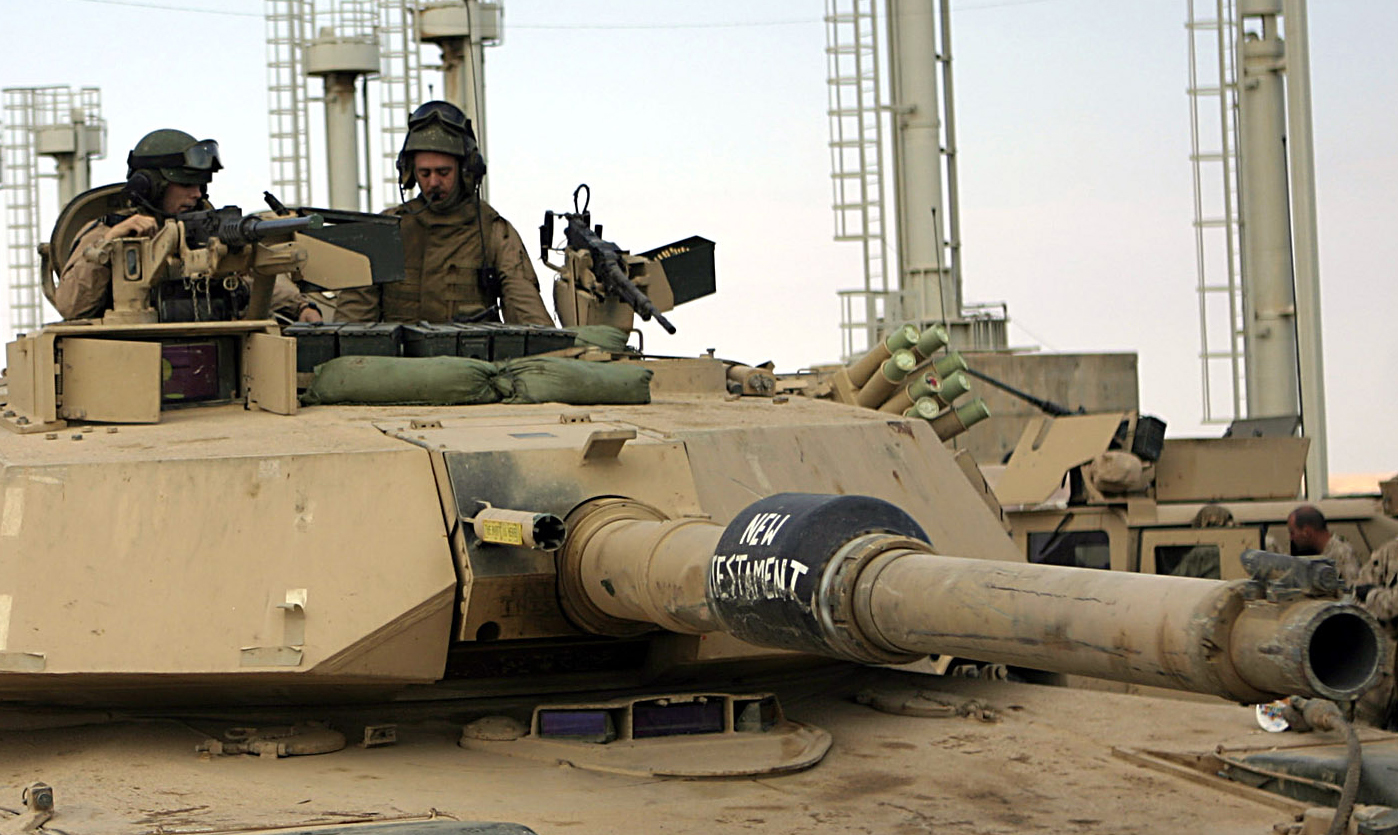
The payback of Heaven neither tortures nor torments.

The vengeance of God is Christ’s victory of mercy,
o’er all venal indenture and vile deception.

The terror of God is the Risen One’s threat
to every merchant of death, every marketer’s breath,
every peddler of gun-wielding promise of power,

Whose assault is but aimed at the shame which
confounds and ensnares you.

Rise up with joy, every fleshly heart, to greet the
      One who entreats you;
Who from the dust has made you,
                              Who savors you,
                  Who knows you by name
                  and now comes to reclaim.

For your Champion shall raise you
      with Pardon’s full measure.
Earth’s delight will one day rise up
            to embrace the treasure
            of God’s steadfast love,
                  now and ever.

©ken sehested @ prayerandpolitiks.org

No one can serve two masters

A litany for worship inspired by Luke 16:1-13

by Ken Sehested

Hear this, oh people of the Covenant: The claim of Heaven’s Reign and the clamor over earth’s rule are woven together. The seed sown in one is harvested in the other. All questions of piety are questions of power. But the nature of power is contested.

No one can serve two masters.

There is this version of the Golden Rule: Those with the gold get to rule.

Say aloud: No one can serve two masters.

Then there is the original: Do unto others as you would to yourself.

Say it proud: No one can serve two masters.

Hoard your money or hallow your God: The one precludes the Other.

All gathered avow: No one can serve two masters.

You will hate the one or love the other; be devoted to one, despising the other.

Your checkbook declares your choice. Prayers and praise then align with that voice.

©ken sehested @ prayerandpolitiks.org

News, views, notes, and quotes

Signs of the Times  •  2 September 2016  •  No. 86

Processional. “Approach My Soul God’s Mercy Seat,” hymn from the indigenous “Spiritual Baptist” tradition of Trinidad & Tobago. (More on that below.)

Above: Sunrise at Ocracoke Island, North Carolina, photo by Ira David Wood III

Invocation. “There are no unsacred places; / there are only sacred places / and desecrated places.” —Wendell Berry, “How to Be a Poet”

Historic flight. “First US-Cuba Commercial Flight in More Than 50 Years Has Landed.” Merritt Kennedy, NPR

Left: The first commercial flight in over 50 years from the US to Cuba—from Ft. Lauderdale to Santa Clara—landed Wednesday, 31 August, and greeted with a water canon salute. Photo by Joe Skipper/Reuters.

More Cuba news. This past June the United Church of Christ Southern Conference approved a resolution drafted by Ken Sehested in support of renewed diplomatic relations between the US and Cuba.  “Bring Down the Wall in the Caribbean” serves as a good summary of recent advances.

It started as a typical evening’s research, selecting and reading a number of news stories in search of material for my weekly column. One on the list was the account of San Francisco 49ers’ quarterback Colin Kaepernick sitting during the playing of the national anthem prior to the start of the game.
        Reading these accounts led me to similar events in previous years of athletes using their public visibility as a stage for protest. That led to digging into the history of the national anthem, “The Star Spangled Banner,” including its largely unknown third verse which celebrates the killing of African slaves. This information led me to research the US invasions of Canada (also largely unknown here).
        It was a busy evening, but a fascinating one. —continue reading Ken Sehested’s “Colin Kaepernick, national anthems, and flag-flown piety

Right: San Francisco 49er stadium, photo by Carlos Avila Gonzalez, San Francisco Chronicle.

Call to worship. “Let the ruined rejoice in the Lamb who rules, for the Tendering Day draws near! How sure the delight of Mercy’s pure light conqu’ring darkness and danger with cheer.” —continue reading Ken Sehested’s “Let the lost rejoice,” a litany for worship inspired by Luke 15:1-10

¶ “Ultimately it’s to bring awareness and make people realize what’s really going on in this country. There are a lot of things that are going on that are unjust, people aren’t being held accountable for, and that’s something that needs to change. That’s something that — this country stands for freedom, liberty, justice for all. And it’s not happening for all right now.” —Colin Kaepernick, commenting on his decision to remain seated during the playing of the national anthem prior to his team’s National Football League game against

Hymn of praise. “For you I'll fly / through skies and seas / to your love / Opening my eyes at last / I'll live with you. [English translation]” —Andrea Bocelli and Sarah Brightman, “Por ti volare” (“For You I’ll Fly”)

It wasn’t until 1931 that “The Star-Spangled Banner” became our national anthem, and then only after 40 previous failed congressional votes, beginning in 1918. The song was not universally beloved, partly because of its difficulty in singing, and partly because of obscure lyrics. Among the obscure ones is a phrase in the third stanza’s:
        “No refuge could save the hireling and slave / From the terror of flight or the gloom of the grave.” The reference was to mercenary forces employed for the British in the War of 1812, along with American slaves who volunteered to fight in exchange for Britain’s pledge of their freedom. Ken Sehested

The first flag desecration laws . . . "were not to stop political dissidents from burning flags.” They were “intended to prevent the use of flag imagery for political campaigns and for commercial and advertising purposes—uses that are now seen as patriotic. —Sarah Boxer, “Word for Word/The Flag Bulletin; Two Centuries of Burning Flags, A Few Years of Blowing Smoke," The New York Times

In 1861, poet Oliver Wendell Holmes wrote a fifth verse to support the Union cause in the Civil War and denounce “the traitor that dares to defile the flag of her stars.” I doubt this verse will be sung this Saturday at the Alabama-Clemson game.

¶ “A Brief History of Racial Protest in Sports,” Kat Chow, NPR.

Invading Canada. Many historical accounts refer to the War of 1812 as “America’s Second War of Independence.” More properly, it was America's “First War of Choice,” since it was we who declared the war. Though historical causation is always a complicated matter, and both Britain and the U.S. had lingering disputes from our previous war, the evidence is clear that the war’s principal aim was annexation of Canada.
        Among the many pieces of our forgotten history is the fact that the U.S. invaded Canada four times. Ken Sehested

Confession. “There is no flag large enough to cover the shame of killing innocent people.” —Howard Zinn

Spontaneous heroism. In case you didn’t see the video (39 seconds) of this woman being freed by passersby from a car fire, shortly after a 10-car pileup in New York. (The first few second are startling—but the rescue is inspiring.)

Hymn of lamentation. “Shadows are fallin' and I've been here all day / It's too hot to sleep and time is runnin' away / Feel like my soul has turned into steel / I've still got the scars that the sun didn't heal. . . . Sometimes my burden is more than I can bear / It's not dark yet, but it's getting there.” —Bob Dylan, “Not Dark Yet

Care as a form of prayer. Rev. Jessica Lowe, a Methodist pastor in Shreveport, Louisiana, recently spent time helping friends in Baton Rouge recover from the flooding. Out of that experience she write this powerful meditation, ““How to Gut a House (in 7 Steps).”

Words of assurance. “Lay down your burden / Lay it all down / Pass the glass between you / Drink it up / Place the Light before you / Come through the door / The dragon doesn’t live here anymore.” —Colleen Crangle, "Lay Down Your Burden," performed by Susan Osborn and the Paul Winter Consort

Troubling conviction. The flag's central purpose, aided by the anthem, is to maintain attention to, and confidence in, military supremacy. The nation's memory of flag “desecration” is associated with the shame of the one war—Vietnam—we lost. Ken Sehested

Hymn of intercession.Talk About Suffering,” Ricky Skaggs, BBC Transatlantic Sessions.

Preach it. “The early church would be utterly baffled by the idea that future Christians would shame someone for not swearing allegiance to the empire.” —Rachel Held Evans

A community’s creative response to hate crime. Suburban Philadelphia resident Esther Cohen-Eskin was saddened one recent morning to find her trash bin painted with a swastika. Cohen-Eskin, who is Jewish, immediately recognized the targeted threat behind such graffiti. In response, she painted flowers over the hate symbol, and in a gesture of solidarity, many of her neighbors painted pleasant scenes on their bins as well. When the story circulated on the web, she received notes of support from as far away as Germany and Ireland, some accompanied with photos of paintings they had done on their own trash cans.Dake Kang, Associated Press

Online offering. You’re invited to take part in the Friday 9 September (12 noon) online seminar about “the Original Rainbow Coalition, formed in Chicago in the late 1960’s, was the alliance between the Chicago Black Panther Party, Puerto Rican Young Lords, and Poor White Young Patriots Organization. It was one of the moments in the history of this country where poor people came together across racial lines to build power, support each other, and fight for their shared interests.” —Kairos: The Center for Religions, Rights, and Social Justice (at Union Theological Seminary, New York City). For more information.

When only the blues will do. I’ll Play the Blues for You,” performed by Joe Bonamassa.

The best short article on racism (and what to do about it) I’ve seen in a long time: “How White Americans’ Hatred of Racism Actually Supports Racism Instead of Solves It.” Jon Greenberg, Everyday Feminism (Thanks Ron.)

Can’t makes this sh*t up. “When you go to war . . . You shoot at the enemy. . . . And the enemy right now, the overwhelming majority of people coming in are people of color.” —Maine Governor Paul LaPage, quoted in Vox

Didn’t hurt a bit. The LinkedIn social media platform just sent me a notice that my profile matches a new job opening for a pregnancy counselor at a local social service agency. (I didn’t have the heart to respond that I had a vasectomy 36 years ago.)

The arena for practicing nonviolence is comprehensive. The overwhelming number of contexts, in fact, are far short of international conflict. For example, school discipline. See “Everything you think you know about disciplining kids is wrong,” Katherine Reynolds Lewis, Mother Jones. (Thanks Abigail.)

Right: AP photo by Mark J. Terrill

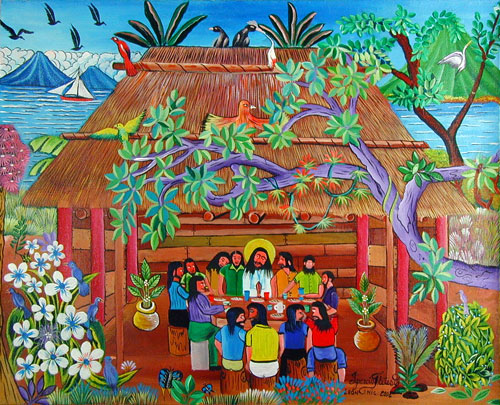
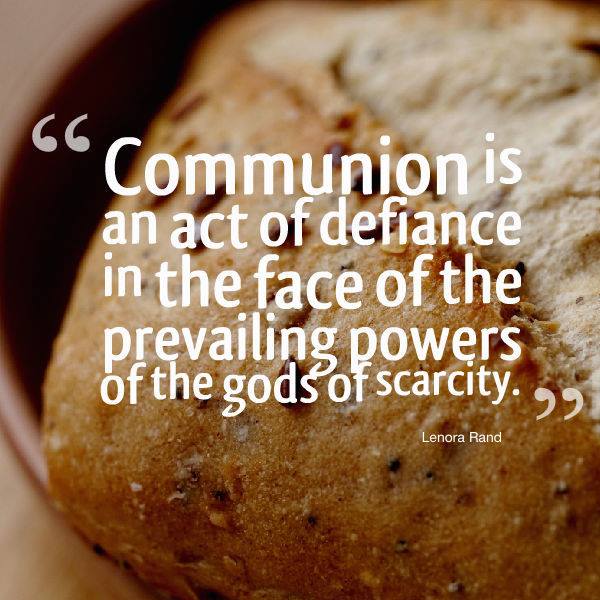
Call to the table. The dispute over sovereignty, over whose bread will satisfy, over whose power is more reliable, over whether love is stronger than fear, is adjudicated anew every time we come to the Table. Unfortunately, the bread tends to be stale. Ken Sehested

Excellent electoral history summary.How the Republican Party went from Lincoln to Trump,” Ezra Klein (7:20 video).

The state of our disunion. Kaepernick’s pride, or lack of it, brings to mind this ancient assessment. “Look at the proud! . . . They open their throats wide as Sheol; like Death they never have enough. They gather all the nations for themselves, and collect all peoples as their own” (Habakkuk 2:4, 5).

After the War of 1812, most of the American slaves who fought for the British settled in Canada. Some, however, relocated to the Caribbean island of Trinidad (one of the twin islands that now make up the nation of Trinidad and Tobago) and founded a distinctive religion tradition known as Spiritual (or Shouter) Baptists. Though explicitly Christian, the tradition adopted many devotional elements from indigenous African religious.

Left: Trinidad & Tobago Prime Minister Kamla Persad-Bissessar (center) is escorted by Archbishop Barbara Gray-Burke (left) in the Shouter Baptist Empowerment Hall for the 15th anniversary of Shouter Baptist Liberation Day celebrations, 30 March 2014, in Maloney. Photo by Abraham Diaz.

Best one-liner. “You don’t like what Kaepernick has to say? Then prove him wrong, BE the nation he can respect. It’s really just that simple.” —Navy veteran Jim Wright

Altar call.Mercy, Mercy, Mercy,” Cannonball Adderly Quintet.

Laughter as a mechanism of grace. Remembering Gene Wilder, PBS Digital Studios interview on why be became an actor. (4:28. Thanks Abigail.)

Benediction. The Gandhi Rap–Be the change you want to see,” MC Yogi.

Recessional.Palestine Symphony,” Murat Malay.

For the beauty of the earth. View a few British photographer Christopher Swann’s breathtaking photos of whales. Inspiremore (Thanks Mimi.)

Lectionary for Sunday next. “Have all the workers of iniquity no knowledge? Who eat up my people as they eat bread, and call not upon the Lord.” —Psalm 14:4

Just for fun. Time magazine has assembled videos of what it judges the “Top 10 Worst National Anthem Renditions.”

#  #  #

Featured this week on prayer&politiks

• “Let the lost rejoice,” a litany for worship inspired by Luke 15:1-10

• “Colin Kaepernick, national anthems, and flag-flown piety: Commentary on what is and is not sacred”

• “Bring Down the Wall in the Caribbean: A resolution in support of renewed diplomatic relations between the US and Cuba.”
 
Other features
• “Labor Day: A litany for worship: For work that fulfills”
• “Labor in the shadow of sabbath,” a Labor Day sermon

©Ken Sehested @ prayerandpolitiks.org. Language not otherwise indicated above is that of the editor. Don’t let the “copyright” notice keep you from circulating material you find here (and elsewhere in this site). Reprint permission is hereby granted in advance for noncommercial purposes.

Your comments are always welcomed. If you have news, views, notes or quotes to add to the list above, please do. If you like what you read, pass this along to your friends. You can reach me directly at kensehested@prayerandpolitiks.org.

News, views, notes, and quotes

Signs of the Times  •  25 August 2016  •  No. 85

Processional. Korean figure skater Yu-na Kim, 2010 Olympic champion, performing to the song “Arirang,” the unofficial national anthem of both North and South Korea.

Happy centennial, US National Park Service! Photo above of Acadia National Park, Mount Desert Island, Maine, by Scott Kublin.

Invocation.How Lovely Is Thy Dwelling Place,” Brahms Requiem, Exultate Festival Choir and Orchestra. (Thanks Roy.)

Call to worship. A variation of Psalm 139. “Where Can I Go Without You,” Nat King Cole.

History being made in Cuba. Pictured (in white, at left) are baptismal candidates at Somos Iglesia de la Comunidad Metropolitana en Cuba (Metropolitan Community Church in Matanzas, Cuba), 20 August 2016, during the service marking the church’s first anniversary. Included among those being baptized is a transgendered woman, thought to be the first trans person baptized by the Christian community in Cuba. Somos meets in the sanctuary of First Baptist Church in Matanzas. Part of the congregation’s mission statement includes this sentence: “We will continue to promote the open table of Jesus Christ for all, no matter who you are, what you are or how you are. We will continue walking along with the lepers, the eunuchs, the excluded and excluded from our time.”

Hymn of praise. “Oh night thou was my guide / Of night more loving than the rising sun / Oh night that joined the lover / To the beloved one / Transforming each of them into the other.” —Loreena McKennitt, “The Dark Night Of the Soul” (Thanks Deborah.)

Now we know. “Contrary to what The Donald says, President Obama and soon-to-be President Hillary Clinton did not found ISIS. It was me. I apologize everybody, I don't know what I was thinking. I remember the #4 train was especially overcrowded that morning, I hadn't had any coffee, and the next thing I knew I'd founded an international terrorist organization. My bad!! Just one of those days I guess. So again, please accept my apologies and feel free and pass along my regrets to all your friends.” —Facebook post from Andy, a friend in New York City

Right: Colombian government negotiator Humberto de la Calle (right) and his Farc counterpart Ivan Marquez (left) signed the agreement as Cuban Foreign Minister Bruno Rodriguez watched. Photo by Ramon Espinosa/Associated Press.

Extraordinary news you probably missed. “Hundreds of Colombians have celebrated an historic peace accord between the government and left-wing Farc rebels, signed after 52 years of conflict.” Cuban and Norwegian officials have brokered this agreement, the result of four years of hard negotiation. BBC News

Confession.God Forgive Us,” Armenian hymn.

Words of assurance. “When it hurts so bad / And you feel that you can't go on / Each day goes by too fast / And the nights are so very long / You'll find out true / What mother said to you / That tears of God will show you the way / The way to turn.” —Los Lobos, “Tears of God

¶ “This work is a masterpiece, far and away the most profound treatment of significant themes of life in Cuba I’ve read anywhere.” That’s what Stan Hastey, a veteran Cuba traveler and analyst, says about Stan Dotson’s new book (cover, at left), Cuba: A Day in the Life. Order from Parson’s Porch Book Publishing.

Wi-Fi temperance at summer camps.  “Campers say going cold turkey isn't easy. When 16-year-old Lily Hildreth first arrives, she says she would constantly ‘tap my pockets, and you're like, what am I missing?'" —Tovia Smith, “Summer Camps Struggle To Enforce Bans On Screen Time,” NPR

The pratfalls of texting while walking. ABC News (1:42)

Wi-Fi mahem.

        •64% of the 2.5 million traffic accidents each year involve use of a cell phone.

        •Each year 330,000 accidents are caused by texting while driving.

        •Texting while driving is six times more likely to cause accidents than drinking and driving.

        • The average speed in the US is about 55mph. Taking five seconds to read a text in this time means that the driver travels the length of a football field without looking at the road.

        • Every year approximately 11 teens die because they were texting while driving.

        • When polled, 77% of adults and 55% of teenage drivers say that they can easily manage texting while driving. ICEBIKE.ORG

There’s a Wikipedia page on this. FoMO (fear of missing out) is "a pervasive apprehension that others might be having rewarding experiences from which one is absent.” This social angst is characterized by "a desire to stay continually connected with what others are doing."

Old school social media.

        • “Using data from nearly three-quarters of the world’s countries, a new analysis from the Organization for Economic Cooperation and Development found that students who do not regularly eat with their parents are significantly more likely to be truant at school.”

        • “Children who do not eat dinner with their parents at least twice a week also were 40% more likely to be overweight compared to those who do.”

        • “Children who do eat dinner with their parents five or more days a week have less trouble with drugs and alcohol, eat healthier, show better academic performance, and report being closer with their parents than children who eat dinner with their parents less often.”

        • ”In her book Eating Together, Alice Julier argues that dining together can radically shift people’s perspectives: It reduces people’s perceptions of inequality, and diners tend to view those of different races, genders, and socioeconomic backgrounds as more equal than they would in other social scenarios.”

        • ”The average American family now spends nearly as much money on fast food as they do on groceries,” and that “meals eaten outside of the home are almost uniformly less healthy than homemade foods, generally having higher fat, salt, and caloric content.” —Cody C. Delistraty, “The Importance of Eating Together,” The Atlantic

¶ “Somewhere, maybe at this very moment, neurologists are trying to figure out what all this screen time is doing to the still-forming brains of people Katherine’s age [13], members of what’s known as Generation Z. Educators are trying to teach them that not all answers are Googleable. Counselors are prying them out of Internet addictions.” —Jessica Contrera, “13, right now: This is what it is like to grow up in the likes, lols and longing,” Washington Post

¶ “Carnival barkers, conspiracy theories, willful bias and nasty partisanship aren’t anything new, and they haven’t reached unprecedented heights today. But what’s remarkable and sort of heartbreaking is the way they’re fed by what should be strides in our ability to educate ourselves. The proliferation of cable television networks and growth of the Internet promised to expand our worlds, not shrink them. Instead they’ve enhanced the speed and thoroughness with which we retreat into enclaves of the like-minded.” —Frank Bruni, "How Facebook Warps Our Worlds,” New York Times (Thanks Jon)

A friend in Australia sent me a job opening notice he saw for a small business. Among the qualifications required is “Be able to last eight hours without your phone.” (Thanks Geoff.)

A quick web search pulled up a tidal wave of article examining the impact of cell phones. The following stories were on the first page of the search (which went on for another 204 million pages).

        •“Cell Phones are Changing Social Interaction,” Psychology Today

        •“Cell phones promote serious social, psychological issues,” Washington Times

        •“Cellphone use linked to selfish behavior,” ScienceDaily

        •“Is Your Cell Phone Making You a Jerk,” Time magazine

        •“Cell Phone and Anti-Social Behavior,” StudyMoose

        •“How Your Cell Phone Hurts Your Relationships,” Scientific American

I taught both my daughters to drive, using some fun exercises like finding an empty school parking lot on a Saturday: I rode a bicycle and required them to follow me in reverse using only mirrors (to get used to using rear and side mirrors and the counter-intuitive steering needed when in reverse).
        One exercise was more serious. We took a walking tour of our local car junk yard, just to inspect up close the horrendous damage that can be done in an accident.
        But everyone who gets behind the wheel, of whatever age, should view this 34-second video of a texting-while-driving accident.

Several years ago my congregation approved a recommendation banning all Wi-Fi devices from our Sunday gathering. Most immediately it was a response to one of our members who lives with an acute sensitivity to the electromagnetic radiation such devices emit (even when they’re “off”). More than that, the decision represents an awareness that social media has an inherent tendency to dominate our lives. Disconnecting for a brief time each week is a tangible discipline to remind ourselves of the need to “be still.” —read Ken Sehested’s “Old dogs, new tricks, and social media

Preach it. “Life smooths us, perfects us as does the river the stone, and there is no place our Beloved is not flowing, though the current’s force you may not like.” —St. Treresa of Ávila

Electoral commentary. “So while a Trump presidency holds the prospect of the United States driving off a cliff, a Clinton presidency promises to be the equivalent of banging one’s head against a brick wall without evident effect, wondering all the while why it hurts so much.” —Andrew Bacevich, “The Decay of American Politics,” TomDispatch

Yes, I’m voting, if for nothing else because the next president will nominate at least one, possibly three, Supreme Court justices. Whatever your conscience—vote or don’t vote. Elections are a tiny part of “seeking the welfare of the city.” Every year I spend a lot more time in grocery store lines and doctor’s office waiting rooms than in polling sites. Elections, whether local, state, or national, are but the terminus of a long pipeline in history’s shaping. Get in on the front end. None of us start a meaningful movement for social change; but we must be busy laying the line in preparation. —Ken Sehested

Call to the table. “The Holy Scriptures were not given to us that we should enclose them in books, but that we should engrave them upon our hearts.” —St. John Chrysostom

The state of our disunion. “What would it take to cause Hillary Clinton to distance herself from the newly launched bombing campaign in Libya? Or call for a congressional debate on it? Or suggest the obvious: that the war on terror isn’t working? Of course it won’t happen. But the fact that it sounds so absurd—almost as fanciful as the notion of movie characters stepping off the screen into real life—indicates how illusory, how unglued from reality, American democracy is at the presidential level. It’s a spectator sport—mud wrestling, say—doled out to us as entertainment by the media in sound bites and poll numbers.” —Robert C. Koehler, “Reaching Beyond the Candidates,” CommonDreams

For the beauty of the earth. 23 dramatic photos of a thunder storm passing over the Outer Banks of North Carolina on 14 July 2016.

Altar call. “The resurrection isn’t an argument. It’s the Christian word for defiance. . . . It is who we are—our word for how we go on in the face of overwhelming odds.” Giles Fraser, The Guardian

Benediction. “Slumber, my darling, till morn's blushing ray / Brings to the world the glad tidings of day / Fill the dark void with thy dreamy delight / Slumber, thy mother will guard thee tonight.” —“Slumber My Darling,” performed by Allison Krauss, Yo-Yo Ma, Edgar Meyer and Mark O’Connor

Recessional, in intercession for friends in South Louisiana. —“Weary Blues,” New Orleans Stompers

Lectionary for Sunday next. “Creator God, we give thanks this day for work: for work that sustains; for work that fulfills; for work which, however tiring, also satisfies and resonates with Your labor in creation.” —continue reading Ken Sehested’s “Labor Day: A litany for worship: For work that fulfills

Just for fun. “‘We’re here to call ourselves the Church of JC Capitalist—a video (2:28) spoof by comedian John Cleese

#  #  #

Featured this week on prayer&politiks

• “Old dogs, new tricks, and social media: Is the "fear of missing out" actually causing us to miss out?
• “Labor Day: A litany for worship: For work that fulfills
• “Labor in the shadow of sabbath,” a Labor Day sermon

©Ken Sehested @ prayerandpolitiks.org. Language not otherwise indicated above is that of the editor. Don’t let the “copyright” notice keep you from circulating material you find here (and elsewhere in this site). Reprint permission is hereby granted in advance for noncommercial purposes.

Your comments are always welcomed. If you have news, views, notes or quotes to add to the list above, please do. If you like what you read, pass this along to your friends. You can reach me directly at kensehested@prayerandpolitiks.org.

Labor Day

A litany for worship: For work that fulfills

by Ken Sehested

Creator God, we give thanks this day for work: for work that sustains; for work that fulfills; for work which, however tiring, also satisfies and resonates with Your labor in creation.

As part of our thanks we also intercede for those who have no work, who have too much or too little work; who work at jobs that demean or destroy, work which profits the few at the expense of the many.

Blessed One, extend your redemptive purpose in the many and varied places of our work. In factory or field, in sheltered office or under open sky, using technical knowledge or physical strength, working with machines or with people or with the earth itself.

Together we promise:

To bring the full weight of our intelligence and strength to our work.

Together we promise:

To make our place of work a place of safety and respect for all with whom we labor.

Together we refuse:

To engage in work that harms another, that promotes injustice or violence, that damages the earth or otherwise betrays the common good; or to resign ourselves to economic arrangements which widen the gap between rich and poor.

Together we refuse:

To allow our work to infringe on time with our families and friends, with our community of faith, with the rhythm of Sabbath rest.

Together we affirm:

The rights of all to work that both fulfills and sustains: to just wages and to contentment.

Together we affirm:

That the redeeming and transforming power of the Gospel, with all its demands for justice and its promises of mercy, is as relevant to the workplace as to the sanctuaries of faith and family.

We make these promises, we speak these refusals and we offer these affirmations as offerings to You, O God—  who labors with purpose and lingers in laughter—in response to your ever-present grace, as symbols of our ongoing repentance and transformation, and in hope that one day all the world shall eat and be satisfied. AMEN.

©ken sehested @ prayerandpolitiks.org

Old dogs, new tricks, and social media

Is the "fear of missing out" actually causing us to miss out?

by Ken Sehested

“I don’t know how to act my age. I’ve never been this age before.”
— cartoon character Dennis the Menace, responding to a scolding from his Mom

        I am more or less at the age of old-fartness. My Medicare coverage is in place—started Social Security early to fund prayer&politiks. Not so long ago I organized a “Pilates for Old Farts” exercise group.

        As if I needed more evidence of the effect of aging, this spring—for the first time in at least 20 years—my reliable Briggs & Stratton lawnmower engine failed to fire up with the first pull of the season. (It took 6, maybe because the rubber engine choke button was stiff from winter’s hibernation.)

        A while ago, in a birthday greeting to a friend turning 50, I noted that’s about the age when things start hurting where you didn’t know you have things. Sixty-five is that and more.

        I can now take my place in the ranks of the cantankerous, pshawing technological advances and cultural cutting edges. So, yes, social media is largely unfriendly to my slackened eyes. My three-year-old grandson knows how to take a picture with a smart phone, something I’ve done only at the request of (and coaching by) others.

        It wasn’t so long past that I was still swinging a three-pound sledge on a industrial grade chisel shaping natural stone for retaining walls, chimneys and porch columns. That career ceased (not entirely by choice) at the same time I took up my online publication. A friend commented that I was exchanging one of history’s oldest technologies for one of its newest.

        I’ve never been known as a technological wiz.

§  §  §

“Thus saith the LORD, Stand ye in the ways, and see, and ask for the old paths,
where is the good way, and walk therein, and ye shall find rest for your souls.”
—Jeremiah 6:16, KJV

§  §  §

        I’m pretty sure I was among the last manual typewriter users. Years of fingertip pushups as a schoolboy athlete meant even the stiffest keys were no problem. And I’m now among the 7% of the US population (25% globally) without a cell phone—or, I was, until my sister’s illness, and now my mother’s health, prompted me to get one of those $100-a-year plans, definitely unsmart, for quick access in case of emergency when traveling. My disregard is not so much the cost as it is the feeding and care of the beast. There are a few times I wished I had the thing, but only a few. I’m more of a wash-and-wear guy.

        It’s still a mystery, with one key stroke on my journal layout page—sending an electronic signal somewhere in the known world—I can watch a corrected spelling appear almost instantaneously before my eyes.

        I still have a vivid memory, as a high schooler, of my inaugural plane ride, and seeing for the first time the tops of clouds.

        Change happens. Sometimes majestically so.

§  §  §

        On my last trip to Cuba I stayed for a few days at a modest hotel on the edge of Ciego de Avila. At dusk one evening I stood on the second-floor balcony watching a man in the distance “mowing” grass with a machete. The efficient rhythm of his movements was fascinating. Every few minutes he stopped and stuffed the cut grass in gunny sacks—likely feed for his horses, my native traveling companion informed. Then at one pause, using his t-shirt to wipe the perspiration from his face, he sat down and pulled something from his pocket. It took me a few seconds to interpret what I was seeing. It was a cell phone.

        Cell phones in Cuba? Friends there tell me they are now coming to terms with children more interested in gathering around an electronic screen of some sort (few as they still are) than playing outside.

        Change happens. Sometimes frightfully so.

§  §  §

        It was the ease of communicating with friends in Cuba, and elsewhere in the distance, that caused me years ago to throw off my laggardly ways regarding email. Back then (and not so different now), a letter took a month or more to reach Cuba, and even then had less than half a chance of actually reaching its addressee.

        I’m not a Luddite when it comes to technology. To earn a living after seminary I learned to use a typesetter, a behemoth piece of electronic equipment, and started a business servicing print needs. That skill provided an enormously helpful subsidy of my organizing work, along with learning layout and design. I’m of the generation who made the switch from hand-laid paste-up—Oh! the days of waxers, Exacto knives, pica sticks and a light table—to computerized design. Though I nearly bit a hole in my cheek learning it, I surely don’t miss the labor-intensive old ways.

§  §  §

        I was initially surprised at the news, but it makes sense that summer camp leaders are in the vanguard of helping young people disconnect from social media for that short period. Researchers refer to this as "the fear of missing out."

        Several years ago my congregation approved a recommendation banning all Wi-Fi devices from our Sunday gathering. Most immediately it was a response to one of our members who lives with an acute sensitivity to the electromagnetic radiation such devices emit (even when they’re “off”). More than that, the decision represents an awareness that social media has an inherent tendency to dominate our lives. Disconnecting for a brief time each week is a tangible discipline to remind ourselves of the need to “be still.”

§  §  §

“I am about to do a new thing; now it springs forth, do you not perceive it?
I will make a way in the wilderness and rivers in the desert.”
—Isaiah 43:19

§  §  §

        When I fled the Southland for New York City midway through college, determined to acquire a cosmopolitan demeanor, I remember being stunned walking by the famous Bitter End nightclub in Greenwich Village. Its marquee heralded a concert by country music legend Hank Williams Jr. At about the same time, pointy-toed cowboy boots were becoming the Next Big Thing in hipster fashion.

        I thought these were among the things I was leaving behind.

§ § §

        The difficult questions we face regarding technological advance in general, and social media in particular, are legion—few are easily resolvable. But we need to ask, Is the fear of missing out actually causing us to miss out?

        The 19th century British Luddites were not so much against machines as they were against displacement of human welfare by insatiable profit motive. The immense social anger on exhibit in our current electoral season is traceable, in significant measure, to the same. No less an authority than Forbes magazine reports that among the 55 wealthiest countries, the US has the greatest level of income inequality, eroding all but the appearance of democracy. Former President Jimmy Carter, among the softest-spoken humanitarians of our age, recently claimed that the US is an oligarchy with unlimited political bribery.” A recent Oxfam report notes that the wealth of the world’s 62 richest individuals is equal to that of half the global population.

§  §  §

        We have known for a while that social media’s “virtual” reality threatens actual reality: eating away at the social ligaments of human bonding; offering more information and less perspective; providing anonymous platforms for ugly, desecrating speech; fast-tracking rumor, gossip and fear-mongering.

        Nowadays you even have the option of online communion, replacing that boundary-breeching shared meal—and its design of a new heaven and new earth—with private cumulation and anomie. Disciples become consumers; hoarding is established as the orientation of hope.

        The urging of return to “old time religion” in the Jeremiah passage quoted above is not to anti-modern old-fartedness. It has nothing to do with old dogs, anymore than Isaiah’s reported vow is about new tricks. God’s social media is an exhortation made in the context of human extortion: “From the least to the greatest of them, everyone is greedy for unjust gain . . . they did not know how to blush” (Jeremiah 6:13, 15—the lostness for which the "old way" is a remedy). This is the only signal to which we must stay attuned—if we are to be atoned.

        How we get there—to the way in the wilderness, to water’s sustenance in the desert—is left up to communal discernment, to paying still-time attention, to spotting the new things the Spirit is doing and mortgaging security to get there.

#  #  #

For more information on the impact of social media, see the 25 August 2016 edition of “Signs of the Times.” prayerandpolitiks.org

©ken sehested @ prayerandpolitiks.org

News, views, notes, and quotes

Signs of the Times  •  8.19.16  •  No. 84

Special issue
Hope quotes

Introduction
       I wrote only one poem from my work as a stonemason, after several days of cutting capstone with hammer and chisel to adorn pillared porch columns. That experience remains a vivid image for what it means to live in hope.

        “The implausible has been promised. But not apart / from covenant terms of disciplined patience, / of sweaty, achy perseverance in pounding / away—strike after metered strike, with pauses to / relieve parched and breathless throat—at / apparently-impenetrable prospects.” (“Blistering Hope”)

        “Despair is the absolute extreme of self-love,” wrote Thomas Merton. (I would have preferred it if he had used “self-obsession”—which I’m pretty sure is what he meant—instead of "self-love.") Numerous others, including the editors of The Midland [Texas] Daily News, have written about despair as a form of luxury:

        “For people in need of clean drinking water, arable land to till, or homes free of bombs and bullets, every day presents unsurmountable challenges. For these, despair is a luxury they cannot afford, because every waking moment must be spent surviving and caring for loved ones.”

        This special issue of “Signs of the Times” is devoted to the virtue of persevering hope (which has nothing to do with optimism) at the heart of the liturgical season of Ordinary Time.

        It seems especially timely, given the butt-kicking news from every direction, near and far.

        There’s nothing ordinary about it, of course. To be reared in hope requires practice, the discipline of habits, and sustenance around a Eucharistic, joy-divining table within a community of conviction—all of which runs against the grain of a culture committed to solitaire and market share.

       Hope floats, but you have to trust the water's buoyancy.

§  §  §

§ “Faith, hope, and love abide, wrote the Apostle, adding that ‘the greatest of these is love’ (1 Corinthians 13:13). Maybe so. But hope is the hardest.” —Nancy Hastings Sehested

§ “Return to your stronghold, O prisoners of hope; today I declare that I will restore to you double.” —Zechariah 9:12

§ “Hope is the radical refusal to calculate the limits of the possible.” —William Sloan Coffin

§ “Repentance is the response to grace that overcomes the past and opens onto a new future.  Repentance distinguishes Christian life as one of struggle and conversion and pervades it, not with remorse, but with hope. The message of Jesus is not ‘Repent’ but ‘Repent for the Kingdom of God is near.’” —John Shea

§ At the center of our pain, we glimpse a fairer world and hear a call. When we are able to keep company with our own fears and sorrows, we are shown the way to go, our parched lives are watered, and the earth becomes a greener place. Hope begins to grow, and we are summoned to the work that will give us a feeling of wellness and make possible that which we envision. —Elizabeth O’Connor

§ “For surely I know the plans I have for you, says the LORD, plans for your welfare and not for harm, to give you a future with hope.” —Jeremiah 29:11

§ “Nothing that is worth doing can be achieved in our lifetime, therefore we must be saved by hope.” —Reinhold Niebuhr

§ “For the needy shall not always be forgotten, nor the hope of the poor perish forever. —Psalms 9:18

§ “The more unpropitious the situation in which we demonstrate hope, the deeper the hope is. Hope is not the conviction that something will turn out well, but the certainty that something makes sense, regardless of how it turns out.” —Vaclav Havel

§ “The beginning of hope is to be conscious of despair in the very air we breathe, and to look around for something better.” —Walker Percy

§ “May the God of hope fill you with all joy and peace in believing, so that you may abound in hope by the power of the Holy Spirit.” —Romans 15:13

§ “Risk in faith, decide in hope, and suffer the consequences in love.” —attributed to an unnamed participant in the 1965 Selma to Montgomery march

§ “Sometime in your life, hope that you might see one starved man (or woman), the look on his (or her) face when the bread finally arrives. Hope that you might have baked it or bought it or even needed it for yourself. For that look on his (or her) face, for your hands meeting his (or hers) across a piece of bread, you might be willing to lose a lot, or suffer a lot, or die a little, even.” —Daniel Berrigan

§ “So we can say with confidence, 'The Lord is my helper; I will not be afraid. What can anyone do to me?'” —Hebrews 13:6

§ “I have a dream that one day every valley shall be exalted, every hill and mountain shall be made low, the rough places shall be made plain, and the crooked places shall be made straight and the glory of the Lord will be revealed and all flesh shall see it together. This is our hope. With this faith we will be able to hew out of the mountain of despair a stone of hope. With this faith we will be able to transform the jangling discords of our nation into a beautiful symphony of brotherhood.” —Martin Luther King Jr., “I Have a Dream”

§ “The best definition of the Gospel message I ever heard is that the Gospel is the permission and command to enter difficulty with hope.” —Donna Schaper

§ “The war horse is a vain hope for victory, and by its great might it cannot save.” —Psalms 33:17

§ “I am open and I am willing / To be hopeless would seem so strange / It dishonors those who go before us / So lift me up to the light of change.” —Holly Near, lyrics in “I Am Willing”

§ “There is no true theology of hope which is not first of all a theology of the cross.” —Jurgen Moltmann

§ “A vision without a task is but a dream, a task without a vision is drudgery, a vision with a task is the hope of the world.” —Church inscription, Sussex, England (1730)

§ “Sing a song full of the faith that the dark past has taught us, / Sing a song full of the hope that the present has brought us.” —James Weldon Johnson, lyrics in “Lift Every Voice and Sing”

§ “Since, then, we have such a hope, we act with great boldness. . . .” —2 Corinthians 3:12

§ “Faith becomes the one wholly inflexible ground for resistance to violence, precisely because it teaches us how to face death—not in excited expectation of reward, but in the sober letting-go of our fantasies in the sure hope that a faithful God holds us firmly in life and death alike.” —Anglican Archbishop Rowan Williams

§ “Occasionally, weep deep over the life you hoped would be. Grieve the losses. Then wash your face. Trust God. And embrace the life you have.” —John Piper

§ “When wounds heal on the world’s face / and in the pits dug by shellfire we have planted trees / and in hearts scorched by conflagration hope sprouts its first buds / and the dead can turn over on their side and sleep without complaining / knowing their blood was not spilled in vain, / this is peace.” —Yannis Ritsos, “Peace”

§ “Always be ready to make your defense to anyone who demands from you an accounting for the hope that is in you.” —1 Peter 3:15

§ “Hope is the ordinary things you stubbornly do every day!” —Mitri Raheb

§ “Hope fills us with the strength to stay present, to abide in the flow of the Mercy no matter what outer storms assail us.” —Cynthia Bourgeault

§ “Hope has two beautiful daughters. Their names are anger and courage: anger at the way things are and courage to see that they do not remain the way they are.” —Augustine

Left: Art by by Jennifer Hewitson

§ “Faith is the assurance of things hoped for, the conviction of things not seen.” —Hebrews 11:1

§ “Let us plant dates even though those who plant them will never eat them. We must live by the love of what we will never see. This is the secret discipline. Such disciplined love is what has given prophets, revolutionaries, and saints the courage to die for the future they envisaged. They make their own bodies the seed of their highest hope.” —Rubem Alves

§ “No one has a right to sit down and feel hopeless. There is too much work to do.” —Dorothy Day

§ “Only the hopeless are silent / in the face of calamity— / silenced because they no / longer aspire even to be heard, / much less heeded. The labor / of lament, on the other hand, / is premised on the expectation / that grief’s rule will be bound / by the Advent of Another.  / The liturgy of grief transforms / the pain of lament into passion / for an / outcome forged in justice / and tempered in mercy.  —Ken Sehested, “The labor of lament

§ "We live by hope, but a reed never becomes an Iroke tree by dreaming." —Nigerian proverb

§ “I consider that the sufferings of this present time are not worth comparing with the glory about to be revealed to us. For the creation waits with eager longing for the revealing of the children of God. . . . Now hope that is seen is not hope. For who hopes for what is seen? But if we hope for what we do not see, we wait for it with patience. Likewise the Spirit helps us in our weakness; for we do not know how to pray as we ought, but that very Spirit intercedes with sighs too deep for words.” —Romans 8:18-28

§ “Who dares nothing, need hope nothing.” —Friedrich Schiller

§ “The Quest stands upon the edge of a knife. Stay but a little, and it will fail, to the ruin of all. Yet hope remains while the Company is true.” —Galadriel, Lady of Lorien, in J.R.R. Tolkien’s The Lord of the Rings: The Fellowship of the Rings

§ “Our ultimate hopes are expressed by whom and what and how we now love.” —Paul S. Minear

§ “The liturgical movement must become a revolutionary movement, seeking to overthrow the forces that continue to destroy the promise, the hope, the vision.” —Rabbi Abraham Joshua Heschel

§ “For people in need of clean drinking water, arable land to till, or homes free of bombs and bullets, every day presents unsurmountable challenges. For these people, despair is a luxury they cannot afford, because every waking moment must be spent surviving and caring for loved ones.” —“Truth and Meaning: The Luxury of Despair,” editorial in The Midland Daily News, 26 December 2015

§ "Hope is a tease designed to keep us from accepting reality.” —Countess Violet Crawly (played by Maggie Smith) on PBS’ “Downton Abbey” series

§ “Hope is hearing the melody of the future. Faith is to dance to it.” —Rubem A. Alves

§ “The very least you can do in your life is to figure out what you hope for. And the most you can do is live inside that hope. Not admire it from a distance but live right in it, under its roof.” —Barbara Kingsolver

§ “The life of the living is a suffering with the world, yet not as a passive victim but suffering in resistance and in love, experiencing the darkness of crucifixion without surrendering the hope and strength and revolution of resurrection. —Albert Camus

§ “As for me, the grounds of my hope have always been that history is wilder than our imagination of it and that the unexpected shows up far more regularly than we ever dream.” —Rebecca Solnit

§ "To be hopeful in bad times is not just foolishly romantic. It is based on the fact that human history is a history not only of cruelty, but also of compassion, sacrifice, courage, kindness. What we choose to emphasize in this complex history will determine our lives.” —Howard Zinn

§ “Why are you cast down, O my soul, and why are you disquieted within me? Hope in God; for I shall again praise the Lord, my help and my God.” —Psalms 42:11

§ “Hope, as an anchor so steadfast, / Rends the dark veil for the soul, / Whither the Master has entered, / Robbing the grave of its goal.” —Septimus Winner, lyrics in “Whispering Hope”

§ “Hope begins in the dark, the stubborn hope that if you just show up and try to do the right thing, the dawn will come. You wait and watch and work: you don’t give up.” —Anne Lamott

§ “You may say I'm a dreamer, but I'm not the only one. I hope someday you'll join us. And the world will live as one.”  ―John Lennon, lyrics in "Imagine"

§ “You cannot swim for new horizons until you have courage to lose sight of the shore.” ―William Faulkner

§ “When our moral lives are shaped by fear, and safety is worshiped as the highest good, we are tempted to make health and security the primary justification for right action. We thus lead timid lives, fearing the risks of bold gestures. Instead of being courageous, we are content to be safe. Instead of being hopeful, we make virtues of cynicism and irony which in turn keep us a safe distance from risky commitments.” —Scott Bader-Saye

§ “They say a person needs just three things to be truly happy in this world: someone to love, something to do, and something to hope for.”  ―Tom Bodett

§ “Hope is the dream of a soul awake.” —French proverb

§ “We boast in our hope of sharing the glory of God. And not only that, but we also boast in our sufferings, knowing that suffering produces endurance, and endurance produces character, and character produces hope, and hope does not disappoint us, because God’s love has been poured into our hearts through the Holy Spirit that has been given to us.” —Romans 5:2

§ “History says, Don't hope / On this side of the grave. / But then, once in a lifetime / The longed-for tidal wave / Of justice can rise up, / And hope and history rhyme.” —Seamus Heaney

§ “Hope is believing in spite of the evidence and watching the evidence change.” —Jim Wallis

§ “To be hopeful in bad times is not just foolishly romantic. It is based on the fact that human history is a history not only of cruelty, but also of compassion, sacrifice, courage, kindness. What we choose to emphasize in this complex history will determine our lives. . . . [T]o live now as we think human beings should live, in defiance of all that is bad around us, is itself a marvelous victory.” —Howard Zinn

§ “For there is hope for a tree, if it is cut down, that it will sprout again, and that its shoots will not cease.” —Job 14:7

§ “To hope is a duty, not a luxury. To hope is not a dream, but to turn dream into reality. Happy are those who dream dreams, and are ready to pay the price to make them come true.” —Cardinal Leo Suenens

 § “It’s not the despair I mind, it’s the hope I can’t stand.” —actor John Cleese in the movie “Clockwise”

§ “And when you get the choice to sit it out or dance, I hope you dance.” —Lee Ann Womack, lyrics in “I Hope You Dance”

§ “Hope is the worst of evils, for it prolongs the torments of man.” —Friedrich Nietzsche

Left: “Hope for the Future,” eddiecalz

§ “What then are we to say about these things? If God is for us, who is against us? Who will separate us from the love of Christ? Will hardship, or distress, or persecution, or famine, or nakedness, or peril, or sword? . . . For I am convinced that neither death, nor life, nor angels, nor rulers, nor things present, nor things to come, nor powers, nor height, nor depth, nor anything else in all creation, will be able to separate us from the love of God in Christ Jesus our Lord.” —Romans 8:31, 35-36

§ To have hope “doesn’t mean closing one’s eyes to the horrors of the world—quite the contrary, in fact: only those who have not lost faith and hope can see the horrors of the world with genuine clarity.” —Vaclav Havel

§ “Faith becomes the one wholly inflexible ground for resistance to violence, precisely because it teaches us how to face death—not in excited expectation of reward, but in the sober letting-go of our fantasies in the sure hope that a faithful God holds us firmly in life and death alike. This is the hope that allows us to recognise power for what it is and isn’t: As what is given us for the setting-free of each other, not as the satisfying of our passion for control.” —Archbishop of Canterbury Rowan Williams

§ “Though the fig tree does not blossom, and no fruit is on the vines; though the produce of the olive fails and the fields yield no food; though the flock is cut off from the fold and there is no herd in the stalls, yet I will rejoice in the LORD; I will exult in the God of my salvation. “ —Habakkuk 3:17-18

#  #  #

©Ken Sehested @ prayerandpolitiks.org. Language not otherwise indicated above is that of the editor. Don’t let the “copyright” notice keep you from circulating material you find here (and elsewhere in this site). Reprint permission is hereby granted in advance for noncommercial purposes.

Your comments are always welcomed. If you have news, views, notes or quotes to add to the list above, please do. If you like what you read, pass this along to your friends. You can reach me directly at kensehested@prayerandpolitiks.org.

Grayed days and clouded sighs

Note to a friend

by Ken Sehested

A note from a dear friend—hospital-bound, IV-fed, on New Year’s Eve and in the isolation ward, no less—
accompanied by a gray landscape photo from her window, inspired an impromptu poem
which captures my emotions in the haggard season in which we live.

The colorless days spur us to stir memory’s store

of rainbowed visions from days past, when the

chords of Delight came freshly to our ears,

cheers chanted, hopes planted, grace granted

in astonished harmony announcing enmity’s

rupture and every heart’s destined, disarmed

gladness. Beneath the soil of grayed days and

clouded sighs lies the Promised Seed whose

reach through trampled ground and bloodied

debris awaits the thaw of clawed hands and

brittle feet. Blessed Assurance, however

embattled, shall not forever be constrained.

Oh, restore in us a foretaste of Glory Divine!

Ken Sehested

©ken sehested @ prayerandpolitiks.org

News, views, notes, and quotes

Signs of the Times  •  11 August 2016  •  No. 83

Processional.Just a Closer Walk With Thee,” by legendary clarinetist Pete Fountain, who died Sunday at age 86.

Good news! “Monarch Butterfly Population More Than Triples Over Last Year.” (Pictured above: Monarch butterfly wintering in Michoacan, Mexico.) —Terry Turner, GoodNewsNetwork

Invocation.Alleluia,” Countertop Ensemble.

Call to worship. “In my vision, Heaven’s Voice made the mountains shake and the meadows rumble. And I said, ‘I am not worthy to see such things! My lips cannot speak such wonder. My hands cannot hold it. I am only a little girl.’ But the One who breathes every breath said to me: Do not say ‘I am only a little girl.’” —continue reading Ken Sehested’s “Send me,” a litany for worship inspired by Jeremiah 1:7-9 and Isaiah 6:1-8

Just amazing. A group of fifth-graders at Bell Gardens Elementary, assisted by their teacher, Leslie Hiatt, convinced the California State Assembly to pass a bill requiring the teaching of the Mexican Repatriation from the 1930s, when more than 1 million US citizens and lawful residents of Mexican descent were deported. Lani Cupchoy, Yes! Magazine

This week brings anniversaries of two priests murdered in the midst of their liturgies.

        • Salvadoran Archbishop Óscar Romero was born on 15 August 1917 in El Salvador. He was assassinated on 24 March 1980 by members of an extrajudicial “death squad” with ties to the US-backed government of El Salvador. An outspoken critic of the military crackdown in his country, the day before his murder he pleaded with soldiers, "I beseech you, I beg you, I order you, in the name of God, stop the repression!"

        • Brother Roger, a Protestant who founded the ecumenical order of monks at Taizé, France, was killed on 16 August 2005 by a person later deemed to be mentally ill. Born 12 May 1915 in Switzerland, he began his ministry sheltering refugees fleeing Nazi control. Over the years the community has become a popular pilgrimage site, especially for young adults. (See Ken Sehested’s “In Memory of Brother Roger.”)

        • Both of these recall the tragic assassination barely two weeks ago of Fr. Jacques Hamel, parish priest in Saint Etienne-du-Rouvray, France, also while saying mass, by two young men claiming affiliation with the Islamic State.

        • Murder comes in many forms—some face-to-face, some from a distance; some personal, some ideological; some by those simply “following orders.” All are forms of derangement. All are forms of “possession.” All are, in fact, variations of atheism, the conviction that God is unable to make history turn out right and in need of surrogates.

Hymn of praise.Go Rest High Upon That Mountain,” Vince Gill, Alison Krauss & Ricky Skaggs.

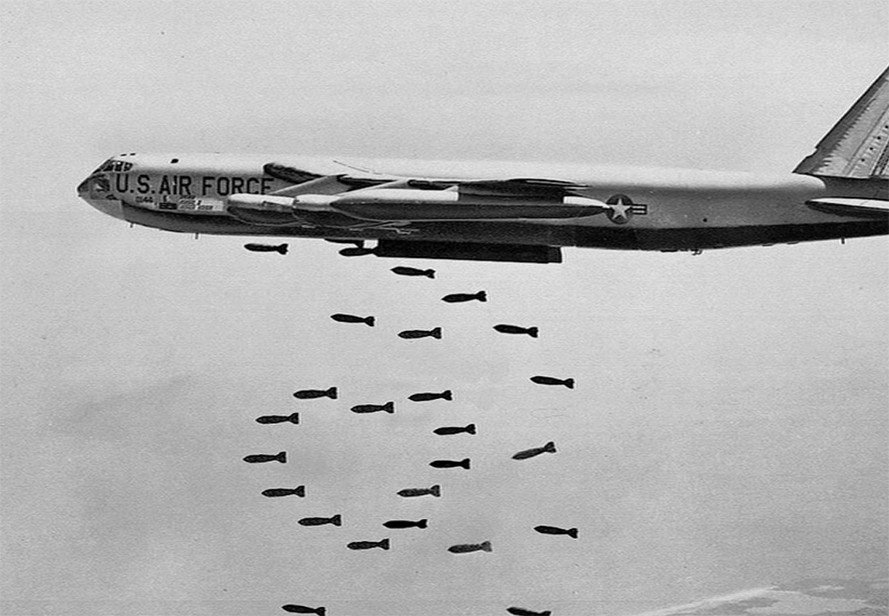
Remember, the US “Shock and Awe” bombing campaign, initiating the 2003 war in Iraq? The phrase itself comes from a 1996 publication by Harlan K. Ullman and James P. Wade, “Shock and Awe: Achieving Rapid Dominance.”
        “The intent is to impose a regime of Shock and Awe through delivery of instant, nearly incomprehensible levels of massive destruction directed at influencing society writ large, meaning its leadership and public, rather than targeting directly against military or strategic objectives.”
        The FBI’s definition of terrorism: “Appear to be intended (i) to intimidate or coerce a civilian population; (ii) to influence the policy of a government by intimidation or coercion; or (iii) to affect the conduct of a government by mass destruction. . . .”

Hymn of intercession and the centennial of the Battle of the Somme. "Pie Jesu" (“Merciful Jesus”) by Sarah Brightman, Paul Miles-Kingston. The music accompanies actual film footage (3:34) from World War I’s “Battle of The Somme,” when French and British allies took the offensive against German troops in France, 1 July-18 November 1916. The British suffered 57,000 casualties on the first day of the offensive. All total, more than 1 million men were wounded or killed, making it one of the bloodiest battles in history.

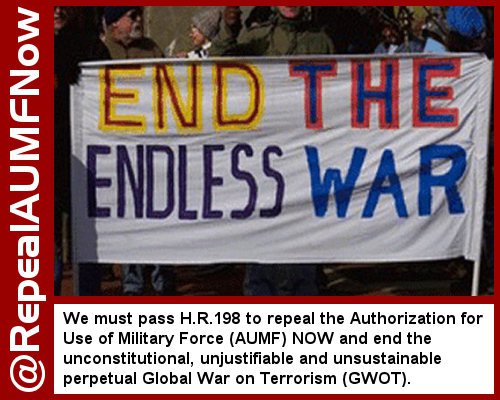
¶ “The United States escalated its war against the Islamic State in Libya on Monday as part of a new military campaign against the extremist Sunni terrorist group’s stronghold in North Africa. . . . By linking the Libya action to [President Bush’s September 2001 authorization for military force against terrorism], the administration will not have to officially notify Congress. That means that the campaign in Libya can continue indefinitely.” Helene Cooper, New York Times

Mehdi Hasan gives 'War on Terror' a reality check. (1:49 video.)

Peter van Buren, active in Iraq reconstruction following the invasion of Iraq, writes about those squandered efforts in We Meant Well: How I Helped Lose the Battle for the Hearts and Minds of the Iraqi People.

        •“There were almost too many failed projects to document, though SIGIR (Special Inspector General for Iraq Reconstruction) tried. What SIGIR called a ‘legacy of waste’ in an August 2010 report included a $40 million prison that was never opened, a $104 million failed sewer system in Fallujah, a $171 million hospital in southern Iraq that [First Lady] Laura Bush ‘opened’ in 2004 but that still has never seen a patient, and more, totaling $5 billion.”

        • Altogether, the US spent $63 billion on reconstruction in Iraq which “was the largest nation-building program in history, dwarfing in cost, size, and complexity even those undertaken after World War II to rebuild Germany and Japan.”

        • “As one Iraqi said, ‘It is like I am standing naked in a room with a big hat on my head. Everyone comes in and helps put flowers and ribbons on my hat, but no one seems to notice that I am naked.’”

Confession. “Somewhere between Cain and Abel, that's where we live / It's only human to take more than you give / To reach for a fix to fix to fill you up / Take away the pain, oh, but that's not love.” —Mary Gauthier, “Walking Each Other Home

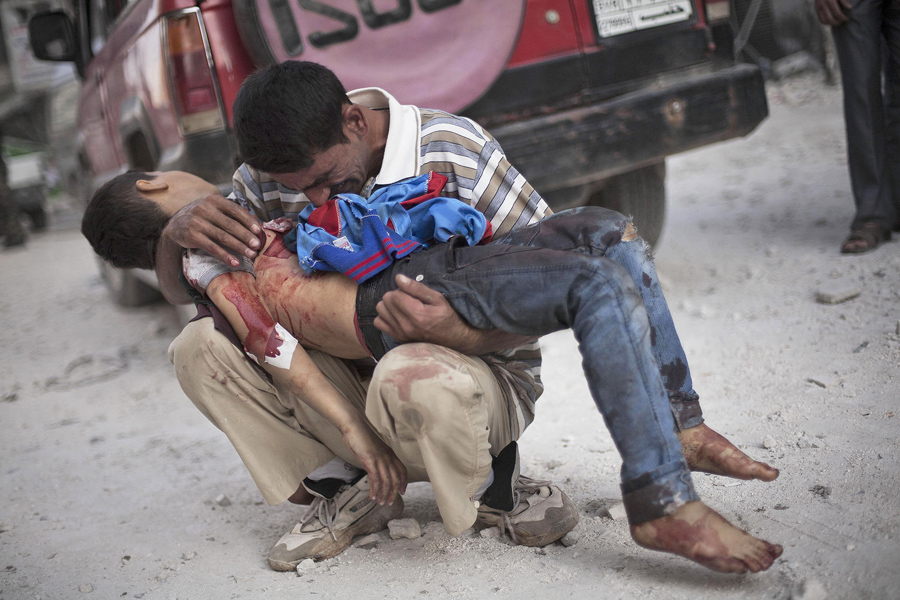
Essential viewing. Watch this video (1:18) by David Wolfe showing “before and after” scenes from the warn torn city of Aleppo, Syria. (Thanks Kent.) h

The state of our disunion. This week our local paper featured a story about a donation campaign headed by a local charity (one that does great work), and supported by a major grocery store, to collect needed supplies (pencils, markers, notebook paper, etc.) for school children prior to the start of the fall term.
        I will be among those donating. But I have to confess it makes me angry that public schools must depend on charitable subsidy when money is never in short supply for warplanes that cost between $9,000-$20,000 per hour to operate.
        Can you imagine a military pilot set up at a card table at your local mall soliciting gas money

¶ “When Soldiers Come Home, Who Tends to Their Moral Injuries.Micael Bogar, Yes! Magazine

Best analysis of presidential race I have read to date. “Note that Clinton’s acceptance speech in Philadelphia included not a single mention of Afghanistan. By Election Day, the war there will have passed its 15th anniversary. One might think that a prospective commander-in-chief would have something to say about the longest conflict in American history, one that continues with no end in sight.” —Andrew Bacevich, “The Decay of American Politics,” TomDispatch

¶ This week marked the second anniversary of the killing of Michael Brown, an unarmed 18-year-old African American, by police in Ferguson, Missouri. Two weeks ago a mural of Brown was painted on the metal gate of a vacant storefront by artists in Trenton, New Jersey. It was painted over when some in the Trenton police force and the Trenton Downtown Association were unhappy with the mural, saying it “sent the wrong message about community and police relations.” David Foster, The Trentonian

Words of assurance. “A kind and steady heart can make a grey sky blue, / And a task that seems impossible, is quite possible for you. / A kind and steady heart, is sure to see you through. / It may not seem like very much right now, / It'll do, it'll do.” —Peter Gabriel, “That’ll Do” (Thanks Randy.)

Good long read. “ISIS Is a Symptom, Not the Cause, of the Middle East’s Disintegration,” by Patrick Cockburn, The Nation.

In a 2007 poll, Americans estimated the number of killed Iraqis at less than 10,000. However a 2015 study by Physicians for Social Responsibility estimates that at least 2 million people have been killed in the Iraq (1 million), Afghanistan (220,000) and Pakistan 80,000) since the 2003 US invasion of Iraq. In addition, they estimate another 1.3 million violent deaths in newer conflict zones, including Syria and Yemen. —see Jon Queally, CommonDreams

Khizr Khan, the Muslim-American, who burst into the political spotlight after dramatically calling out Donald Trump at the Democratic National Convention, continues to make news, though this time not a way either party prefers.
        In an MSNBC interview, Khan, who lost a son in Iraq in 2004, was asked by Chris Matthews what he thought about the multiple US military engagements in Muslim-majority countries, with renewed US bombing in Libya in the news. Khan replied that these are leaving the US in a “quagmire,” “more vulnerable,” and are creating “chaos for ourselves.”
        Not surprisingly, MSNBC didn’t include this part of the interview in the clip posted on the company’s website.
        That’s not unlike the celebrated October 2013 visit with President Obama by Nobel laureate Malala Yousafzai. Her telling the President that “drone attacks are fueling terrorism” got little notice. Listen to Ronan Farrow’s interview with Malala about her meeting with Obama. (3:33)

According to the transparency group Airwars, July 2016 had the highest number of civilian deaths [in Syria] caused by US-led coalition since the bombing began two years ago. Andrea Germanos, CommonDreams

Preach it. “But to our wounds only God’s wounds can speak, / And not a god has wounds, but Thou alone.” ―Edward Shillito

Can’t makes this sh*t up. “Deodorant is having a little bit of a moment. People are thinking about it more and talking about it more, and are willing to spend more. What’s really interesting to me here is people are wardrobing, which is they’re buying different deodorants for different occasions.” Sales for deodorant and antiperspirant rose to almost $4.3 billion last year, up more than 7% from the prior year. Marketplace

Call to the table.Adagio for Strings,” with scenes from the movie “Platoon.” (7:35)

Some remembrances, however painful, provide essential guidance for truth telling in the future. The second of two atomic bombs dropped on Japan exploded directly over the Urakama Cathedral in Nagasaki, a Jesuit-led congregation at the heart of Japan’s Roman Catholic population, on 9 August 1945. (Thanks Shelley.)

For the beauty of the earth.The Earth—A Living Creature." Amazing NASA Video. (1:28. Thanks David.)

Altar call. “How many times must the cannon balls fly before they’re forever banned?” Bee Gees (from 1963! Thanks Marian.)

Benediction.Peace, Salaam, Shalom,” by Emma’s Revolution with the Community of Christ. (The first few bars are rather discordant—wait for it.)

Recessional.Study War,” by Moby.

Lectionary for Sunday next. “Just got back from speaking to the Baptist Student Union. They wanted me to talk about ‘seeking God.’ As one student told me, 'We just want to seek God's face and worship him.'
      “So I spoke from Hebrews 12 [vv. 18-29], where it recounts that Moses sought God on the mountain and the mountain shook. There was darkness and gloom, fire and smoke, and Moses said, ‘I tremble with fear.’ The text ends with, ‘for our God is a consuming fire.’
      “I told the students if they seek God, great; but they had better be careful. I've seen this God make sophomores sick, cause otherwise subdued English majors to lose control. I've seen senior marketing majors all set to graduate and pull down some big bucks meet this God and end up going to work the homeless and hungry. I've seen ROTC members meet this God and begin to question whether you can follow Jesus and be prepared to use violence at the same time. I've seen it!" —Kyle Childress

Just for fun. Legendary tap dancers gather at the Kennedy Center to honor Sammy Davis Jr. The Nicholas Brothers (Harold & Fayard), Chuck Green, Jimmy Slyde, and 'Sandman' Sims. (6:05)

#  #  #

Featured this week on prayer&politiks

• “Mercy’s requite,” a litany for worship inspired by Jeremiah 1:7-9 and and Psalm 71

• “In memory of Brother Roger, founder of the Taizé community in France: A meditation on tribulation and contemplation

• “Send me,” a litany for worship inspired by Jeremiah 1:7-9 and Isaiah 6:1-8

©Ken Sehested @ prayerandpolitiks.org. Language not otherwise indicated above is that of the editor. Don’t let the “copyright” notice keep you from circulating material you find here (and elsewhere in this site). Reprint permission is hereby granted in advance for noncommercial purposes.

Your comments are always welcomed. If you have news, views, notes or quotes to add to the list above, please do. If you like what you read, pass this along to your friends. You can reach me directly at kensehested@prayerandpolitiks.org.

Send me

A litany for worship inspired by Jeremiah 1:7-9 and Isaiah 6:1-8

by Ken Sehested

It was a time of great turmoil in the land. The Spirit of God bypassed all the famous leaders and came to me with a dream.

And I saw the Ruler of All Creation sitting on a throne, high and lofty, with majesty filling the sky as far as the eye could see.

Angels filled the air, shouting, “Holy, holy, holy! Just and Righteous and Merciful is God’s name!”

“Every bit of the earth is filled with the Blessed One’s caress!” And in my vision, Heaven’s Voice made the mountains shake and the meadows rumble.

And I said, “I am not worthy to see such things! My lips cannot speak such wonder. My hands cannot hold it. I am only a little girl.”

But the One who breathes every breath said to me: “Do not say ‘I am only a little girl.’ For you shall go where I send you, speak what I command you. Fear not, fear not.”

That’s when the Hand of Strength reached out and touched my mouth, saying, “I am putting my words in your mouth.”

It was as if coals of fire reached my lips. Not with pain, but with cleansing speech and clarifying conviction.

And I said: “OK. Here I am. Send me where you want me to go.”

Blessed is the journey in and through the turmoil. And blessed is the One who seeks the abandoned, who sings the harmony of life, who sows the seeds of justice and reaps the harvest of peace.

Send us. Send me.

So let it be.

Amen and Amen.

©ken sehested @ prayerandpolitiks.org