Recent

Wade in the water

Baptism as political mandate (in this and every '9/11' moment in history)

by Ken Sehested

      Among the first questions I heard on the epochal date of September 11, 2001, was that of my good friend’s third-grader: “Papa, are we safe here?” Emily had just returned from school in the small East Texas town where I was visiting.

      By now the most turbulent emotions of that infamous rupture have yielded to the daily demands of groceries to buy, laundry piling up, calendars to keep. And children to attend, even more so now, according to demographers who report an upturn in birthrates, as if last September’s devastation triggered not just emotional but biological urges to connect, to repair the breach of life, tikkun olam (“repair of the world,” in Judaism’s rabbinic tradition). But the deeply affective question “are we safe?” continues to roil just beneath the surface.

߆߆ß

      Nothing, absolutely nothing—no religious motivation, no matter how pure; no ideological commitment, no matter how just; no scientific conclusion, no matter how convincing—can justify terrifying a single child. It’s not so hard to agree on this principle, just as it seems self-evident that we all want peace. The problem is that we also want what we cannot get without war. And children sometimes get in the way of perceived security needs.

      Our powers of empathy are truncated: We find it difficult to connect the love we feel for our own children, and for the young of those we hold dear, to little ones without faces, bearing hard-to-pronounce names in places we’ve never been. Recently our youngest enjoyed her wedding feast. Not long after, another wedding feast, in Afghanistan, was raked with fatal fire from the sky. I have no doubt it was a tragic mistake, a military miscalculation. But the connecting conclusion remains: to insure the safety for ours requires putting the others' in jeopardy.

߆߆ß

      The longing for safety, like the impulse to vengeance, is legitimately rooted in life’s soil—human and humus alike, pronounced good at the outset of the Judeo-Christian creation narrative. Yet both have been blighted and disfigured by forces too impervious to accurately describe or adequately name. (“Sin” is the more traditional but largely abandoned name for the culprit.) The longing for vengeance shares the same emotive DNA as the longing for justice—to make right, to reweave the moral fabric of existence—and is a welcomed alternative to nihilism, to life without consequence. In parallel fashion, the world’s logic transforms Emily’s petition for safety into ever-escalating policies and institutions devoted to voracious security needs (be they of nation, class, racial-ethnic identity, religious affiliation, etc.

߆߆ß

      In the book of Genesis, the narrative records this blessing given by Isaac to his son: "May God give you of the dew of heaven and of the fatness of the earth, and plenty of grain and wine" (27:28). This is the earthy materialism of biblical spirituality. But the promise of plenty mutates to a point almost beyond recognition, as recorded in this complaint of the Psalmist against inconsequential living: "[P]ride is the necklace [of the wicked]; violence covers them as a garment. Their eyes swell out with fatness, their hearts overflow with follies. They scoff and speak with malice; loftily they threaten oppression. They set their mouths against the heavens, and their tongue struts through the earth" (73:6-9). This is the backdrop against which the contours of safety, security—salvation—are fashioned and forged. It has been so since the beginning: “Now the earth was corrupt in God’s sight; and the earth was filled with violence” (Genesis 6:11). Spiritual corruption and physical violence are mirror images.

߆߆ß

      What then are we to do to break the determinants which transform a child’s need for safety to the existing national security apparatus? Or as the Apostle Paul agonized, Who can save us from this body of corruption?

      I don’t much believe in universal answers, which may seem odd coming from a genuine Bible-believing, baptist-flavored "follower of the Way" (the designation for the original disciples of Jesus). Few card-carrying postmodernists would salute me, however, since I also believe in consequential living and communal accords, difficult and dangerous as they may be to establish. Furthermore, I believe that the only way to puncture (and it will be a conflictive enterprise) dominant systems of the world’s disorder is via religious vision. While I understand the frequent distinction made between being religious and being spiritual, I sometimes suspect that the latter is a form of laziness, like fast-food dinner. Spiritual formation rarely happens quickly or conveniently.

      Every discipline of spiritual formation is reckoned by some form of relinquishment, is oriented to some kind of “dying.” Which makes sense, because every dominant system will claim that what is possible is limited to what is available. People of faith believe otherwise; but in order to move forward a kind of retraction is needed.

߆߆ß

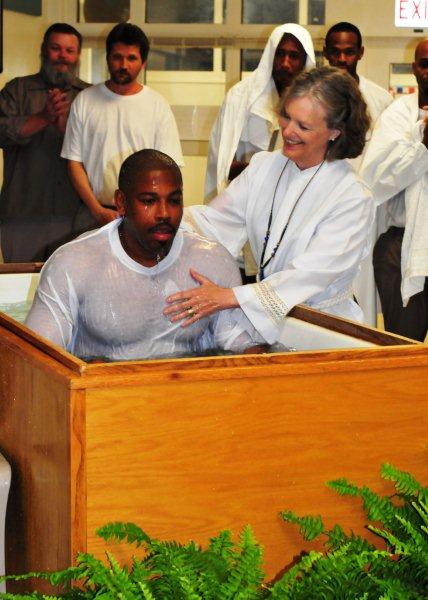
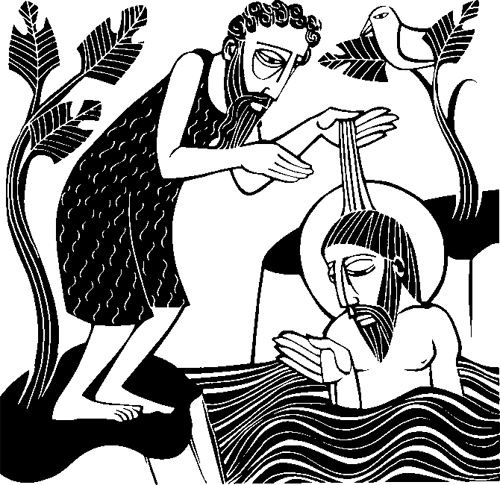
      For many Christians, the inaugural act of this retraction exercise is signified by baptism, which involves the ritualized activity of dying (to the current ordering of values), being buried (severance from the illusion of self-centered life) and being resurrected (to a renewed configuration of safety, security, salvation). “Those who find their life will lose it,” Jesus said, “and those who lose their life for my sake will find it” (Matthew 10:39). And what is the “sake,” the welfare, of Jesus we are called to secure? He gave many clues, none more explicit than the dramatic scenario of Matthew 25 where, on the projected day of judgment, he assigns to heaven or to hell according to the criteria of care for marginalized people—the hungry, the thirsty, the naked, the diseased, the immigrant and the imprisoned—all those for whom the world’s dominant systems have little or no use. Thus, people on the Way, those immersed in the Jesus narrative—which, like most narratives, is porous and resistant to philosophical precision—are bound for trouble. I like the way Flannery O’Connor put it, paraphrasing a text from John’s Gospel: “You shall know the truth, and the truth will make you odd.”

      We are God’s odd ones. And according to the Jesus story, God is more taken with the agony of the earth than with the ecstasy of heaven. Connecting the purpose of Jesus with the drama of Creation is the heart of Christian confession. Everything else is footnote.

߆߆ß

            Paul Ricouer wrote: "If you want to change people's obedience then you must change their imagination." My overriding passion is to insist that recovery of baptismal integrity is the Christian community’s most urgent political task. By implication, this suggests that the most urgent political task of each of our respective traditions is to drink more deeply from the wells that nourish world-transforming faith.

߆߆ß

      At this point we must be clear: Ultimately, power does not flow from the barrel of a gun. While violence may destroy power, it can never create it. “Every war already carries within it the war which will answer it,” wrote Käthe Kollwitz, artist of torment. “Every war is answered by a new war, until everything, everything is smashed.” Or as the poet e.e. cummings wrote with such concise precision, “hatred bounces.”

      Such a judgment is not rooted in political calculation but theological affirmation. We believe that the power of God, the Abba of Jesus is the power to claim by relinquishing, voluntarily submitting to body broken, blood spilt, rather than by grasping, by shedding the blood of others.

      The Christian vision affirms that only this kind of power is sufficient to subvert the ruling powers of this age. It is messianic power in the manner of Jesus, whose “name” we confess as shorthand for the career to which we, too, have been called. “The one who believes in me will also do the works that I do,” Jesus reminded his disciples shortly before he was executed in a manner reserved by Roman rule for political subversives. The same thought is central to the Apostle Paul’s proclamation: “For [God] has graciously granted you the privilege not only of believing in Christ, but of suffering for him as well” (Philippians 1:29).

߆߆ß

      Unfortunately, the political relevance of Christian baptismal vows is little understood in the church and virtually oblivious in the larger world.

      In the featured Time magazine op-ed article for the January 1993 issue, essayist Lance Morrow wrote:

       "War is rich and vivid, with its traditions, its military academies, its ancient regiments and hero stories, its Iliads, its flash. Peace is not exciting. Its accoutrements are, almost by definition, unremarkable if they work well. It is a rare society that tells exemplary stories of peacemaking—except, say, for the Gospels of Christ, whose irenic grace may be admired from a distance, without much effect on daily behavior." [italics added]

       This same author, in the special September 11, 2001, issue of the same journal, began his commentary (“The case for rage and retribution”) on the day’s trauma with these vitriolic lines:

      "For once, let’s have no fatuous rhetoric about 'healing'. . . . Let’s have rage . . . a policy of focused brutality . . . [and] relearn why human nature has equipped us all with a weapon called hatred."

      The relation between the two statements is not coincidental. There is an intimate link between skepticism regarding Jesus’ relevance for daily behavior and the counsel to “a policy of focused brutality.”

      In the end, the advocates of both positions—nonviolent struggle for justice versus policies of focused brutality—work from theological presuppositions, whether explicitly acknowledged or not. Both require conclusions (neither of which can be submitted to conclusive empirical testing) about the ultimate nature of power, about the road to safety, to security, to salvation.

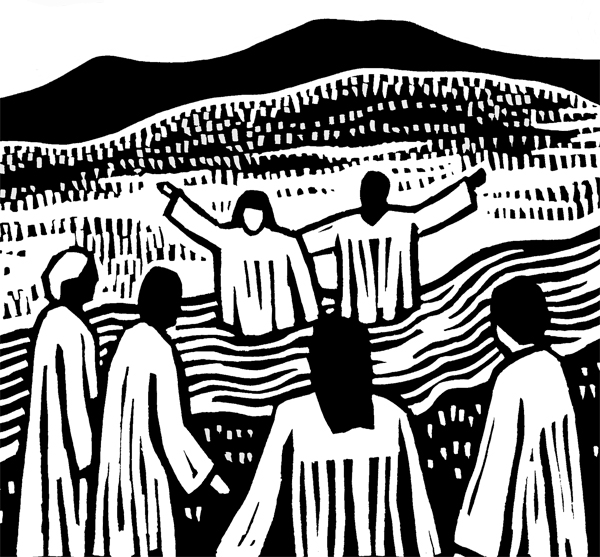
      Meanwhile, Emily’s question, the most ancient of questions, invites the baptismal response of reoriented life. Wade in the water children . . . God’s gonna’ trouble the water.

#  #  #

Originally published in the September 2002 issue of Peacework, magazine of the American Friends Service Committee.
©Ken Sehested @ prayerandpolitiks.org

Suffer the children

A Bible study on Jesus’ teachings about “becoming like children”

by Ken Sehested

Written with gratitude for the Children’s Defense Fund,
on the 25th anniversary of its “Children’s Sabbath” program.

      From the intimate environment of the home to the callousness of war-ravaged regions, the scale of violence against children is numbing. A few examples:

      •A child dies every 10 seconds due to a combination of undernourishment, impure water, and easily preventable diseases.

      •More than 100 million children under the age of five are undernourished.

      •An estimated 1.2 million children are trafficked each year.

      •In the U.S., 20% of children live in poverty.

Right: Art by Ade Bethune, ©Ade Bethune Collection, St. Catherine University, St. Paul, MN.

      There is something particularly widespread and outrageous about the ways young people suffer. By and large, children are given little voice in the situations they face. They are made powerless by social systems that hold them captive, by churches that make them invisible, and by home environments whose impact in forming capabilities both for contempt and compassion are often profoundly underestimated.

"Unless you become like children"

      Anyone familiar with King James’ translation of Scripture will recognize the phrase “Suffer the little children to come unto me,” spoken by Jesus in rebuffing the disciples’ intent on keeping young ones at arm’s length. (See Mark 9:33-37 and 10:14, with parallel stories in Matthew 18 and Luke 18.) The synoptic writers’ retention of this odd story serves as a point of entry into the Gospel story as a whole.

            Children generally are absent or nameless in Scripture, even more so than women, and their place in society was clearly subservient. In his commentary on Mark, Ched Myers notes that the subjugation of children was the building block for wider socio-political structures and patterns of domination.*

            The Synoptic Gospels' story of Jesus' welcoming the children is as puzzling as it is familiar. The three writers tell it with slight variances. Let's focus on Mark's 10:13-16 account.

      Jesus has just crossed over into the region of Judea. Crowds have gathered to hear him teach. Suddenly, children are on the scene. The disciples attempt to screen this intrusion, try to shoo them away. Jesus notices the commotion and, as the text says, "he was indignant"—the only time in which he is so described in the New Testament.

      No doubt thinking they were being responsible stewards, having Jesus' best interests in mind, the disciples were a bit stunned when Jesus contradicted them, saying "Let the little children come to me; do not stop them" (v.14, NRSV). And then he uttered those startling and mysterious words: ". . . for it is to such as these that the kingdom of God belongs. Truly I tell you, whoever does not receive the kingdom of God as a little child will never enter it."

      The story ends with the narrator noting that Jesus not only blessed the children but actually took them into his arms, visually reinforcing his far-reaching comments.

"Become like children"

      The Gospels contain other similar comments by Jesus. In Mark 9:37 (with parallels in Matthew and Luke): "Whoever receives one such child in my name receives me; and whoever receives me, receives not me, but him who sent me." Uniquely in Matthew Jesus says "unless you turn and become like children, you will never enter the kingdom of heaven" (18:3).

      This locating of the kingdom's entrance in child-likeness is mystifying.  Doesn't Scripture elsewhere note that, in order to obtain maturity, we must put away "childish things" (1 Corinthians 13:11)?

      In order to understand the meaning of this text, it would be useful to examine what it doesn't mean. Our reading of these statements from Jesus—read through the lens of prevailing cultural ideas about children and youth—has been glamorized, idealized, romanticized, and sentimentalized. As a result, these stunning biblical metaphors have been drained of their power to reorient out thinking.

      (1) A focus on children in Jesus' teaching might seem, at the outset, to play right into the hands of those charged with manipulating consumer preference in our culture. The glamorization of youthfulness has created a myth to which we have become enslaved. The very notion of "mid-life crisis" to which people of my generation attend with such earnestness—and for which an entire psychotherapeutic service industry has been created—is a direct result of an artificially created standard equating youthfulness with well-being. Facial wrinkles and greying hair are vigilantly camouflaged. The glamorization of youth has become, in our day, a form of discrimination against the aged, and is one of several ways we distance ourselves from the reality of death and dying.

      (2) The idealizing of youth occurs when we adults focus on our own faded memories of youthfulness. Nostalgia is a great deceiver, engendering complaints about today’s young people in comparison to “when I was young.” The truth is, such complaints are common literature for as far back as history is recorded. I seriously doubt that the general moral grit of today's youth is any different from ours, or of our parents or grandparents. But the complexities which today's children face are far greater. Even if there were a kernel of truth to the charges of declining character among the young, the indictment is on us. Concerned about nihilistic, value-barren behavior? Look at our national leadership, our economic priorities, and the way our nation conducts its foreign policy.

      (3) Our tendency to romanticize the children in Jesus' sayings, to project on them a mythical state of innocence, creates another layer of insulation between the text and our responsibilities as nurturers of the young. We see them as morally pure, humble, no doubt full of joy, trust, and spontaneity—the things we all feel when we watch those adorable children in the church Christmas play. But children are not always as adorable as we like to imagine. This romanticizing habit creates distance between the children of which Jesus speaks and our own children, and excuses us adults from the rigorous, hard work of instructing and forming our young ones "into the paths of righteousness."

      (4) Sentimentalizing the children embraced by Jesus creates distance between the text's imperative and our ability to respond. We love to latch on to the language unique to Matthew's account ("Whoever becomes humble like this child. . . ."), rendering "humility" to a subjective state of mind. But Jesus makes no moral claim concerning children. As when Jesus blesses the "poor in spirit" and the "meek" in the beatitudes, the "humility" of which he speaks is not a reference to character but to social, economic, and political vulnerability. Referring to someone "of humble origins" is a polite way of calling them poor.

      The sentimental way we envision the children to whom Jesus is available allows us to side-step his claim on our loyalties. It's nice to teach these things to the kiddos in Sunday school. And it's always good to hear the poetry of Isaiah's vision—of an adorable child leading the parade of animals (how sweet!), along with the special music and the decorations—during the Christmas season. But we secretly recognize that the "real" world doesn't work that way, dismissing both Isaiah and Jesus as naïve about power, rendering innocuous the demands of discipleship.

"To such as these. . . ."

      The instruction to suffer the children—to welcome them, to treat them with respect and dignity—is but one variation of a consistent theme not only in the Gospels but throughout Scripture. The children in Jesus' arms are to be honored not because they are morally pure, any more than are the ones near to us, but because they are defenseless. To be on the Way with Jesus involves giving priority attention to those who, in countless ways, do not count in the world’s security arrangements and to be with these “little ones” not as saviors but as friends.

      This story of Jesus' indignant rebuke of the disciples is not a lesson about the nature of children—but about the nature of God and the way God operates . . . and, by implication, the way we are to operate as children of God. It is simultaneously an indicative (of the nature of God) and an imperative (of how we're to live).

      This teaching is one of many variations in Scripture about God's reversals of value. Each of the Synoptic Gospel texts which instruct that we are to "receive one such child in my name" appear immediately following accounts of the disciples discussing "who will be the greatest" in the kingdom of heaven. In God's upside-down ordering, the first shall be last; those who lose will find; the great will be the servant of all; those unaccustomed to royal feasts will be the very ones sought out as guests. Those who are shut out of the world's provision will, in the end, inherit the promise of well-being envisioned by God at the beginning. In short, the way the world is currently ordered is in opposition to God's New Realm. And that New Realm is on its way, even as we speak, breaking out here and there.

Right: The author offering a prayer of dedication for his new granddaughter, Easter Sunday 2008.

      The God who "suffers children" is not goo-gooing over cradles, much as we prefer that image. No, that is simply one of Jesus' ways of speaking of a God whose gifts are gratuitous, given freely, not based on human ingenuity, power, or any other measuring rod of competence. There is no merit system in the matter of grace. No heroic standard qualifies; no level of moral turpitude disqualifies; no degree of moral purity is sufficient. Only empty hands. Only trusting hearts, willing, like children, to be picked up and embraced, without negotiation or calculation.

      In suffering the children we are not doing nice things for the weak—we are attending to our own need for conversion. The experience of grace makes us graceful; the reality of being forgiven generates forgiving behavior. As a lover responds to the beloved—lavishly, expansively, without thought of recompense—so we respond to God’s embrace by likewise embracing the "little ones" of this world about whom God is so terribly passionate.

This is the good news of the Gospel. It also is a spirituality which threatens the very fabric of our social, economic, and political status quo. To suffer the children entails active, even conflictive, opposition to any who cause, or permit, the children to suffer.

#  #  #

For information about the Children's Defense Fund "Children's Sabbath."

*"The subjugation of the child thus represents the basic building block of socialization into wider socio-political structures of domination." Myers also quotes psychoanalyst Alice Miller's finding that the result of children's experiences of humiliation creates a "vicious circle of contempt for those who are smaller and weaker." These, says Myers, generate "patterns of domination that are maintained and psychically enforced intergenerationally." Binding the Strong Man: A Political Reading of Mark's Story of Jesus, Orbis Books, 1988, p. 269.

©ken sehested @ prayerandpolitiks.org


News, views, notes, and quotes

Signs of the Times  •  6 September 2018 •  No. 171

¶ Processional. “Crazy Horse,” Dupleesy & the violins of the world” (Thanks Wendy.)

Above. Aechmea blanchetiana (Orange) are large full sun tolerant bromeliads. Posted in gratitude for the life and legacy of David McReynolds.

Special issue
Short accounts of remarkable, but largely unsung, heroes

Invocation. “Throw off the covers of earth’s darkened slumber! Unplug your ears, you creatures of flesh! From deepest sigh of tear-stained eye, set your sight on Heaven’s resolve. For the sky’s bright luster, alive with motion, shows the wonder of Blessed intention.” —continue reading “Blessed intention,” a litany for worship inspired by Psalm 19

Call to worship. “We travel today with Jesus as he was leaving Caesarea Philippi, in the far northern region of ancient Israel. Named for the Roman Caesar, located in what is now known as the Golan Heights, a site of contention to this day, Syrian land occupied by Israeli allure. Even after these years together, the disciples still imagine Jesus supplanting the great Caesar, scattering Rome’s legions, restoring the glory of Judea’s lost splendor, fulfilling its remembered boast as the

capital of nations.” —continue reading “I’m not saying it will be easy,” a call to worship inspired by Mark 8:27-38

Remembering David McReynolds. “It would be a stretch to say he was a friend. More like an acquaintance in his far-flung orbit of fellow pilgrims who looked to him for light.

Right: McReynolds with his cat, Shaman.

        “We corresponded off and on for more than a decade. He was generous to people he barely knew, and was known throughout his life for kindness to those with whom he disagreed.

        “I looked forward to his occasional posts on Facebook, with off the cuff commentary on current events. In our last correspondence, he responded to some material I wrote about Muriel Lester, who has a front row seat in my personal cloud of witnesses. David wrote to say that he drove Lester all over Southern California on one of her speaking tours many years ago.

        “‘I must come to see you to hear those stories,’ I responded. Regrettably, I never did.” —continue reading “He desired a better country: A remembrance of David McReynolds

Hymn of praise. “Sing, so the back row hears you / Glide, 'cause walking just won't do / Dance, you don't have to know how to / Ever since, ever since grace got you.” —MercyMe, “Grace Got You

Good news. “A federal judge in South Carolina recently reinstated water protections in 26 states, following a lawsuit filed by environmental groups against the Trump administration for illegally suspending the Clean Water Rule early this year. The law clarifies which bodies of water are covered by the Clean Water Act’s pollution-control programs. Although implementation is still on hold in 24 states, the ruling is a decisive win for the environment—and for the millions of Americans whose water supplies are now better protected from pollution.” Courtney Lindwall, Natural Resources Defense Council

Confession. “You can’t fix yourself by breaking someone else.” —watch this brief (2:58) video of Jay Shetty explaining how the longer one holds on to anger, resentment, anxiety, the more damage it does to oneself (Thanks Linda.)

Words of assurance. “You just hide me in thy bosom / ‘Til the storm of life is over / Rock me in the cradle of thy love / Then you feed me, ‘til I want no more / Then you take me to that blessed home above.” —Fireside Gospel Singers, “Hide Me In His Bosom

¶ “The Baptists and the yogis join to fight a pipeline.” “Just down the road, across the rolling fields and woodlands where most of his congregation grew up, the most powerful corporation in Virginia plans to build a natural gas compressor station. Dominion Energy’s facility is integral to the 600-mile Atlantic Coast Pipeline, which will tunnel under the nearby James River and march across the county.

Right: Hindu priest Swami Dayananda

        “The pipeline has drawn protests along its planned path from West Virginia, through Virginia and into North Carolina. But the Union Hill community in Buckingham County, founded after the Civil War by freed slaves and near the geographic center of the state, is the only place in Virginia that faces the additional issue of a compressor station. . . .

        “The choice to resist has put Wilson and his congregation in step with an unlikely group of allies. As he neared the end of his sermon last Sunday at Union Grove Baptist, Wilson noticed a figure in orange just inside the entrance to the church. . . . ‘Swami Dayananda!' Wilson exclaimed at a diminutive woman with short gray hair and the robes of a Hindu monk.” —for more see Gregory S. Schneider, Washington Post

Hymn of supplication. “We staring in the face of hate again / The same hate they say will make america great again / No consolation prize for the dehumanized / For america to rise it's a matter of black lives / And we gonna free them, so we can free us / America's moment to come to Jesus.” —Common, “Letter to the Free

¶ “About 15,000 Flint [Michigan] children will return to school next week with new backpacks stuffed with goodies, some including letters of encouragement and support from people across the globe.

        “The letter-writing initiative, as well as the backpacks filled with notebooks, folders, pencils, and other school supplies, is the result of a project by Mari Copeny (pictured at left), an 11-year-old Flint sixth-grader who is using her budding celebrity to draw attention to her city’s water crisis. Cynthia E. Thomas, Yes! magazine

Professing our faith. "When it comes to saving what needs saving, being merely nice and pliant won’t win the day, or the life. Sometimes we need to dig in our heels and do some hollering." —Jan Richardson

Hymn of resolution. “I want to be ready when joy comes back to me.” —Ruthie Foster, “Joy Comes Back

Short story. When Grammy nominated Jordin Sparks sang the national anthem prior to the Dallas Cowboys v.s Phoenix Cardinals football game in 2017, she didn’t take a knee. But neither did she let the occasion pass without a word of dissent. On her left wrist—with which she held the microphone—she had prominently written “Proverbs 31:8-9.” Look it up.

Offertory. Indiara Sfair, “Improvisation in Cm.”

¶ Greta Thunberg (pictured at right), a 15-year-old in Sweden, is protesting climate change “in the most active way she knows how. She is on strike, refusing to go to school until her country’s 9 September general election. Her protest has captured the imagination of a country that has been struck by heatwaves and wildfires in its hottest summer since records began 262 years ago.”

        “Every day for two weeks, Thunberg has been sitting quietly on the cobblestones outside parliament in central Stockholm, handing out leaflets that declare: ‘I am doing this because you adults are shitting on my future.’” David Crouch, Guardian

More on Sen. John McCain. As is often the case, Rebecca Solnit’s commentary on Sen. John McCain’s legacy rises above the swarm of interpreters.

        “Our country was founded in conflict—not the ordinary conflict of the Revolutionary war, but the conflict between Thomas Jefferson’s ideals and his actions as an owner and exploiter of other human beings. You can dismiss the slavery and uphold the ideals, or vice versa, but an understanding of who we have been and how we got here means recognizing both and how they inflect each other. . . .

        “It means recognizing Abraham Lincoln’s greatness and his monstrous policies toward the Lakota, recognizing that we have been neither—as American exceptionalism would have it—the best of nations, or the worst, but a magnificent, unresolved pile of conundrums and paradoxes and populations at odds with each other and ideals that are more often held up for admiration than they’re upheld. . . .

        “I don’t want people to appraise [McCain] for his sake, but for our own: for our ability to tell irreducible stories, to see the world and its players in their full complexity.” —“John McCain was complex. His legacy warrants critical discussion,” Guardian

Preach it. “Forgive yourself for not knowing what you didn’t know before you learned it.’ —Maya Angelou

Profile. The beautiful artwork of Ricardo Levins Morales  requently graces the layout of “Signs of the Times” columns. (With his permission. See one of his latest, at left.) In a recent interview with Margie O’Loughlin, he comments:

        “I was born into a farming family on a mountain in Puerto Rico. Nothing in my life blinked, beeped, or had a pause button. From that, I learned a certain kind of patience—and to speak of the world through a narrative of abundance. When people are behaving in ways that are harmful to others, it almost always comes down to a perception of scarcity. . . .”

        The movements he is drawn to are “about restoring power to people whose power had been taken away.” —for more see “Local Art Studio focues on resilience against oppression through art,” Messenger, newsletter of the Longfellow and Nokomis areas of Minneapolis, Minn.

Can’t makes this sh*t up. In January an armed Trump supporter confronted Rep. Eric Descheenie during an anti-immigration protest at the Arizona state capitol, demanding to know if he was in the country legally. Descheenie is Navajo. Snopes

Call to the table.For the Fruits of All Creation,” sung by First-Plymouth Church, Lincoln, Nebraska.

¶ “That girl was a problem. . . Glory Be.” Dr. Courtney Pace, in a 2017 “Nevertheless She Preached” conference presentation, “Subversive Sisters: A Herstory of Our Foremothers." This year’s conference (“Celebrating the voices of women in the pulpit”) is slated for 23-25 September, Waco, Texas.

The state of our disunion. “We have about 50% of the world's wealth but only 6.3% of its population. . . . In this situation, we cannot fail to be the object of envy and resentment.  Our real task in the coming period is to devise a pattern of relationships which will permit us to maintain this position of disparity without positive detriment to our national security.  To do so we will have to dispense with all sentimentality and day-dreaming. . . .

        “We should dispense with the aspiration to 'be liked" or to be regarded as the repository of a high-minded international altruism.  We should stop putting ourselves in the position of being our brother's keeper and refrain from offering moral and ideological advice. We should cease to talk about vague and unreal objectives such as human rights, the raising of living standards, and democratization. The less we are then hampered by idealistic slogans, the better.” —excerpt from an historic planning study written in 1948 by George Kennan, then with the US State Department and later ambassador to the Soviet Union. Kennan, a Democrat and later critic of President Bush’s war in Iraq

Best one-liner. “The hard right has no interest in religion except to manipulate it.” —Rev. Billy Graham, Parade magazine, 1981

For the beauty of the earth universe. A visual meditation on Psalm 119 using 100 photos from the Hubble Space Telescope, music by Peter Gabriel. (6:29. Thanks Tom.)

Altar call. “I believe in being ready, / I believe in being ready, / I believe in being ready, / When this world's at an end.” Rising Appalachia

Benediction. “Open your mouths, oh people of praise. Unchain your lungs and unleash your lips. Let joyful noise erupt from every muted tongue, thankful hymns from every muffled mouth. Compose a new song for the Chorister of Heaven. A cappella or symphonic, let the sound rise like leaven. Whether big band or bluegrass or rhythm and blues. Polka or hip-hop, bebop or swing. Salsa, Gregorian or adagio for strings.” —continue reading “Big band or bluegrass,” a litany for worship inspired by Psalm 98

Recessional. “God be in my head, and in my understanding; / God be in mine eyes, and in my looking; / God be in my mouth, and in my speaking; / God be in my heart, and in my thinking; / God be at mine end, and at my departing.” —H. Walford Davies, performed by Choir of King's College, Cambridge

Lectionary for this Sunday.

        “Blessed intention,” a litany for worship inspired by Psalm 19

        “I’m not saying it will be easy,” a call to worship inspired by Mark 8:27-38

Lectionary for Sunday next.

       Big band or bluegrass,” a litany for worship inspired by Psalm 98

        “In the Shadow of a Steeple: Time for a post-national church?” a sermon drawing on 1 Corinthians 1:18-31

Just for fun. The sand pendulum, from the Science Academy. (Thanks Floyd.)

#  #  #

Featured this week on prayer&politiks

• “I’m not saying it will be easy,” a call to worship inspired by Mark 8:27-38

• “He desired a better country: A remembrance of David McReynolds

• “Big band or bluegrass,” a litany for worship inspired by Psalm 98

• “Blessed intention,” a litany for worship inspired by Psalm 19

• “In the Shadow of a Steeple: Time for a post-national church?a sermon drawing on 1 Corinthians 1:18-31

©Ken Sehested @ prayerandpolitiks.org. Language not otherwise indicated above is that of the editor, as are those portions cited as “kls.” Don’t let the “copyright” notice keep you from circulating material you find here (and elsewhere in this site). Reprint permission is hereby granted in advance for noncommercial purposes.

Feel free to copy and post any original art on this site. (The ones with “prayer&politiks.org” at the bottom.) As well as other information you find helpful.

Your comments are always welcomed. If you have news, views, notes or quotes to add to the list above, please do. If you like what you read, pass this along to your friends. You can reach me directly at kensehested@prayerandpolitiks.org.


He desired a better country

A remembrance of David McReynolds

by Ken Sehested

        It would be a stretch to say he was a friend. More like an acquaintance in his far-flung orbit of fellow pilgrims who looked to him for light.

        We corresponded off and on for more than a decade. He was generous to people he barely knew, and was known throughout his life for kindness to those with whom he disagreed.

        I looked forward to his occasional posts on Facebook, with off the cuff commentary on current events. In our last correspondence, he responded to some material I wrote about Muriel Lester, who has a front row seat in my personal cloud of witnesses. David wrote to say that he drove Lester all over Southern California on one of her speaking tours many years ago.

        “I must come to see you to hear those stories,” I responded. Regrettably, I never did.

        Our face-to-face interaction was limited to the better part of one day. I learned he was coming to town when a call went out for volunteers to help prepared meals for the national meeting of the War Resisters League board. He agreed to a favor I asked; and it resulted in one of those “keeper” moments that linger for a lifetime.

§  §  §

        According to one political scientist, David McReynolds (25 October 1929 – 17 August 2018) “defined modern pacifism in the US.” He was a democratic socialist who twice ran for the presidency, the first time in 1980 on the Socialist Party ticket, with a Sisters of St. Francis nun, Diane Drufenbock, as his vice presidential running mate. The first of his many arrests was in 1954 when he refused induction into the military. He was among the first anti-Vietnam War protesters who burned their draft cards—though he wasn’t arrested since he was too old for the draft. He was the first openly gay man to run for public office. He worked for the War Resisters League for nearly 40 years and was a rigorous, principled proponent of nonviolent social change.

Left: McReynolds' office was something of a miniature botanical garden. Photo by Ed Hedemann.

        An avid photographer, David was also a member of the Bromeliad Society, an international botanical group devoted to that family of plants which does not require soil for growth. (e.g., think Spanish moss, among many others) Beauty drew his attention, including animals of all sorts. His Facebook feed was littered with animals-acting-funny videos. But cats, in particular, were objects of special affection. Fatefully, his long-time feline companion Shaman died after David was rushed to the hospital after collapsing in his home.

§  §  §

        “Nonviolence is an effort to restore a sense of ‘the beloved community.’ If it was easy to do this, then it would be no big deal. . . . Nonviolence is a search for truth—not a search for ways to prove your opponent wrong. If you are not ready, as you examine the facts, to realize you may be wrong and your opponent right, you aren't ready for nonviolence.” [See his long essay “Philosophy of Nonviolence”]

        A pragmatic willingness to entertain unkindly facts tempered his political passions, which occasionally prompted disdain from sectarian leftists. (The malady is an equal-opportunity affliction, both in politics and in religion.) As one of the architects of the anti-Vietnam War movement, David was known for his ability in managing coherence in a politically diverse coalition.

        Oddly enough, his skill as a public speaker was honed early in his life as part of a traveling Temperance Talking Team promoting alcohol abstinence. Among the unexpected things I learned in our one day together, he grew up, and was baptized in, a conservative Baptist congregation in Southern California.

§  §  §

        The favor I asked shortly before his trip to Asheville was if he would be willing to speak in my congregation’s Sunday worship service.

        “You do know I’m an atheist?” he asked.

        He didn’t say so, but I knew he was on speaking terms with a variety of religious traditions, including frequent use of Dr. Martin Luther King’s vision of the “beloved community,” a vision that is inherently transcendent since its surety cannot be verified in history’s narration.

Right: McReynolds with his cat, Shaman.

        (After this particular conversation, I vowed henceforth, whenever someone says they don’t believe in God, to respond: Tell me which God you don’t believe in; chances are good I don’t believe in that one, either.)

        “Yes, I know,” I said in answer to his puzzled question. “But the values for which you have devoted your life’s energies—the struggle for justice, the pursuit of peace, the advocacy for civil rights and human dignity, despite seemingly overwhelming odds and a meager record of success—these are things our congregation values. We would like to hear your story, and what it is that has sustained your persistent and costly struggle. Don’t think of this as a sermon. Tell us who you are and why it matters.”

        “I can do that,” he responded.

        I cannot now recall details of what he said. What I remember is the sense of being inspired and of being blessed. And then humbled, by what came next.

        Following his comments, it was my turn to give the call to the table for our weekly communion ritual. Among the words of institution I spoke were phrases familiar to our congregation.

        “All are welcome at this table. You don’t have to speak with our accent. You don’t have to be a member of our tribe. You may not be entirely sure what you believe about Jesus. But you do have to be hungry.”

        As the line formed, my eyes focused on each individual, addressing each by name along with “this is the bread of life and the cup of joy.” Before I knew it, David was standing in front of me.

§  §  §

        In her remembrance of David, Frida Berrigan wrote, “Every year, he called together his community to ‘the Night of the Candles.’ In the dark, he and his friends named and remembered those who had died in the past year, lighting candles and speaking their names. It is a tradition he kept for many years.”

Left: McReynolds hosting one of his Night of the Candles events. Photo by WNV-Matthew Daloisio

        Given that I’m already planning for All Saints’ Day, Frida’s reference is radiant. In every season of turmoil, corruption, and distress—like ours, now—the observance of All Saints’ Day is all the more important, because of its witness to perseverance, to its promise of buoyancy, to its call for indefatigable faith.

        And not only to bold, sometimes controversial public action. As David once wrote,

        “Let me toss in something we sometimes forget, as we ‘measure our number of arrests’—it takes more courage to bring a child into this world, care for it, love it, than it does to get arrested. The people with the most guts are parents. . . .”

        In the end, whether we stand or sit or march or rock a fretful infant to sleep, we do so without insurance that our labor not be in vain. We do so only with assurance. We bet our assets on a promise that does not submit, ultimately, to empirical measurement, strategic management, or moral heroism. We are mutineers on a ship steered by navigators of alleged political “realism,” as atheists among communities professing faith in redemptive violence, as truth tellers in a culture of discourse where speech disguises private gain as public good.

        “We are not among those who shrink back and so are lost,” in the eschatological language of the Book of Hebrews. We cast our lot with those “who died in faith without receiving the promise,” who have seen the beloved community from a distance, who “desire a better country” (10:39; 11:16).

Right: Photo by Courtesy Lee Mentley

        “Yet, as I reflect on [David’] life,” Frida Berrigan continued, “all I see is courage. He came out as gay when that identity was a jail sentence, a tightly shut closet and a career killer even within progressive circles. He came out as a pacifist when that identity was mocked as naive, bourgeois and traitorous. He came out as a socialist when that identity was misunderstood, feared and hated. David was out; he learned to live without apology, without shame, without caveat. . . .”

        Thus endeth the lesson.

#  #  #

For more background

•The best overview of David McReynolds’ life is Jacey Fortin’s obituary in the New York Times, “David McReynolds, Socialist Activist Who Ran for President, Dies at 88"

•The best short commentary on his legacy is Frida Berrigan’s “David McReynolds modeled a life of building peace and living without apology” in Waging Nonviolence

•For more about David McReynolds, watch this portion (22 minutes) of a Democracy Now broadcast focused on his life and legacy.

•On his commitment to nonviolence, see his long essay, “Philosophy of Nonviolence.”

•See this collection of David McReynolds’ photography.

•For a longer treatment of McReynolds’ life and legacy, see Martin Duberman’s A Saving Remnant: The Radical Lives of Barbara Deming and David McReynolds.”

©ken sehested @ prayerandpolitiks.org
9 September 20189

News, views, notes, and quotes

Signs of the Times  •  28 August 2018 •  No. 170

Above: Photo from Colombia’s newly established Serrania del Chiribiqu National Rainforest. Thanks to the efforts of 25 young people, ranging in age from 7-25, the area has been declared the world’s largest tropical rainforest national park following decades of efforts by environmental experts and conservationists. More than that—and this is historic—the forest has been given the same legal rights as a human being. Photo by Cesar David Martinez. —for more see Anastasia Moloney, “The Colombian Amazon has the same legal rights as you,” World Economic Forum

Processional. “Now as I look around, it's mighty plain to see, / This world is such a great and a funny place to be. / Oh, the gamblin' man is rich, an' the workin' man is poor, / And I ain't got no home in this world anymore.” —Woodie Guthrie. “I Ain’t Got No Home In This World Anymore” [Keep in mind that investment houses on Wall Street, no less than casinos, are gambling dens.]

        Guthrie wrote this song as a parody of the popular hymn, “This World Is Not My Home” (akaCan’t Feel At Home”),  popularized at the time by the Carter Family.

        However, in the Newer Testament’s repeated admonitions to “love not” and “be not conformed” to “the world,” it’s not speaking about the earth. “The world” is the complex web of oppressive power arrangements which distort and disfigure God’s intention in Creation. Those excluded from the table of bounty—in its fullest sense, and by the innumerable ways injustice, indignity, and violence happens—have "no home" in this "world."

Good news. Recently, after Saskatchewan farmer Brian Williams died just before harvest, more than 100 volunteers showed up at his farm to reap his crop. (See photo above by Jeff Brown.) Watch this brief (0:33) video.  For the full story, see David Shield, CBC.

Invocation. “Whoever sows injustice will reap calamity, and the rod of anger will fail. Those who are generous are blessed, for they share their bread with the hungry. Do not rob the poor or crush the afflicted, for the LORD pleads their cause and despoils the life those who despoil them.” —Proverbs 22:8-9, 22-23

Call to worship. “Creator God, we give thanks this day for work: for work that sustains; for work that fulfills; for work which, however tiring, also satisfies and resonates with Your labor in creation. As part of our thanks we also intercede for those who have no work, who have too much or too little work; who work at jobs that demean or destroy, work which profits the few at the expense of the many.” —continue reading “Labor Day,” a litany for worship, for work that fulfills

¶ “This weekend we mark another Labor Day holiday, both here and in Canada (excepting Quebec). At least 80 other countries celebrate the first of May as a workers’ holiday. Jamaica has the most interesting Labour Day tradition. For most of its colonial history the country observed “Empire Day” on 24 May in honor of British Queen Victoria’s birthday and her emancipation of slaves in 1938. But in 1961 Empire Day was supplanted by Labour Day, on 23 May, to commemorate the 1938 labor rebellion which led to independence. And the day’s focus is not on picnics, retail sales and car racing but on community service projects.

Left: Art by Ricardo Levins Morales, ©RLM Art Studio

        “As with so many of our holidays, we have mostly forgotten the severe conflict which provides the historical context. In the latter decades of the 19th century industrialization was hitting its stride in the developing world. The technology of commerce was producing massive amounts of profit and a widening gaps between rich and poor.” —continue reading “Labor in the Shadow of Sabbath,” a sermon for Labor Day

Confession. “Is there no song to be sung, no bell to be rung, no laughter from the fields at play with their yield? Would that my mouth be formed and my lips unleashed to speak a word, a true and hearty word, to all grown deaf with grief.” —continue reading “Sustain the weary with a word,” a litany for worship inspired by Isaiah 50:4-9a

The History Channel has a good brief video and article with Labor Day history.

Hymn of praise. “My Lord done just what he said. / Yes He did, Oh Lord, yes He did. / He healed the sick and He raised the dead. / Yes He did, Oh Lord, yes He did.” —The Nathaniel Dett Chorale, “I Can Tell the World

Forgotten Labor Day history. “The U.S. Department of Labor’s page on the history of Labor Day notes the holiday “is a creation of the labor movement and is dedicated to the social and economic achievements of American workers.” It doesn’t mention the Pullman strike of 1894, which President Grover Cleveland suppressed with federal troops, leading to dozens of deaths. —for more see Arthur Delaney, “The Bloody Origin of Labor Day,” huffpost

Right: On 1 May 1886, some 300,000 workers across the US went on strike, singing a popular slogan, “Eight hours for work, eight hours for rest, Eight hours for what we will!”

Hymn of intercession. Hymn of intercession. Joan Baez singing “Joe Hill”  And here’s Paul Robeson’s rendition.

        Joe Hill, a Swedish immigrant, was a songwriter, cartoonist and mining labor organizer in the US. He was convicted (on shady evidence) of killing a Salt Lake City grocery store owner and executed by firing squad in 1915. Hill is credited with coining the phrase “pie in the sky,” used in his most famous song, “The Preacher and the Slave,” which was a parody of the hymn “In the Sweet By-and-By.” Here’s a Utah Phillips rendition of “The Preacher and the Slave”.

Hymn of delectability. In celebration of a new season of the edible, often red, berry of the nightshade Solanum lycopersicum, commonly known as a tomato plant, listen to Kate Campbell’s “Jesus and Tomatoes Coming Soon.”

¶ “Ever wonder why homegrown tomatoes taste so much better than ones you buy in a store? Renowned seed saver and farmer John Coykendall hits it out of the park with this explanation.” PBS Food (9:18 video. Thanks Leah.)

Words of assurance. This short (3:39 video) commentary about the common good by Robert Reich is revelatory. (Thanks Jimmy.)

Word. "Let the thief no longer steal, but rather let him labor, doing honest work with his hands, so that he may be able to give to those in need." —Ephesians 4:28

Belated celebration of the Feast of Jonathan Daniels, 14 August. Daniels, an Episcopal seminarian, was in Lowndes County, Alabama in 1965 working on voter registration. He and others were arrested on 14 August. After being released on 20 August, he was instantly killed by a shotgun blast while protecting 17-year-old Ruby Sales, a co-worker, who later became a prominent civil and human rights activist, founding The SpiritHouse Project, a non-profit inner-city mission in Washington, DC dedicated to Daniels’ memory. In 1994 the Episcopal Church added Daniels to its Lesser Feasts and Fasts calendar of commemoration. —for more see Mary Frances Schjonberg, Episcopal News Service

Left: Icon of Jonathan Myrick Daniels by Mark Friesland

Professing our faith. “I lost fear in the black belt [of Alabama, a region originally named for its dark topsoil] when I began to know in my bones and sinews that I had been truly baptized into the Lord's death and Resurrection, that in the only sense that really matters I am already dead, and my life is hid with Christ in God. I began to lose self-righteousness when I discovered the extent to which my behavior was motivated by worldly desires and by the self-seeking messianism of Yankee deliverance!

        "The point is simply, of course, that one's motives are usually mixed, and one had better know it. As Judy and I said the daily offices day by day, we became more and more aware of the living reality of the invisible "communion of saints"—of the beloved community in Cambridge who were saying the offices too, of the ones gathered around a near-distant throne in heaven—who blend with theirs our faltering songs of prayer and praise.

Right: Ruby Sales' mug shot at the Montgomery Police Department after her arrest.

        "With them, with black men and white men, with all of life, in Him Whose Name is above all the names that the races and nations shout, whose Name is Itself the Song Which fulfills and ‘ends’ all songs, we are indelibly, unspeakably ONE." —Jonathan Daniels. You can read Daniels' entire meditation at Luis Enrique Hernández Rivas' Facebook page.

Hymn of supplication. “Jesus, lover of my soul, Let me to Thy bosom fly, While the nearer waters roll, While the tempest still is high: Hide me, O my Saviour, hide, Till the storm of life is past.” —Maddy Prior & The Carnival Band “Jesus, Lover of My Soul

Can’t makes this sh*t up. On Tuesday, 5 June, US Education Secretary Betsy DeVos said her newly-established federal school safety commission will not be examining the role of guns in our nation’s spate of school shootings. —Haley Britzky, Axios

        And now DeVos is considering using federal grants to purchase guns for teachers. (While 94% of teachers use personal funds for school supplies.) Erica L. Green, New York Times

Preach it. “Our merchants and masters complain much of the bad effects of high wages in raising the price and lessening the sale of goods. They say nothing concerning the bad effects of high profits. They are silent with regard to the pernicious effects of their own gains. They complain only of those of other people.” ―Adam Smith, 18th century Scottish economist and philosopher whose book, "The Wealth of Nations," is considered the “bible of capitalism”

Call to the table. “Sweetheart, you look a little tired / When did you last eat? / Come in and make yourself right at home / Stay as long as you need / Tell me, is something wrong? / If something's wrong you can count on me / You know I'll take my heart clean apart / If it helps yours beat.” —Sleeping At Last, "Atlas: Year Two" (Thanks Mike.)

The state of our disunion. A number of companies are experimenting with food and beverage delivery by drone. IBM just scored a patent on a delivery service, where the drone actually anticipates your coffee needs by tracking your sleep quality via a Fitbit or similar device that records your biometrics, blood pressure, pupil dilation, facial expressions and wake-up time. —Ziati Meyer, USA Today
        Meanwhile, 21% of children in the US live in families whose income is below the federal poverty threshold.

For the beauty of the earth. A time-lapse video (0:28) of the Milky Way galaxy rotating over an ancient baobab tree. This sequence was shot over a period of almost 8 hours last month at "The Island of Lost Baobabs" in Botswana's Makgadikgadi Pans. —Burrard-Lucas Photography (Thanks Donna.)

Altar call.Which Side Are You On,” Pete Seeger.

¶ “I have disagreed with Sen. John McCain on a whole range of issues over many years. We see the world in profoundly different ways. However, he is numbered in a rare breed of politicians of his generation who has displayed more character and integrity, the willingness to be guided, more often than not, by moral principle rather than profit or political expediency.” —continue reading “Senator McCain: Long live the mavericks

Benediction. “I want to be with people who submerge / in the task, who go into the fields to harvest / and work in a row and pass the bags along, / who stand in the line and haul in their places, / who are not parlor generals and field deserters / but move in a common rhythm / when the food must come in or the fire be put out.” —Marge Piercy

Recessional.When Lilacs Last in the Dooryard Bloom’d,” Ethan McGrath’s composition of Walt Whitman’s poem, performed by Taipei Chamber Singers.

Lectionary for this Sunday. “Oh, for a Word to be heard from above / Oh, for a pardon for hardened contempt / School us in mercy, tutor in grace.” —“Oh, for a Word,” a litany for worship inspired by Mark 7:31-37

Lectionary for Sunday next.

        • “Blessed intention,” a litany for worship inspired by Psalm 19.

        • “Sustain the weary with a word,” a litany for worship inspired by Isaiah 50:4-9a.

Just for fun. “If you were a sibling of Jesus,” comedian Michael Jr. (3:54 video)

#  #  #

Featured this week on prayer&politiks

• “Labor Day,” a litany for worship, for work that fulfills

• “Labor in the Shadow of Sabbath,” a Labor Day sermon

• “Blessed intention,” a litany for worship inspired by Psalm 19

• “I’m not saying it will be easy,” a call to worship inspired by Mark 8:27-38
 
Other features

• “Senator McCain: Long live the mavericks,” brief commentary on his passing

• “Sustain the weary with a word,” a litany for worship inspired by Isaiah 50:4-9a

©Ken Sehested @ prayerandpolitiks.org. Language not otherwise indicated above is that of the editor, as are those portions cited as “kls.” Don’t let the “copyright” notice keep you from circulating material you find here (and elsewhere in this site). Reprint permission is hereby granted in advance for noncommercial purposes.

Feel free to copy and post any original art on this site. (The ones with “prayer&politiks.org” at the bottom.) As well as other information you find helpful.

Your comments are always welcomed. If you have news, views, notes or quotes to add to the list above, please do. If you like what you read, pass this along to your friends. You can reach me directly at kensehested@prayerandpolitiks.org.


Senator McCain

Long live the mavericks

by Ken Sehested
26 August 2018

I have disagreed with US Sen. John McCain on a whole range of issues over many years. We see the world in profoundly different ways. (And I say this without the slightest hint of having a fraction of his stature.)

However, he is numbered in a rare breed of politicians of his generation—or mine, or any in my memory—who has displayed more character and integrity, the willingness to be guided, more often than not, by moral principle rather than profit or political expediency.

Which is why he has the reputation of being a political maverick. (And, likely, why he has requested that our current president not attend his funeral.)

The testimony of his life is an instruction, to me, in humility. Namely, there are people as intelligent and/or compassionate and/or convicted as me (maybe more) with whom I differ on important matters.

This does not mean I double-clutch my convictions. It simply means there will always remain a bit of slippage between my vision and God’s.

The implication is that the conclusion of the human drama is not in my hands. The presumption that any are anointed to make history turn out right is the source of all violence, and it is the devil’s own lie.

Long live the mavericks.

#  #  #

©ken sehested @ prayerandpolitiks.org

Plastic Jesus

A Lenten meditation on plastic

by Ken Sehested

        My wife’s eyebrows first raised, then furrowed, when I answered her question, “What’s your column focus for this week?

        “Plastic,” I said.

        I knew immediately from her response that I needed to do some explaining as to why, in the middle of Lent, plastic is a relevant topic. [For more on this, see the 1 March 2018 edition of “Signs of the Times.”]

§  §  §

“I don't care if it / Rains or freezes / As long as I've got my / Plastic Jesus /
Ridin' on the dashboard / Of my car. . . . / When I'm in a traffic jam / He don't
care if I say damn / I can let all my curses roll / 'Cos Jesus' plastic doesn't hear /
'Cos he has a plastic ear / The man who invented plastic / Saved my soul.”
—Gal Holiday and the Honky Tonk Revue, “Plastic Jesus"

§  §  §

        It was a serendipitous decision, one of those streaking-star flashes of inspiration that came after stumbling on several news stories.

        The first reported on Rio de Janeiro’s Carnival celebrations, where glitter-streaked faces are common in street parades. Turns out, glitter is environmentally harmful, made as it is from tiny bits of plastic which, when washed away, travels from sewer and sanitation pipes to the ocean. [See Dom Phillips, “Brazil carnival revelers warned that all that glitters is not good for the planet,” The Guardian]

Right: Carnival reveler Rio de Janeiro Brazil. Photo by Leo Correa/AP.

        Scientists now estimate that every square mile of ocean contains about 46,000 pieces of floating plastic. The deepest parts of the oceans, along with tap water in countries around the world (including at the US Environmental Agency’s headquarters) now contain microplastic particles. [See Damian Carrington, “Plastic fibers found in tap water around the world,” The Guardian.] In 2008, a sperm whale beached on a California shore was found to have 48.5 pounds of plastic in its stomach.

        Eco-friendly glitter is available, but at a cost of hundreds of times more. “It is just one more thing to make the lives of Brazilians more difficult,” complained one party-goer when told of the environmental hazard. “I think they are making it up.” A parallel story, from New Orleans, reports that city workers cleaned 93,000 pounds of plastic beads—the ubiquitous kind thrown from Mardi Gras parade floats—from storm drains. [See “New Orleans Finds 93,000 Pounds Of Mardi Gras Beads In Storm Drains,” NPR.]

        The next article I found reported on Parity, a faith-based LGBTQ-focused network of over 200 churches who offer Ash Wednesday forehead impositions combining traditional palm frond ashes with glitter.

        Rev. Marian Edmonds-Allen, Parity’s executive director, said the Glitter Ash Wednesday events were meant to be acts of love and resistance at a time when members of the LGBTQ community feel especially vulnerable to discrimination.

        “Glitter is serious business for queer people,” said Episcopal priest Rev. Elizabeth M. Edman. “Glitter is how we have long made ourselves visible, even though becoming visible puts us at risk.” [See Anya M. Galli Robertson, “Mixing glitter and protest to support LGBTQ rights,” The Conversation,  and Jessica Roiz, “Churches Are Supporting LGBTQ Christians With the ‘Glitter Ash Wednesday’ Movement,” MSN.]

§  §  §

“There's really no such thing as the 'voiceless.'
There are only the deliberately silenced, or the preferably unheard.”
—Arundhati Roy

§  §  §

            I confess to two immediate and opposite reactions to this latter story. Neither had anything to do with whether mixing ashes with glitter on Lent’s inaugural day is sacrilegious. Though highly conversant with, and committed to, tradition, I am not a traditionalist. There’s a big difference.

            One reaction was something like you-go-girl!, of making room for the full participation of, and affirmation for, the queer community in the life of believing communities. And also (this is important) of addressing the profound theological misconception of Ash Wednesday’s ritual as a form of self-abasement and groveling, as if God were a sadist who enjoys our belittling postures. [For more about the recovery of penitential language, see “The Ties That Bind: The Integrity of Penitence, on the 50th Anniversary of the Massacre at My Lai.”]

            If there be no god but such god, count me among the ungodly.

            I believe the promise of sparkle is real—though Lenten ashes acknowledge that Easter’s herald is everywhere contested and opposed. The odds of verifiable evidence are stacked against the prospect of rolled stones on Resurrection morning.

            The objection that simultaneously accompanies an affirmation of glitter ashes is this: Can such a ritual sidestep the glitterization of faith? In a culture committed to comfort, convenience, and security, can sparkly ash speak to the discomfort, inconvenience, and unsecured terms of Nachfolge Christi (“Following Christ,” which was the original title of Dietrich Bonhoeffer’s book, The Cost of Discipleship)?

            The entire logic of Lenten observance is not to banish delightful, fruitful life. Mardi Gras’ festivity is incorporated in the first doctrine of Scripture: Genesis’ account of creation’s conclusion is declared delightful. Sabbath is one part fiesta, one part siesta.

            But something went terribly wrong; and a certain kind of purging must occur before we can don our dancing shoes, because we have become so plasticized—so molded and conformed—to the mechanisms of humiliation and degradation which now inflict God’s verdant creation. A certain decolonizing—of both social structures and of the heart—must be pursued in our search for the Beloved Community.

            Or as Ursula K. Le Guin puts it, in words beyond that of traditional faith language, “The mental and moral shift from denial of injustice to consciousness of injustice is often made at very high cost.” To love is to suffer with.

§  §  §

“When the city bus paused for a few minutes outside the Woolworth store,
I rushed in to get a coca-cola and a few unnecessary plastic objects.”
—Nanci Griffith, in her brief monologue before singing “Love At the Five and Dime

§  §  §

            As things now stand, it’s hard to imagine life without plastic or the host of other fossil-fuel products. Whether you are the parent of an infant, a medical professional, a backpacking enthusiast, or merely sitting at a computer like I’m doing right now, plastics impinge. Not only the “unnecessary plastic objects”—the doodads for which cultural elites hold in contempt the mobile home crowd—but also things that make life more enjoyable.

            At present I cannot see and articulate a comprehensive plan of action to get from where we are to where we need to be, inexplicably trapped as we are in a system whose excesses threaten the ecosystem itself. And yet, as Edmund Burke said, nobody made a greater mistake than those who did nothing because they could only do a little.

            Thankfully, there are people smarter than me who are leading the way forward. Few of the solutions will be comfortable, convenient, or risk-free. The things needing to be done require attention to way more than one person, one movement, or even one era can accomplish. Most of the initial steps toward lasting change will be incremental: whether it’s a commitment to recycling or to participating in acts of civil disobedience against the plague of fossil fuel industries. The thoughtful, persistent habits of daily divergence from the grip of marketeers is no less heroic than breaching the barricades of unjust legal norms.

§  §  §

“For grace to be grace, it must give us things we didn’t know
we needed and take us to places where we didn’t want to go.”
—Kathleen Norris

§  §  §

            The way will not open until we begin walking. We more often live our way into new thinking than we think our way into new living.

            Make a commitment that builds on what you are already doing. Mix these concrete actions into a commitment to do fuller analysis of cause-and-effect relations as well as a deeper life of prayer. The capacity for risk is always in proportion to the capacity for reverence.

          Then knead all this into conscious and disciplined collaboration with a larger community of conviction, to further sharpen perception, sustain inspiration, and magnify engagement.

            This learning process—the comprehensive work of spiritual formation, of recognizing to Whom we belong, to what Purpose we are called, and by what Promise we are sustained—is called discipleship.

            Leave aside every plastic, gerrymandered jesus, whose principal function is little more than that of a mascot for the empire. Dare to go for the real thing. Lent’s wilderness showdown with the Confuser is a call to come home, where the prospect of morning’s joy will sustain through every night’s sorrows.

#  #  #


©ken sehested @ prayerandpolitiks.org

News, views, notes, and quotes

Signs of the Times  •  16 August 2018 •  No. 168

Special issue
GOOD NEWS STORIES

and in commemoration of the life and legacy of Aretha Franklin, “Queen of Soul,” whose lineage
included being raised singing Gospel music in the New Bethel Baptist Church,
Detroit, Michigan, where her father, Rev. C. L. Franklin, was pastor

Processional. “O Happy Day,” Aretha Franklin & Mavis Staples.

Invocation. “…You can trust the promise of this opening; / Unfurl yourself into the grace of beginning / That is at one with your life’s desire. / Hold nothing back, learn to find ease in risk; / Soon your will be at home in a new rhythm, / For your soul senses the world that awaits you.” —John O’Donohue

Call to worship. “No kind action ever stops with itself. One kind action leads to another. Good example is followed. A single act of kindness throws out roots in all directions, and the roots spring up and make new trees. The greatest work that kindness does to others is that it makes them kind themselves.” —Amelia Earhart

Hymn of praise. “None shall sleep, / None shall sleep! . . . / Vanish, O night! / Set, stars! Set, stars! / At dawn, I will win! / I will win! / I will win!” (English translation)  —Aretha Franklin, who at the last minute substituted for famed tenor Luciana Pavarotti at the 1998 Grammy Award ceremony, performing “Nessum Dorma

Small-scale agriculture as spiritual practice

How people of faith and conscience are recognizing that growing food
and tending nutrition is far more than producing sufficient (and cheaper) calories.

Right: A rural farm and church in Vermont, photo by Sean Pavone/iStock

¶  “The Movement to Turn Church Land into Farmland. A nascent movement of faith leaders, conservation experts, and food advocates are joining forces to connect young farmers to the vast quantity of land owned by churches. . . . In March, 35 leaders from across the U.S. who are ‘working at the intersection of faith, ecological stewardship, and farming’ gathered for the inaugural FaithLands event at Paicenes Ranch in California’s Central Valley.” Leilani Clark, Civil Eats

Learn more about a new church start in North Carolina organized around farming. —Brooks Berndt, “Farm Church as Embodied Spirituality: An Interview with Sarah Horton-Campbell,” United Church of Christ

¶ “On a warm weekend in early May, Reverend Heber Brown of Pleasant Hope Baptist Church in Baltimore led a delegation of his members on a tour of Browntown Farms in Warfield, Virginia and the Coalition for Healthier Eating food hub in Bethel, North Carolina. For Brown, the founder of the Black Church Food Security Network (BCFSN), the day trip was a concrete step toward solidifying strong relationships between Black residents of East Coast cities and Black farmers in the rural south.” Leilani Clark, Civil Eats

Imagine a 2-acre farm that produces 300 kinds of vegetables. In the middle of Detroit. (See photo at left.) It’s called an “agrihood,” short for agricultural neighborhood, which puts food production at its center. And it’s a growing trend. (2:54 video. Thanks Lamar.)

Words of assurance.Blessed Assurance,” Aretha Franklin.

Confession. “I've spent a lot of time in gun-country, God-fearing America. There are a hell of a lot of nice people out there, who are doing what everyone else in this world is trying to do the best they can to get by, and take care of themselves and the people they love. When we deny them their basic humanity and legitimacy of their views, however different they may be than ours, when we mock them at every turn, and treat them with contempt, we do no one any good. . . . We should be breaking bread with each other, and finding common ground whenever possible. I fear that is not at all what we've done.” —for more see Tyler Durden, “Anthony Bourdain Slams 'Privileged' Liberals For Their 'Utter Contempt" Of Working-Class America,' ZeroHedge

Passing the Peace. One day, when the congregation is instructed to “greet each other with the Peace of Christ,” this is gonna break out. And the Book of Revelation’s concluding promise that one day “every tear will be dried” will also say “and every leg will know how to dance.” (2:00 video. Thanks Wendy.)

Hymn of supplication.Precious Lord Take My Hand,” Aretha Franklin

¶ “10 years ago Grace Covenant Presbyterian Church in Asheville [NC] turned their lawn into a garden. (See photo at right.) It was an early "food and faith" connection on my vocational path. Stopped by for a visit today. (BTW, I love that their garden is right next to McDonalds. I've always seen it as an act of defiance.)” —Leah McCullough, Facebook

Professing our faith. “When I think about the changes I want to see in the world, it's easier . . . to snipe from the edges than to enter the space between the comfort of home and the risks of the world.” —Gareth Higgins, The Porch magazine

Eliada Homes has been serving children since 1903, but is now recovering a significant part of its agricultural mission—not simply to save money on food but also as a means of enhancing emotional healing and building social skills for the 600 children it serves annually in its residential treatment programs, foster care services, and traditional childcare.

        Located on 320 acres on the edge of Asheville, NC, the renewed subsistence farming operation focuses on food as part of holistic therapy. Many of the children have been traumatized by some form of abuse. “It’s going to be dynamic in the sense that it involves the community, but also in the sense that it takes the children here and gives them a learning center where they can interact with mother nature,” according to Farms Manager Brook Sheffield. —for more see Mackensy Lunsford, “Eliada revives farming to help heal, feed children,” Asheville Citizen-Times

Hymn of resolution.Precious Memories,” Aretha Franklin, with Rev. James Cleveland & the California Community Choir.

Short story. “When the news reporter approached me, I was milling about in the grass, adjusting my pastoral stole, preparing to be present with some of our local teachers at a press conference.

        “He wanted to know why I was there. I answered with a simple affirmation of our public schools and the teachers that serve in them.

        “But he was asking a different question, and he persevered: but why? Why are you here, as a faith leader, in support of public education?

        “I stared at him for a moment, summoning all of those things that are true about public schools and God’s children, young and old, who gather there. As stories about community and brokenness, wealth and poverty, injustice and restoration, passion and exhaustion, the love of discovery and the lack of paper, and the provision of care for the least of these swarmed, fighting for the spot on the tip of my tongue, I wondered if I might ought to simply say: because of Jesus. 

        “Because of Jesus. . . .” —continue reading Mary Elizabeth Hanchey’s “Because of Jesus,” written after participating in a public school teachers’ rally in Raleigh, NC. Hanchey is Program Associate for Legislative Advocacy and Interfaith Outreach for the NC Council of Church.

Hymn of intercession.A Change Is Gonna Come,” Aretha Franklin.

¶ “Why Mister Rogers’ Message of Love Is Good for Your Health. Evidence has mounted that he was on to something—people who express love and kindness really do regularly lead healthier lives.”

        The “Won’t You Be My Neighbor?” documentary on Fred Rogers and his “Mister Rogers Neighborhood” is now making it’s way to your local theatre. See this 2:55 trailer. Richard Gunderman, Yes! Magazine

This is a hopeful trend. “Candidates across the country and allied outside groups are seizing on the gun debate in advertising this election cycle, but with a twist: More spots now promote gun control than oppose it.” Nicole Gaudiano, USA Today

When only the blues will do.Ain’t No Way,” Aretha Franklin.

Short take: Remembering an unheralded saint. “Bob Fletcher, a former California agriculture inspector who, ignoring the resentment of neighbors, quit his job in the middle of World War II to manage the fruit farms of Japanese families forced to live in internment camps, died in 2003 in Sacramento at age 101.” William Yardley, New York Times

Good-but-overlooked electoral news. There was virtually no reporting on recent primary elections in the US that including this gem: Voters in Ohio approved a measure that will curtail gerrymandering in the state’s congressional districts—by 75%!

        In 2012 Republicans garnered only 52% of the vote in Ohio, but won 12 of 16 congressional races. Fran Korten, Yes! Magazine

        States where legislation or citizen initiatives to curb gerrymandering electoral districts may be on the ballot in November, including Michigan, Missouri, Ohio, Oklahoma, Oregon, Utah, and Colorado, Pennsylvania, and Illinois. Alexis Farmer, Brennan Center for Justice

Preach it. “The best criticism of the bad is the practice of the better.” —Fr. Richard Rohr

Inspiring news. Watch this brief (1:00) video about 83-year-old Antonio Vicente (pictured at right), a Brazilian, who restored 76 acres of clear-cut forest to its previous condition. 60 Second Docs (Thanks Rachel.) 

Call to the table. “Be not dismayed whatever betide / God will take care of you / Beneath His wings of love abide / God will take care of you.” —Aretha Franklin, “God Will Take Care of You

Best one-liner. “There are three things that are real: God, human folly, and laughter; the first two things are beyond our comprehension, so we must do what we can with the third.” —former US President John F. Kennedy

For the beauty of the earth. This is wondrous: “The Most Detailed Map of the Universe to Date.” (3:40 video. Thanks Larry.)

Altar call. “When my soul was in the lost and found / You came along to claim it / I didn't know just what was wrong with me / Till your kiss helped me name it / Now I'm no longer doubtful, of what I'm living for / And if I make you happy I don't need to do more.” —Aretha Franklin, “Natural Woman

Benediction. “To be truly radical is to make hope possible, rather than despair convincing.” —Raymond Williams

Recessional. “I wanna wear a diamond gem / In the new Jerusalem / I wanna walk the street of gold / In the homeland of the old / I'm going to view the host in white / Who travel both day and night / Coming up from every nation / On the way to the great carnation.” —Aretha Franklin, “How I Got Over

Barack and Michelle Obama released a statement remembering Aretha Franklin, saying “For more than six decades since, every time she sang, we were all graced with a glimpse of the divine.” For more background on Aretha Franklin, watch this short (4:34) video recollection, “Remembering Aretha Franklin” and/or read Farah Jasmine Griffin’s “Aretha Franklin—Musical Genius, Truth Teller, Freedom Fighter,” The Nation

Lectionary for this Sunday. “. . . my heart and my flesh sing for joy to the living God.” —Psalm 84:2

Lectionary for Sunday next. “By the Word of Truth we are nursed and nestled. We are cradled, caressed, and sanctified. . . . But know this: Doing the Truth may raise blisters on your feet, calluses on your hands, sweat running down from forehead to finger.” —“By the Word of Truth,” a litany for worship inspired by James 1:17-27

Just for fun. What brilliant engineers do in their spare time. (3:21 video. Thanks Wendy.)

More fun. When you need a hug from a furry friend who expects nothing in return. Animals Are Family (2:59 video. Thanks Lori.)

#  #  #

Featured this week on prayer&politiks

By the Word of Truth,” a litany for worship inspired by James 1:17-27

• “We must be prepared: A brief meditation for the living of these days

• “Sweet surrender,” a litany for worship inspired by Psalm 15
 
Other features

• “The latest US-Iran dust-up: Reckless baiting . . . again,” an essay

• “Where do you put your anger? Anger and the animating presence of God,” an essay
 

©Ken Sehested @ prayerandpolitiks.org. Language not otherwise indicated above is that of the editor, as are those portions cited as “kls.” Don’t let the “copyright” notice keep you from circulating material you find here (and elsewhere in this site). Reprint permission is hereby granted in advance for noncommercial purposes.

Feel free to copy and post any original art on this site. (The ones with “prayer&politiks.org” at the bottom.) As well as other information you find helpful.

Your comments are always welcomed. If you have news, views, notes or quotes to add to the list above, please do. If you like what you read, pass this along to your friends. You can reach me directly at kensehested@prayerandpolitiks.org.

Breathing Places

A story from prison

by Nancy Hastings Sehested

It wasn’t the blood on the stairs that sent me racing back down the hallway, or the repeated cries of “Oh, my god!” that turned me away. It was simply this: I couldn’t breathe. I needed air. Air that was not saturated with pepper spray. With eyes burning, I coughed and sputtered my way back to where I could breathe again. After ten years at the prison, I knew where to go for breathing places.

Two nurses and six officers bolted down the main corridor to the housing unit where the assault happened. No one invited me to go along, of course. They were the first responders, not me. They had retractable batons, pepper spray, and handcuffs; they could stop the flow of blood or patch a gash of flesh. But me? I was useless. “Non-essential staff.”

It was 7:30 on a Sunday morning. I prepared for the morning worship service, oriented our new assistant chaplain, and checked on the forty volunteers who were leading a weekend spiritual retreat for forty-two inmates. As I walked through the lobby, the sergeant in Master Control announced “Code 4. Code 4.” Inmate-to-inmate assault. Then “Code Red. Code Red.” Medical emergency.

Staff materialized from all directions. I raced with them down the central hallway with the urgency of an ambulance driver. But unlike them, I made a quick U-turn at the red-stained stairwell and parked myself against a wall where I could gulp in air and watch from a distance.

An officer came down the hallway, bent over and gasping for breath. He waved for the control room to pop the outside door so he co­uld let in some fresh air. It wasn’t enough. He stepped outside, threw up in the grass, and returned to duty. “I’ve never seen so much blood,” he said. “I don’t know if the guy will make it. Blood was spurting everywhere.”

A nurse accompanied by several officers swiftly pushed the victim in a wheelchair toward the gatehouse and the incoming ambulance. When he passed by me, he was still conscious, pressing bloody towels against his neck. I recognized this large muscular man. I couldn’t imagine anyone messing with him. Who was the Goliath who attacked him, I wondered?

I didn’t know what to do or say. I flung out a prayer. “Luther, God is with you. Mercy to you!”

I heard a faint “Thanks, Chap,” as I watched door after door being opened for him and the emergency crew.

Left: Cross necklace made by inmate using plastic bags.

The lieutenant walked toward me and held out a blade about the size of a box cutter with a small plastic handle melted around it. “Chap, this is what sliced him open around his neck and face. It’s bad. Real bad.”

“Who did it?”

“A guy named Barton. That’s all I know.”

“Barton? There must be more than one Barton. I can’t imagine the Barton I know doing this. He’s one of the pipe-bearers for the Native American circle.”

“You just never know. Anything can set these guys off.”

The prison was immediately put on lock-down. The assistant chaplain, one week on the job, went home with his un-preached sermon tucked under his arm. Our volunteers were allowed to complete the retreat with the inmates. They called it a miracle that Luther was alive and prayed that his life be spared.

One day later I saw Luther through his solitary confinement cell window. He showed me his stitches. Almost 200 trailed down his face and neck. He said he felt lucky to be alive. I agreed that he was truly fortunate and asked him what happened.

“Barton jumped me. That’s all I know.”

That was not all he knew, I was sure of it—and maddening to think I might never know.

I was given permission to see Barton. He was no Goliath, more like an average-sized man in the middle years of his life. He was fully shackled and was led into the conference room by three officers. He slowly eased down into the plastic chair at the far end of the table from me. Chaplain confidentiality permitted me to see an inmate alone, but officers watched closely through the large glass window in the door.

Barton spoke first, sitting up straight in his chair, dignified. He thanked me for coming to see him and apologized for messing up the retreat and the Sunday programs. “I’m truly sorry about that,” he said.

“What? You’re sorry about the retreat and the Sunday programs? What about Luther?”

He didn’t answer. “I couldn’t believe it when I heard you attacked him. What happened?”

Still no answer. I reminded him about his words to his brothers at the pipe ceremonies: “Be careful how you act. What you do reflects back on all of us.”

“I know. Please tell the circle how sorry I am.”

“The circle? That’s it?” I snapped. I pointed out he just earned at least five years in seg [solitary confinement]. And how could he, I asked, be the same man who the week before had carved a beautiful treasure box out of soap, a work of art that must have taken hours to create. “Only a few days later, you almost killed a man. It makes my head spin.”

“I know, Chap. But I just couldn’t let some things go on.”

“So this was about defending your honor, your reputation?”

“I was defending more than that. I was defending my life.” He spoke calmly. “This is my house for the rest of my life. I’ve got to live with these guys side by side, in this prison or the next one or the one after that, shipped all over this state, one year after another. This is my life, Chap. I had no other choice.”

I was a calamity of emotions. No matter what reason Barton gave me, I wouldn’t have found it reasonable. I took a deep breath, placed my folded hands on the table and leaned over the chasm between us.

“Barton, those are some of the saddest words ever spoken, ‘I had no other choice.’” I slammed a hand on the table. “That can’t be true. It just can’t be.” An officer immediately opened the door and asked if I was okay. “Yes, fine,” I said confidently. The door closed as the eyes of the officers remained on us.

We stared down at the table through an uneasy silence. The chain around Barton’s waist and wrists clanged as he shifted his weight in the chair. “I guess there was a choice. I guess there was.”

#  #  #

Rev. Nancy Hastings Sehested, co-pastor of Circle of Mercy Congregation in Asheville, NC, was for 14 years a prison chaplain, most of that time in a maximum security facility. ©prayerandpolitiks.org


Joy’s ascendance

This stuff could get you in trouble

by Ken Sehested

“For Jesus, there are
no countries to be conquered,
no ideologies to be imposed,
no people to be dominated.
There are only children,
women and men to be loved.”
—Henri Nouwen

Yes. This. Of course. No doubt about it.
I stake everything on this claim.

However, some employ this credo
as warrant for quietude and passivity
in the face of threat:
      when conquering stalks the land;
      when imposition is frequent and flagrant;
      when domination is the organizing
            principle of public policy making;
      when fortune’s rise depends on
            squalor’s increase.

In such an age
(ours is hardly the first, nor will be the last),
truthful words are hitched to connivance;
trustworthy ideas are poached and sold on corrupt
markets as collector trinkets; righteousness is
muzzled and paraded in circuses for the glitterati;
faith is traded on Wall Street’s big board.

In such an age,
a certain kind of insolence is required.
A scrupulous disrespect is called for.
A principled nuisance needs be made.
A distinct discord sown,
      a discomforting voice raised,
      a troubling undertaken,
      a disturbing cry wailed.

Levitation from history is not an option.
None are exempt from making painstaking
choices amid contested and morally-
ambiguous terrain.

This stuff could get you in trouble.
Faith in the Manner-of-Jesus does
not cultivate placid circumstances
but insurrection against the world’s
disarray, informed by and conformed
to the beatific vision of the Creator’s
purpose, the Resurrector’s promise,
and the Animator’s presence.

The Beloved’s intent strikes terror
in the hearts of every merchant of misery.
They will not retreat without a struggle.
Travel through the narrow gate, along
the rugged road, is beset with bandits and
desperadoes armed with pious impunity.
Hardened hearts invent gods to match.

But sustenance is promised; manna will
descend; thirst will be slaked by water
springing from barren rock. Beauty will be
disclosed in our scars; healing, from our
wounds;  direction, from our dismay.
In that Day-to-Come, every creature,
mount and meadow, sea and fountain
—human and humus alike—
will rejoice and disclose Earth’s
exaltation at the news of Heaven’s
betrothal with Incarnation’s yearning.

The Word to people of the Way is to
abandon love-in-general in favor of
compassion-in-particular—to move
from history’s rhetorical grandstands,
from courts of impartiality and generic
prescriptions—turning instead into
unsettled circumstances with (potentially
and personally) hazardous results.

The night of crying endures, and the storm’s
dark turbulence may continue for as far as
mortal flesh can tell. But joy’s ascendance
(admittedly, at times, sorely dark and faint)
provides buoyancy and guidance for those
      with eyes to see,
      with ears to hear,
      with hearts large enough to shelter an
      other outside one’s own kin and skin.

As ancient Isaiah exhorted: Go out in joy and
be led back in peace, the hills bursting in song,
the trees in applause.* The only Adoni worthy
of adulation is approached in the darkness, is
encountered in the storm. For God is the storm,
and has incendiary designs for the storehouses
of human arrogance and greed. Cling to this
blessed assurance despite brutal prospects.
Oh, what a foretaste of Glory divine.


*55:12
©ken sehested @ prayerandpolitiks.org