Recent

News, views, notes, and quotes

Signs of the Times  •  25 October 2017 •  No. 141

Processional.Fa’afetai i le Atua,” Samoan hymn, sung by a wildfire “hotshot” crew from the Polynesian island of American Samoa, a colony of the US, brought in to help fight wildfires in northern California. (“Hotshot” firefighters are those with specialized training and assigned the most challenging locations—sort of like the military’s special forces.) —Hawaii News Now (2:46–scroll down to find the video. Thanks Duane.)

Above: Orionid meteors fly each year between about October 2 to November 7. That’s when Earth is passing through the stream of debris left behind by Comet Halley. The Orionids are named after the direction from which they appear to radiate, which is near the constellation Orion. First discovered in 1839, Halley has probably been around for more than two millennia. The particles which hit earth’s atmosphere, at 132,000 mph, are mostly microscopic in size. Photo by John Ashely in Montana during the 2015 Orionid shower. —for more info see Deborah Byrd, Astronomy Essentials

Invocation. “For it is in the act of worship that the church steadily renews itself in the discipline of wisdom. Worship is a vigorous act of reordering our desires in the light of God’s burning desire for the wellness of creation.” —Ellen F. Davis

Call to worship. "Beloved God, accept our prayers. When we fall, may we fall freely, completely . . . finding our soul’s depth again, the solid earth from which we may rise and love again. Have mercy. Have mercy upon us. Here, there, everywhere. Have mercy. Amen." —Nancy Hastings Sehested

Introduction

This week’s focus is on the coincidence of two recent headline events: the #MeToo social media campaign ignited after the ghastly uncovering of Hollywood movie mogul Harvey Weinstein’s legacy of sexual assault; and the 50th anniversary of the March on the Pentagon, a defining moment for the movement to halt the Vietnam War.

            What is especially instructive about these concurrent stories (and we can only hope attention outlasts the fickle news cycle) is the way they portray the range of realities to which people of faith and conscience need to attend: from the up-close-and-personal sphere of sexual harassment and assault, to the large-and-public realm of geopolitical warmongering. Violence comes in many forms and must be strategically and appropriately addressed. At the same time, any vision of the Beloved Community must be cradled in an understanding of how the varied fruits of violence share a common root.

            So the question becomes: How do we carry out our concrete, grace-shaped, justice-seeking, peace-making, mercy-mediated engagement in ways that take into account the larger landscape of dehumanizing afflictions?

            Unfortunately, when all is said and done, there’s usually a lot more said than done. To accomplish anything in particular, you have to focus. While doing so, though, a larger vision is needed. Connecting the dots (the reason that awkward word, intersectionality, is now employed) is significant, because everything, somewhere, somehow, is connected and interactive.

Hymn of praise. “Woah I, know I've been changed / Angels in heaven done sign my name.” —“Angels in Heaven,” performed by two of my city’s finest buskers, Abby the Spoon Lady and Chris Rodriguez

Confession. “We talk about how many women were raped last year, not about how many men raped women. We talk about how many girls in a school district were harassed last year, not about how many boys harassed girls. . . . So you can see how the use of the passive voice has a political effect. [It] shifts the focus off of men and boys and onto girls and women. Even the term ‘violence against women’ is problematic. It's a passive construction; there's no active agent in the sentence. It's a bad thing that happens to women, but when you look at that term ‘violence against women,’ nobody is doing it to them. It just happens to them. . . . Men aren't even a part of it!” —Jackson Katz, Sojo.net

¶ “Alyssa Milano was in bed with her two young children when a friend of a friend on Facebook suggested something that struck her as a great way to elevate the Harvey Weinstein conversation. She took the idea to Twitter, posting: ‘If you’ve been sexually harassed or assaulted write ‘me too’ as a reply to this tweet.’” Leanne Italie, Washington Post

Words of assurance. “Prayer,” by Rene Clausen using words from a prayer by Mother Teresa, performed here by the Colorado Christian University Choir.

Right: Cartoon by Jeff Koterba, Omaha World Herald

¶ “Years before actress Alyssa Milano’s tweet publicized the idea of sharing ‘me too’ to add one’s experiences with sexual harassment or assault to the widening cultural conversation, [Tarana] Burke, a black woman, blogger, and women’s advocate, was spreading that healing message to survivors of trauma. Late Monday, Milano gave Burke credit for founding the ‘me too’ wave and shared a link to Burke’s youth organization, Just Be Inc. Its mission is ‘the health, well-being, and wholeness of brown girls everywhere,’ according to its website.” —Cristela Guerra, “Where did “MeToo” come from? Activist Tarana Burke, long before hashtags,” BostonGlobe

Professing our faith. “To be a Mother is to suffer; / To travail in the dark, / stretched and torn, / exposed in half-naked humiliation, / subjected to indignities / for the sake of new life. / To be a Mother is to say, / ‘This is my body, broken for you,’ / And, in the next instant, in response to the created’s primal hunger, / ‘This is my body, take and eat.’” —continue reading Allison Woodard’s poem, “God Our Mother

In spring 2012, a week after setting up a website to catalogue experiences of gender inequality, I asked Lady Gaga for her support via Twitter. Keen to raise awareness of my newly created Everyday Sexism Project, I hoped she might spread the word among her millions of followers.

            The next morning I had 200 new notifications. “I clicked eagerly on the first message and stopped cold. It was a brutally graphic rape threat—and the moment I became aware of the sheer force of hatred that greets women who speak out about sexism.” Laura Bates, The Guardian

Hymn of intercession.Til It Happens To You,” Lady Gaga at the 2016 Oscars, surrounded near the end of her song by young survivors of sexual assault.

¶ “I think the golden rule for men should be: If you’re a man, don’t say anything to a woman on the street that you wouldn’t want a man saying to you in prison.” —comedian Peter White

Twitter confirmed to CBS News that [as of Tuesday] over 1.7 million tweets included the hashtag "#MeToo," with 85 countries that had at least 1,000 #MeToo tweets.

Hymn of grief. “I was tortured in the desert / I was raped out on the plain / I was murdered by the highway / And my cries went up in vain / My blood is on the mountain / My blood is on the sand / My blood runs in the river / That now washes through their hands / I am lost unto this world.” —“Lost Unto This World,” Emmylou Harris

Last Saturday was the 50th anniversary of the historic 21 October 1967 March on the Pentagon, sponsored by the National Mobilization Committee to End the War in Vietnam, which brought 100,000 people to Washington, DC. For the significance, see “How this 1967 Vietnam war protest carried the seeds of American division,” David Smith, The Guardian.

One in my congregation was actually present for the historic March on the Pentagon in October 1967. Read Bill Ramsey’s first-person account, “Launched for a Lifetime.”

¶ “The March on the Pentagon: An Oral History” gives more first-person flavor to that day. —New York Times

Ken Burns and Lynn Novick’s PBS series, “The Vietnam War,” represents one of those don’t-say-you-didn’t-know moments for us in the US. It still shocks the mind that more than three million Vietnamese (the estimates go as high as six million) died. The film “deserves an Oscar for its depiction of the gore of war and the criminality of the warmakers. But it also deserves to be critiqued for its portrayal of the anti-war movement.” —for more see Robert Levering’s “Ken Burns’ powerful anti-war film on Vietnam ignores the power of the anti-war movement

            It is arguably the most powerful anti-war film created in the US, even though as Christopher Koch points out, “Its tragic failure is its inability to hold anyone responsible for their actions. . . . Without the peace movement, there is no moral center to this series.” —“The Tragic Failure of Ken Burns’ ‘The Vietnam War,’” Counterpunch

            The series—10 episodes over 18 hours—is about the only must-see TV I know of. PBS has made it convenient to do so by free streaming.

Preach it. “I think we do need truth and reconciliation in America. But truth and reconciliation are sequential. You can’t get to reconciliation until you first tell the truth.” Bryan Stevenson, founder of Equal Justice Initiative, one of whose projects is documenting more than 4,000 lynchings in the US, most of them African Americans. A memorial to these will open in the spring of 2018 in Montgomery, Alabama.

Right: In Poland and many Western European countries, All Hallow's Eve is marked by candlelit cemeteries.

¶ “We destroyed 60% of [Vietnam’s] villages, sprayed 21 million gallons of lethal poisons, imposed free fire zones (a euphemism for genocide) on 75% of South Vietnam. They attacked US military bases in their country and never killed an American on American soil. There are no equivalences here. . . ." —Christopher Koch, "The Tragic Failure of Ken Burns’ ‘The Vietnam War,’” Counterpunch

Can’t makes this sh*t up. Lt. William Calley, whose infantry platoon massacred as many as 500 civilians in the hamlet of My Lai, South Vietnam, was convicted of premeditated murder of 22 of My Lai’s victims. Calley, who could have received the death penalty, was sentenced to life imprisonment and hard labor. Instead, he served three years of house arrest. All of the other 26 soldiers in his command were exonerated.

            During his court martial Calley testified, “I was ordered to go in there and destroy the enemy. I did not sit down and think in terms of men, women, and children. They were all classified as the same. I felt then and I still do that I carried out the order that I was given.” —for more background see Wikipedia

Best one-liner. “[T]he difference between being at peace and being complacent is one of the most basic lessons saints can teach us.” —Charles Mathewes

For the beauty of the earth. Dolphins as appreciative fans. (0:43 video. Thanks Charles.)

Altar call. The “processional” music video (noted at top, of a Samoan hymn) illustrates an important and largely-overlooked fact about singing hymns of hope and confidence: By and large the authoring was done in the face of trauma and risk—which the American Samoan firefighting crew calls to mind, when your vocation requires going into harm’s way. When expressions of piety occur outside such a context, their meaning often changes. They have a tendency to become self-centered assertions of privilege.

Benediction. “The doxologies of ancient Israel, the lyrical soaring of Paul’s Epistles, and the regular amazement evoked by the deeds and teaching of Jesus all converge in the stunning affirmation that the world is other than we had taken it to be, because the world is the venue for God’s reign.” —Walter Brueggemann

Recessional.The Trumpet Shall Sound,” Phil Driscoll juicing Handel, from The Messiah. (Thanks Tom.)

Lectionary for this Sunday.Prosper the work of every generous hand,” a litany for worship inspired by Psalm 90

Lectionary for Sunday next. Listen as seven-year-old Sydney reads the Beatitudes at Circle of Mercy Congregation 

Just for fun. 4-month-old otter has a bath for the first time. (2:14. Thanks David.)

#  #  #

Featured this week on prayer&politiks

Lectionary resources for Reformation Sunday

• “She was not: Judges 19: The Bible’s most vividly brutal story and why we must read and remember it,” a sermon

• “Limb from limb: Repenting and repairing a legacy of violence against women,” a litany for worship inspired by Judges 19

• “Let gladness swell your heart,” a litany for worship inspired by Psalm 107
 

Resources for All Hallow’s Eve and All Saints Day

• “Hallowed Week: A call to worship for All Hallows Eve and All Saints Day,” a litany for worship by Abigail Hastings

• “All Saints,” an All Saints Day call to worship and pastoral prayer by Nancy Hastings Sehested

Seven-year-old Sydney reading the Beatitudes at Circle of Mercy Congregation   

• “All Saints Day,” a litany for worship

• “For All the Saints," new lyrics for an old hymn

©Ken Sehested @ prayerandpolitiks.org. Language not otherwise indicated above is that of the editor, as are those portions cited as “kls.” Don’t let the “copyright” notice keep you from circulating material you find here (and elsewhere in this site). Reprint permission is hereby granted in advance for noncommercial purposes.

Feel free to copy and post any original art on this site. (The ones with “prayer&politiks.org” at the bottom.) As well as other information you find helpful.

Your comments are always welcomed. If you have news, views, notes or quotes to add to the list above, please do. If you like what you read, pass this along to your friends. You can reach me directly at kensehested@prayerandpolitiks.org.


 

News, views, notes, and quotes

Signs of the Times  •  17 October 2017 •  No. 140

Special edition
THE PROTESTANT REFORMATION

Processional.A Mighty Fortress Is Our God,” University of Texas Trombone Choir.

Above: Plitvice Lakes National Park, Croatia.

Invocation. To commemorate the International Day of the Girl, watch this remarkable video (2:57) of Beyoncés “Freedom.”  (Open a second tab to follow along with the lyrics.)

Call to worship. “The earth and all its environs were marked from the beginning as the Dwelling Place of abundance. In this once-and-future land the arrogant are humbled by the countenance of Truth. / Holy the Name, whose might is manifest in mercy. Prosper the work of every generous hand.” —continue reading “Prosper the work of every generous hand,” a litany for worship inspired by Psalm 90

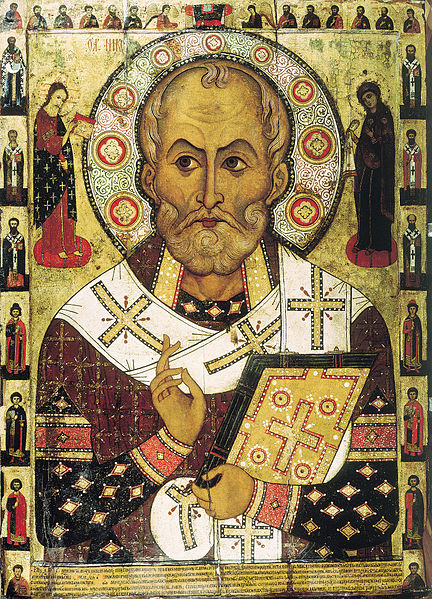
Dirk Willems (see illustration at right) was a 16th century Dutch Anabaptist who is most famous for escaping from prison, turning around to rescue his pursuer—who had fallen through thin ice while chasing Willems—to then be recaptured, tortured and killed for his faith. Wikipedia

Hymn of praise (which gets my vote for a modern Reformation hymn). “If I Had a Hammer,” The Weavers.

One way to understand the Protestant Reformation (and maybe our own age as well) is to turn to the oft-cited quote from Anglican Bishops Mark Dyer, popularized in the writing of Phyllis Tickle:

        “The only way to understand what is currently happening to us as 21st-century Christians in North America is first to understand that about every 500 years the church feels compelled to hold a giant rummage sale," when “the empowered structures of institutionalized Christianity become an intolerable carapace that must be shattered in order that renewal and new growth may occur." —see more at Tom Roberts, National Catholic Reporter

The Reformation is typically divided into two wings from the 16th century: the “Magisterial” Reformation (think Luther, Calvin, Zwingli, etc.) who were supported by their respective existing political institutions, and the “Radical” Reformation, a diverse collection of movements commonly designated as Anabaptists, who were very nearly killed off (by Reformation and Roman Catholic authorities) after a generation. The bodies known now as Mennonites, Brethren, Amish, etc., are among the Anabaptist heirs.

Near the end of seminary training, I made a listing of what had been the most important books in my theological education. As one reared in deep-water Baptist tradition, I was shocked to recognize that more than two-thirds of my “most important” guides were Roman Catholic authors. . . . I now say that while my ship of faith has many sails, its mainsail is that legacy flowing from the anabaptist outburst of the 16th century. —continue reading “My ship of faith has many sails: What it means to live into particular religious identity in the midst of spiritual plurality

Reformation as “democratizing access to the holy.” “Much of the history of the church is the story of the unfolding details of who gets to say and do what in the life of the believing community. It is the story of an increasingly complex bureaucracy detailing who gets to approach God on behalf of the people and approach the people on behalf of God. The early baptist impulse was to say that the unlettered and the unwashed also testify to the work of the Holy Spirit. The unanointed, the unlettered, the non-ordained also have access and also are called to speak to the difficult choices involved in following Jesus.” —continue reading “The baptist impulse: Notes toward a renewal of baptist identity

Confession. “We have divided Jesus into at least 41,000 denominational pieces when there is actually only one Jesus vine and, through the ages, billions of branches, because we . . . are the branches Jesus is referring to.” —Rev. Mari Larson, “Lutherans and Catholics Jointly Commemoration Reformation’s 500th Anniversary," The Catholic Key

Right: Dissenting Czech theologian Jan Huss, declared a heretic and burned at the stake in 1415 in Constance, Germany.

¶ “If anything signals the ‘overness’ of the Reformation, it has to be the appearance of Pope Francis at the Lutheran World Federation’s [LWF] formal inauguration of the year leading up to the October 2017 anniversary of the 95 Theses. This festive worship on October 31, 2016 featured the startling image of the pope—whose office was not infrequently identified by Luther as that of the Antichrist—processing up the aisle of the great cathedral flanked by Bishop Munib Younan, president of the Lutheran World Federation, and Martin Junge, general secretary of the LWF.” —Sarah Hinlicky Wilson, “Is the Reformation over? Yes and no,” Christian Century

Hymn of supplication. “O God of earth and altar, / bow down and hear our cry, / our earthly rulers falter, / our people drift and die; / the walls of gold entomb us, / the swords of scorn divide, / take not thy thunder from us, / but take away our pride.” —Iron Maiden, “O God of Earth and Altar” (click “show more” to see all the lyrics)

THIS is the profound failure not only of the Magisterial Reformation but of the church as a whole, in effectively removing the actual life and teachings of Jesus from the Christian story (from John Calvin’s Geneva Catechism, 1545)
        Question 55: “Why do you leap at once from [Jesus’] birth to his death, passing over the whole history of his life?”
        Response: “Because nothing is treated of here but what so properly belongs to our salvation, as in a manner to contain the substance of it.”

Words of assurance. “Thou, greatest solace in all suffering, / Help us to fear neither shame nor death, / that we do not despair / before the enemy sues for our life. / Kyrioleis.” —lyrics to Martin Luther’s Pentecost hymn “Come, Holy Ghost, God and Lord”

Left: Martin Luther’s burning of the Papal Bull excommunicating him

¶ As with most all historical naming, the date of 31 October 1517 as “Reformation Day” is biased. Dissent against the Holy Mother Church had already been underway for a century. The choice of this date comes because one of the most identifiable and volatile acts occurred that day.

        “A simple act . . . but it triggered an epic era of political and religious convulsions that changed the shape of Europe” when “a monk named Martin Luther walked to a church in the German town of Wittenberg and nailed his 95 theses to its wooden doors, lighting the fuse of the Reformation.” —Harriet Sherwood, “After 500 years of schism, will the rift of the Reformation finally be healed?” The Guardian

        New technology was a key factor. “The Protestant Reformation had a lot to do with the printing press, where Martin Luther’s theses were reproduced about 250,000 times, and so you had widespread dissemination of ideas that hadn’t circulated in the mainstream before.” —Nate Silver, author and statistician

Luther was a prolific and eminently-quotable writer. Here are a few of my favorites:

        • “Our Lord has written the promise of the resurrection, not in books alone, but in every leaf in spring-time.”

        • “As long as we live, there is never enough singing.”

        • “A religion that gives nothing, costs nothing, and suffers nothing, is worth nothing.”

        • “You are not only responsible for what you say, but also for what you do not say.”

        • “I consider looseness with words no less of a defect than looseness of the bowels.”

It’s also true that Luther had some horrendous things to say about women, e.g., that women had but two roles: wife or prostitute. And even worse things about Jews, urging in “On the Jews and Their Lies” that “Jewish synagogues and schools be set on fire, their prayer books destroyed, rabbis forbidden to preach, homes burned, and property and money confiscated. They should be shown no mercy or kindness, afforded no legal protection, and ‘these poisonous envenomed worms’ should be drafted into forced labor or expelled for all time. . . . [W]e are at fault in not slaying them.Wikipedia

Professing our faith. “If you preach the gospel in all its aspects with the exception of the issues that deal specifically with your time, you are not preaching the Gospel at all.” —Martin Luther

Hymn of resolution.Give Me Jesus,” Danny Gokey.

Short story. For a short (8:17) video telling the story of Martin Luther’s revolt against the church’s practice of selling “indulgences” (to help speed one’s way, after death, from purgatory to heaven) to help rebuilding St. Peter’s Basilica in Rome, see “An Introduction to the Protestant Reformation,” Khan Academy.

For a summary of the major characters of the Protestant Reformation, see History World’sHistory of the Reformation.”

¶ For a brief survey of the four currents within the “Radical Reformation”—the Protestant reformers who carried on the church’s reformation without official sanction from governing authorities—see “The Reformation Era,” Christianity Today.

Left: Oil painting after the etching La Pendaison (The Hanging), from Les Grandes Misères (“The Great miseries of War”), one of a series of 18 etchings by French artist Jacques Callot. The art depicts the destruction unleashed on civilians during the Thirty Years War in Europe (1618-1648), sparked when the Holy Roman Emperor Ferdinand II attempted to push back the advance of Protestant rulers, primarily those of Sweden, France, Spain and Austria, with most of the conflict occurring on German soil. The “Peace of Wesphalia” treaty ending the wars reshaped the religious and political map of central Europe and set the stage for the development of the modern sovereign state.

Preach it. Harold Bender, the Anabaptist scholar, writes that the notion of following was the key distinctive of the Anabaptist movement's birth in the 16th century. By and large the radical reformers were in agreement with the magisterial reformers, but felt they hadn't pushed the Reformation far enough. The notion of ‘salvation by grace alone’ was good but not sufficient. . . . Nachfolge Christi—following Christ—was the insistent refrain from the Anabaptists. They insisted that any idea, any cognitive affirmation, about God is tested by the way it transforms the shape of our lives. —continue reading “Trust and obey: Reflections on living in the Spirit

Can’t makes this sh*t up. President Trump declared the week of Oct. 15-21 National Character Counts Week in a proclamation Friday. "We celebrate National Character Counts Week because few things are more important than cultivating strong character in all our citizens, especially our young people," Trump said. USA Today

Call to the table. “When three of us began daydreaming about a starting a new congregation . . .  one of the things we immediately imagined was worship centered around communion. This tangible ritual act—of re-membering in the midst of a dismembered world—is poignantly expressive of our theological vision.” —continue reading “Eucharistic conventions: Why we practice these (somewhat) odd manners at the Lord’s Table

The state of our disunion. “Forasmuch as experience hath plentifully and often proved that since the first rising of the Anabaptists, about one hundred years since [a gross, willful, or ignorant misrepresentation], they have been the incendiaries of the Commonwealth, and the infectors of persons in matters of religion.” —“Act of the General Court of Massachusetts Bay Colony law November 1644

Best one-liner. “We must make the invisible kingdom visible in our midst.” —John Calvin

For the beauty of the earth. “There is not one blade of grass, there is no color in this world, that is not intended to make us rejoice.” —John Calvin

Altar call. “Even if we were not sinful by nature, the sin of having private property would suffice to condemn us before God; for that which he gives us freely, we appropriate to ourselves.” —Swiss Protestant reformer Huldrych Zwingli

Benediction. “We should ask God to increase our hope when it is small, awaken it when it is dormant, confirm it when it is wavering, strengthen it when it is weak, and raise it up when it is overthrown.” —John Calvin

Recessional.Never Turning Back,” Street Choir Festival at Jubilee Square in Leicester, made up of 30 choirs across the UK.

Lectionary for this Sunday. “For the nations shall tremble, the earth shall quake, at the stirring of Holy Intent. For the Beloved awakes to the cries of the poor, to the mourning of land and sky.” —continue reading “Nation of frivolous piety,” a litany for worship inspired by Psalm 99 & Isaiah 1:15

Lectionary for Sunday next. Prosper the work of every generous hand,” a litany for worship inspired by Psalm 90.

Just for fun. A Calvinist arrives at St. Peter’s gates and sees that there are two queues going in. One is marked “predestined,” and the other is marked “free will.” Being the card-carrying Calvinist that he is, he strolls on over to the predestined queue. After several moments an angel asks him, “Why are you in this line?” He replies, “Because I chose it.” The angel looked surprised, “Well, if you ‘chose’ it, then you should be in the free will line.” So our Calvinist, now slightly miffed, obediently wanders over to the free will line. Again, after a few minutes, another angel asks him, “Why are you in this line?” He sullenly replies, “Someone made me come here.”

Just for fun #2.Monty Python—The Adventures of Martin Luther.”

#  #  #

Featured this week on prayer&politiks

• “Prosper the work of every generous hand,” a litany for worship inspired by Psalm 90

• “My ship of faith has many sails: What it means to live into particular religious identity in the midst of spiritual plurality,” a short essay

• “Eucharistic conventions: Why we practice these (somewhat) odd manners at the Lord’s Table,” a short essay

©Ken Sehested @ prayerandpolitiks.org. Language not otherwise indicated above is that of the editor, as are those portions cited as “kls.” Don’t let the “copyright” notice keep you from circulating material you find here (and elsewhere in this site). Reprint permission is hereby granted in advance for noncommercial purposes.

Feel free to copy and post any original art on this site. (The ones with “prayerandpolitiks.org” at the bottom.) As well as other information you find helpful.

Your comments are always welcomed. If you have news, views, notes or quotes to add to the list above, please do. If you like what you read, pass this along to your friends. You can reach me directly at kensehested@prayerandpolitiks.org.
 

Trust and obey

Reflections on living in the Spirit

by Ken Sehested
(unpublished lecture delivered at Anabaptist Mennonite Biblical Seminary, March 1993)
 

Two ancient texts to begin:

The Problem: Now the earth was corrupt in God's sight, and the earth was filled with violence. (Genesis 6:11)

The Solution: Heal the sick, and say to them, 'the reign of God has come near you.' (Luke 10:9)

A modern text: The churches are challenged to their best life when we hear the cry of the oppressed as a siren deep within our bones, when we risk our lives to respond, when we discover that there is no fundamental contradiction between waking up with our minds stayed on Jesus and stayed on freedom. Both songs belong to us. Both open us to the morning light. —Vincent Harding, Hope and History

      In a popular book entitled Jesus Means Freedom Ernst Käsemann relays this story from a pastor-friend in Amsterdam of the aftermath of the severe rains and flooding in Holland in 1952:

      "The scene was one of those parishes where people felt themselves strictly bound to obey God's commandments, and therefore to keep the Sabbath holy. The place was so threatened by wind and waves that the dike had to be strengthened one Sunday if the inhabitants were to survive. The police notified the pastor, who now found himself in a religious difficulty. Should he call out the people of the parish that had been entrusted to him, and set them to do the necessary work, if it meant profaning the Sabbath? Should he, on the contrary, abandon them to destruction in order to honor the Sabbath? He found the burden of making a personal decision too much for him, and he summoned the church council to consult and decide. The discussion went as one might suppose: We live to carry out God's will. God, being omnipotent, can always perform a miracle with the wind and waves. Our duty is obedience, whether in life or in death. The pastor tried one last argument, perhaps against his own convictions: Did not Jesus himself, on occasion, break the fourth commandment and declare that the Sabbath was made for man, not man for the Sabbath? Thereupon a venerable old man stood up: 'I have always been troubled, Pastor, by something that I have never yet ventured to say publicly. Now I must say it. I have always had the feeling that our Lord Jesus was just a bit of a liberal.'"

      There is probably no clearer dividing line within the Christian community than the one between pietists and activists. The line is also framed as "conservatives" and "liberals." There is something on the order of a massive fault-line running down through most Christian bodies. On the one side are those who urge the church to faithful habits of prayer, worship, Bible study, evangelism, orthodoxy; on the other are those urging ministry, compassionate care for the world, the pursuit of justice, the search for peace, orthopraxis.

      On the one side are those who focus on inwardness, on words like holiness, conversion, getting right with God, getting saved; on the other the focus is on outwardness, on words like social action, peace and justice, structural change.

      On the one side the predominant language stems from pietist, contemplative, or revivalist traditions; on the other, such "religious" language—if not entirely discarded—is carefully pruned, reserved for the sanctuary and filtered through the vocabulary of social science.

      On the one side you're more likely to hear fervent sermons about the need to "trust Jesus"; on the other, statistically-peppered admonitions to "obey Jesus." On the one side Jesus is pictured as Savior; on the other, Jesus as servant and exemplary model. On the one side, private morality is stressed; on the other, public justice.

      On the one side, attention is focused on heaven; on the other, to the earth. Are we to tend to "spiritual" realities or to "material" ones?

      It would be relatively easy to classify most local congregations as either a "trusting" church or an "obeying" one. Most of the time, though—as in the story Käsemann tells—the preferred language pits "conservative" against "liberal."

      There was a time when I assumed this division was somewhat peculiar to my own Baptist heritage. But I have since become aware that no Christian tradition has escaped the effects of this fissure. And although this division within the Christian church may be more pronounced in the West, and particularly within the United States. I now know it afflicts the worldwide Christian communion.

      The debate signals a profound confusion as to our identity and role as the Body of Christ. On the one side, among conservatives, there is a forceful, even frantic attempt to shore up the crumbling authority of the church and the verity of its faith by resort to nostalgia, a fanciful reconstruction of an imagined past. The uncertainty of its position is marked by the increased volume of its voice, the deepened furrow of its brow. It heralds with pride its separation from modernity—clearly a characteristic of biblical people of all ages—oblivious to the pact it has in fact made with modern culture. It no longer hesitates to enforce constituent loyalty, whether by means of "disfellowshipping" (among Baptists) or excommunicating (among Catholics).

      On the other side, among liberals, the confusion is expressed as a distaste for much and maybe all that looks and sounds "religious." It exhibits an embarrassment over traditional religious language and categories and thinks of itself as "come-of-age," mature enough to translate archaic theological notions into the modern, more intelligible categories of psychology and sociology or into the framework of the exotic.

      Both, however, share a number of things in common, among them: the inability to imagine that the ancient confession that "Jesus is Lord" can impact the future of nations; the inability to imagine a suffering Savior as sufficient for the problems at hand; the lack of confidence in God's promised redemption of creation.

      Trust . . . or obey. Piety or politics. Evangelism or social engagement. Prayer or praxis.

      We feel caught, as William Willimon notes, between the devotional love of God, on the one hand, and the activist love of neighbor on the other. Is it possible for us to move beyond the horns of this dilemma? Is it conceivable that we might come to comprehend what Karl Barth meant when he said: "To clasp hands in prayer is the beginning of an uprising against the disorder of the world"? Attempts to separate "spiritual" concerns and "social" concerns have a long history. According to Robert McAfee Brown such attempts "have been front and center ever since Pharaoh unsuccessfully tried to persuade Moses that religion had nothing to do with Egypt's domestic policy on the status of nonindentured servants."

      The dilemma we face is rooted in the very language we use. We seem to be caught in a linguistic trap. What we need, as Gustavo Gutierrez has written, is a language that is both contemplative and prophetic; contemplative because it ponders a God who is love; prophetic because it talks about a liberator God who rejects the situation of injustice in which the poor live. (quoted in Robert McAfee Brown, Spirituality and Liberation, p. 134)

      The title for this work comes from the old hymn by John Sammis, "When We Walk With the Lord." The refrain contains the key words: "Trust and obey / for there's no other way / to be happy in Jesus / but to trust and obey."

      My thesis is that that old hymn may contain the clue we need to a complete reformulation of the way we understand Christian identity, one that leads beyond the familiar polarization between concern for heaven and concern for the earth, between personal religion and public faith, between the quest for spirituality and the longing for justice. At present we're at an impasse.

      If we are to continue, with any semblance of fidelity to biblical faith, we simply must find a way beyond these dualisms. We must discover the organic connection between trust and obedience; we must learn to understand that biblical talk about heaven is a particular way of talking about the earth; that personal religion without public witness is as insipid as public witness without personal faith is impotent; that spiritual and material reality intersect; that Scripture's promise of salvation intersects with its promise of liberation; that Micah's famous trilogy—"do justice, love mercy, walk humbly with God"—is not a three-part statement but a means of saying the same thing in three different ways.

      The basic affirmation made here is that the presence of glaring injustice, the wretched destruction of war and violence that ravages the human community, even the desecration and pollution of the earth itself, are indicative of a profound spiritual malaise. The longing for peace to flow like a river, justice like a mighty stream, is first and foremost an issue of spirituality. The love of God, in biblical terms, transpires in the love of God's creation. In biblical terms, an active life of prayer and devotion is intrinsically connected with a life of resistance to present power arrangements governing the world. In biblical terms, our most transparent encounter with God occurs in the compassionate encounter with those who are crushed and marginalized in the world's ordering of values, in the world's assignment of honor and status.

      To explore this thesis more fully we need to explore three areas: First, an analysis of the ways we have attempted to domesticate Scripture, effectively rendering it innocuous, by driving a wedge between spiritual realities and material or physical realities. Second, by indicating why it is that the word following is a much better term for discipleship than is the word believing. Third, by pressing the point that, in the end, Christian obedience ("ethics") is deeply rooted in trust ("worship").

      We in the industrialized, wealthy part of the world have effectively rendered the Bible innocuous through a process of "sentimentalizing" what we read. Sentimentalizing—having to do with sentiments, with the psycho-emotional. We moderns would say: "It's the thought that counts."

      Soren Kierkegaard tells the story about a flock of geese, sequestered in a barn yard. Every seventh day these geese paraded over to a specially-designated corner of the yard, standing in neat and solemn rows as their most eloquent orator got up on the fence and spoke of the wonders of geese.

      He told of the exploits, the courage and the marvelous adventures of their ancestors who had dared to mount up on wings and fly all over the sky, throughout most of the globe. He spoke of the mercy of the creator, who had given geese strong and able wings, as well as the instincts to plummet through the air high above all the other animals. This narrative never failed to impress the assembled flock of geese, inspiring them and filling them with awe and wonder. And they would nod their heads in conviction.

      All this the geese did, every seventh day. One thing they did not do. They did not fly, for the corn was good and the barnyard was secure.

      Like the geese in Kierkegaard's story, our response to the ancient stories of our ancestors is more along the lines of nodding our heads. We might say amen; or feel a strange but wonderful warming of the heart. But we do not fly.

      In my travels I often use a sermon based on the familiar story of Zacchaeus in Luke's Gospel. It's a well-worn story, in part because of the simple song many of us grew up singing about Zacchaeus. You know how it goes: Zacchaeus was a wee little man, and a wee little man was he. He climbed up in the sycamore tree, for the Lord he wanted to see. And as the Savior passed that way, he looked up in the tree. And he said, Zacchaeus, you come down, for I'm going to your house today."

      Have you ever thought about the way that song doesn't finish the story? Why doesn't it tell about what happened at Zacchaeus' house? Although the text is silent about their conversation, it does record the conclusion, where Zacchaeus makes his profession of faith in Jesus Christ as personal Lord and Savior. Only he says it in a way that would confuse the counselors at a Billy Graham evangelistic campaign. Zacchaeus simply says: Lord, if I have defrauded anyone, I restore it fourfold; and I give half of my goods to the poor. And Jesus' response? "Today salvation has come to this house."

      Our notions of what it means to be spiritual are so weak, so insipid, so trivial, so disembodied and ethereal. They have about as much credibility as a singing TV commercial. The church's proclamation of the Good News of the Coming Reign of God has become background noise in our time, kind of like cultural muzak. The second letter to Timothy is familiar with this reality even back then when it notes that some "hold the form of religion but deny the power of it" (2 Timothy 3:5).

      Clarence Jordan once said: "Faith is not belief in spite of the evidence; that's not faith, but foolishness. Faith is life lived in scorn of the consequences."

      The problem is that the word faith has undergone a radical transmutation in modern times. The question of faith is now a question of cognitive assent. Faith is believing in the existence of God. And the polls show that most everybody believes in God. At least as many people believe the earth is round, too; so where's the rub?

      There's a story from Clarence Jordan's life that illustrates why "believing" is no longer an adequate word for Christian faith and why "following" is better suited.

      As you probably know, Clarence and Florence Jordan, along with Martin and Mabel England—two good Baptist families—founded Koinonia Farm in South Georgia in 1942. They wanted to do some experimental farming, trying to demonstrate new agricultural methods which would allow poor farmers a chance to make a living, allow them to keep from going broke and migrating to the big cities where, as Clarence had seen, would only make things worse. Their dream was a civic-minded one. They probably could have gotten a foundation grant for something like that. The hitch, however, was that these dreamers were intent on having blacks and white work together. And to make matters worse, they insisted on paying black folk the same as white. Being socially polite to black folk was risky enough. But the issue of equal pay represented a frontal assault on the economic system of the region.

      As you might imagine, Koinonia Farm quickly went from being an oddity to a scandal. At first they were tolerated; then there were repeated attempts to terminate them. Several times the farm buildings were fired upon from the highway that ran by their house. The farm's roadside fruit stand was bombed. An economic boycott was mounted against the farm.

      Things were tough. Money was almost gone. The end was in sight. In desperation, Clarence turned to his brother, a successful lawyer in a nearby town who would later become a state senator in Georgia.

      After a long and fruitless conversation, Clarence finally challenged him: "Brother, you and I walked down the aisle as kids—at the same time, in the same Baptist church—and said 'yes' when the preacher asked if we wanted to give our hearts to Jesus and follow him in baptism."

      His brother replied: "I know, Clarence; I want to follow Jesus too, but only up to a point."

      "Might that point be the foot of the cross?" Clarence asked. "Brother," he continued, "I think you need to go back to that little church where we walked the aisle and clarify exactly what it was you said yes to. You tell the church that what you meant to say was that you admire Jesus, not that you want to follow him."

      Harold Bender, the Anabaptist scholar, writes that the notion of following was the key distinctive of the Anabaptist movement's birth in the 16th century. By and large the radical reformers were in agreement with the magisterial reformers, but felt they hadn't pushed the Reformation far enough. The notion of "salvation by grace alone" was good but not fully sufficient. The radical reformers insisted on a more tangible and less rhetorical shape of Christian identity, on lives of obedience to the Kingdom of God as a clear and decisive alternative to the kingdoms of this world. That's why their communities were characterized by economic sharing, by concrete actions of mercy and compassion, and—most significantly—by refusing to wield the sword in defense of ruling lords and princes.

      Salvation, they insisted, must be evidenced by fruit, by a new life lived from new values, values not honored by the world, values judged foolish by worldly standards.

      Nachfolge Christi—following Christ—was the insistent refrain from the Anabaptists. They insisted that any idea, any cognitive affirmation, about God is tested by the way it transforms the shape of our lives, by the way it operates in all our personal and collective decisions about security.

      Interestingly enough, Dietrich Bonhoeffer, the German pastor and theologian, picked up this theme in a book he titled with a single German word: Nachfolge, a title that was translated in the English version as The Cost of Discipleship.

      My assertion that following is a better descriptive watchword for Christian faith than believing is massively demonstrated not only in the substance of Scripture but also in its very form and shape, its literary genre.

      The heart of both Hebrew Scripture (the Old Testament) and the New Testament is a collection of stories and narratives rather than philosophical arguments. Ancient Israel's fundamental confession was the story of her liberation from Egyptian slavery. God is not pictured in abstract metaphysical terms; rather, Yahweh God is the instigator of a massive freedom march. The ongoing interaction between God and Israel revolves around concrete events of liberation, disobedience, confession and restoration within the vicissitudes of human history, within the order of flesh-and-blood creation.

      Not that Israel never reflected upon these experiences and memories, articulating principles about the nature of God's expectations. But the infrastructure of their theology was always a story, a lived experience, of God's initiative. The attempt to capture God within the logic of a theological proposition always gave rise to some prophet who came along and turned things upside down.

      The story of faith is the story encompassing faithful and faithless people. The only reliable theological method is that of attending to God's movement in time and space, to God's building up and tearing down.

      As Gustavo Gutierrez has noted in his marvelous book, We Drink From Our Own Wells, "At the root of every spirituality there is a particular experience that is had by concrete persons living at a particular time. . . . The great spiritualities in the life of the church continue to exist because they keep sending their followers back to the sources."

      This impulse is still present in my Baptist heritage. When I was growing up, personal testimonies still played an important part in our corporate piety. Untrained lay folk were encouraged to speak of their faith by way of telling stories of personal redemption, with reference to concrete experiences and events.

      We evangelical-type Christians put a lot of stock in the importance of having a "personal relationship with Jesus Christ." Unfortunately, our more "progressive" churches don't ask such questions any more. You can understand why, since more often than not the question masks an arrogant demand that we use only certain language to confess faith, that we pray only in routine ways, that we limit church music to certain hymns and certain standards of piety.

      But there is a very good reason why the question of one's personal relationship with Jesus Christ is significant and worth asking, even though it's been forgotten by most of the folk currently insisting on its importance. To have a personal relationship with Jesus is our tradition's way of asking, "Have you put your faith on the line? Does it make a tangible difference in the way you live? Has your allegiance to mammon—to wealth, power, status and security—been compromised because of what you believe God is doing in the world? Does your confession of Jesus as Lord have implications regarding Caesar's claim to lordship? Are your career ambitions called into question because of your ambitions to be faithful to Christ?

      Faith is life lived in scorn of the consequences. The Southern novelist, Flannery O'Connor, paraphrased a verse from John's gospel in this way: You shall know the truth, and the truth will make you odd! Following, not believing, is the prior point of departure for Christian identity.

      If you've stayed with me thus far, you can probably anticipate the conceptual problem which comes next. If what I've said is true, are we not then left with the old problem of works-righteousness? Doesn't this direction lead down a dead end street? Aren't we getting into a theologically boxed canyon? Aren't we collapsing theology into ethics? What keeps Christian discipleship distinctive from the human potential movement?

      Despite this somewhat campy resuscitation of old-fashioned revivalist and pietistic notions, isn't this argument in reality a dressing up of liberal naivete in evangelical drag? Do we throw out the Bible as a Sunday school text and substitute books analyzing foreign policy—or worse still, books on "how to get all the love you deserve"? Do we stop calling for conversion and settle for a little Jungian individuation?

      To make the transition to the final part of this lecture, let me tell you about a letter I got recently. It's from a friend who pastors in Texas.

      "Just got back from speaking to the Baptist Student Union," he wrote. "They wanted me to talk about 'seeking God.' As one student told me, 'We just want to seek God's face and worship him.'

      "So I spoke from Hebrews 12, where it recounts that Moses sought God on the mountain and the mountain shook. There was darkness and gloom, fire and smoke, and Moses said, 'I tremble with fear.' The text ends with, 'for our God is a consuming fire.' I told the students if they seek God, great; but they had better be careful. I've seen this God make sophomores sick, cause otherwise subdued English majors to lose control. I've seen senior marketing majors all set to graduate and pull down some big bucks meet this God and end up going to work the homeless and hungry. I've seen ROTC members meet this God and begin to question whether you can follow Jesus and be prepared to use violence at the same time. I've seen it!"

      Changing the metaphor for Christian identity from "believing" to "following" does not leave us ethics stripped of theology. There is another option besides the seemingly endless dualisms of faith versus works, evangelism versus social action, prayer versus politics.

      Let me offer my systematic theology. Fortunately, it's much more concise than that of Barth or Tillich. I can do it in five sentences.

      First, the principle duty of the Christian community is to adore God. Second, according to the New Testament, to adore, honor and worship God means we should attend to Jesus, God's Only Begotten. Third, according to Jesus' own repeated command, those who adore him will follow him—"if you love me, do as I have commanded." Fourth, if we follow Jesus—animated by the power of the Holy Spirit—we are likely to end up with a fate somewhat like his own. Which is to say, we're likely to get into trouble. To quote Jordan again: "I don't think a Christian is worth his salt who has not been called a Communist today. Trying to refute that epithet is about like running for your birth certificate when someone calls you an s.o.b." Fifth, and finally, it is in trouble—when human resources and calculations prove insufficient—that we learn what it means to adore God, to "lean on the everlasting arms."

      Walter Brueggemann notes that it is right and proper to focus on God's shalom as task. But shalom begins at the table, in the Lord's Supper, as assurance.

      It is trust which provides the fertile ground for obedience. "Our problem," says William Willimon, "is not that we do not act upon our beliefs. Our problem is that we are enslaved. We can never do more than act in accordance with our situation. Obligation is the correlate of sovereignty. We serve whom we worship." Or, as St. Augustine said it, "We imitate whom we adore."

      It is this posture of adoration which now defines our life direction. Ethics is the by-product of adoration. It is in worship, in prayer, that we are alerted to the great secret of the universe: the secret that God is not yet done. It is a secret the world hates. And so it should, for the message of this secret is that the lowly will be lifted, the exalted thrown down; the marginal brought to the head table, and the royalty ushered to the margins.

      To worship is to devote ourselves to the cleansing fire of the Spirit, to have our fears relieved, to experience God's emancipation proclamation. We are afraid, afraid that in truth only the strong survive, and we are not strong. It is this fear, this polio of the soul, which is healed in worship. As Charles Elliott notes, "the demand for radical love of God is indistinguishable from the radical love of those who have no claim on us. So prayer comes to focus on that vortex: where freedom to give and receive the abundance of God's love spills over into, comprehends, includes, becomes the essence of the splendor of love of the vulnerable and the dispossessed."

      In the eucharistic meal, God's love feast, we are called to remember: Do this in memory of me, Jesus said. But this meal of remembrance does not imply a simple historical recollection—oh, yeah, at a certain time and such-and-such a place Jesus had this dinner party and said "Ya'll don't forget what I told you." No, the Greek word is anamneisis, which means to re-member, to put back together. It means to wake up, open your eyes—remember who you are! For we are God's; we are safe; we can risk everything, and we want to because the vision of a healed creation is so compelling!!

      A famous rock-and-roll tune from my adolescent years says it about as good as it can be said: "Freedom's just another word for nothing left to lose."

      It is in worship, in adoration, in contemplating the fact that Almighty God takes great delight in loving us that we are freed to live—to live with abandon, especially in the direction of, for the sake of, those for whom the world has no use. We are free to honor the dishonored, for the world's honor is recognized for what it is, vainglory. We are free to associate with the lowly, for the opinions of the high and mighty no longer impress us. We are free—even, if need be, to risk our very lives—for we now know that our security rests elsewhere, that there's nothing the world can do to us which ultimately matters. Because of our confidence in the resurrection, not even death can harm us.

      In worship, according to Dom Helder Camara, we discover the power to "be free to the point of being able to deliver ourselves from ourselves and be able to give ourselves to others."

      When our lives are rooted in prayer, in adoration, in solitude, we stay in touch with God's grace. Not the sugar-filled emotions of feel-good religion. It is only a focus on adoration as the basis for action, prayer as the ground of politics, the ecstasy of worship as the seedbed for ethics, which will heal the severance of redemptive action from redemptive vision.

      Trust and obey. Trust: that there is in the universe a power which you do not manage, which you do not fund, which you do not sustain. As Matthew Fox reminds us: "The paranoid and the mystic share much in common: paranoid persons believe there is a conspiracy in the universe against them; mystics believe there is a conspiracy in the universe on their behalf."

      "True evangelical faith," wrote Menno Simons, "cannot lie dormant. It clothes the naked; it feeds the hungry; it comforts the sorrowful; it shelters the destitute; it serves those that harm it; it binds up that which is wounded; it has become all things to all."

      "Trust and obey, for there's no other way
       to be happy in Jesus, but to trust and obey."

###

My ship of faith has many sails

What it means to live into particular religious identity in the midst of spiritual plurality

by Ken Sehested

        Near the end of seminary training, I made a listing of what had been the most important books in my theological education. As one reared in deep-water Baptist tradition, I was shocked to recognize that more than two-thirds of my “most important” guides were Roman Catholic authors.

        I now say that while my ship of faith has many sails, its mainsail is that legacy flowing from the anabaptist outburst of the 16th century (though that movement’s precursors stretch back to 14th century figures like the Czech priest Jan Hus and the Oxford theologian John Wycliffe—and even 13th century figures like St. Francis in Italy and the Beguine communities, a lay, semi-monastic order of single women (later repressed) in the Low Countries of Europe, all of whom dissented from  the church’s wealth and privilege.

        Long story short, my anchorage among the Radicals stems from two reasons: First, because of their thoroughgoing affirmation of what I call the “democratizing of access to the holy” and, correspondingly, their undermining of all notions of political sovereignty. Second, the anabaptist majority’s (there were dissenters on this score) refusal, on theological grounds, to wield the sword in defense of the state. (For more on this, see “Public reasoning and ekklesial reckoning: Commentary on the Vatican conference calling for ‘spirituality and practice of active nonviolence’ to displace church focus on just war” and "Enough of this! Toward a theology of nonviolence: Why I don’t often use the language of ‘pacifism’.”)

        The unfortunate unintended consequence in our day of emphasizing equal access to the holy is thinking that if it’s equal, it’s easy—requiring no struggle, no training, no effort or discipline. And if the sovereign claims of political institutions (including ecclesial ones) are overturned, then the solitary soul becomes sovereign.

        This form of sovereignty is in fact the worst form of bondage in that it ignores the need and purpose for making promises, of honoring vows, of establishing covenants, of participating in any form of community—or experiencing simple empathy—whatsoever. This, I would say, is hell itself.

        Back to the many sails: I believe that every denominational tradition (well . . . maybe there are a few stinkers) represents a gift from the Holy Spirit meant for the whole church. The vocation of those whose vision is especially shaped by one of these gifts is to be a steward and advocate of its insights within the larger body. Sometimes, though, the whole body simply squashes the newcomers. Other times, the newcomers vainly assume their access to the holy is privileged above all others, as if we knew God's one and only Presence.

        None of us live in a constant state of levitation, hovering above history, devoid of parochial bents and peculiar accents, free of the limitations imposed by ethnicity, culture, nationality, gender-orientation-race-class and on and on. At our best we discover that such limitations are malleable. Our job is to discover these given contours, for each is a gift; and then to explore such limits in fruitful ways where they come up against the "other," not as imperialists or for conquest but as friends and companions.

        This is what it means to live into particular religious identity in the midst of spiritual plurality.

        Ironically, those with the most clarity about the center of identity are better equipped to explore its porous boundaries.

#  #  #

©ken sehested @ prayerandpolitiks.org

Eucharistic conventions

Why we practice these (somewhat) odd manners at the Lord’s Table

by Ken Sehested

        When three of us began daydreaming about a starting a new congregation,
during long hikes in the Blue Ridge Mountains in the first year of the new millennium,
one of the things we immediately imagined was worship centered around communion,
including placing the table in the center of our seating. Every Sunday—which is unusual
in Protestant bodies. None of us were raised that way. This tangible ritual act—of
re-membering in the midst of a dismembered world—is poignantly expressive of our
theological vision.

        Moreover, we wanted to do this with bodies in motion, as an act of intentionality,
requiring each to stand, to walk, to mingle in random, status-scrambling order with
others, encircling a round table—with the offering plate right there on the table
sharing space with the cup and homemade Host, along with hand-picked flowers, one
or more candles burning in remembrance of those not present and, on occasion,
pastoral letters of encouragement or prophetic challenges issued from the congregation
and signed by all so willing.

        Coming to the table involves a certain animation, just as the life of faith requires
rising from the spectator’s chair, just as the pursuit of hopeful vision in a tortured world is never hand-delivered but hard-won.

        The Eucharist is rightly called a “joy meal,” but it is not a Happy Meal. As the author
of Hebrews puts it, it was “for sake of the joy set before him” (12:2) that Jesus endured the
cross.  Just as it was “on the night of his betrayal” that Jesus drew his followers into shared
culpability for the struggle to come, so, too, do we week after week, in the mire of the world’s
continuing betrayal (and sometimes our own), return to the source of confidence and
courage and beatific vision that Another World is promised.

        More odd still in our communion practice, we not only invite children to participate but,
sometimes, to serve as well. It is a scandalous departure from the believers’ church tradition,
and even the infant baptizers typically require confirmation classes prior to being welcomed
at the table.

        The complaint against such is that young ones do not understand the implications the
ritual. I say, who among us understood the implications of our initial confession of faith?
Who, in their wedding ceremony, understood the implications of matrimony? Who among us parents refuse a place at the dinner table for our children because they do not understand the digestive system?

        Didn’t Jesus rebuke his disciples for keeping the children at bay? And did he not say that entry into God's Reign entails child-like character?
(Matthew 19:13-15; Luke 18:15-17)

        The third of our unusual Eucharistic conventions is that we use three servers each
week: one for the bread, one for the cup, and the third for anointing, with oil in the shape
of a cross, the forehead of each who desires it. It serves as the weekly reminder of our
baptismal vows that faith is not an inoculation but an invoking. We must repeatedly be
called back from distractions and distress to our one True Mind. (1 Corinthians 2:16)

        Typically one of our pastors does the anointing. But on one recent Sunday, when no
one was doing so, one of our children noticed (see the photo above) and, on her own
initiative, retrieved the small beaker of oil and began performing this act of blessing.

        Can you think of a better image for the upside-down, inside-out, privilege-reversing
character of our calling?

#  #  #

©ken Sehested @ prayerandpolitiks.org
Photos by Marc Mullinax

News, views, notes, and quotes

Signs of the Times  •  10 October 2017 •  No. 139

Processional.Grace,” early American melody, performed by the San Francisco Gay Men’s Chorus the day after the mass shooting in Las Vegas.

Above: Centuries old juniper tree in the Canary Islands, molded by trade wind. Photo by Eckhard Pecher.

Invocation. “"Something's your vocation if it keeps making more of you." —character in Gail Godwin’s novel “Evensong”

Congratulations ICAN! “The Nobel Peace Prize was awarded to the International Campaign to Abolish Nuclear Weapons (ICAN) for drawing attention to the “catastrophic humanitarian consequences” of using nuclear weapons and for its efforts in a nuclear treaty, the Norwegian Nobel Committee said on Friday.
        “ICAN, which was founded in Australia, is based in the offices of the World Council of Churches in Geneva, Switzerland. It acts as an umbrella organization for 468 non-governmental organizations, including peace, rights and development groups, which are all trying to push for global nuclear disarmament.” —for more see Tara John, “5 Reasons Why ICAN Won the Nobel Peace Prize," Time

Right: Beatrice Fihn, Executive Director of the International Campaign to Abolish Nuclear Weapons (ICAN) receives a bottle of champagne from her husband Will Fihm Ramsay (r) next to Daniel Hogsta, coordinator, while they celebrate after ICAN won the Nobel Peace Prize 2017, in Geneva, Switzerland. Photo by Denis Balibouse/Reuters

Call to worship. “Be forewarned, you nation of frivolous piety: You who turn the Most High God into a mascot for your charade of innocence while deceitfully invoking the Sovereign’s blessings on your affairs.” —continue reading “Nation of frivolous piety,” a litany for worship inspired by Psalm 99 & Isaiah 1:15

Los Angeles is the most recent (and largest) city in the US to declare 9 October as “Indigenous People’s Day” instead of or in addition to “Columbus Day.” To date, four states and 55 cities and counties have approved such a measure. —see the list at Jennifer Calfas, Time

¶ “Columbus Day as a national, and international, phenomenon reflects a much larger dynamic that promotes myriad myths and historical lies that have been used through the ages to dehumanize Indians, justifying the theft of our lands, the attempted destruction of our nations and the genocide against our people.” —Russell Means & Glenn Morris

Hymn of praise. “Holy Spirit, / Giving life to all life, / Moving all creatures, / Root of all things, / Washing them clean, / Wiping out their mistakes, / Healing their wounds, / You are our true life, / Luminous, wonderful, / Awakening the heart from its ancient sleep.” —“Spiritus Sanctus,” Hildegard von Bingen, performed by Lumina Vocal Ensemble

¶ “Gold is a treasure, and he who possesses it does all he wishes to in this world, and succeeds in helping souls into paradise.” —Christopher Columbus

¶ Watch this video (3:38) surveying the legacy of Christopher Columbus.

¶ “If you want to read about a European pioneer on Columbus Day, learn about Bartolomé de las Casas. His story is one of unfolding repentance over the course of his life in regard to treatment of the indigenous population of the Spanish conquest of the ‘New World.’” —continue reading “Witness to villainy: An excerpt from Bartolomé de las Casas’ documentation of Spanish conquest in the Americas

Hymn of supplication.La Paz de la Tierra/The Peace of the Earth,” a traditional Guatemalan blessing arranged and performed by Marty Haugen and Marc Anderson (sung first in Spanish, then in English).

Confession.
        Men: What good can come from such vile remembrance? Can we not safely and how then can we live with such terrible knowledge?
        Women: We can live because the truth unknots the cords of enmity. But first, a NO has to be spoken with clarity, a renunciation has to be made, before a YES can be asserted, before an affirmation can be announced. —continue reading “Limb by limb: Repenting and repairing a legacy of violence against women,” a litany for worship

October is “Domestic Violence Awareness Month.” An international coalition of faith based groups and non-governmental organizations are sponsoring “Speak Out Sabbath13-15 October, encouraging faith groups to give focused attention to domestic violence. Worship resources available. Watch this brief (1:09) video.

¶ “Timeline of Legal History of Women in the United States.” —National Women’s History Project

¶ Judges 19—the Bible’s most brutal chapter. “But as [Phyllis] Trible reminds us, even the best English translations cannot do justice to the original Hebrew, where all of the verbal forms and the object in this statement are written in feminine gender. Literally, if awkwardly, translated it becomes “And all who saw her said, ‘SHE was not, and SHE was not seen such as this from the day that the people came up out of the land of Egypt.’” In other words, the unnamed woman [of Judges 19], the one with no status and object of unspeakable terror, is at the center of this story demanding our attention.” —continue reading “She was not: Judges 19: The Bible’s most vividly brutal story and why we must read and remember it,” a sermon on domestic violence

Words of assurance.What a Friend We Have In Jesus,” Alabama.

The Treaty on Non-Proliferation of Nuclear Weapons (NPT), approved by the United Nations in 1968 and then extended indefinitely in 1995, is a multilateral treaty aimed at limiting the spread of nuclear weapons including three elements: (1) non-proliferation, (2) disarmament, and (3) peaceful use of nuclear energy.

Above: U.S. Air Force B-52 Stratofortresses bomber

       • Nine countries possess nuclear weapons: United States, Russia, United Kingdom, France, China, India, Pakistan, North Korea, and Israel. Only the first five have signed the NPT. The US and Russia have 93% of these weapons.

        • ”Fact Sheet: Who Has Nuclear Weapons and How Many Do They Have?—Elizabeth Chuck, NBC News

        • One Ohio-class US nuclear submarine (the US has 14) carries 24 Trident II ballistic missiles, each of which splits into eight independently-targeted nuclear warheads.

        • The US is planning a $1.2 trillion upgrade of its nuclear weapons program. Doing so will likely provoke a new nuclear arms race with Russia and China.

        • Currently there are 15,000 nuclear weapons, 9,400 active in military arsenals, 4,000 in a state of constant readiness.

        • At the height of the Cold War the global stockpile of nuclear weapons was 40,000+. The negotiated reduction is good; but that’s a bit like saying you used to have 40,000 hammers in your workshop but now only 15,000.

        • The largest US weapon would kill 1.4 million within the first 24 hours; the largest Russian weapon, about half that many. Many millions would die in the weeks and months after.

        • Today’s strategic nuclear weapons are between 6 and 333 times more powerful than the bombs dropped by the US on Hiroshima and Nagasaki in 1945.

        • As few as 100 nuclear bomb explosions would create a “nuclear winter,” sending enough ash into the air to block sunlight and dramatically lower temperatures, eventually destroying most life forms.

        • The Treaty on the Prohibition of Nuclear Weapons (TPNW) was adopted by the UN General Assembly in July 2017 to strengthen the Non-Proliferation Treaty by comprehensively prohibiting nuclear weapons. 122 nations voted in favor; the Netherlands voted against; Singapore abstained; and all nine nuclear powers (and many of their allies) refused to take part in the negotiations.

        • Nuclear Weapons 101.” —Physicians for Social Responsibility

        • It’s not widely known that the US has never adopted a no-first-use policy regarding nuclear weapons.

Left: Painting by Jeffrey Robin

Two overlooked premises. First, if you believe in principled ethics—that the same norms should apply consistently—then nations possessing nuclear weapons have no moral basis for denying them to others. Second, if you believe in the rule of law, then nuclear powers are bound by the Nuclear Non-Proliferation Treaty to take concrete, tangible action to abolish all nuclear weapons. For that goal, the US only has thoughts and prayers.

Hymn of resolution.Nearer My God to Thee” (for 9 cellos), The Piano Guys.

¶ “10 Horrifying Facts about Nuclear Weapons.” —Citizens for Global Solutions

¶ “Surveys show that 13 of the leading nuclear weapons manufacturers combined spent $81 million per year lobbying US legislators. These same companies combined received an incredible $334 billion over two fiscal years. Every dollar invested in lobbying and campaign contributions resulted in about a $1,000 return in federal dollars.” Terry Clark, Asheville Citizen-Times

Short story. This is an extraordinarily moving story from National Public Radio about a music therapist and a dying patient. Listen (5:08) or read the transcript. —Erika Lantz

Offertory. Rodrigo’s Aranjuez Concerto” featuring Rafael Aguirre’s classical guitar.

Preach it. “I have come into this world to see this: the sword drop from men's hands even at the height of their arc of rage because we have finally realized there is just one flesh we can wound.” —Hafez

Can’t makes this sh*t up. Overheard in a cable news channel report: “We are just now finding out that Russia hacked into the National Security Agency, compromising the agency’s information gathering operations.” Russians hack. The US merely gathers information.

Call to the table. Imagine we were following Issy Emeney down the aisle, mimicking her every Appalachian flatfooting dance moves with ease, coming to the communion table.

The state of our disunion. The July issue of Ms. Magazine reports in the “No Comment” section an ad for a bowling alley in Michigan, which reads “Have some fun. Beat your wife tonight. Then celebrate with some good food and drink with your friends.”

Best one-liner. When you hear Republican politicians offering thoughts and prayers today [for the mass shooting in Las Vegas], remember they voted in February to sell guns to the mentally ill. Jessica Taylor, NPR

¶ “It is incomprehensible to us, as Australians, that a country so proud and great can allow itself to be savaged again and again by its own citizens. We cannot understand how the long years of senseless murder, the Sandy Hooks and Orlandos and Columbines, have not proved to Americans that the gun is not a precious symbol of freedom, but a deadly cancer on their society.

        “We point over and over to our own success with gun control in the wake of the Port Arthur massacre, that Australia has not seen a mass shooting since and that we are still a free and open society.” —editorial, Sydney Morning Herald, which goes on to recommend eight specific, commonsensical policy recommendations (Thanks Ivan.)

Another foreign perspective on US gun violence, this one from the Dutch, with a satirical take. NRA-Sunday with Lubach (3:14 video. Thanks Norman.)

¶ “The 12 Most Common Fallacious Gun Arguments (and How to Refute Them),” by gun owner Michael E. Sparks. —Independentthinker

For the beauty of the earth. Feather star fish in motion. (0:36 video)

Altar call. The poem about gun violence every American needs to hear.” IN-Qu, Occupy Democrats (3:14 video. Thanks Virginia.)

Benediction. “It is said that those who walk on flat ground need not hold hands. But we who climb a steep and slippery road must hold onto each other to make our way securely.” —St. Francis de Sales

Recessional.I’ll Fly Away,” Ransomed Bluegrass.

Lectionary for this Sunday. “Finally, beloved, whatever is true, whatever is honorable, whatever is just, whatever is pure, whatever is pleasing, whatever is commendable, if there is any excellence and if there is anything worthy of praise, think about these things.” —Philippians 4:8-9

Lectionary for Sunday next. “For the nations shall tremble, the earth shall quake, at the stirring of Holy Intent. For the Beloved awakes to the cries of the poor, to the mourning of land and sky.” —continue reading “Nation of frivolous piety,” a litany for worship inspired by Psalm 99 & Isaiah 1:15

Just for fun. Slow motion video (0:31) of 17-year-old pole-vaulter Mondo Duplantis setting a new prep record of 19’1”. (Thanks Anne.)

#  #  #

Featured this week on prayer&politiks

• "Witness to villainy: An excerpt from Bartolomé de las Casas’ documentation of Spanish conquest in the Americas

• “Limb by limb: Repenting and repairing a legacy of violence against women,” a litany for worship

• “She was not: Judges 19: The Bible’s most vividly brutal story and why we must read and remember it,” a sermon on domestic violence

• “Nation of frivolous piety,” a litany for worship inspired by Psalm 99 & Isaiah 1:15

Witness to villainy: An excerpt from Bartolomé de las Casas’ documentation of Spanish conquest in the Americas
 

©Ken Sehested @ prayerandpolitiks.org. Language not otherwise indicated above is that of the editor, as are those portions cited as “kls.” Don’t let the “copyright” notice keep you from circulating material you find here (and elsewhere in this site). Reprint permission is hereby granted in advance for noncommercial purposes.

Feel free to copy and post any original art on this site. (The ones with “prayerandpolitiks.org” at the bottom.) As well as other information you find helpful.

Your comments are always welcomed. If you have news, views, notes or quotes to add to the list above, please do. If you like what you read, pass this along to your friends. You can reach me directly at kensehested@prayerandpolitiks.org.
She was not

Judges 19: The Bible’s most vividly brutal story and why we must read and remember it

Ken Sehested
Circle of Mercy Congregation
19 September 2005
Text: Judges 19:1-30

      There have been two special occasions in my life when I have become agonizingly aware of the special fear women feel over the threat of sexual assault.

      The first happened when Nancy and I were counting the days before our wedding. Every couple weeks she came in from where she went to school in New Jersey to meet me in a chaplain’s office in New York City. We were doing a series of premarital counseling sessions.

      She was late that evening, and I was feeling a mixture of irritation and concern. When she finally arrived, her face—paler than ever—still bore the marks of terror. She had stopped along the highway to check what she thought might be a bad tire. And a stranger had assaulted her.

      She was lucky to get away without physical harm. But the psychic wound was deep. It’s hard—maybe impossible—for us men to fully appreciate this kind of trauma unless it happens up close and personal, to someone you love as much as life itself.

      To get inside such an experience, we men have to have our hearts directed in intimate ways.

      My second such experience was more public than personal. In 1992 I was part of a group of Jews, Christians and

Muslims visiting the war-torn Balkan region of southeast Europe, to the country formally known as Yugoslavia. War had previously broken out in the Slovenian and Croatian regions which were now declaring independence from Yugoslavia’s federated republic.

Right: "Death recognized as a friend" drawing by Käthe Kollwitz

      Most of the shooting war now centered in Bosnia and Herzegovina, an ancient culture whose lands once formed the western boundary of the former Turkish Empire. Because of this, many Bosnians were Muslims. But many others were of Serbian ancestry, a culture dominated by one of the eastern Orthodox traditions of Christianity. Although their cultures had lived in relative harmony for many years, deep rivalries stretched back to the history of the Crusades a full millennium ago.

      The Franciscan Abbott of Croatia had invited the Fellowship of Reconciliation to bring a group to his cathedral church in Zagreb to lead an interfaith service dedicated to affirming that God was neither a sponsor of nor a partisan for any side in this war.

      During my visit, I was ill prepared for the testimonies of numerous Bosnian Muslim refugees and countless aid and human rights workers. Time after time we heard the confirmed stories of Serbian militias raping Bosnian women and then putting them on a bus for transport to Croatia, each with a hand-painted sign reading, “Here comes another busload of little Chetniks,” the colloquialism used to indicate Bosnian militias.

      Rape has always been part of the culture of warfare—by every side and in the service to every cause. (And I don’t mean to imply that Serbs committed all the atrocities of that conflict.) Apparently, though, this was the first time in modern history when rape of women by men became a conscious and intentional strategic tactic.

      I came home from that trip very nearly stunned into speechlessness. Who can fathom such brutality?

      This same question comes to mind after hearing the earlier story from the book of Judges. I suspect many of you are hearing it for the first time. It is a horrifically gruesome story.

      We could easily spend a week with this one chapter. Though it’s not easy to pick up in a first reading, the characters, plots and subplots, coded language and highly dramatized narratives are as elaborate as they are concise. You have to know some history and other biblical literature to catch all the nuances. The original author, the later editor, and the even-later compiler of this material all had interpretive points to make.

      And that doesn’t even get us to the question of why this violent and obscene material is in our Holy Book in the first place. To that question I will simply say: The Bible may be the original reality show. The mess we now get on TV is there in this ancient literature. If you happen to think the Bible is loaded with uniformly nice, sweet, “godly” characters, you haven’t done much reading. Misogyny, among other morally-debased activities, is all over the place.

      We’ll have to leave such dilemmas to a later time. Suffice it to say, I happen to think just such a body of literature is what helps us see and resist the violent and profligate culture in which we now live. Of course there are differences between now and then. Which is why this material requires some work if we are to comprehend and learn from it. But there are also profound points of convergence between this text and our context.

      Oddly enough, the central character in this story is one that remains nameless and one who never speaks. Her identity is always subsumed in collective references that include the accompanying servant and two donkeys. She is a concubine, something like we would think of as a mistress; only she is not “kept” in luxury. Her social status is actually less than that of the servant. Her owner is a Levite, a member of the professional religious class in ancient Israel. And there is no scandalous inference to his ownership of her. Just as today, generally speaking, there is no special significance assigned the scandalous rate of domestic abuse against women in our supposedly “enlightened and advanced” culture.

      Let me point out just a few of the points to consider.

      The first significant clue comes in the very first line of the story, where it says, “In those days, there was no king in Israel.” Calling attention to this fact is not so much an argument for a return to monarchy, but simply an indication that the structures of public justice had collapsed. The text is implicitly tied to a related fact mentioned in the chapters surrounding this story, where this line is repeated: “every man did what was right in his own eyes.” This opening line is a clue about how we are to interpret what comes next.

      The second line of the narrative mentions what for the original audience was a startling turn of events. It’s something we pass over without noticing. The story says the unnamed woman fled her master’s house. A desperate flight is underway, and it is centered around a nameless nobody.

      Of course, the revolt is quickly quashed. Everyone in this Circle knows what it’s like to be involved in quashed revolts—revolts in our everyday lives against dehumanizing behavior in our neighborhoods and workplaces, in the formation of local economic policies, state and national funding priorities, political corruption creeping in, even within the institutions we love and support . . . sometimes even into the church itself. People who are still grasped by a different vision—of affordable health care, of educational institutions devoted to genuine learning rather than propaganda and cultural assimilation, of genuinely equal opportunities for both women and men—we get beat down and quashed so often that we begin to think we’re crazy.

      One of the reasons worship is so central to our lives is because this is the place and time we get together to remind ourselves that we’re not crazy. That a different world is not only possible but is promised. Which is why one of the Bible’s most persistent themes is: don’t give up, stand firm, persevere, don’t be afraid. Part of our calling involves a kind of revolutionary patience (Dorothee Sölle).

      I don’t need to repeat the callously brutal facts of the rest of the story: of whole communities committed to rape; of men protecting their own status and safety by sacrificing the lives of women. In her book, Texts of Terror, Phyllis Trible offers this commentary:

      “Of all the characters in Scripture, she is the least. Appearing at the beginning and close of a story that rapes her, she is alone in a world of men. Neither the other characters nor the narrator recognizes her humanity. She is property, object, tool, and literary device. Without name, speech, or power, she has no friends to aid her in life or mourn her in

death. Passing her back and forth among themselves, the men of Israel have obliterated her totally. Captured, betrayed, raped, tortured, murdered, dismembered and scattered—this woman is the most sinned against.” (pp. 80-81)

Left: Sculpture by Käthe Kollwitz

      The story closes, with the woman’s dismemberment and the scattering of her body parts to the far reaches of the land, the text’s final words are instruction for the whole population to hear and heed: “Has such a thing ever happened since the day that the Israelites came up from the land of Egypt? Consider it, take counsel, and speak out.”

      But as Trible reminds us, even the best English translations cannot do justice to the original Hebrew, where all of the verbal forms and the object in this statement are written in feminine gender. Literally, if awkwardly, translated it becomes “And all who saw her said, ‘SHE was not, and SHE was not seen such as this from the day that the people came up out of the land of Egypt.’” In other words, the unnamed woman, the one with no status and object of unspeakable terror, is at the center of this story demanding our attention.

      The narrative closes with three imperatives: “Consider this, take counsel, and speak.” But again, the original is so much stronger: The first comment is not a suggestion; it is an imperative. And it’s not just “think about this.” It’s more like: “Direct your heart.” It is a NOW HEAR THIS! And not just in general, but “to her,” to this abused woman. God’s interest is tied up in, is synonymous with, the interests of this woman.

      Then, “take counsel,” immerse yourself in this deforming tale and let it inform and reform you.

      And finally, “speak.” Declare. Advocate. Demand a listening attention. Be a nuisance if you have to.

      The silence must end, sisters and brothers—but here especially I am speaking to my brothers. To find the wherewithal to do this, our hearts must be directed to the stories of forgotten and unnamed sisters. They have names, and we must learn them. They have histories and we must tell them. In the end, we must nurture a vision where our security and theirs are bound up together.

      Lord, hear our prayer. May it be so.

#  #  #

©ken sehested @ prayerandpolitiks.org

News, views, notes, and quotes

Signs of the Times  •  3 October 2017 •  No. 138

Processional.Never Turning Back,” Street Choir Festival at Jubilee Square in Leicester, made up of 30 choirs across the UK.

Above: Red Rock Canyon National Conservation Area, just west of Las Vegas. Photo by Terry Tyson.

Invocation. “Throw off the covers of earth’s darkened slumber! Unplug your ears, you creatures of flesh! From deepest sigh of tear-stained eye, set your sight on Heaven’s resolve. For the sky’s bright luster, alive with motion, shows the wonder of Blessed intention. The Word—shorn of words—springs from every nick and cranny. By night and by day the silent sound of Wonder drenches every listening ear.” —“Blessed intention," a litany for worship inspired by Psalm 19

Call to worship—A litany for Puerto Rico. “Loving Almighty One, we claim your promises of wholeness and provision when we pray for one another.
        “God, as we join in prayer and in spirit for your people, our brothers and sisters in Puerto Rico. We celebrate that You are our comfort and strength in times of disaster, crisis and pain.
        “Today Puerto Rico faces a great challenge and has chosen to shout Puerto Rico se levantaPuerto Rico rises up. Surround them with your Grace and peace.” —continue reading Xiomara Reyboras Ortiz’s “Litany for Puerto Rico” (Thanks Suzi.)

Hymn of praise. “Woah I, know I've been changed / And I know I've been changed / I know I've been changed / Angels in heaven done sign my name / Angels in heaven done sign my name.” —“Angels in Heaven,” performed by two of Asheville’s finest buskers, Abby the Spoon Lady and Chris Rodriguez

Seven days after Hurricane Maria devastated the island, half its 3.5 million citizens lack potable water. Restoring the island’s power grid could take months.

        I almost didn’t use the Judson Memorial Church sign (left below), since most of the people I know in Puerto Rico don’t want to be US citizens.

        Nearly half of US citizens don’t know that Puerto Ricans are US citizens.

        Puerto Rico, presently a “possession” of the US, is the world’s oldest colony, having first been colonized by Spain in the 15th century and then ceded to the US after the 1898 Spanish American War, a war the US had been planning for at least eight years. Puerto Ricans were not allowed to vote on whether to become an independent country until 1967. By then the island’s economy was so intertwined with that of the US that the majority favored remaining as a territory, though support to become the US’s 51st state has been growing—something Congress is highly unlikely to approve.

        It’s true, as President Trump famously complained, that Puerto Rico is facing a massive debt problem. They cannot declare bankruptcy, as businessman Trump has done six times.

        For an explanation of the island’s debt crisis, see Dara Lind, “Puerto Rico’s debt crisis, explained in 11 basic facts,” Vox

        In case you missed it, listen to San Juan, Puerto Rico Mayor Carmen Yulín Cruz issue an agonizing call for help. NBC Nightly News (2:07 video)

        Watch President Trump help distribute emergency aid in Puerto Rico—by tossing roles of paper towels to the crowd.CNN (1:06 video)

        For more background on the status of Puerto Rico, see Frances Robles, New York Times, and Katy Collin, “Puerto Rico votes on statehood on Sunday—for the fifth time. Here’s what’s at stake,” Chicago Tribune

Confession. "This is an island surrounded by water, big water, ocean water." —President Trump, speaking 29 September, about the hurricane devastation of Puerto Rico

Blistering commentary. Lt. General (ret.) Russel Honoré had some blunt things to say about the Trump Administration’s response to the humanitarian crisis in Puerto Rico, in an interview on Erin Burnett’s OutFront program. Honoré is best known for cleaning up the Bush administration’s Federal Emergency Management Agency mess after the 2005 Hurricane Katrina devastation of the Gulf Coast. CNN (1:07 video)

The controversy NFL quarterback Colin Kaepernick (unintentionally) created in 2016 by refusing to stand for the national anthem prior to the game has escalated significantly this year. Remember: His refusal to stand was related to the killing of unarmed black men by law enforcement officials, though with President Trump’s attention, the debate has broadened to include patriotism in general. (For more see “Colin Kaepernick, national anthems, and flag-flown piety: Commentary on what is and is not sacred.”)

Why do whites oppose the NFL protests? “In a poll, whites were asked whether the NFL players kneeling in protest during the national anthem are helping or hurting the cause of racial justice. No fewer than 85 percent said they are hurting it.

        “Oh, wait. I’ve got that wrong. Those figures don’t come from a new poll. They come from a survey taken in 1966 asking whites whether ‘the demonstrations by Negroes on civil rights have helped more or hurt more in the advancement of Negro rights.’

        “Only 15% of whites surveyed thought those peaceful protests would advance the cause of integration and equality. Martin Luther King Jr. and his nonviolent methods are honored even by conservatives today, but in 1967, half of whites said he was harming blacks, with only 36 disagreeing.” Steve Chapman, Chicago Tribune

Words of assurance.Weep No More,” the Esh family.

As it turns out, violation of the US Code governing flag use is quite common. A few for-instances:

• “The flag should never be carried flat or horizontally, but always aloft and free” (§176c). Which means displays like the one pictured above prior to a National Football League game are actually illegal.

• “The flag should never be used for any advertising purpose(§176i). Why is it that car dealerships fly the biggest (or most) flags in town?

• “When on display [as in a church sanctuary], the flag is accorded the place of honor, always positioned to its own right. Other flags should be to the speaker's left” (§175k). Which means if you’re properly displaying the US and Christian flags in your sanctuary (with the US flag to the pulpit’s right as facing the congregation—to the left as seen from the pews), the symbolism is that the Caesar’s billing overshadows Christ’s.

• “The flag should not be embroidered on such articles as cushions or handkerchiefs and the like, printed or otherwise impressed on paper napkins or boxes or anything that is designed for temporary use and discard” (§176i). Careful about those July 4th cookout napkins!

• “The flag should never be used as wearing apparel, bedding, or drapery” (§176d). Do a web search for “US flag apparel images” to see your choices for civil disobedience.

The earliest “flag desecration” laws (every state had one by 1932) were not enacted to squelch political dissent but to prohibit use of the flag for political or commercial ends—something that now happens all the time. The only attempt at federal law criminalizing flag desecration (in 1968, specifically aimed at repressing flag burning) was overturned by the Supreme Court in 1989.

Hymn of prophecy. “But your flag decal won't get you / Into Heaven any more. / They're already overcrowded / From your dirty little war. / Now Jesus don't like killin' / No matter what the reason's for, / And your flag decal won't get you / Into Heaven any more.” —John Prine, “Your Flag Decal Won’t Get You Into Heaven Any More

For more information on how the flag has been used, see Marc Leepson, "Capturing the Flag,” Washington Post

Watch this brief (2:00) video on what Colin Kaepernick’s been up to since being snubbed by the NFL. (Thanks Edward.)

Until the Civil War, the US flag was only used on government buildings and military installations. "For the first two thirds of our nation’s history, it was almost unheard of for individual Americans to fly the flag or display the flag," according to Marc Leepson, author of Flag: An American Biography. That changed when the Confederates attacked the Union outpost Fort Sumter in Charleston, S.C., in April of 1861, in what would be the start of the Civil War. "It has been said that when the flag came down in Fort Sumter, it went up everywhere in the North," Leepson added. —Olivia B. Waxman, “How the American Flag Pattern God So Popular,” Time

Hymn of intercession.African Prayer" (Trad. Zulu), Stellenbosch University Choir.

Listen to The Daily Show’s Noah Trevor opening monologue on the mass shooting in Las Vegas. (3:56 video)

¶ “1,516 mass shootings in 1,735 days: America's gun crisis—in one chart.” —The Guardian

Testify. “You should be outraged not only as an airman, but as a human being.” —Lt. General Jay Silveria, superintendent of the Air Force Academy, in a blistering five-minute speech to 4,000 cadets and 1,500 staff following an incident where racial slurs were written on the dormitory boards of five black students. A video of Silveria’s speech is here.

¶ Offertory. “Occhi chorni” (“Очи Чёрные”), Russian gypsy accordion music.

¶ “We have been taught that ignorance and hate lead to racist ideas, lead to racist policies,” Kendi said. “If the fundamental problem is ignorance and hate, then your solutions are going to be focused on education, and love and persuasion. But of course [Stamped from the Beginning: The Definitive History of Racist Ideas in America] shows that the actual foundation of racism is not ignorance and hate, but self-interest, particularly economic and political and cultural.” Self-interest drives racist policies that benefit that self-interest. When the policies are challenged because they produce inequalities, racist ideas spring up to justify those policies. Hate flows freely from there.” —Ibram Kendi, director of a new anti-racism center at Ameican University, in Lonnae O’Neal, "The Undefeated" (Thanks Paul.)

Preach it. “Preach the Gospel at all times. When necessary, use words.” —St. Francis of Assisi, on the eve of his 4 October feast day

Can’t makes this sh*t up. “Gun stocks rose Monday following the deadliest mass shooting in American history late Sunday night [in Las Vegas]. . . . The stocks have tended to rally in the immediate aftermath of mass killings.” Paul R. La Monica, CNN Money

Good news. “More than 40 Catholic institutions are to announce the largest ever faith-based divestment from fossil fuels, on the anniversary of the death of St Francis of Assisi. The sum involved has not been disclosed but the volume of divesting groups is four times higher than a previous church record, and adds to a global divestment movement, led by investors worth $5.5tn.” Arthur Nelsen, The Guardian

The state of our disunion. "Now I hate to tell you, Puerto Rico, but you’ve thrown our budget a little out of whack because we’ve spent a lot of money on Puerto Rico." Jill Colvin & Calvin Woodward, Associated Press

Best one-liner. "I am unable to commit to any messiah who doesn't knock over tables." —Garret Keizer

For the beauty of the earth. Scrap metal sculpture artist John Lopez. (2:57 video. Thanks Amanda.)

Altar call. Here’s my new mental metaphor of the Holy Spirit’s work in coaxing wannabe-believers into an actual life of faith. (2:16 video)

Benediction.Prayer of St. Francis” by Sarah McLachlan.

Recessional. Frédéric Chopin’s “Prelude No. 4 in E minor, Op 28,” performed by Jimmy Page.

Lectionary for this Sunday. “Steer clear of the barking dogs, those religious busybodies, all bark and no bite. All they’re interested in is appearances—knife-happy circumcisers, I call them.” —Philippians 3:4b-6, The Message

Lectionary for Sunday next. “Finally, beloved, whatever is true, whatever is honorable, whatever is just, whatever is pure, whatever is pleasing, whatever is commendable, if there is any excellence and if there is anything worthy of praise, think about these things.” —Philippians 4:8-9

Just for fun. Seal gets a belly rub from a diver. (Thanks David.)

#  #  #

I'M DELIGHTED TO ANNOUNCE that Peace Primer II: Quotes from Jewish, Christian and Islamic Scripture & Tradition which I edited with my friends and colleagues Rabbi Lyn Gottlieb and Muslim chaplain Rabia Terri Harris, has been reprinted by Wipf & Stock Publishers. It’s an excellent tool for interfaith dialogue or for personal devotional reading.

#  #  #

Featured this week on prayer&politiks

• “Blessed intention,” a litany for worship inspired by Psalm 19

• “Colin Kaepernick, national anthems, and flag-flown piety,” commentary on what is and is not sacred

 
Other features
• “Another Word is in the wind: A psalm of complaint and avowal,” a new poem
 

©Ken Sehested @ prayerandpolitiks.org. Language not otherwise indicated above is that of the editor, as are those portions cited as “kls.” Don’t let the “copyright” notice keep you from circulating material you find here (and elsewhere in this site). Reprint permission is hereby granted in advance for noncommercial purposes.
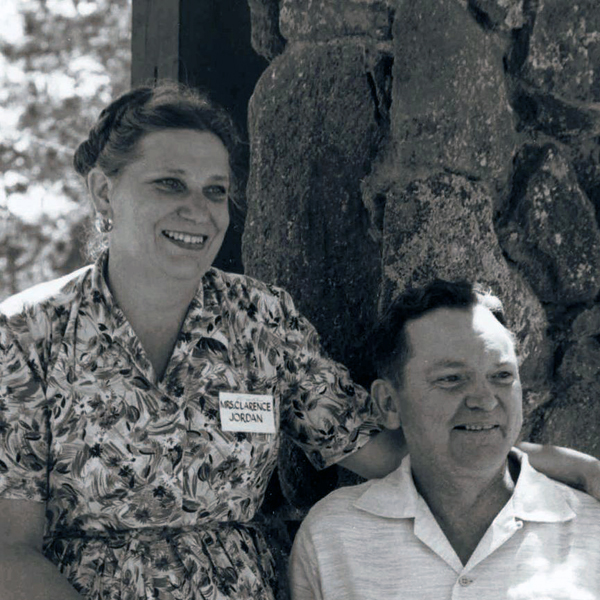
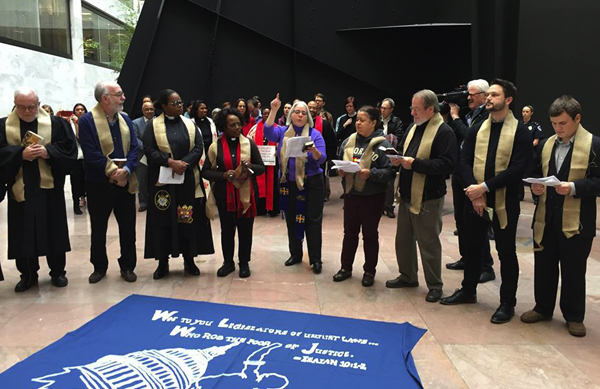
Feel free to copy and post any original art on this site. (The ones with “prayer&politiks.org” at the bottom.) As well as other information you find helpful.

Your comments are always welcomed. If you have news, views, notes or quotes to add to the list above, please do. If you like what you read, pass this along to your friends. You can reach me directly at kensehested@prayerandpolitiks.org.


Go out in joy

A litany for worship adapted from St. Francis' "Canticle of the Sun" and related Scripture texts

by Ken Sehested

What is it you wish to know, oh mortal one?

Do you think you must ascend to the highest heaven or descend to the deepest pit?

Do you not know that Wisdom has pitched a tent in your midst?

Ask the four-legged, and they will mentor you, or the winged-of-air, and they will school you;

Or speak to the earth, and it will teach you, or let the fish of the sea inform you.

Who does not know that the Gracious Host has done this?

In the Blessed One’s reach is the heart of every creature, the breath of every living thing.

Brother Sun declares the Beloved’s glory. His voice goes out o’er all the earth, his words to every inhabited place.

Sister Moon and stars pour forth speech to brighten the night in splendor and counsel.

Now hear the blessed promise of old, made new in your hearing:

May you go out in joy and be led back in peace, the hills bursting in song, the trees in applause!˙


©ken sehested @ prayerandpolitiks.org, adapted from Job 12:7-10, Psalm 19:1-4, Psalm 97:6, Isaiah 55:12 and St. Francis of Assisi’s “Canticle of the Sun”


News, views, notes, and quotes

Signs of the Times  •  20 September 2017 •  No. 137

Processional.Chaiyalim Adonai dances at Rosh Hashanah.”

Invocation. “Let the beauty we love be what we do. There are a thousand ways to kneel and kiss the ground.” —Rumi

Shana Tova! Happy New Year (5778 on the Jewish calendar).

        The Jewish new year, Rosh Hashanah (have “a sweet new year”), which began at sundown yesterday, literally means “the head of the year.” The date is variable on the Gregorian calendar, since, like Easter in the Christian tradition, it is based on a lunar calendar. Rosh Hashanah marks the first day of the “10 Days of Repentance” (or “Awe”) where Jewish people acknowledge their sins of the previous year, culminating in Yom Kippur, the day of atonement, marked by fasting to symbolize the longing for forgiveness. All together this season represents the “High Holy Days” of Judaism.

        In Hebrew rosh has many meanings, including “head” or “first” or “start,” and shanah means “year,” with ha simply meaning “the.” In combination, the name of the holiday translates as “head of the year.”

Call to worship.Rosh Hashanah Rock Anthem,” Aish.com.

¶ “4 Things Jews Do on Rosh Hashanah,” Mayim Bialik. (Thanks Ivan.)

How to say “happy New Year” in Hebrew. Menachem Posner, chabad.org

¶ “Though it depends on which Jewish tradition is being followed, much time is spent at a synagogue. During services, a hollowed-out ram's horn, known as a shofar, is blown, symbolizing a call to repentance. Many Jews also observe a tradition called tashlich, meaning "casting off" in Hebrew, in which they go to a nearby river or lake and throw pieces of bread, which signifies the washing away of sin.” —for more see Matthew Diebel, USAToday

        Apples dipped in honey, challah (round sweet bread), and/or pomegranates are consumed to symbolize the sweetness of the new year, the circle of life and/or the many seeds yet to be sown (and even fish heads, representing the “head” of the new year). —for more see Carol Kuruvilla, “The Spiritual Meaning Of The Food On Your Rosh Hashanah Table,” HuffPost

Hymn of praise.Psalm 104” (in Hebrew). Yamma Ensemble .

Confession. "Days pass, and the years vanish and we walk sightless among miracles." —Jewish Sabbath Prayer

Words of assurance.Ya Rab” (“My Lord God” in Arabic), Yuval Ron Ensemble featuring Sukhawat Ali Khan & Najwa Gibran.

While researching art for this issue, I found one image with the jar of honey and traditional blessing in Hebrew. But underneath, printed in the product’s distinctive typeface, is the wording “Say it with Coca-Cola.” The fruitful delight of creation transposed by the well-documented corporate marketing of sugar, which is at the root of our nation’s obesity health crisis. Then again, given the sugary, insubstantial character of much that passes for spirituality, maybe this is appropriate.

I’ve long been taken with juxtaposing the Jewish “Days of Awe” beginning with Rosh Hashanah and ending with Yom Kippur with the “Shock and Awe” military doctrine that launched the 2003 US attack on Iraq.

        The “fear of the Lord” in Scripture, the basis for awe, is not a form of heavenly terrorism designed to keep humans in line. Rather, as Walter Brueggemann writes, to “fear God” is to take God and God’s intention with utmost seriousness, to be honored above all other demands for devotion and obedience.

        “Shock and awe,” on the other hand, is a military doctrine entailing deployment of "instant, nearly incomprehensible levels of massive destruction directed at influencing society writ large, meaning its leadership and public, rather than targeting directly against military or strategic objectives even with relatively few numbers or systems." (With this background, can you see the brutal rationality of attacks by terrorists on crowded urban streets?) "Shock and Awe" language meets every definition of “terrorism.” —for more see Harlan K. Ullman and James P. Wade, "Shock and Awe: Achieving Rapid Dominance,” National Defense University Institute for National Strategic Study

Hymn of supplication.Avinu Malkeinu” (“Our Father, Our King”), Barbara Streisand. The song is a Jewish song of supplication, sung from Rosh Hashanah until, 10 days later, Yom Kippur. The Talmud (T.B. Ta'anith 25b) records Rabbi Akiva (died 135 CE) reciting two verses each beginning "Our Father, Our King" in a prayer to end a drought.

Good news. “Meet the 14-year-old girl (left) from Odisha, India, who has invented a fuel-free bike. With the increasing levels of carbon monoxide and carbon dioxide in the air, big cities in India have been suffocating with harmful pollutants. In these times, 14-year-old Tejaswini Priyadarshini has invented an ‘air bike’ which runs at up to 60 km per hour.” Your Story

Short story. “There's a lovely Hasidic story of a rabbi who always told his people that if they studied the Torah, it would put Scripture on their hearts. One of them asked, ‘Why on our hearts, and not in them?’ The rabbi answered, ‘Only God can put Scripture inside. But reading sacred text can put it on your heart, and then when your hearts break, the holy words will fall inside.’” ―Anne Lamott, “Plan B: Further Thoughts on Faith”

Testify. “The apple symbolizes Gan Eden (the Garden of Eden), which according to the Midrash has the scent of an apple orchard, and in Kabbalah is called ‘the holy apple orchard’. . . . When Solomon depicts the love G‑d harbors for His nation, he writes (Song of Songs 8:5): ‘Beneath the apple tree I aroused you[r love].’ Eating an apple on Rosh Hashanah is an attempt to remind G‑d of our age-old love.” Rabbi Baruch S. Davidson, Chabad.org

Hymn of intercession. Julie Geller, “Sheya'alu שיעלו” (“They Will Ascend”).

The largely-unknown international hero of the 20th century. The world has only recently learned of the death of a Soviet soldier (pictured at right) credited with saving the world from nuclear holocaust, during a time of high tension between the US and the Soviet Union, 6 years before the Berlin War came down.

        “Stanislav Petrov (Станислав Евграфович Петров), born in 1939, was the duty officer monitoring an early warning system from a bunker outside Moscow on September 26, 1983, when the radar screen suddenly appeared to depict a missile inbound from the United States.

        “The Soviet Molnyia, vast elliptical orbiting satellites, were supposed to decrease the likelihood of natural phenomena being mistaken for a launch. However during that midnight Autumn Equinox in 1983, the sun’s reflection on high altitude clouds against the darkness of space mimicked the launch of first one, then later several, U.S. missiles on a trajectory toward the Soviet Union. It was a particularly volatile time because just three weeks before this incident, the Soviet Air Force had shot down Korean Air Flight 007 with 269 people on board, including US Congressman Larry McDonald and several other Americans.

        “‘All my subordinates were confused, so I started shouting orders at them to avoid panic,’ Petrov told the Russian news agency RT in 2010. ‘I knew my decision would have a lot of consequences.’

        “The alert siren wailed. A message on the bunker's main screen reported that four more missiles had been launched, he said. Petrov had 15 minutes to determine whether the threat was real and report to his commanders.

        “Petrov, thinking that any U.S. attack should have involved even more missiles to limit the chance of Soviet retaliation, told his Kremlin bosses the alert must have been caused by a malfunction. He persuaded Moscow not to shoot back.” —watch a brief (0:53) news video about Stanislav Petrov and read John Bacon’s “Stanislav Petrov, Soviet soldier credited with saving world from nuclear war, dies at 77,” USAToday , and Barbara Kaufman, “Stanislav Yevgrafovich Petrov: Not On My Watch: The Enemy Who Saved the World

Call to the table. “A New Year: Communities around the world celebrate the new year…in song,” 92nd Street Y.

Pictured at left is a stained glass window in the sanctuary of Sixteenth Street Baptist Church. The bombing decapitated Jesus. Indeed, every bombing, anywhere, does the same.

Last week marked the 54th anniversary of the 15 September 1963 bombing of Sixteenth Street Baptist Church in Birmingham, Alabama, which killed four children, Addie Mae Collins, Denise McNair, Carole Robertson and Cynthia Wesley, ages 11 to 14.

        It would be another 14 years before a determined Alabama attorney general reopened the case and secured the conviction of the first of four suspects, Ku Klux Klan member Robert Chambliss.

        During his trial, a witness said Chambliss told her that that he had "enough stuff put away to flatten half of Birmingham." A second suspect died before his trial. It would take another 13 years before the remaining two suspects were convicted. All together, it took 27 years, a shifting public consensus, and an attorney general with a conscience to meet the bare minimum of "justice."

¶ Watch this brief (3:24) video, “Birmingham Bombing 1963.”

Between 1947 and 1965, there were 41 bombings (and one attempted bombing that we know of) in Birmingham, a city nicknamed “Bombingham.” Back then, such acts—and similar ones across the US—were not widely considered as terrorism, and no trillion-dollar war was launched.

What is especially important to remember is the fact that this horrific bombing came just 18 days after the historic March on Washington which included Martin Luther King Jr.’s famous “I Have a Dream” speech.

        I have no doubt that the march’s success played some role in galvanizing the resolve of the Birmingham bombers’ resolve for vengeance, since Sixteenth Street Baptist Church was a frequent gathering place to launch the civil rights marches now remembered by TV footage of police attack dogs and fire hoses being unleashed on the marchers.

        Which is to say: Dreams that matter will provoke resistance. We should not be surprised at—and should be prepared for—the terms of death-defying endurance.

News about the bombing of the Sixteenth Street Baptist Church so moved Welsh artist John Petts that he volunteered to create a replacement stained glass window for the one depicting Jesus that was destroyed. The editor of his hometown newspaper in Llansteffan, Wales, launched a front page appeal to cover the cost. Petts’ “Wales Window for Alabama(left) depicts a black Christ, chest thrust out and arms outstretched as though on a crucifix, the right one pushing away hatred and injustice, the left offering forgiveness. —for more info see BBC News

The state of our disunion. In his speech at the United Nations, President Trump threatened to “totally destroy” North Korea, home to 25 million citizens. At the outbreak of such an attack, North Korea's 10,000 artillery pieces (and maybe their thermonuclear warheads) aimed at the 25 million South Koreans in the metropolitan Seoul area would commence firing. Think about that for a minute. Then begin pondering what you can do about it.

How does climate change make hurricanes worse? Here’s a brief (0:49) summary.

Best one-liner. “They tried to defeat us. We survived. Now let’s eat.” —summary of Jewish theology by Jonathan Sacks, former Chief Rabbi of the United Hebrew Congregations, UK

For the beauty of the earth.What A Wonderful World With David Attenborough,” BBC (2:00 video).

Altar call. “Prayer is meaningless unless it is subversive, unless it seeks to overthrow and to ruin the pyramids of callousness, hatred, opportunism and falsehood. The liturgical movement must become a revolutionary movement, seeking to overthrow the forces that continue to destroy the promise, the hope, the vision.” —Abraham Joshua Heschel

Benediction. “I want to be written again / in the Book of Life / to be written every single day / till the writing hand hurts.” —Jehuda Amicha, The Poetry of Yehuda Amichai

Recessional. Cantor Avraham Feintuch, “Yom kippur Kol nidre prayer.” 

Lectionary for Sunday next (World Communion Sunday). “Our Presbyterian friends get credit for initiating [World Communion Sunday], back in the mid-1930s, then adopted in 1940—at the brink of world war—by the Federal Council of Churches (now National Council of Churches). I’m not sure if it’s celebrated much outside the US. And that may be because much of the world suspects that ‘world communion’ holds the same promise of what we call ‘globalization.’ A globalized economy is supposed to work for everyone. ‘Everyone has an even chance,’ so we’re told. But casino owners say the same thing, knowing the process is heavily tilted toward the house.” —continue reading “Remembering the Future: Bright with Eden’s dawn: A World Communion Sunday sermon

Just for fun. Comedic outbreak for train riders in Europe. Performers along a 30 killometer stretch perform theatre for train passengers. (0:58 video. Thanks Judy.)

Featured this week on prayer&politiks
• “Remembering the Future: Bright with Eden’s dawn," a World Communion Sunday sermon
If justice and only justice: Lamech's threat of escalating violence,” a new poem

#  #  #

©Ken Sehested @ prayerandpolitiks.org. Language not otherwise indicated above is that of the editor, as are those portions cited as “kls.” Don’t let the “copyright” notice keep you from circulating material you find here (and elsewhere in this site). Reprint permission is hereby granted in advance for noncommercial purposes.

Feel free to copy and post any original art on this site. (The ones with “prayer&politiks.org” at the bottom.) As well as other information you find helpful.

Your comments are always welcomed. If you have news, views, notes or quotes to add to the list above, please do. If you like what you read, pass this along to your friends. You can reach me directly at kensehested@prayerandpolitiks.org.