Recent

News, views, notes, and quotes

Signs of the Times  •  23 August 2017 •  No. 133

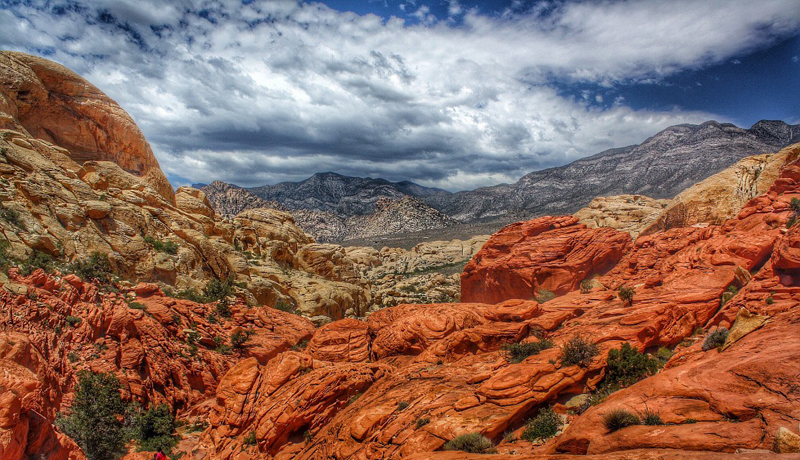
Above: Spring in Zibak District, Badakhshan, Afghanistan

Special issue on
THE WAR IN AFGHANISTAN

Abbreviated issue

Afghanistan is "easy to march into, hard to march out of."
—Alexander The Great (4th century BCE)

Invocation. Muslim call to prayer in Afghanistan.

President George W. Bush announced the “war on terror” in a 21 September 2001 speech to a joint session of Congress, saying “this crusade, this war on terrorism, is going to take a while.” On 7 October he launched “Operation Enduring Freedom” by attacking Afghanistan. —see the full text of Bush’s speech at The Guardian

¶“In 2010 the International Council on Security and Development conducted a survey that found that 92% of Afghan men have never heard of 9/11.” PBS

Babur, founder of the Mughal dynasty that ruled much of central Asia in the 1500s: “Afghanistan has not been and never will be conquered, and will never surrender to anyone.”

The story behind the world’s most famous photo. “Three decades ago, Steve McCurry took arguably the most iconic picture of all time. . . . ‘I knew she had an incredible look, a penetrating gaze,’ he recalls. . . . The striking portrait of 12-year-old Sharbat Gula (at right), a Pashtun orphan in the Nasir Bagh refugee camp on the Afghan-Pakistan border, was taken in December 1984.” It became National Geographic magazine’s most successful cover ever and led the magazine to set up the Afghan Children’s Fund.Jake Wallis Simons, CNN

¶ “We can’t kill our way to victory.—Admiral Mike Mullen, chair of the Joint Chiefs of Staff, in September 2008 testimony to the House Armed Serviced Committee. He also told the committee that the US is “running out of time” to win the war in Afghanistan, and sending in more troops will not guarantee victory. President George W. Bush has just announced deployment of 4,500 addition troops to Afghanistan, about the same number President Trump is about to send. —CNN

The busiest single airport runway in the world is on the US military base in Kandahar, southern Afghanistan. It is also the only airport outside the North Atlantic Treaty Organization (NATO) member countries controlled by NATO. —“Ten facts you may not know about Afghanistan,” BBC

Ooops. Since 11 September 2001 the Department of Defense has sent 1.4 milion guns to Iraq and Afghanistan but now does not know where half of them went. Nika Knight, CommonDreams

¶ “The world's first oil paintings were drawn not in Renaissance Europe but in the caves of Bamiyan, in the central highlands of Afghanistan around 650 BCE. Bamiyan boasted a flourishing Buddhist civilisation from the 2nd Century up to the Islamic invasion of the 9th Century. This is where the world's two largest standing Buddhas once stood, until the Taliban destroyed them in 2001 [see below].” —“Ten facts you may not know about Afghanistan,” BBC

The Buddhas of Bamiyan were carved from the sandstone cliffs in the Bamiyan Valley of Central Afghanistan during the 6th-7th centuries, the site of several Buddhist monasteries at the time. Pictured at left is the larger of the two statues, before and after the Taliban destroyed them in 2001.

Theological hubris. "My administration has a job to do and we're going to do it. We will rid the world of the evil-doers." President George W. Bush, 16 September 2001, CNN

Something shady about this intelligence. Five years ago American military intelligence estimated the Taliban had no more than 20,000 fighters. Yet, recently, one senior American military official estimated 10,000 Taliban fighters are killed every year. —Rod Nordland, “What an Afghan Victory Looks Like Under the Trump Plan,” New York Times

The US has spent at least $1.07 trillion in 16 years of war in Afghanistan. The nation’s population is 34.6 million, and the average annual salary is $410. Which means that instead of going to war with Afghanistan, the US could have paid the average annual salary of every person (including children) for 72 years.  Average life expectancy is Afghans is less than 61 years.

¶ “We kill and bomb / Murder and maim / Target and terrorize mostly / (for high-tech armies) / from great distance / the better not to see actual faces / or severed limbs, or / intestines oozing through / holes where belly buttons used to testify / to being a mother-born child. / But then we apologize / Sorry / So sorry / Deeply regret / Such a tragedy!” —continue reading “Sorry, sorry, sorry: The political meaning of ‘collateral damage’ repentance

¶ “America has been no different from other imperial powers in finding itself ensnared repeatedly in costly, bloody, and eventually futile overseas wars. From the Roman empire till today, the issue is not whether an imperial army can defeat a local one. It usually can, just as the United States did quickly in Afghanistan in 2001 and Iraq in 2003.
        “The issue is whether it gains anything by doing so. Following such a 'victory,' the imperial power faces unending heavy costs in terms of policing, political instability, guerilla war, and terrorist blowback. Terrorism is a frequent consequence of imperial wars and imperial rule. Local populations are unable to defeat the imperial powers, so they impose high costs through terror instead.” Jeffrey D. Sachs, CommonDreams

In April the US Air dropped its 21,600 pound GBU-43 Massive Ordnance Air Blast bomb (MOAB) on a suspected ISIS base in northeast Afghanistan, killing 94 combatants. The bomb itself cost a reported $170,000.00. That means each of those ISIS fighters’ death cost over $1,800 (plus shipping and handling).

¶ “Fifteen years after launching a worldwide effort to defeat and destroy terrorist organizations, the United States finds itself locked in a pathologically recursive loop; we fight to prevent attacks and defend our values, only to incite further violence against ourselves and allies while destabilizing already chaotic regions. Our forces are competent, professional, and effective.
        “But, no matter how good our forces are, it is irrelevant for the reasons laid out by historian Williamson Murray: ‘No matter how effective the military institutions might be at the tactical and operational levels, if the strategy and political framework [was] flawed, the result was defeat.’” Major John Q. Bolton, US Army (veteran of both the Iraq and Afghan Wars),  Foreign Affairs

Commenting on news that US Marines were filmed urinating on the bodies of dead Taliban soldiers in Afghanistan: “Reserve Marine Lt. Col. Paul Hackett, who teaches the law of war to Marines before they are sent off to Afghanistan, made it clear Friday that he was not condoning the Marines’ actions. But he warned against judging them too harshly, saying: ‘When you ask young men to kill people for a living, it takes a whole lot of effort to rein that in.’” —Robert Koehler, “The Dignity of Corpses,” HuffPost

¶ “The Department of Defense procured uniforms for the Afghan Army in a camouflage pattern that is both far more expensive than other options and likely inappropriate for the landscape there, a U.S. government watchdog says.
        “The pattern choice cost U.S. taxpayers as much as $28.2 million extra since 2008, according to a report out Wednesday, and if changed could save up to $72.21 million over the next 10 years.

Right: Doves at the Kart-e Sakhi mosque in Kabul, Afghanistan. Adek Berry/AFP/Getty Images

        “Nearly 1.4 million full uniforms and nearly 90,000 pairs of pants had a camouflage print designed to help military personnel blend in with a forest environment. But according to the report, only 2.1 percent of Afghanistan is comprised of forest.” —Merrit Kennedy, NPR

¶ “The Marine Corps taught Sam Siatta how to shoot. The war in Afghanistan taught him how to kill. Nobody taught him how to come home.” —C.J. Chivers’ New York Times Magazine story, “The Fighter,”  gives a vivid account—the sights, sounds, smells, and moral quandry—of combat, along with the sometimes dystopian results of trying to adjust afterwards.

After 15 years of US war in Afghanistan, and more than $68 billion in military aid to the Afghan National Defense and Security Forces, the Taliban now controls more of the country’s territory than at any time since 2001. Nadia Prupis, Common Dreams

See an annotated timeline of Afghanistan, beginning with the 1838 British invasion. —Afghanistan profile, BBC

¶ “Concealed within that oft-cited ‘freedom’—the all-purpose justification for deploying American power — were several shades of meaning. The term, in fact, requires decoding. Yet within the upper reaches of the American national security apparatus, one definition takes precedence over all others. In Washington, freedom has become a euphemism for dominion.” —Andrew Bacevich, “Iraq and Afghanistan Have Officially Become Vietnam 2.0,” The Nation

Brutality in defense of Starbucks. “The madness of war is that while this system is in place to kill people, it may actually be necessary for the greater good. We live in a dangerous world for killing and torture exist and where the persecution of the weak by the powerful is closer to the norm than the civil society where we get our Starbucks. Insuring our own safety and the defense of a peaceful world may require training boys and girls to kill, creating technology that allows us to destroy anyone on the planet instantly, dehumanizing large segments of the global population and then claiming there is a moral sanctity in killing. To fathom the system and accept it use for the greater good is to understand that we still live in a state of nature. Timothy Kudo, former Marine captain and veteran of the wars in Afghanistan and Iraq, New York Times

Can’t makes this sh*t up. “I can’t guarantee your kids won’t be here in 20 years with another old guy standing in front of them.” —Marine General Robert Neller, responding to a question from his troops about their objective in Halmand Province, Afghanistan, quote in Thomas Gibbons-Neff, “ ‘It’s like everyone forgot’: On a familiar battlefield, Marines prepare for their next chapter in the Forever War,” Washington Post

Right: Children in a refugee camp in Afghanistan. Photo by Chris Fahey.

Confession. There are reasons the Trump Administration provokes more public outrage than any other in memory. But there are a larger trending factors we overlook.
        • President Obama is the only US president to serve two complete terms with the nation at war.
        • In 2016, Obama’s last full year in office, US special forces were active in 70% of the world’s nations, 138 countries, which represented a 130% increase from the George W. Bush years.
        • During the Obama years, the US dropped or launched at least 26,171 bombs and missiles. That averages out to 72 per day, or three per hour. Medea Benjamin, The Guardian

¶ In a 1 August 2017 polling report, the Pew Research Center announced that the US is again perceived to be the greatest threat to world peace by citizens around the world, and this time the results were worse than the previous poll in 2013.
        In their polling of people in 30 nations, 35% said the US was the greatest threat, following by Russia and China (31% each). Making matters worse, of the 30 countries in the survey, only one, Venezuela, is not an ally of the US. And none of those polled live in nations that are allies of Russia or China.
        This polling data reveals what most of us in the US still are unable to comprehend: President Trump is actually a better reflection of US foreign policy than any of our presidents since the late 19th century, beginning with the Spanish-American war, when the US imperial reach set in motion. It’s just that most of our presidents have been better than Trump in disguising US foreign policy as “making the world safe for democracy.” —kls

Benediction. Muslim call to prayer in Afghanistan

Just for fun. When you’re super dope with your cat. (2 second video)

#  #  #

Featured this week on prayer&politiks

• “Testimony in a time of terror: Standing with the Word of God, for the earth, and against the world,” a litany for worship

• “The taunt of Lamech’s revenge.” Authorization for Use of Military Force: 60 words that bring the US to the edge of a permanent state of war.

• “Sorry, sorry, sorry: The political meaning of ‘collateral damage’ repentance,” a poem

Other features

• “The United States at War.” There have been only 17 years that the US has not been involved in a war since 1776.

• “Boots on the ground and other obfuscations.” On this, my 65th birthday, I’ve made a new vow.

©Ken Sehested @ prayerandpolitiks.org. Language not otherwise indicated above is that of the editor, as are those portions cited as “kls.” Don’t let the “copyright” notice keep you from circulating material you find here (and elsewhere in this site). Reprint permission is hereby granted in advance for noncommercial purposes.
Feel free to copy and post any original art on this site. (The ones with “prayer&politiks.org” at the bottom.) As well as other information you find helpful.

Your comments are always welcomed. If you have news, views, notes or quotes to add to the list above, please do. If you like what you read, pass this along to your friends. You can reach me directly at kensehested@prayerandpolitiks.org.


News, views, notes, and quotes

Signs of the Times  •  16 August 2017  •  No. 132

Processional. “O troubled dust concealing / An undivided love / The Heart beneath is teaching / To the broken Heart above.” —Leonard Cohen, “Come Healing

Above. White light image of the solar corona during totality of a solar eclipse. For viewers in its path, “the Aug. 21, 2017, total solar eclipse will last less than two and half minutes. But for one team of NASA-funded scientists, the eclipse will last over seven minutes. Their secret? Following the shadow of the Moon in two retrofitted jet planes.” —read more in “Chasing the Total Solar Eclipse from NASA’s WB-57F Jets,” NASA

Back to school special edition

Invocation. “The human hand – this bundle of bones, flesh, and nerves – think of all it can do. It can bless or curse. It can draw blood or bind a wound. It is gentle, agitated, vicious; supplicating, ardent, tender. It can weld an iron bridge or caress a child’s head. It possesses the power to both harm and heal.—Karl Joseph Friedrich

Call to worship. “I appeal to you therefore, brothers and sisters, by the mercies of God, to present your bodies as a living sacrifice, which is your spiritual worship.” —Romans 12:1

¶ “From the age of six to fourteen I took violin lessons but had no luck with my teachers, for whom music did not transcend mechanical practicing. I really began to learn only after I had fallen in love with Mozart’s sonatas. The attempt to reproduce their singular grace compelled me to improve my technique. I believe, on the whole, that love is a better teacher than sense of duty.—Albert Einstein

Hymn of praise. “Living below in this old sinful world / Hardly a comfort can afford / Striving alone to face temptation so / Now won't you tell me / Where could I go but to the Lord?—Elvis Presley (on the anniversary of his death), “Where Could I Go But To the Lord”

Feel free to copy and circulate any of the original artwork (the ones
with “prayerandpolitiks.org” printed at the bottom) used on this site.

Confession. Thomas Merton rightly observed that “The least of the work of learning is done in the classroom.” Is this a disparagement of classroom teachers—or for that matter, pulpit preachers? I don’t think so. Good preachers and teachers know their job is to incite a thirst for learning and for revelation in the world beyond libraries and liturgies. —kls

Reversal of fortunes. What if schools enjoyed pork-barrel largesse and the military depended on corporate charity?

      One recent slow morning in August, the grocery stores’ circulars in the newspaper caught my attention. I began to wonder how things might be different if certain fortunes were reversed. Instead of “back-to-school” it’s “back-to-basic-training” discount offers.

      Imagine, if you will:

      •At Ingles, earn $1,000 for mops for the Navy, boots for the Army, when you use your Advantage™ Card. And keep your eyes out for our “Box Tops for Top Guns” special deals to ensure cockpit decal maintenance.

      •Harris Teeter’s brand purchases maintain a steady supply of camouflage face grease for our special forces. Don’t forget to relink for special deals at Lockheed Martin. Soldiers count!

      •Bi-Lo offers tools for troops. Every one of the more than 800 U.S. military bases outside the U.S. have benefited from this unique program, netting more than $9 million in free equipment for every branch of the service.

      Meanwhile, back in Washington, these headlines from major media outlets:

      •Fox News: “Whining base commanders grousing again about the amount of personal money they have to spend decorating barracks.”

   •NBC: “Congressional leaders unable to round up votes necessary to defeat another multi-million dollar ‘supplemental’ educational appropriation. The Speaker of the House claims Department of Education budget already ‘bloated’ with unnecessary pork.”

      •ABC: “Senate Health, Education and Labor Committee hearings underway for alleged corruption in ‘no-bid’ contracts to fulfill ‘No Child Left Behind’ spending.”

      •CBS: “Pentagon brass say ‘bake sales no way to adequately fund quality national defense.’”

      •Associated Press: “Investigative reporter uncovers widespread complaints by Marine officers that merit pay is tied to low combat injury reports and exaggerated readiness testing.”

      The above written with thanksgiving for the teachers and educational administrators who know that knowledge is more than information, that character is not subject to cost analysis, and that learning potential exceeds the boundaries of test results. Don’t just thank a teacher. Argue for a different definition of national security. —kls

One of the Latin roots of the English word education is educere, which means to bring forth, calling up the image of the midwife.
        Socrates (470-399 B.C.) preferred to describe education by comparing it with his mother’s profession. Education is Midwifery. A teacher, like a midwife, only helps the mother to give birth. The teacher is not the mother. The teacher coaxes out capacities already there.

¶ “There are thousands of students today in classrooms with teachers who are wholly unprepared” in the California school system, according to a new report from the Learning Policy Institute. —Fermin Leal, “Worsening teacher shortage puts more underprepared teachers in classrooms, report says,” EdSource (see graph below)

In Michigan “enrollment in teacher prep programs declined 38% from 2008-09 to 2012-13, according to the most recent federal data available. Nationally, the drop was 30% during the same time period. . . . ‘Teachers are demoralized,’ said Michelle Fecteau, a member of the State Board of Education.” Lori Higgins, Detroit Free Press

¶ “Enrollment in teacher preparation programs has declined 36% nationwide since the 2009-10 academic year, and a [2016) Center for American Progress report presents several reasons for the decline, finding that state policies can have a big influence over whether students are interested in teaching careers. . . ‘The data are clear: Teacher recruitment is closely related to perceptions of job insecurity and low pay,’ said Christina Baumgardner, co-author of the report.” Center for American Progress

¶ “The teacher pay penalty is bigger than ever. In 2015, public school teachers’ weekly wages were 17.0 percent lower than those of comparable workers—compared with just 1.8 percent lower in 1994.” Sylvia Allegretto and Lawrence Mishel, Economic Policy Institute

Yet salaries are “not the end of the story,” according to Sean Corcoran, an associate professor of educational economics at NYU who has conducted extensive research on the U.S. teaching force.
        In a “Quality of Worklife” survey of more than 30,000 educators last year, just 46% said their salaries were a major source of stress in the workplace. Testing fatigue, bloated bureaucracy, little time to reflect and decompress and develop professionally have all taken a significant toll on teachers’ job satisfaction.” Alia Wong, The Atlantic

Hymn of lamentation.Sing Me Back Home,” Merle Haggard.

¶ “Thomas Carlyle said the best effect of any book is to excite the reader to self-activity,” said Betty Lou.
        “That man clearly never ran a library. My dear, between you and me, the best effect of any book is that it be returned unmutilated to its shelf,” replied Mrs. Armstrong, her head librarian and boss. —dialogue from the 1992 comedy movie, “The Gun in Betty Lou’s Handbag”

Words of assurance.Rock of Ages,” Fernando Ortega.

¶ “I remember the same thing was done when I was a boy on the Mississippi River. There was a proposition in a township there to discontinue public schools because they were too expensive. An old farmer spoke up and said if they stopped the schools they would not save anything, because every time a school was closed a jail had to be built.” —Mark Twain, in a November 1900 speech to the Public Education Association

¶ “Experience is a hard teacher because she gives the test first, the lesson afterwards.” —Vernon Law

Hymn of intercession. “Teach your children well, their father's hell did slowly go by, / And feed them on your dreams, the one they pick's the one you'll know by. / Don't you ever ask them why, if they told you, you would cry, / So just look at them and sigh and know they love you.” —Crosby, Stills, Nash & Young, “Teach Your Children

¶ “I hear and I forget; I see and I remember; I do and I understand.” —source unknown

Preach it. “Something is wrong with the values of a nation that would rather spend [tens of] thousand of dollars to lock a child up after getting into trouble, but won’t invest a few thousand dollars to get kids born healthy, to give them a head start, to give them a decent education. We must changes these priorities.” —Marian Wright Edelman, president of the Children’s Defense Fund

¶ “As each take your leave / now charting your own courses / I pause and ponder your absence / with dreaded joy: / joy that your wings have spread / so far so fast, / dread at the silence filling the air / which your voices once stirred.” —continue reading “On the flow of tears,” a poem on the occasion of my daughters’ transitions

¶ “The cost of imprisoning each of California's 130,000 inmates is expected to reach a record $75,560 in the next year, enough to cover the annual cost of attending Harvard University and still have plenty left over for pizza and beer.” Don Thompson, Associated Press

¶ “The greatest sign of success for a teacher . . . is to be able to say, ‘The children are now working as if I did not exist.’” —Maria Montessori

Can’t makes this sh*t up. “"Do not use conditioner in your hair because it will bind radioactive material to your hair." —one of the recommendations in a two-page fact sheet issued to citizens of Guam in case of a nuclear strike by North Korea

Call to the table. “This is the mystery of the Christian life, to receive a new self, which depends not on what we can achieve but on what we are willing to receive.” —Esther de Waal

The state of our disunion. “During the 19th century, college education in the United States was offered largely for free. Colleges trained students from middle-class backgrounds as high school teachers, ministers and community leaders who, after graduation, were to serve public needs. This free tuition model had to do with perceptions about the role of higher education: College education was considered a public good. Students who received such an education would put it to use in the betterment of society. . . .
        “The perception of higher education changed dramatically around 1910. Private colleges began to attract more students from upper-class families—students who went to college for the social experience and not necessarily for learning. . . . What was once a public good designed to advance the welfare of society was becoming a private pursuit for self-aggrandizement.” —Thomas Adam, “College Was Once Free and For the Public Good—What Happened?” Yes! magazine

Best one-liner. “Your best teacher is your last mistake.” —Ralph Nader

For the beauty of the earth. “Why you should never miss a total solar eclipse.” —3:09 video [But if you have to travel, beware the traffic jams.]

Altar call. “The purpose of public education in a republic, according to Benjamin Rush, a medical doctor in Philadelphia and signer of the Declaration of Independence: ‘Let our pupil be taught that he does not belong to himself. . . .’” —John Fea, “In Bernie Sanders’ deeply religious message, an echo of the Founding Fathers,” Religion News Service

Benediction. “Do not be conformed to this world, but be transformed by the renewing of your minds, so that your may discern what is the will of God—what is good and acceptable and perfect.” —Romans 8:2

Recessional. Lebanese Dabke dancing.

Just for fun. Ten giraffes wend their way up a spiral walkway, to the high diving board above a swimming pool, to perform some acrobatic moves. (5:27 video. Thanks David.)

#  #  #

Featured this week on prayer&politiks

• “Fire and Fury: Reading Elijah in light of Charlottesville,” by Nancy Hastings Sehested

• “We are Charlottesville.” The fact that we are shocked about today’s news from Emancipation Park is part of our problem

• “Religious liberty, or social mischief?Understanding the "wall of separation" between church and state
• “On the flow of tears,” a poem on the occasion of my daughters’ transitions

©Ken Sehested @ prayerandpolitiks.org. Language not otherwise indicated above is that of the editor, as are those portions cited as “kls.” Don’t let the “copyright” notice keep you from circulating material you find here (and elsewhere in this site). Reprint permission is hereby granted in advance for noncommercial purposes.

Feel free to copy and post any original art on this site. (The ones with “prayer&politiks.org” at the bottom.) As well as other information you find helpful.

Your comments are always welcomed. If you have news, views, notes or quotes to add to the list above, please do. If you like what you read, pass this along to your friends. You can reach me directly at kensehested@prayerandpolitiks.org.
You Might Be a Redneck If . . .

. . . Yuppies Get Rich Making Fun of You

by Ken Sehested

This article was originally published in Baptist Peacemaker magazine in 1995. The version below is slightly edited.

      One of the up-and-coming stars on the humor scene in the U.S. is Jeff Foxworthy's "You Might Be a Redneck If . . ." standup comedy (now in multiple illustrated book form and soon, I'm told, to be a television offering).

      "You might be a redneck if . . . hail hits your house and you have to take it to the body shop for an estimate." Or, ". . . your family tree does not fork."

      Our local bookstore has seven volumes—testimony to Foxworthy’s vivid imagination. And funny.

      So why do my throat and facial muscles refuse to participate in the fun?

      Have you ever considered where the word redneck came from? In an earlier time, when agriculture was principally our culture (as opposed to our current "agribusiness"), poor whites, unable to afford either slaves or hired help, worked their own small farms with only their families to assist. Long days in the hot summer sun will discolor the skin. Hats and shirts block most of the sun's intrusion. But the neck—exposed through much bent-over labor—was left exposed and thus bore the mark of one's economic class status. Have you ever considered why it is that progressives have warm, romantic associations with foreign-sounding words like peasant or campesino when the closest domestic equivalent, "redneck," provokes just the opposite? Peasant dresses and shirts are the stuff of boutiques. Rednecks shop at Goodwill and Salvation Army.

      The "cultured" are at least as fickle as the rest of us. I'll never forget my astonishment when, having fled to New York City (to escape the South) as a student, I arrived just in time for pointy-toed cowboy boots to come into style in Greenwich Village, and country music star Hank Williams Jr. to showcase at The Bitter End, the hippest of the hot musical venues of the time.

      Mesquite-grilled cooking later became the culinary rage. Having grown up in West Texas, mesquite wood was what you used to barbecue if you couldn't afford the luxury of store-bought charcoal. And now we all love to find Cajun food restaurants; but when I was in high school down the bayous of South Louisiana, Cajun food was what the mongrel-breed illiterates out in the swamp ate.

      Maybe we should have gotten the hint much earlier, remembering there was a time when many community school boards outlawed wearing blue jeans to school. Too trashy. Nowadays the high fashion store Neiman Marcus will sell you a “distressed” pair of jeans for $1,495.00.

      In his "Elvis Presley As Redneck" article, Will Campbell speaks more thoroughly to the class and cultural bias implicit in "redneck" language. My purpose here is to comment—actually to confess and ask your assistance in repentance—on the shape of the Baptist Peace Fellowship's work. Specifically, to ask for your ideas and suggestions on how our organizing among Baptist-flavored Christians on peacemaking can overcome its urban cultural bias.

      You've probably noticed that most "peace" organizations are located on the coasts; or, if not there, in the major urban centers. This physical arrangement tends to reinforce a seductive mental grid that sees little more than backwater landscape in between the ocean boundaries. Kind of like The New Yorker magazine's comic map of the U.S., depicting little annotation between The City (as New Yorker's are wont to say) and the west coast.

      Actually, I get a strange kind of amusement when making initial contact with the coastal crowd. Often there are two reactions in sequence: first, "I didn't know there was a Baptist peace group"; and then, "you say you're located in Memphis?!" It stretches credulity. Kind of like Nathanael's incredulous response to his brother Andrew's breathless announcement that the one "of whom Moses in the law and also the prophets wrote"—the Messiah—had been found, Jesus of Narareth.

      "Can anything good come out of Narareth?" (John 1:45-46)—out of cultural backwater geography, out of the sticks, amid the "blue highway" and farm-to-market regions removed from our major cities? Such startling ironies are a hallmark of biblical material.

      The truth of the matter, however, is that we, too, are complicit in such bias. Most of our organizing work, program suggestions, resource materials, etc., are also geared toward congregational life in cities. And that's a problem needing to be addressed.

      Not, of course, by bashing the cities—there's a long-standing bias against city life in Christian tradition—but by allowing ourselves to look beneath the cultural propaganda which scorns those locales which lack 24-hour-a-day grocery stores. There are traditions and values in such places worthy of our applause, worthy of conservation. And there, too, come breathless announcements heralding prophetic moments of Gospel promise.

#  #  #

©ken sehested @ prayerandpolitiks.org

Fire and Fury

Reading Elijah in light of Charlottesville

Nancy Hastings Sehested
Text: 1 Kings 19:9-18
Circle of Mercy Congregation, Asheville, NC
August 13, 2017

Friends, I still believe that when history beams its light on these treacherous times, that we will be known less by the battles we won and lost, and more by the stories we loved and lived.

The stories from long ago and the stories from headline breaking news is one of fire and fury. The ancient story gives us the full array of human choices in the midst of struggles.

Both the oppressed and the oppressors have found words to liberate or words to enslave within the biblical story. Rev. Jeffress from Dallas stated this week that “God has endowed our rulers full power to use whatever means necessary—including war—to stop evil.” His words are in a long line of religious leaders who have used religious language to justify violence.

Our presence today is our choosing again the story that liberates with the love of God. We are still followers of Jesus, and his way of justice and love.

The prophet Elijah would have felt right at home in these times of fire and fury. You remember Elijah. He was a chosen one of God. He was fierce, determined, and uncompromising. He was a man of miracles. He fed the hungry, raised the dead and blasted the evil empire of King Ahab and Queen Jezebel. His message was to bring down the mighty and lift the lowly.

Right: Painting by Frances Hogan.

Like a superhero, he could suddenly appear in just the right place at just the right time, pouncing on injustice, exposing the hypocrisy and falsehood of the powerful. His most zealous actions were targeted on that relentless rascal of a king, Ahab. The king was a bully. He had wealth, position, and power. Step in his way and he retaliated with ridicule and revenge. With the help of his conniving wife, he contaminated the nation with the poison of fear. Pagan temples were their joy. The palace became home to hundreds of false prophets. Political favors were handed out like candy at Halloween. The people didn’t know who to trust.

Military might was the centerpiece for maintaining national power. On the backs of the poorest people, the nation slid into disaster. People were suffering. King Ahab and Queen Jezebel were a disgrace. It seemed like no one could stop them.

After several attempts at halting the horrors, including famine and humiliation techniques, Elijah got word from God that it was time to put the false prophets to death. Now in this part of the story we could wish that God wasn’t involved in that kind of showdown. And we could wish that Elijah had the benefit of reading Walter Wink’s book about the myth of redemptive violence. Hadn’t enough blood been shed to know that? We could wish that Elijah had the example of Jesus meeting violence with his witness of peace and non-violence. But no. There was fire and fury.

Elijah gave a passionate word before the battle, asking God’s people a decisive question: “How long will you go limping with two opinions? If God is God, follow God. But if Baal, then follow Baal.”

Voices should’ve shouted out “God, not Baal,” but not a word came out of the people. Nothing. They didn’t answer. Elijah, like all prophets, was a loner. But he liked applause. It was not forthcoming. Nothing worse than a preacher offering their best line, and the people don’t utter a peep. No amens. No nods of the head. No, “Preach on, Prophet!” Nothing.

Elijah, being the sensitive type, took it maturely. “I, even I only, am left.” Oh, there is no high like a self-righteous high. The fight was on, with the great Prophet leading the way. The prophets of Baal did the same. The contest was this: the one who called down their god with fire was the winner. The one with the biggest fire power wins. It’s such a tiresome game. Couldn’t we just limit ourselves to kayak races?

The prophets of Baal danced around the altar all morning long, calling out, “O Baal, answer us.” Nothing. By noon they were hoarse from shouting and worn out from walking around in circles. They started limping around the altar.

Elijah pulled out the mocking method of bringing down the enemy. “Keep it up, guys. Oh, I’m sure he is god. He’s just taking a little break, meditating, no doubt.” The prophets of Baal tried some more. Nothing.

It was Elijah’s turn. “Step back everybody.” Lightening flashed. Fire ignited the whole thing…the offering, the stones, the wood, and even the water in the trench. The whole kit and caboodle went up in smoke.

The people shouted, yelled, jumped up and down and applauded. “God is the true God! God is the true God.” The false prophets were then slaughtered at the river. It ran blood red that day.

Queen Jezebel got wind of the slaughter of her best spiritual counselors. She was ready to have Elijah’s head. He took off for the hills to try to save his life. Once he got far enough away, he took shade under a broom tree. He was worn out. He had won, but he had lost. His victory did not satisfy him. He was a man on the run. Where could he go to hide? He prayed, “God, just go ahead and take me now.”

Elijah felt like a total and complete failure. He thought God should’ve at least shown some appreciation for all he’d done on God’s behalf…put a little extra in the Prophet Pension Fund. But no. All he got was a pushy angel shoving him awake and demanding that he stop his whining and moaning. “Get up and eat! You’ll need it for the journey.” You ever noticed how neither God nor God’s messengers have ever been good with empathetic listening skills?

Elijah walked 40 days and 40 nights until he arrived at the mountain of God. He crawled into a cave and collapsed. God showed up and asked, “What are you doing here, Elijah?” Running? Trying to hide? Think you can escape from your life and your calling in there? Think you can have security there?

Elijah responded, “I’ve been working my tail off trying to get people on your side, God. I made lots of promises to persuade folks. I had a good  mission plan. I took up for you. But now it’s over. I have nothing to show for all my efforts except my picture on wanted posters. I’m the only one left. There are folks after me!”

There was no answer to Elijah’s whine. The voice spoke: “Go, stand and wait at the mountain. God is coming your way.” Elijah stayed in the mountain. A hurricane force wind ripped through the mountain. It was so strong that it split open boulders. God had been in wind before. Was this God? No. God was not in the wind. The ground shook beneath his feet. An earthquake happened. God had been in earthquake before. Was this God? No. God was not in this earthquake. A fire flamed up. God had been in fire before. Was this God? No. God was not in this fire.

Then came the sound of sheer silence. Elijah knew the sound of this Presence. He wrapped his face with his cloak, stepped to the front of the cave, and stood. God asked again, “Elijah, what are you doing here?”

Elijah answered with the same old story. “I gave my heart and soul to this battle, and I have nothing to show for it. I alone am left.”

Elijah failed to interpret the sheer silence of God. What was this silence of God? It was not the silence of calm and peace. It was sheer cliff silence. It was an unbearable silence that verges on a scream. It was the inner scream of God. It was the kind of silence heard through the walls of skin of an exasperated person.

It was the silence when there are no words left to say. It was God’s silence speaking as if to say, “Elijah, didn’t I feed you? Wasn’t the bread shared with those who needed it? Didn’t I give you the strength to stand up to all the lies? Didn’t I give you the courage to resist the royal tyrants and demand justice? Wasn’t I with you always? Elijah, what are you doing here?”

So what are we doing here? Perhaps it is time to listen with Elijah at the doorway of our deepest fears and disillusionments. Can we stand here long enough to see more clearly as a nation, as a people? The earthquake, winds and fires of Charlottesville have been gathering power for a long time. White supremacy and patriarchy are embedded in our national history. Sometimes it flames into fire and fury within public view. But let us not be fooled. Behind the vivid and horrific violence of yesterday are systemic and structural powers that keep privilege in place. The structures and institutions that hold our lives have enormous power over all of us. Most of the major issues we face are decided without our vote and out of our sight . . . in boardrooms and corporate offices and legislative rooms where a code of ethics for the common good is not in place.

The ancients called such a sin-sick society ensnared by the “powers and principalities.” Hannah Arendt named it “the banality of evil.”

Perhaps it is time to stop and listen, to stop our words long enough to experience the silent cries of God. Perhaps it is time, when hatred runs down the streets of Charlottesville, and laws allow terrorizing extremists to legally carry weapons. . . .

        Rev. Nancy Hastings Sehested

Perhaps it is time, when mothers and dads are taken from their children and deported, and mosques are bombed in our cities, and black and brown-bodied people and LGBTQ people are vulnerable everywhere. . . . Perhaps it is time, when the major institutions that control our lives leave too many without adequate healthcare, wages and housing. . . . Perhaps it is time, when tyrants hold the world hostage with threats of using nuclear weapons. . . . Perhaps it is time for us to stand together, all of us . . . the wounded alongside the wounding . . . and listen.

Let us listen to our common fears, fears for ourselves and for our children. The world is much too complicated and confusing for any of us. Let us confess that the fire and fury can envelop us so that we cannot hear God’s heartbeat of love for us.

My Old Testament professor, Dr. Terrien, taught us about an Arab gesture made when speaking of a small sound. The thumb and the forefinger come together on both hands, creating a tiny opening. It is the image of a sound, hardly able to see or hear the voice. It was used as a symbol for little possibility.

But even little possibility is possibility for a way, an opening. It can open us to divine encounter, to the Holy Presence of hope.

Maybe in the silence we can hear Jesus once again, who did not conform to this world, but was transformed, and gave himself as an offering to God’s way of love. We can find our lives again where Jesus did…on the edges where the fierce winds blow . . . alongside those who suffer. There we can discover again that there is no promise, save one…we are not alone.

Elijah thought he was running to safety. He was afraid. He had every reason to be afraid. So do we. This world is not safe. Earthquake, wind, and fire still rage around us. Elijah’s escape was no escape at all.

God asked Elijah the question: “What are you doing here? I need you. Come on out. Stop believing the lie that you are helpless and life is hopeless. Besides it’s not all about you. Go and anoint Hazael as king over Aram. Go and anoint Jehu as king over Israel. And go and anoint Elisha as the prophet who will take your place.”

“Take my place as prophet? Really? And isn’t there already a king in place?”

God didn’t explain. “And one more thing, Elijah. You are not the only one who has stayed faithful to me. There are 7,000 others who have not bent their knees and paid homage to Baal. Some of them were walking bravely in a march for love yesterday in Charlottesville. Some of them attended to the wounded. Some of them quelled the riot. There are plenty of others in this struggle. Join them. Draw strength from them. Keep on keeping on with them. I am with you.”

Friends, what are we doing here? Our God is a God who brings hope out of the dark night of despair. We have some anointing to do in God’s name. Anoint the rulers with new visions. Anoint the broken-hearted with comfort. Anoint the shamed with mercy. Anoint the damned of this earth with love . . . until God’s reign of justice has come, and the Bright Morning Star of Love rises in the hearts of all people.

Let us go and join the others.

#  #  #

©prayerandpolitiks.org

We are Charlottesville

The fact that we are shocked about today’s news from Emancipation Park is part of our problem.

by Ken Sehested

        I recall my first trip to South Africa, leading a delegation of US and European Christians for a first hand look at the apartheid regime. Over the course of 10 days we met with a host of groups and individuals, and even participated in an impromptu, multi-racial prayer vigil on the grounds of the South African parliament in Pretoria, something that was still illegal in 1989.

        It was, as you might imagine, a stunning and profoundly revelatory journey. Four things still burn bright in my memory.

        First, I did not know that the Dutch Afrikaners, who would later construct the legal framework of apartheid (pronounced there as “apart-hate”) settled in southern Africa about the same time English came to the American continent. There are many parallels in these stories.

        Second, I was dumbfounded when I learned that Mohandas Gandhi’s utopian Phoenix Settlement, formed in 1904 in the KwaZulu-Natal province, north of Durban, was burned to the ground in 1986 during inter-tribal conflicts—a sobering reminder of the difficulties in rooting out the seeds of oppression cultivated over generations. Even passionate commitment to doing good is no guarantee of success.

        Third, we were in South Africa during Holy Week, and on Easter Sunday afternoon we toured the Voortrekker Monument, a museum celebrating the Afrikaner’s conquest of the Zulu people. The facility is more than a museum, though—the bloody story it tells is more like a national sanctuary commemorating theological consent to the conquest. I’ve never quite felt such a palpable presence of godforsakenness. The title of what I wrote afterwards was “Hoping for Easter in the Land of Good Friday.”

        Finally—and most startling of all—I discovered that the word “reconciliation,” a pivotal word to my own sense of purpose, was an ugly, discredited word to those struggling for justice in South Africa. What I discovered was that “reconciliation” was among the key words used by those supporting apartheid, and what is meant was: "When you are reconcilied to the fact that we are on top and you are on the bottom, then we'll have peace.”

        Reconciliation as acquiescence to and accommodation in the existing order.

        These memories came streaming back today as I watched the savage news from the “Unite the Right” white supremacists’ rally in Charlottesville—but especially as President Trump spoke during his New Jersey golf resort news conference.

        The tripe pouring from his puckered lips, deploring the “egregious display of hatred, bigotry and violence on many sides, on many sides” (he repeated for emphasis)—and then, in anticipation of his critics, assured the nation that “this has been going on for a long time”—stirred volatile emotions.

Left: One of the white supremacists at Saturday's rally ran his car into a group of counter protestors, killing one (as of this writing) and injured scores of others, some seriously. Photo by Ryan M. Kelly/AP

        He used the occasion to recite how great his presidency has been. He did not mention white supremacists, neo-Nazis, the KKK, and other extremist groups’ convergence (some with weapons, including semi-automatic rifles) in Charlottesville. His commentary was pure cockamamie. Fatuous. Clueless. Asinine. Like a befuddled fire chief, faced with a burning building, saying water is wet.

        Even conservative Republicans were critical of the President’s apparent refusal to name the provocateurs in Charlottesville and his hint at there’s nothing to see here folks—been happening for a long time in our country. [1]

        In the latter case, he is right. As that prophetic line from an adrienne maree brown poem puts it: “Things are not getting worse. They are getting uncovered.” The poet’s counsel in light of these things would be mine as well: “We must hold each other tight and continue to pull back the veil.”

        The fact that we are shocked about today’s news from Emancipation Park is part of our problem.

        If People on the Way seriously intend the hard work of reconciliation, the first step will be to post signs in our conversation rooms with something like what proceeded one video clip from today’s news: “Viewer warning: The following footage contains graphic and disturbing images.”

        Pulling back the veil of our glamorized national history will not be pretty. The first step South Africa took in emerging from its nightmarish history was its Truth and Reconciliation process, a painful and messy affair and only a first step. The work of reconciliation is not like taking a pill. It is a long process whose completion none of us will likely live to see.

        We live, as the author of Hebrews commended, in unverifiable assurance of things hoped for, by the conviction of things not seen, still a distance away from what is promised (11:1, 39). Persistence is among our highest virtues.

        If you know anything about restorative justice, you know the goal of truthtelling is not to decide who to blame and how to punish them. It is to learn who has been harmed, and how; and who must be involved, in what ways, to heal the wound. The horizon is not retribution but restitution, restoration, reconciliation.

        I like the procedural outline my friend Nibs Stroupe identifies, with six stages: recognition, resistance, resilience, reparations, reconciliation and recovery.[2] I would add a premise to this procedure: Every one of us has a part to play; but few will be convenient or comfortable.

        Another poet, Maya Angelou, gets the last word.

        “History, despite its wrenching pain, cannot be unlived, but if faced with courage, need not be lived again.”

#  #  #

©ken sehested @ prayerandpolitiks.org

Postscript: I certainly haven’t watched everything on the news today; but two pieces stand out.

        One was an MSNBC newscaster Joy Reid report on live action in downtown Charlottesville, where Rev. Traci Blackmon, executive minister of the United Church of Christ Justice and Witness Ministries, was suddenly pulled away from her conversation with Reid when members of the white supremacist groups began attacking her and other members of a large group of clergy among the counter protestors. Here’s the link for that (23 minute) segment.

        The second was also a Joy Reid interview, this time with NAACP Legal Defense Fund President Sherrilyn Ifill, whose commentary summed up the moment more pointedly and concisely than anything I’ve seen in a long time. This 7-minute conversation is well worth your time.

ENDNOTES

[1] David Duke, former Imperial Wizard of the Ku Klux Klan, convicted felon, and one-time Republican member of the Louisiana House of Representatives, whose endorsement presidential candidate Donald Trump had to be badgered into disclaiming, said in tweets following Trump’s statement about events in Charlottesville: “So, after decades of White Americans being targeted for discriminated & anti-White hatred, we come together as a people, and you attack us? . . . I would recommend you take a good look in the mirror & remember it was White Americans who put you in the presidency.”
        Last Saturday Duke called the “Unite the Right” rally a "turning point" saying that protesters would fulfill the promises of Trump's candidacy. "This represents a turning point for the people of this country. We are determined to take our country back," Duke said. "We are going to fulfill the promises of Donald Trump. That's what [we] believed in. That's why we voted for Donald Trump."

[2] In a series of articles for Hospitality, newsletter of the Open Door Community in Atlanta, Ga., 2016-2017.

News, views, notes, and quotes

Signs of the Times • 10 August 2017 • No. 131

Above: Garden of Morning Calm, Gyeonggi-do, South Korea

Invocation.
Don't the hours grow shorter as the days go by
We never get to stop and open our eyes
One minute you're waiting for the sky to fall
The next you're dazzled by the beauty of it all
—Bruce Cockburn, "Lovers in Dangerous Times

Potpourri edition
(Commentary in small bytes)

Lovers in dangerous times

Korean conflict and the meaning of might

These are surely dangerous times, the smell of fear swirling, with prickly gun-slinging leaders playing with matches in pools of jet fuel and trading tinny, boisterous threats, the fate of the long-colonized Korean Peninsula hanging in the balance. Even without nuclear weapons, the estimated toll from a war begins with hundreds of thousands casualties, on up into multiple millions.

        In the same week, a government funded scientific study was leaked to the press for fear that the Trump Administration would quash its findings. The report, concluding that “evidence for a changing climate abounds, from the top of the atmosphere to the depths of the oceans,” assigns human activity as the cause of most of the damage.

        Trump's menacing "fire and fury" rant on North Korea came amid a meeting with health officials and cabinet to discuss the opiod crisis—the average daily death toll is now 142—President Trump refused to endorse his own Commission on Addition and the Opiod Crisis’ recommendation for designating a national emergency, saying the border wall with Mexico and drug treatment programs would do for now. In actual fact, Congressional Republicans and Trump’s own proposed budget call for reducing existing drug treatment options.

§  §  §

In the meantime, President Trump has refused to comment on the terrorist bombing of a mosque in a Minneapolis suburb. And now, this coming Saturday, what may prove to be the largest ever alt-right rally (“Unite the Right”), is scheduled for Charlottesville, Va. In fact, Airbnb has canceled bookings linked to the rally.

§  §  §

Lurking, largely unmentioned, in the background of all these headlines is the fact that an estimated 20 million people are facing starvation in Yemen, Somalia, South Sudan and Nigeria. In a recent interview with Vox, Michael Bowers, vice president of humanitarian leadership and response for the aid group Mercy Corps, said the current famine was “entirely avoidable.”

        “It’s entirely a man-made construct, and that means we have it within our power to stop that,” he said. “Wars are hard to stop; famines are not.” Jane Jerguson, Vox

 §  §  §

“We just annihilated them.” —US Korean War veteran. In July 1950, early in the Korean War, somewhere between 250-300 South Korean refugees fleeing the fighting were massacred near the village of Nogeun-ri, southeast of Seoul, by the US 7th Cavalry Regiment. It wasn’t until 1999 that a thorough investigation of the incident was issued by the Associated Press (whose authors won a Pulitzer Prize for Investigative Reporting for the story).

        After decades of denying responsibility, in 2001 the Army finally acknowledged that “an unknown number” of refugees had been killed, but denied that orders to kill refugees had been issued. The report did not disclose that the 7th Cavalry log for July 1950, which would have held such orders, was missing from the National Archives.

        In a response to reporters, President Bill Clinton commented that “things happened which were wrong.”

        In 2005, South Korea’s National Assembly created the Truth and Reconciliation Commission of the Republic of Korea to investigate these allegations, as well as other human rights violations in southern Korea during the 20th century. In its 2008 report, the Commission named more than 200 cases of what it described as "civilian massacre committed by U.S. soldiers.” —for more, see “No Gun Ri massacre,” Wikipedia

§  §  §

In the late 19th century, Japan joined the Western European move to establish “protectorates” in Asia, the former establishing control of the Korean Peninsula. After World War II, the Soviet Union and the US split control of the country along the 38th parallel. In 1950, North Korea invaded South Korea, launching the Korean War.” —David W. Brown, “10 Facts About the Korean War,” Mental Floss

        The US “Special Forces” and the National Security Agency trace their origins to the Korean War.

        Plans to the use of the atomic bomb on China and the Soviet Union were drafted, but not implemented, in the event of one or the other’s intervention in the Korean War.

Right: Roughly 5,000 Korean and U.S. soldiers and American Christian broadcasting personnel gathered in August 2016 at the Yeonmudae Military Church in South Chungcheong Province on Saturday to take part in the country’s largest-ever baptism ceremony. Along with the thousands of local soldiers, 40 local ministers, 22 American ministers and U.S. military chaplains participated. The event was also a way of thanking the U.S. military personnel for their past sacrifices in the once war-torn country. The Korea Herald

        “On July 27, 1953, American Lieutenant General William Harrison, Jr. and North Korean General Nam Il signed the Korean Armistice Agreement, ending “all acts of armed force” in Korea, until both sides were able to find a “final peaceful settlement.” The agreement was notably not a peace treaty, but rather, a ceasefire. [In other words, the Korean War is not over.] Over 60 years later, it seems we are no closer to a peaceful ending of the conflict.” —David W. Brown, “10 Facts About the Korean War,” Mental Floss

§  §  §

Among the reasons North Korea is considered a “rogue” nation is based in international law concerning the country’s nuclear weapons program. We forget that this same international legal framework requires the US (and other nuclear powers) to take concrete steps toward eliminating nuclear weapons.

        President Trump has vowed to carry through on the Obama Administration’s planned upgrade of US nuclear weapons, estimated to cost $1,000,000,000,000 over the next three decades.

§  §  §

Siegfried Hecker, the last known American official to inspect North Korea's nuclear facilities, said prior to Trump's statement that treating Kim Jong-un as though he is on the verge of attacking the U.S. is both inaccurate and dangerous. ‘Some like to depict Kim as being crazy—a madman—and that makes the public believe that the guy is undeterrable,’ said Hecker. ‘He's not crazy and he's not suicidal. And he's not even unpredictable. The real threat is we’re going to stumble into a nuclear war on the Korean Peninsula.’" Julia Conley, CommonDreams

§  §  §

These fragile bodies of touch and taste
This fragrant skin, this hair like lace
Spirits open to the thrust of grace
Never a breath you can afford to waste
—Bruce Cockburn, “Lovers in Dangerous Times

§  §  §

Just as surely, you may ask, must we rehearse in a single setting all the disheartening stories above? (The list is certainly much longer.) Can the result be more than a dissing of the heart?

        Only if what passes for hope is little more than lullaby.

        The kind of hope in which people of faith are to be formed is one that refuses a censoring of history’s trauma. At the same time, though, this formation orients the ear to hearing other stories—stories that counter the soap-selling sensationalism that masquerades as news.

        Here’s one from this week.

§  §  §

In February Cédric Herrou, a French farmer, was convicted and given a suspended €3,000 fine. His crime? Assisting refugees crossing the border from Italy into France in the Breil-sur-Roya region where Herrou cultivates his olive trees.

Right: French farmer Cédric Herrou, convicted of helping refugees crossing the border from Italy into France, in the makeshift migrant camp on his property.  Photo by Eric Gaillard/Reuters

        This week the French court gave him a four-month suspended prison sentence.

        Herrou’s legal argument was that he has simply been upholding France’s “good Samaritan” law which legally requires a person to come to the aid of those in danger. Several European and Latin American countries have such laws, as do ten states in the US.

        "It is the role of a citizen in a democracy to take action when the state fails to,” said Herrou following the verdict. —for more, read or listen (4:40 audio) to this story by PRI’s Marco Werman

§  §  §

“When you see the donkey of one who hates you lying under its burden and you would hold back from setting it free, you must help to set it free.“ —Exodus 23:5

§  §  §

Courage is not the absence of fear; Aristotle believed it was the virtue which trains us to fear in the right way, in the right amount, and about the right things.” —Kyle Childress

§  §  §

 “They will be met with fire and fury—and, frankly, power—like the world has never seen.” —President Donald Trump

        In his second iteration of his “fire and fury” threat against North Korea, Trump added “and, frankly, power.”

        In response to such claims, people of faith respond with baptism.

        Every issue is an issue of baptism, according to William Stringfellow, because baptism is a question of power; and every question of power is a question about God.

        “Not by might, nor by power, but by my spirit, says the Lord” (Zechariah 4:6).

        The claims of competing prowess are present in every baptism: In a treacherous world, whose promises are sturdier? In Babel’s wake, whose words are trustworthy? In a world brimming with belligerents, where significant commitments presume an outcome which cannot be verified ahead of time, whose covenant will endure?

        We are all, every one of us, believers of some sort when it comes to wielding power and might. Jesus repeatedly warned that his Way would be considered politically inept—even reckless—by the “the world.”

        Tribulation is the natural home of the church (e.g., John 16:33)—which is why, in large measure, the church in the West has contracted a form of spiritual emphysema. To regain our breath will require release—a kind of disablement, threatening as it seems—in order to be rightly abled to hear and see and sense the Spirit’s movement in the shadows, away from centers of privilege, at the edges of entitlement.

§  §  §

        As my long-time friend Paul Hayes recently noted, water-boarding has become the secular counterpart to baptism. Terrorism—whether sponsored by state or non-state actors—is anti-baptism.

        Baptism’s claim is staked on the Resurrection. This is the source of power with which the world does not reckon. With confidence in God’s power over the realm of death, believers can risk much. This is the secret of our freedom and our joy.

        But also the source of our risk, since nothing frightens imperial agents more than free, fearless people.

§  §  §

 “In the face of death, live humanly. In the middle of chaos, celebrate the Word. Amidst babel, speak the truth. Confront the noise and verbiage and falsehood of death with the truth and potency and efficacy of the Word of God. Know the Word, teach the Word, preach the Word, defend the Word, incarnate the Word, do the Word, live the Word. And more than that, in the Word of God, expose death and all death's works and wiles, rebuke lies, cast out demons, exorcise, cleanse the possessed, raise those who are dead in mind and conscience.” —William Stringfellow

§  §  §

This past weekend my wife and I preached and taught about baptism at Noank Baptist Church in Noank, Connecticut. At the end of the Sunday morning service, the congregation processed downhill for a baptism at the mouth of the Mystic River. At left, Rev. Paul Hayes, pastor of Noank Baptist Church, leading four baptismal candidates—three young people and one senior adult—into the water.

§  §  §

Benediction.
When you're lovers in a dangerous time
Sometimes you're made to feel as if your love's a crime
Nothing worth having comes without some kind of fight
Got to kick at the darkness 'til it bleeds daylight
—Bruce Cockburn, “Lovers in Dangerous Times

#  #  #

©Ken Sehested @ prayerandpolitiks.org. Language not otherwise indicated above is that of the editor, as are those portions cited as “kls.” Don’t let the “copyright” notice keep you from circulating material you find here (and elsewhere in this site). Reprint permission is hereby granted in advance for noncommercial purposes.

Your comments are always welcomed. If you have news, views, notes or quotes to add to the list above, please do. If you like what you read, pass this along to your friends. You can reach me directly at kensehested@prayerandpolitiks.org.


News, views, notes, and quotes

Signs of the Times • 1 August 2017 • No. 130

¶ Invocation. Listen to my 3-year-old grandson recite e.e. cumming’s poem “I thank you God for this most amazing day.” (Special thanks to Marc Mullinax for technical expertise.)

Above: This beautiful “Nature Mandala” collage was created in June by children, and their teacher, Monica Hix, at a “Worship in the Arts” camp at First Baptist Church, Greensboro, NC.

Potpourri edition
(commentary in small bytes)

NORMALIZING CRUELTY

There are at least four ways to normalize cruelty, to make it appear routine, inconspicuous, unnoteworthy.

            One is to make it a statistic. It was the Soviet butcher Joseph Stalin who said, “The death of one man is a tragedy. The death of millions is a statistic.” So, talking about 15 or 20 or 30 million people without health care, as the various Republican plans have stipulated, isn’t a stretch when there are no faces or names.

            Eh, a million here, a million there. . . .

            A second way to normalize cruelty: Use the word “freedom.” (And if you can stuff it in, insert “religious” as an adjective.) That’s what Vice President Mike Pence did in an interview with Fox News host Tucker Carlson. Asked if repealing the Affordable Care Act (“Obamacare”) would be “worth it” if the outcome led to “millions fewer Americans” having health insurance, Pence responded by saying “the very essence of living in a free society is people get to make their own decisions. . . .” —for more see Oliver Willis, Shareblue

            A third way to normalize cruelty: Call it colorful language. That’s what short-term White House communications director Steve Scaramucci did in his non-apology after being called out for using a squalid stream of profanities to describe West Wing colleagues, plus promising to “f***ing kill all leakers.” Tacitly, by his silence, Trump had no qualms with such behavior.

            A fourth way to normalize cruelty: Say it’s a joke. Just kidding. That’s the response from the White House after Trump did one of his famous wink-wink saying-something-without-actually-saying-it comments, this time, in a speech to law enforcement, an endorsement of police brutality. His suggestion was so bald that police chiefs across the country publicly disassociated themselves and their officers from the president. (For the White House press secretary to say it was all in good fun is actually worse.) —for more see Ray Sanchez, “Police push back against Trump’s law-and-order speech,” CNN

§  §  §

Senate vote drama, 1:30 a.m. Friday morning, 28 July. CNN called it “John McCain’s maverick moment,” then the Washington Post headlined, “The night John McCain killed the GOP’s health-care fight.”

        Yes . . . but no.

        It’s true, Senator McCain’s vote was as dramatic as it was surprising, having flown back from Arizona to DC less than two weeks after surgery to partially remove a cancerous tumor above his eye, to deliver a surprising (and deciding) “no” vote on the latest Republican health care bill.

Left: Senators Susan Collins (R-ME), Sen. John McCain (R-AZ), Sen. Lisa Murkowski

        There’s something about staring mortality in the face that enables the choice for truth over politically-expeditious deceit. The believing community is called to ritually enact such choices in every baptism and memorialize in every Eucharistic observance.

        Renewed confidence that death is not the end is faith’s gambit (and the only reliable source of freedom) while surrounded on every side by the vanity of lies that rationalize cruelty and despotism.

Word. "Madness in great ones must not unwatched go."
—Roman Emperor Claudius, first century CE (Thanks Don.)

§  §  §

However, the efficacy of McCain’s vote was utterly dependent on fellow Republican Senators Lisa Murkowski (AK) and Susan Collins (ME). These two women resisted the moral catastrophe of their colleagues’ attempts to gut health care throughout each of the bill’s three different versions.

        We know, at least in Murkowski’s case, that the Trump Administration explicitly threatened to withhold federal funds for previously approved projects for her Alaskan constituents unless she voted the party line. —for more see Alexia Fernández Campbell, Vox

Right: Delicious irony.

§  §  §

This episode, played out after midnight last week on the Senate floor, illustrates the range of options people of faith may be called upon to practice. It is misguided to argue over which is more important: McCain’s dramatic stand or Murkowski’s and Collins’ endurance. Though it is certainly true that women’s contributions to the commonwealth have long been ignored or discounted.

        I agree with those who say that, in Scripture, the most celebrated virtue is faithful persistence, practiced mostly out of the limelight, no TV cameras or book publishers waiting to tell your story, in out-of-the-way places, by those who scramble when kids are sick and can’t go to school, who regularly squeeze pennies out of paychecks, and contend with getting food on the table and laundry out of the wash.

        Everyone wants to change the world; fewer are willing to do the dishes.

§  §  §

I have come to believe that the true mystics are not those who contemplate holiness in isolation, reaching godlike illumination in serene silence, but those who manage to find God in a life filled with noise, the demands of other people and relentless daily duties that can consume the self. . . . If they are wise, they treasure the rare moments of solitude and silence that come their way, and use them not to escape, to distract themselves with television and the like. Instead, they listen for a sign of God’s presence and they open their hearts toward prayer.” —Kathleen Norris, The Quotidian Mysteries

Left. President Lyndon B. Johnson signing Medicare and Medicaid into law.

§  §  §

On 30 July 1965, “President Lyndon Johnson signed Medicare and Medicaid into law, extending health care to millions of seniors and the poor.

        “The idea had been in the works for decades but previous attempts had been unsuccessful. Industry groups were fierce in their opposition and conservatives denounced any plan as ‘socialized medicine.’

        “Johnson persevered. At the time, nearly half of America's seniors didn't have access to health insurance and a third lived in poverty. Today, all seniors have access to affordable health care and the poverty rate has fallen to 9%. The Congressional Budget Office has found that Medicare and Medicaid are more efficient than private insurance. Yet Republicans today seem just as determined to undermine these essential programs as they were before 1965. The fight is far from over.” Robert Reich on Facebook

§  §  §

On a hopeful note, Trumphoolery is actually inspiring some of its antidote. “Much has been said about White House dysfunction and how little President Trump has accomplished in his first six months. But that’s not the whole story: In Washington and around the world, in some surprising ways, things are happening—but they are precisely the opposite of what Trump wanted and predicted when he was sworn in.” —for details see Fred Hiatt, "Behold, the Trump boomerang effect," Washington Post (Thanks Larry.)

§  §  §

¶ Benediction. “There will be no love that's dying here / The bird that flew in through my window / Simply lost his way / He broke his wing, I helped him heal / And then he flew away / Well the death of love is everywhere / But I won't let it be / There will be no love that's dying here for me.” —Gregory Proter, “No Love Dying” (Thanks Al.)

#  #  #

©Ken Sehested @ prayerandpolitiks.org. Language not otherwise indicated above is that of the editor, as are those portions cited as “kls.” Don’t let the “copyright” notice keep you from circulating material you find here (and elsewhere in this site). Reprint permission is hereby granted in advance for noncommercial purposes.
Your comments are always welcomed. If you have news, views, notes or quotes to add to the list above, please do. If you like what you read, pass this along to your friends. You can reach me directly at kensehested@prayerandpolitiks

News, views, notes, and quotes

Signs of the Times  •  25 July 2017  •  No. 129

Art ©John August Swanson http://www.johnaugustswanson.com/

Processional. Traditional Samoan Medley performed by Choloration, a combined choir of Westlake Girls and Westlake Boys High School in New Zealand.

Above: Elephants create an impenetrable barrier protecting the mother as she gives birth to a calf in the Amboseli National Park in Kenya. This rare photo—it’s impossible to know exactly when an elephant will give birth—show a formation taken in only two cases: when they are under attack by predators or during birth. —For more photos and this fascinating story, see Daniel Miller, “Try getting past this lot! Elephants huddle round female to protect her from prowling hyenas while she gives birth,” The Daily Mail

Invocation.Do You Call That Religion,” The Norfolk Jubilee Quartet.

We want the kind of health care which Donald Trump repeatedly promised in his campaign speeches: Better coverage, for more people, at lower cost.

Call to worship. “Dare to declare who you are. It is not far from the shores of silence to the boundaries of speech. The path is not long, but the way is deep. You must not only walk there, you must be prepared to leap.” —Hildegard of Bingen

Good news. In India 66 million trees were planted in just 12 hours (see photo at right), utilizing 1.5 million volunteers. The country has pledged to reforest 12% of their land by 2030 at a cost of $6.2 billion. This is part of India’s commitment to the Paris climate agreement. AJ+ (1:26 video. Thanks Harriet.)

Hymn of praise. “He is powerless, Hallelujah / Satan is powerless / He’s disappointed, Hallelujah / Satan is disappointed / He’s fleeing, Hallelujah / Satan is Fleeing” (English translation). —“Akanamandla” (He’s Powerless), South African freedom song, performed by Waldorf Students Choir, Quire, Colchester

I don’t know if the irony could be more bitter: Sen. John McCain, just out of surgery for brain cancer, gets clearance from his government-insurance-paid doctor to fly back to Washington to cast the deciding vote for the Republicans to resume their as-yet-secret health care legislation that will likely remove tens of millions from insurance roles, decimate Medicaid (which covers the poorest of the poor), and shuttle those with preexisting conditions into a high-risk-astronomically-expensive pool.
        Sen. McCain did, however, make an impassioned plea for a bipartisan approach to health care. —kls (1:44 video)

Highly recommended podcast. Jill Lepore, Harvard historian, summarizes a century of presidential attempts to get Congress to approve universal health care coverage in the US and what it will take to make this happen. New Yorker Radio Hour (15:30 audio)

Confession. “Despite having the most expensive health care system, the United States ranks last overall among 11 industrialized countries on measures of health system quality, efficiency, access to care, equity, and healthy lives.” Commonwealth Fund

Primum non nocere. “In a letter to Senate Majority Leader Mitch McConnell and Minority Leader Chuck Schumer, the American Medical Association's CEO James Madara wrote, ‘Medicine has long operated under the precept of Primum non nocere, or ‘first, do no harm.’ The draft legislation violates that standard on many levels.’” Dylan Stafford, CNN

Hymn of lamentation. “O God of earth and altar, / bow down and hear our cry, / our earthly rulers falter, / our people drift and die; / the walls of gold entomb us, / the swords of scorn divide, / take not thy thunder from us, / but take away our pride.” —Iron Maiden “O God of Earth and Altar” (click “show more” to see all the lyrics)

¶ “You say you’re pro-life, but then you want to limit health care for my disabled son.” Preston Yancey, Washington Post

¶ “Healthcare in America is more expensive than in any other rich country. . . . Compared to 35 other countries [in the Organization for Economic Cooperation and Development], Americans have spent more on their health every year since 2000. . . . Total health spending last year, including private out-of-pocket and government spending, was $8,985 per person in the US while the OECD average was just $3,633. And yet all that health spending hasn’t resulted in better health. The life expectancy of the average American is 78.8 years, putting the US a fraction ahead of the Czech Republic, where out of pocket spending was just $236 last year.” Mona Chalabi, The Guardian

¶ “Health insurance industry rakes in billions while blaming Obamacare for losses. Major insurance companies are enjoying record profits but claim they are losing money under the Affordable Care Act.” Amy Martyn, Consumer Affairs

Words of assurance.Glory, Glory Hallelujah” (Since I Laid My Burden Down), The Staples Singers.

¶ “The median household income in 2015 was $56,515, which the average healthcare CEO made in less than a day. . . . Since the Affordable Care Act  passed in 2010, the ‘CEOs of 70 of the largest U.S. healthcare companies cumulatively have earned $9.8 billion,’ according to a report by Axios's Bob Herman.” Not only is the Affordable Care Act not collapsing, as Trump says, but ‘Stock prices have boomed, and CEOs took home nearly 11% more money on average every year since 2010.’” Jake Johnson, CommonDreams

In case you missed this. Late night talk show host Jimmy Kimmel tells a moving first-person story about one element of health care the insurance companies want to limit (by making it unaffordable for most). Washington Post (2:02 video)

McKesson is the largest drug distributor in the US, and the fifth largest corporation. The role of such companies in the opiod epidemic is now coming under scrutiny. Take West Virginia, for example, with the nation’s highest rate of opiod-related deaths. In the small town of Kermit, population 392, drug companies shipped over a two-year period nearly 9 million highly addictive hydrocodone pills to a single pharmacy. “In six years, drug wholesalers showered the state with 780 million hydrocodone and oxycodone pills, while 1,728 West Virginians fatally overdosed on those two painkillers.” Eric Eyre, Charleston, (WV) Gazette-Mail

¶ “The state of Ohio has sued five major drug manufacturers for their role in the opioid epidemic. In the lawsuit filed Wednesday, state Attorney General Mike DeWine alleges these five companies ‘helped unleash a health care crisis that has had far-reaching financial, social, and deadly consequences in the State of Ohio.’

The lawsuit accuses the companies of engaging in a sustained marketing campaign to downplay the addiction risks of the prescription opioid drugs they sell and to exaggerate the benefits of their use for health problems such as chronic pain.” Colin Dwyer, NPR

¶ “Hundreds of people nationwide, including dozens of doctors, have been charged in health care fraud prosecutions, accused of collectively defrauding the government of $1.3 billion, the Justice Department said on Thursday.
        “Nearly one-third of the 412 charged were accused of opioid-related crimes. The health care providers, about 50 of them doctors, billed Medicare and Medicaid for drugs that were never purchased; collected money for false rehabilitation treatments and tests; and gave out prescriptions for cash, according to prosecutors.” Rebecca R. Ruiz, New York Times

Hymn of intercession.Jesus, Jesus, Jesus,” Chant de la communauté de L'Emmanuel.

¶ “A 12-year study by the American Journal of Public Health documented the fact that “the odds of non-Hispanic white youth using cocaine were 30 times higher than African Americans. . . . Most notably, the findings of the study highlight the incongruity between drug use and incarceration rates along racial lines. According to estimated figures from the U.S. Department of Justice, of the males born in 2001, one in three African Americans and one in six Hispanics will be incarcerated at some point during their lifetimes. By contrast for Caucasians, that number is one in 17.” Robin Schder, AlterNet

When only the blues will do.Blue and Lonesome,” Little Walter.

President Trump’s statement about the Affordable Care Act “exploding” was not an idle threat. There are a number of things the administration can do to tweak the law’s regulations. And Wall Street is notorously fickle: if enough people shout “fire,” health care providers may continue to abandon the market-based plan. —see more at Amy Goldstein & Juliet Eilperin, Washington Post

By the numbers. The Center on Budget and Policy Priorities estimates that more than half—or $2.5 trillion over 10 years—of the Trump administration’s proposed fiscal year 2018 cuts will come from programs that help low- and moderate-income Americans. To cover that deficit, our nation’s 350,000 religious congregations would each have to raise $714,000 annually, every year for 10 years, to make up that amount. —or more information see Bread for the World

Preach it. “If there is a major problem in spirituality today, it may be that we do not do enough to form Christians for resistance to evil. We form them for patient endurance and for civil conformity. We form them to be “good” but not necessarily to be “holy.” In the doing of it, we make compliant Christians rather than courageous ones, as if bearing evil were more important than confronting it. We go on separating life into parts, one spiritual, one not.” —Joan D. Chittister, OSB

Can’t makes this sh*t up. Essayist David Sedaris recalls an incident from his flight from Hawaii to Portland, Oregon. “This woman said, you are so lucky to be seated up front, it’s a great spot for people-watching. And I said, hmm, it could be, but we don’t really count you as people.” He meant it as wry humor. Alex Clar, The Guardian

Call to the table.Love Is Everything,” K.D. Lang.

The state of our disunion. “The Trump health care and budget plans will be harsh on the poor, which we expected. But they’ll also be harsh on the working class, which we didn’t. We’re ending up with the worst of the new guard Trumpian populists and the old guard Republican libertarians. We’re building walls to close off the world while also shifting wealth from the poor to the rich.” David Brooks, New York Times  

Left: Ricardo Levins Morales, ©RLM Art Studio

For the beauty of the earth. A Japanese puffer fish worked 24 hours a day, for a week, to construct a stunning ocean floor piece of art to attract female attention. (2:59 video. Thanks Laura.)

Altar call. “I was born to ignorance, yes, and lesser poverties / I was born to privilege that I did not see / Lack of pigment in my skin, won a free and easy in / I didn't know it, but my way was paved.” —John Gorka, “Ignorance and Privilege" (Thanks Peter.)

Benediction. “Jesus promised his disciples three things—that they would be completely fearless, absurdly happy, and in constant trouble.” —G.K. Chesterton

Recessional.Djelem Djelem,” Žarko Jovanović, performed by Barcelona Gipsy Klezmer Orchestra. The song, in the Romani language, tells about the atrocities Roma people suffered in World War II and the rise of the Roma people to come. (Click the “show more” button for more background.)

Lectionary for this Sunday. “The Love of Christ . .  / is the still, deep stream amid / Every tempest that knows / nothing, nothing, / can separate us from the / length and breadth / of Heaven’s reach.” —continue reading “The breadth of Heaven’s reach,” inspired by Romans 8:26-39

Lectionary for Sunday next. “. . . I have avoided the ways of the violent.” —Psalm 17:4a

Just for fun. Cat herders! (1:00 video. Thanks Pat.)

#  #  #

Featured this week on prayer&politiks

• “The breadth of Heaven’s reach,” inspired by Romans 8:26-39
 
Other features

• “Religious liberty, or social mischief? Understanding the ‘wall of separation’ between church and state

Above: The newborn calf (see the story at top) reaches out to grab Mom's tusk to stand for the first time.

©Ken Sehested @ prayerandpolitiks.org. Language not otherwise indicated above is that of the editor, as are those portions cited as “kls.” Don’t let the “copyright” notice keep you from circulating material you find here (and elsewhere in this site). Reprint permission is hereby granted in advance for noncommercial purposes.
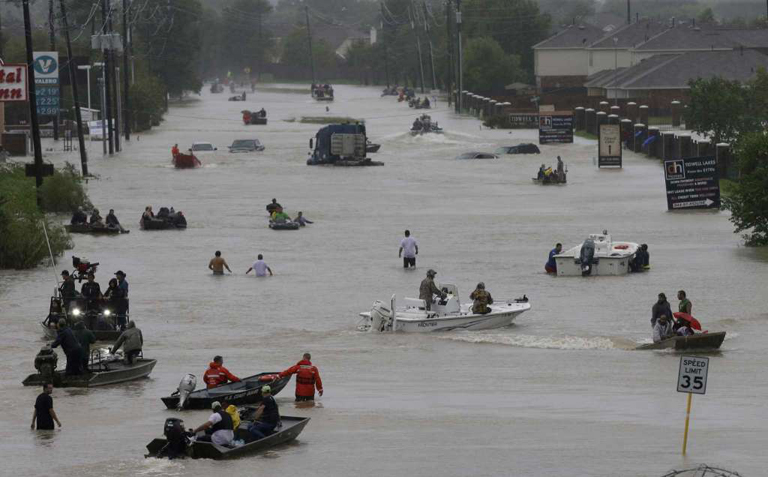
Your comments are always welcomed. If you have news, views, notes or quotes to add to the list above, please do. If you like what you read, pass this along to your friends. You can reach me directly at kensehested@prayerandpolitiks.org.

News, views, notes, and quotes

Signs of the Times  •  19 July 2017 •  No. 128

¶ Processional. “There’s a Meetin’ Here Tonight,” Cantus.

Above: Strawberry Hedgehog (Echinocereus engelmannii) cactus blooming in the Santa Ana National Wildlife Refuge in South Texas. A federal official told the Texas Observer that the first section of the Trump Administration’s border wall “will essentially destroy” the Santa Ana Wildlife Refuge, which is often called the crown jewel of the national wildlife refuge system. Melissa del Bosque

Special issue
US MEDDLING IN OTHER COUNTRIES’ ELECTIONS

Introduction. It was an innocent and obvious question. My wife and I were watching a bit of news after dinner. Russian attempts to influence US elections were the background for all the talking heads.

        “Do these folk ever talk about US interference in other countries’ elections?” Nancy asked. “Where do you find information about that?”

        I responded, “Well, you have to look for it pretty hard.”

        Turns out, it’s not so hard to find this information. And since it’s a topic few mainstream news outlets are raising, I decided to do a little digging of my own. A small sampling of what I found is the special feature of this column.

Invocation. “Pleni sunt caeli et terra gloria tua. Osanna, Osanna in excelsis” (“Heaven and earth are full of thy glory. Hosanna, hosanna in the highest”) —“The Ground,” by Ola Gjeilo, performed by the Heritage Concert Choir at Western Washington University

Good News. “The Standing Rock Sioux Tribe won a significant victory in its fight to protect the Tribe’s drinking water and ancestral lands from the Dakota Access pipeline. A federal judge ruled that the federal permits authorizing the pipeline to cross the Missouri River just upstream of the Standing Rock reservation, which were hastily issued by the Trump administration just days after the inauguration, violated the law in certain critical respects.
        “In a 91-page decision, Judge James Boasberg wrote, ‘the Court agrees that [the Army Corps of Engineers] did not adequately consider the impacts of an oil spill on fishing rights, hunting rights, or environmental justice, or the degree to which the pipeline’s effects are likely to be highly controversial.’” theindigeneousamericans

Call to worship. “Merciful One, you have searched me and known me. You know when I sit down and when I rise up; you hear my thoughts from far away. Encompass me with your Presence, and lay your hand on my heart.” —continue reading “Wonderfully made,” a litany for worship inspired by Psalm 139

¶ “Moscow didn’t do anything in America’s election that Washington hasn’t done elsewhere in the world.Stephen M. Walt, Business Insider

Hymn of praise. “Hatred had me bound, had me tied down / Had me turned around, couldn't find my way / Then you walked with me and You set my spirit free / To me and my family down that long highway / Free at last, free at last / Free from the world and all it's sins / Free at last, free at last / I've been to the top of the mountain.” —Joan Baez, “Free At Last” (Thanks Tom.)

¶ “A 2016 study by [Carnegie Mellon University researcher Dov] Levin found that, among 938 global elections examined, the US and Russia combined had involved themselves in about one out of nine (117), with the majority of those (68%) being through covert, rather than overt, actions. The same study found that ‘on average, an electoral intervention in favor of one side contesting the election will increase its vote share by about 3%,’ an effect large enough to have potentially changed the results in seven out of 14 US presidential elections occurring after 1960. According to the study, the U.S. intervened in 81 foreign elections between 1946 and 2000, while the Soviet Union or Russia intervened in 36.” Wikipedia

¶ “A brief history of the times the US meddled in others' elections.” T.J. Raphael intervew with Tim Weiner, author of “Legacy of Ashes: The History of the CIA,” PRI

Confession. “Indeed, meddling in foreign politics is a great American pastime. . . . For more than 100 years, without any significant break, the U.S. has been doing whatever it can to influence the outcome of elections―up to and including assassinating politicians it has found unfriendly.” —Ryan Grim & Arthur Delaney, Huffington Post

¶ “Over a period of more than a century, American leaders have used a variety of tools to influence voters in other countries. We have chosen candidates, advised them, financed their parties, designed their campaigns, bribed media outlets to support them, and intimidated or smeared their rivals.” —Stephen Kinzer, “We’ve been hacking elections for more than a century,” Boston Globe

Listen as conservative Senator Thom Tillis (R-NC) admits during a Senate Armed Services Committee hearing that the US has interfered 81 times in the elections of other countries. CSPAN video (0:50), 9 January 2017

¶ “While the days of its worst behavior are long behind it, the US does have a well-documented history of interfering and sometimes interrupting the workings of democracies elsewhere. It has occupied and intervened militarily in a whole swath of countries in the Caribbean and Latin America and fomented coups against democratically elected populists.” Ishaan Tharoor, Washington Post

Hymn of lamentation.Wayfaring Stranger,” Rhiannon Giddens.

¶ “10 Times The U.S. ‘Hacked’ Foreign Elections and Democracies.” W.E. Messamore, IVN

Words of assurance. “There is coming a day when no heartaches shall come  / No more clouds in the sky, no more tears to dim the eye  / All is peace forevermore on that happy golden shore,  / What a day, glorious day that will be.” —Southern Gospel Revival, “What a Day That Will Be

¶ “Of course, the irony behind these concerns about the interference of foreign nations in the domestic political affairs of the United States is that the US has blatantly interfered in the elections of many other nations, with methods that include not only financial support to preferred parties and the circulation of propaganda but also assassinations and overthrows of even democratically elected regimes.” C.J. Polychroniou interview with Noam Chomsky, truth-out

¶ “Database Tracks History Of U.S. Meddling In Foreign Elections.” NPR's Ari Shapiro talks to Carnegie Mellon University researcher Dov Levin about his historical database that tracks U.S. involvement in meddling with foreign elections over the years. National Public Radio

Professing our faith.С нами Бог” (“God Is With Us”), Divna Ljubojevic and Melodi.

¶ “Acting under a secret National Security Council directive without authorization from Congress, the Central Intelligence Agency set to work” influencing the 1948 election in Italy. Whether its support of the Christian Democratic Party’s win was needed, “the agency was encouraged by the victory and the CIA’s practice of purchasing elections and politicians with bags of cash was repeated in Italy—and in many other nations—for the next twenty-five years.” —Joshua Keating, “Election Meddling Is Surprisingly Common,” Slate

After Salvador Allende was elected president of Chile in 1970, “the Central Intelligence Agency attempted, through a terrorist group, to block Salvador Allende” from taking office.
        “‘Make the economy scream,’ [US President] Nixon ordered the CIA, while Kissinger infamously quipped, ‘I don't see why we need to stand by and watch a country go communist due to the irresponsibility of its own people.’ In 1973, Allende died in a military coup instigated and welcomed by the American government. And Chile, the nation that I called home, endured 17 years of torture, bloodshed and oppression before we managed to peacefully fight our way back to democracy.” Ariel Dorfman, CNN

Hymn of intercession.Freedom,” Richie Havens, improvising “Motherless Child” at Woodstock in 1969.

By the numbers. There have been only 17 years since 1776 when the US has not be involved in a war. See the list.

Offertory.Paris Blues,” Django Reinhardt.

Preach it. “Earth is so thick with divine possibility that it is a wonder we can walk anywhere without cracking our shins on altars.” —Barbara Brown Taylor

Can’t makes this sh*t up. National Public Radio has a 29-year tradition of reading the US Declaration of Independence on 4 July. This year they took to social media as well, tweeting the document in 113 consecutive posts. Some followers weren’t happy, one referring to it as “propaganda.” Among other responses: don’t want to read “this trash”; “this is why you’re going to get defunded”; and “So, NPR is calling for revolution.” Amy B. Want, Washington Post (Thanks Amy.)

Call to the table. “You have drunk a bitter wine / With none to be your comfort / You who once were left behind / Will be welcome at love's table.” —Julie Miller, “By Way of Sorrow

The state of our disunion. Electoral victories by Republicans are bad for gun sales. On the day after the election last fall, shares of gun maker Sturm Ruger fell 14%; Smith & Wesson fell 15%. “In the gun industry, politics and fear matter.” Uri Berliner, NPR

Best one-liner. The word “listen” contains the same letters as the word “silent.” —Alfred Brendel

For the beauty of the earth. Watch Video of Venus and Earth forming beautiful flower pattern orbiting Sun. (1:03 video)

Featured new essay. “Not so long ago a sermon on religious liberty would likely provoke yawns. The widespread and diverse claims of “religious freedom” are so common and unquestioned in our culture, they mostly go without notice.
        “In recent years, however, a new crop of claims of religious freedom has arisen to give credence to some very old forms of discrimination. Some claims to religious liberty disguise social mischief. How do we distinguish the two?” —continue reading “Religious liberty, or social mischief? Understanding the “wall of separation” between church and state

Altar call. "The way we are, we are members of each other. All of us. Everything. The difference ain't in who is a member and who is not, but in who knows it and who don't." —Wendell Berry’s character Burley Coulter in "The Wild Birds"

Benediction. "Keep knocking, and the joy inside will eventually open a window and look out to see who’s there." —Rumi

Recessional.Walking in Jerusalem,” Bill Monroe and the Bluegrass Boys.

Lectionary for this Sunday. “Sister and brothers, why are we here, again, week after bloody week, weak after so much weary, warring news? . . . / Groaning with sighs too deep for words, singing our woebegone songs for the world that is promised from beyond every prediction, / beyond every market forecast, beyond every rule of engagement, beyond—at times—even our own faltering faith. / It is for that Bright Land that we intercede!” —continue reading “For that Bright Land,” a poem inspired by Romans 8:18-27

Lectionary for Sunday next. “The Love of Christ . .  / is the still, deep stream amid / Every tempest that knows / nothing, nothing, / can separate us from the / length and breadth / of Heaven’s reach.” —continue reading “The breadth of Heaven’s reach,” inspired by Romans 8:26-39

Just for fun. Here’s the ultimate way to quit a job. The Playmakers Comedy (1:00 vdeo. Thanks Chris.)

#  #  #

Featured this week on prayer&politiks

• “Religious liberty, or social mischief? Understanding the ‘wall of separation’ between church and state,” a sermon

• “For that Bright Land,” a poem inspired by Romans 8:18-27

• “Wonderfully made,” a litany for worship inspired by Psalm 139

• “The breadth of Heaven’s reach,” a poem inspired by Romans 8:26-39
 
Other features
• 50+ new annotated book reviews in “What are you reading and why?

©Ken Sehested @ prayerandpolitiks.org. Language not otherwise indicated above is that of the editor, as are those portions cited as “kls.” Don’t let the “copyright” notice keep you from circulating material you find here (and elsewhere in this site). Reprint permission is hereby granted in advance for noncommercial purposes.

Your comments are always welcomed. If you have news, views, notes or quotes to add to the list above, please do. If you like what you read, pass this along to your friends. You can reach me directly at kensehested@prayerandpolitiks.org.

For that Bright Land

A litany for worship inspired by Romans 8:18-27

by Ken Sehested

We enter this house of meeting with lips pursed in praise, voicing rejoicing, hearts heaving to the rhythm of mercy and the beat of beatitude.

’Cause we woke up this morning with our minds stayed on freedom. And stayed on Jesus.

Stayed on freedom, about which politicians banter but secretly fear.

Stayed on Jesus, who moves among us, incognito, inviting, enticing, calling from the margins: Over here! Follow me!

Sister and brothers, why are we here, again, week after bloody week, weak after so much weary, warring news?

It’s me, it’s me, it’s me, O Lord, standing in the need of prayer.

It’s my neighbor, it’s my nation, its creation that’s groaning, standing in the need of prayer.

Groaning with sighs too deep for words, singing our woebegone songs for the world that is promised from beyond every prediction,

beyond every market forecast, beyond every rule of engagement, beyond—at times—even our own faltering faith.

It is for that Bright Land that we intercede!

Its merciful manna is ours to neither hoard nor dispense. We are not its border guards.

All are immigrants to that Beloved Community into whose citizenship we are invited, for whose establishment we are committed, by whose joyful refrain our tongues cannot be restrained.

©ken sehested @ prayerandpolitiks.org