
Recent

News, views, notes, and quotes

Signs of the Times  •  11 July 2017  •  No. 127

Invocation. “I will bow and be simple, / I will bow and be free, / I will bow and be humble, / Yea, bow like the willow tree. / I will bow, this is the token, / I will wear the easy yoke, / I will bow and will be broken, / Yea, I'll fall upon the rock.” —a Shaker hymn, “I Will Bow and Be Simple” performed The Christmas Revels

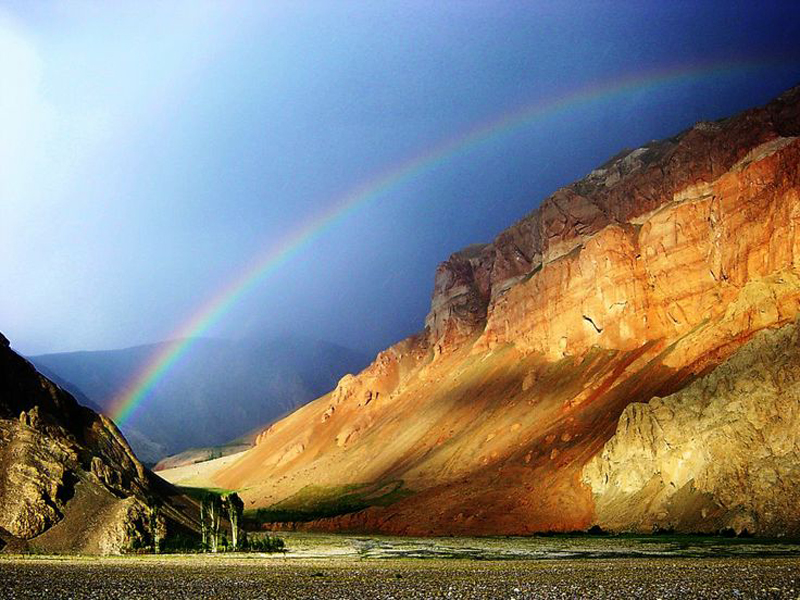
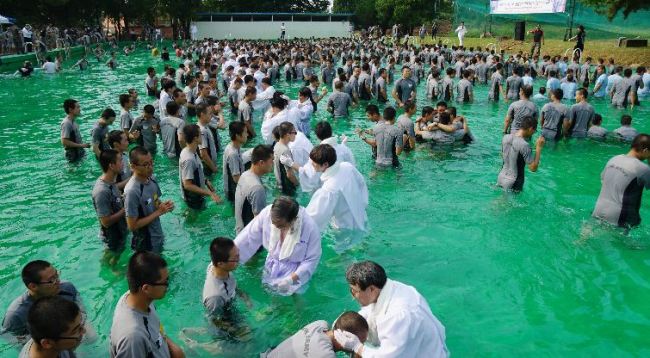
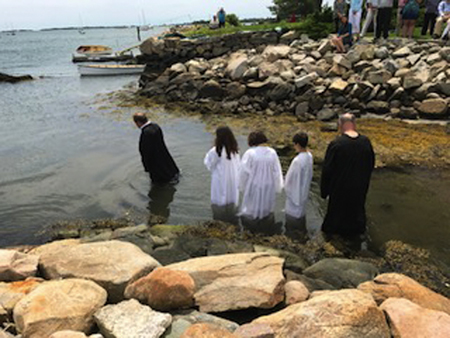
Above: Photo by Gus Ravenwheel

Abbreviated issue

This week’s column is brief to allow for some maintenance.

In his classic book on spirituality and prophetic life, We Drink From Our Own Wells, Peruvian priest Gustavo Gutiérrez writes:

        “At the root of every spirituality there is a particular experience that is had by concrete persons living at a particular time. . . . The great spiritualities in the life of the church continue to exist because they keep sending their followers back to the sources. . . . Spiritual experience is the terrain in which theological reflection strikes root. Intellectual comprehension makes it possible to carry the experience always comes first and is the source.”

        Articulating the faith—in commonplace terms or literate—is always secondary to actual living in the midst of particular, often mundane, circumstances. But we all profit from those whose capacity with words throw light on our common journey.

        In recent weeks I’ve been especially taken by the reflected experience shared by two friends. Below are excerpts.

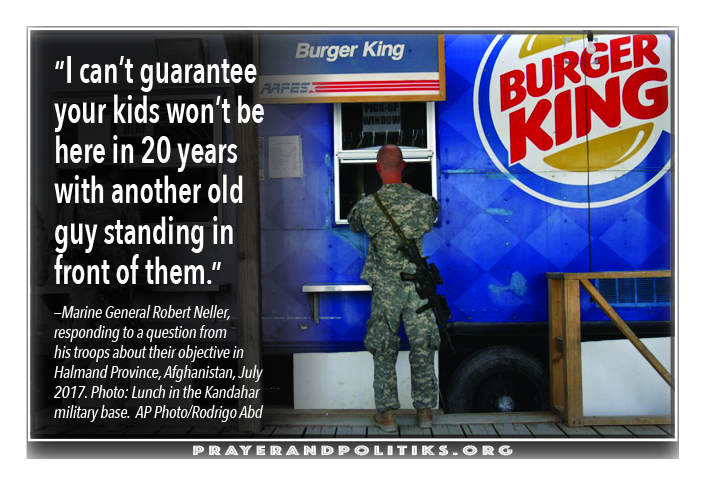
        Finally, we close with a word of victory from the war against ISIS—which raises the question, what has been won?

§  §  §

Micah Bucey, associate pastor of Judson Memorial Church in New York City, received a damning letter after the recent “Gay Pride” march. I love the way he responds with a fierce mercy and also by affirming this movement in the context of a larger Movement:

        “. . . But this year, our Pride March will be a Resistance Riot, a queer agenda that moves beyond the gay one, an embodied reminder, not only to you, but to ourselves, a reminder that we are only as queer as the last person we’ve saved, that we are only as queer as the last battle we’ve fought, that we are only as queer as the last opportunity we took to step outside our complacent commitments to assimilation and nudge ourselves back to the revolution that saved our lives in the first place.” —you can read the entirety of Micah’s response on Facebook

§  §  §

Greg Yost, formerly a high school math teacher, is among the founders and leaders of Beyond Extreme Energy, an environmental group that focuses on opposing natural gas pipelines and storage facilities. (Methane, the primary component in natural gas, is 84 times more potent than carbon dioxide as a greenhouse gas.)

        In a recent sermon in our congregation, Greg used Jesus’ statement, “Those who find their life will lose it, and those who lose their life for my sake will find it” (Matthew 10:39), then recounted his Witness for Peace trip to Nicaragua when he was 19, during the US-backed Contra War during the 1980s, when the US attempted to overthrow the country’s democratically elected government.

        “. . . That short time in Nicaragua in 1986 was a defining moment in my life of faith. But I want to be clear about what it has meant subsequently. Despite the physical and spiritual drama, I did not experience the trip as some hard-won climb to a higher spiritual vantage point. Rather, it has been less about elevation and much more about orientation. It decisively affected the direction of my life’s compass needle. It has made me hold some things looser and other things much tighter than I ever would have otherwise.

        “I offer this testimony confident that many of you will have experienced a similar orienting moment in your own life of faith. If you have, I invite you to reflect on it now. One time-tested way of speaking of such things is using the language of ‘conversion.’

        “I know common religious misuse and abuse of that word may have made it off putting for some, but I’d invite you to let your guard down. Think about what it means. It’s well and good that together we have such varied ways individually of conceptualizing our spiritual lives. One way that is so, so powerful is that of simply following Jesus. We know from the gospels enough about who he is and what he will dare to do to know that moments of decision, or conversion, are an essential requirement for joining him along that way. He told us, plainly and repeatedly, that his way leads to a cross. No one sets a course thus by happenstance.”

§  §  §

Benediction. “There will be a jubilee / Oh my lord oh my lord / There will be a jubilee / When the children all go free / Yeah they'll lay down their swords / They'll study war no more / There'll be a great big jubilee.” —The Devil Makes Three, “There’ll Be a Jubilee

#  #  #

©Ken Sehested @ prayerandpolitiks.org. Language not otherwise indicated above is that of the editor, as are those portions cited as “kls.” Don’t let the “copyright” notice keep you from circulating material you find here (and elsewhere in this site). Reprint permission is hereby granted in advance for noncommercial purposes.

Your comments are always welcomed. If you have news, views, notes or quotes to add to the list above, please do. If you like what you read, pass this along to your friends. You can reach me directly at kensehested@prayerandpolitiks.org

News, views, notes, and quotes

Signs of the Times  •  4 July 2017  •  No. 126

Processional.Memory,” Barbara Streisand.

Above: Maze Overlook, Canyonlands National Park-Utah-Photo by Tom Till

Special issue
MEMORY AS SPIRITUAL DISCIPLINE

Introduction

        Broadly speaking, there are two forms of memory loss, and both involve history.

        Many of us have cared for, or now care for, loved ones enduring the ravages of dementia. It is heart-breaking, exhausting work. But this is not the topic of this column.

        The other form of memory loss is a spiritual condition which also leads to brutal historical disordering but on a larger public scale. Theologically speaking, this kind of confusion—as to whom we belong, to whose purposes we are called, and over which security terms are trustworthy—leads to deceit, to violence, and to death.

        This special issue was inspired by an article by my friend and colleague Joyce Hollyday, celebrating the departure of one of our congregation’s youth on a Witness for Peace delegation to Nicaragua. In 1983 Joyce was among the founders of Witness for Peace, a faith-based response to the Reagan Administration’s secret war against the government of Nicaragua, funded by illegal (some would say treasonous) sales of weapons to Iran

        “I’ve been part of a lot of failures in the past three and a half decades,” Joyce writes. “Despite all our efforts for justice and peace, the world is a colossal mess. . . . Back in the 1980s, when I went to Nicaragua, I was an editor for Sojourners. One morning a call came into the magazine’s office from a friend in Congress. He reported that he had just come from a military briefing in which the Head of the Joint Chiefs of Staff had announced:

        “‘We could have invaded Nicaragua if we could have gotten the damn Christians out of the way.’”

        (Read Joyce's essay, “Making a Difference.”)

        Getting in the way of all sorts of traffickers of human and environmental misery is not the only thing we do in joyful response to Jesus’ summons, but often it’s a starting place. Such work doesn’t always “work.” We carry on, not so much to succeed but simply to breathe.

        It’s always nice, though, to get an inkling of the results.

#  #  #

Invocation. “We may ignore, but we can nowhere evade, the presence of God. The world is crowded with God. God walks everywhere incognito. And the incognito is not always hard to penetrate. The real labor is to remember, to attend. In fact, to come awake. Still more, to remain awake.” —C. S. Lewis

Call to worship.Precious Memories,” Alan Jackson.

¶ Memory recovery. The University of Virginia “is planning to build a large and visible memorial to commemorate the contributions of an estimated 5,000 enslaved people who helped build and maintain the school founded by the third U.S. president.” (See the artist’s rendering at left.) Susan Svriuga, Washington Post (Thanks Sally.)

More than 50 times the Pentateuch uses a variation of this statement, “Remember you were slaves in the land of Egypt and the Lord Your God redeemed you” (Deut. 15:15). Similar expressions occur more than 100 times in the rest of the Hebrew Bible.

Hymn of praise. “When there was no ear to hear / You sang to me. . . / When there were no strings to play / You played to me. . . / When I had no wings to fly / You flew to me. . . / When there was no dream of mine / You dreamed of me.” —Grateful Dead, “Attics of My Life

¶ “A people’s memory sets the measure of its political freedom.—Wilson Carey McWilliams

Confession. “‘Remembering the future’ is at the heart of our redemptive calling. Remembering the future is what we ritually practice in the celebration of the Eucharist, communion, the Lord’s Supper. People on the Way of Jesus are by definition an unreasonable people—if, by reason, you mean . . . that respect comes at the price of threat.” —continue reading “Remembering the Future: a World Communion Sunday sermon

¶ “To forgive is not to forget, but to remember in a different way—in a way that no longer holds us captive to the past.” —R. Schreiter, C.PP.S.

Hymn of lamentation. “By the waters of luxury, we sat and tired to sing again / hung our harps of the traffic signs, ‘cause the music could not come. / In our capital captivity, heated and cooled by central air, / in an alien land that we made for ourselves, we tried to remember home.” —Ken Medema, “By the Waters of Luxury

Words of assurance. What can we do? We can hone our memory, we can learn from our history. We can continue to build public opinion until it becomes a deafening roar. . . . We can re-invent civil disobedience in a million different ways. In other words, we can come up with a million ways of becoming a collective pain in the ass. . . . Another world is not only possible, she is on her way. On a quiet day, I can hear her breathing.” —Arundhati Roy

Professing our faith. “If you want to be remembered, give yourself away.” — William Bryant Logan

Hymn of resolution. “Though the nations rage from age to age, we remember who holds us fast; / God’s mercy shall deliver us from the conqueror’s crushing grasp. / This saving word that our forebears heard is the promise which holds us bound, / Till the spear and rod can be quelled by God who is turning the world around.” —Gary Daigle, Rory Cooney & Theresa Donohoo, “Canticle of the Turning

Hymn of intercession.Lord Remember Me,” Ruthie Foster, featuring the Blind Boys of Alabama.

Short take. “When people say to me that the [monuments to the Confederacy] are history . . . it immediately begs the questions, why there are no slave ship monuments, no prominent markers on public land to remember the lynchings [540 alone in Louisiana], nothing to remember this long chapter of our lives; the pain, the sacrifice, the shame. . . . So for those self-appointed defenders of history and the monuments, they are eerily silent on what amounts to this historical malfeasance, a lie by omission. There is a difference between remembrance of history and reverence of it.” —New Orleans Mayor Mitch Landreu, explaining why the city recently removed statues commemorating the Confederacy. Read the full text or watch the video (23:04).

Left: Statue of Confederate General Robert E. Lee being removed in New Orleans.

¶ “I dare not ask for improved memory, but for a growing humility and a lessing cocksureness when my memory seems to clash with the memories of others.” —excerpt from “17th century nun’s prayer”

By the numbers. The establishment of Confederate monuments [numbering more than 700], which crested between 1900 and 1930 and again during the Civil Rights Movement in the 1960s, didn’t end with the 20th century. Their numbers actually have been increasing. In North Carolina, for instance, 35 monuments have been added since 2000, according to a University of North Carolina survey. One, dedicated in Mitchell County in 2011, commemorates 79 men “who died for their freedom and independence.’’ And not for slavery. Rick Hampson, USAToday

Offertory.Lord Do Remember Me,” Mississippi John Hurt.

Preach it. “Essentially, a church is a community that keeps alive the dangerous memories of its classics. The memory of Jesus, for example, disconcerts all present reality, including that of the church, because He essentially afflicts the comfortable and comforts the afflicted. . . . This is a dangerous occupation.” —David Tracy

Can’t makes this sh*t up. The “Colfax Riot” (see historical marker at right) was not a riot but a massacre. During Reconstruction, following the Civil War, a Fusion-Republican party (coalition of black and white citizens) made significant electoral gains in Grant Parish, Louisiana. A group of white vigilantes attacked the Colfax courthouse in an attempted coup d’état. Most of the 150 African Americans killed were murdered after they surrendered.

¶ "The one who delivers the blow forgets. The one who bears its mark remembers." —Haitian proverb

South Africa’s Truth and Reconciliation Commission, which began hearings in 1996, is the most well known of dozens of such efforts in other countries. The goal for each has been to face a brutal history of repression in order to set the stage for public healing. Here is a list of such commissions elsewhere, including one in Greensboro, NC.

¶ "Promise me you'll always remember: You're braver than you believe, and stronger than you seem, and smarter than you think." —Christopher Robin to Winnie the Pooh (A.A. Milne)

Call to the table. At this table of remembrance, the Blessed One is at work disremembering your soiled and sullied moments, saying, “Won’t you join me in disremembering the slights you still clutch?”

        “Behold,” the Spirit whispers to all with ears to hear, “I am doing a new thing, beyond your wildest dreams and favored calculations!” —continue reading “Remembering in a different way: A call to the Table

¶ “The body remembers what the mind forgets.—Martha Manning

¶ “In In Praise of Forgetting: Historical Memory and Its Ironies, David Rieff quotes approvingly the suggestion of a Northern Irish writer that the next memorial to Irish history should be ‘raising a monument to Amnesia, and forgetting where we put it.’” —Gary J. Bass

¶ "Hope, like every virtue, is a choice that becomes a habit that becomes spiritual muscle memory. It's a renewable resource for moving through life as it is, not as we wish it to be." —Krista Tippett

The state of our disunion. A Confederate memorial in front of the Anderson County, South Carolina courthouse bear this inscription: "The world shall yet decide, in truth's clear, far-off light, that the soldiers who wore the gray, and died with Lee, were in the right.”

Best one-liner. “One day we’ll wake to remember how lovely we are.” —Bruce Cockburn, “Wait No More

For the beauty of the earth. A flock of starlings in startling performance. A film by Liberty Smith and Sophie Windsor Clive, music by Nomad Soul. (2:00.)

Altar call. “To be hopeful in bad times is not just foolishly romantic. It is based on the fact that human history is a history not only of cruelty, but also of compassion, sacrifice, courage, kindness. What we choose to

emphasize in this complex history will determine our lives.” —Howard Zinn

What to tell the children? “. . .You tell them / To stand up and fight. / Remind them of all the lawful atrocities / Committed in the sick and twisted history / Of this violent country. . . / Tell them love will win this war, / But only if we remember / That love is not just one unending cuddle puddle, / But fierce as a mother bear protecting her cubs.” —Rachel Kann

Benediction. “Remember your ancestors. Say their names out loud and often. Give thanks that you are not alone. You are not creating this movement out of nothing. It’s been done over and over again. Your work is simply to offer new gifts to old work.” —Lydia Wylie-Kellermann

Recessional. “When I am laid, am laid in earth, / May my wrongs create / No trouble, no trouble in thy breast. / Remember me, remember me, but ah! forget my fate. / Remember me, but ah! forget my fate.” —Alison Moyet, Dido’s Lament from “Dido and Aeneas” by Henry Purcell

Lectionary for this Sunday. “O God of justice, ignite the hearts of our legislators with your commitment to truth and your demand for justice. May their hands be large enough to reach across the bloody divisions in our land.” —continue reading “Give wisdom to legislators,” a litany inspired by Psalm 72

Lectionary for Sunday next. “To the Blessed One of Heaven does my heart heave its burden. / For release from my shame, I wait all the day long. / Silence accusers; still every sharp tongue. / For pardon amid failure, I wait all the day long.” —continue reading “All the day long,” a litany for worship inspired by Psalm 25

Just for fun. When sculpture and kids interact.

#  #  #

Featured this week on prayer&politiks

• “Of thee I sing: An Independence Day meditation

• “Remembering the Future,” a World Communion Sunday sermon

• “Remembering in a different way,” a call to the Table
 

©Ken Sehested @ prayerandpolitiks.org. Language not otherwise indicated above is that of the editor, as are those portions cited as “kls.” Don’t let the “copyright” notice keep you from circulating material you find here (and elsewhere in this site). Reprint permission is hereby granted in advance for noncommercial purposes.

Your comments are always welcomed. If you have news, views, notes or quotes to add to the list above, please do. If you like what you read, pass this along to your friends. You can reach me directly at kensehested@prayerandpolitiks.org.
 

Liberating Bible Study

Laurel Dykstra and Ched Myers, eds., Wipf and Stock, 2011, reviewed by Vern Ratzlaff

        Here is an excellent compilation of 25 essays dealing with social justice issues as they are dealt with by biblical writers and by current activists. ‘The bible is a record of displaced and dispossessed people who have found a communal identity…. It provides an important perspective for reflecting on responsibilities toward refugees…. The bible is a book by and for refugees…. First century Christianity in Asia Minor, as reflected in 1 Peter, faced the same issues as did the church in Central America in recent years’ (p 198,199).

        The book has well defined subject matter: chs 1-10, the Hebrew bible; 11-19, Jesus and the gospels; 20-25, the Epistles. I found the last section the most moving as the writers dealt with issues of sanctuary: the church as counter-cultural, the biblical emphasis on hospitality, and a powerful poem reflecting on Vancouver’s east side street life of the homeless.

        The fiery trial (1 Peter 4:12) is not so much a case of persecution by outsiders but of collusion with the enemy, capitulation to consumerism, the profit motive, conformity to values diametrically opposed to a gospel celebrating G-d’s favour toward the poor. The ‘Christian nations make and sell the bombs, train the torturers, create and refuse the refugees’ (p 210). A powerful section deals with 17 political dimensions that appeared in the Galilee of Jesus’ day and contemporary forms (‘top down social organizations and control’, p 149-151).

        A powerful look at the bible’s treatment of social dynamics.

Vern Ratzlaff is a pastor and professor of historical theology at Lutheran Theological Seminary in Saskatoon, Saskatchewan, Canada.

The Power of Parable: How Fiction BY Jesus became Fiction ABOUT Jesus

John Dominic Crossan. HarperCollins, 2012, reviewed by Vern Ratzlaff

        Crossan examines Jesus’ parables and identifies what he calls the ‘challenge parable’ as Jesus’ chosen teaching tool for urging his followers to probe, question and debate the absolutes of religious faith and the presuppositions of social, political and economic traditions. He proposes a three-fold typology for the parable genre: riddle parables (allegory) (eg Sower and the Seed, Mark 4); example (seeing the lost things (Luke 15) and challenge (his major category)(p 244). He then presents the four gospels as mega parables, interpretation by the gospel writers challenging and enabling us to co-create with G-d a world of justice, love and peace.

        Crossan invites a new perspective involving the probable setting of an oral tradition. ‘Would there have been an absolute and respectful silence, for say an hour plus as Jesus performed his story? Or would there have been interruptions and pushbacks, agreements and agreements, not only between speaker and hearers, but among the hearers themselves?’ (p 95), an audience participation involved a class reversal of traditional expectations (eg the Good Samaritan). Challenge parables are participatory—because provocative—pedagogy. The gospels are challenge parables not by but about Jesus.

        Crossan presents a non-violent Jesus who rejects rhetorical violence. But what of the violent metaphors Jesus uses (ie ’hypocrites’, especially in Matthew 23)? Here Crossan sees the gospel writers as parable writers; ‘does Jesus change his mind or does Matthew change his Jesus?” (p 187). ‘The power of Jesus’ parables challenged and enabled his followers to co-create with G-d a world of justice and love, peace and nonviolence’ ( p 252).

        A wonderful exposition of parables by and about Jesus.

Vern Ratzlaff is a pastor and professor of historical theology at Lutheran Theological Seminary in Saskatoon, Saskatchewan, Canada.

News, views, notes, and quotes

Signs of the Times  •  28 June 2017  •  No. 125

Processional.Stand By Me,” Steel Pan band at the 30th anniversary Flatbush Frolic in Brooklyn, NY.

Special issue
PATRIOTISM

Invocation. “To the one unchanged  / Yesterday and today  / Oh YHWH  / I will try to stay awake  / Take my last breath of faith  / As I wait for you to come / Take me beyond  / This land undone  / Over the flood  / By your word, spirit, and blood.” —Josh Garrels, “Words Remain

This was once on the tip of our national tongue. “Wherever the standard of freedom and independence has been or shall be unfurled there will be America's heart, her benedictions and her prayers. But she goes not abroad in search of monsters to destroy. She is the well wisher to the freedom and independence of all. She is the champion and vindicator only of her own.” However, should we succumb to the temptation of “wars of interest and intrigue, . . . fundamental maxims of [US] policy would insensibly change from liberty to force. . . she might become the dictatress of the world.” —President John Quincy Adams, Washington, DC, 4 July 1821

One of the first treaties signed by the US, with Tripoli (now Libya) in 1796, rejected any notion of theocratic governance, stating that "the Government of the United States of America is not, in any sense, founded on the Christian religion." Wikipedia

Call to worship. “O God of justice, ignite the hearts of our legislators with your commitment to truth and your demand for justice. May their hands be large enough to reach across the bloody divisions in our land.” —continue reading “Give wisdom to legislators,” a litany inspired by Psalm 72

Good news. This is an extraordinarily moving story from National Public Radio about a music therapist and a dying patient. Listen (5:08) or read the transcript. —Erika Lantz 

Hymn of praise. Monastery of St. Clare, Lusaka, Zambia.

¶ “Patriotism is when love of your own people comes first; nationalism, when hate for people other than your own comes first.” —Charles De Gaulle

Confession. “Born in iniquity and conceived in sin, the spirit of nationalism has never ceased to bend human institutions to the service of dissension and distress.” —Thorstein Veblen

During the Spanish-American War of 1898, “As our armies were committing massacres in the Philippines (at least 600,000 Filipinos died in a few years of conflict) [and waterboarding was used in interrogation], Elihu Root, our secretary of war, was saying: ‘The American soldier is different from all other soldiers of all other countries since the war began. He is the advance guard of liberty and justice, of law and order, and of peace and happiness.’" —Howard Zinn, “Put Away the Flags

¶ “Every war when it comes, or before it comes, is represented not as a war but as an act of self-defense against a homicidal maniac.” —George Orwell

Among the sacred Independence Day traditions in the US is the annual Nathan’s Hot Dog Eating Contest. Matt Stonie set the current record in 2015, eating 69 hot dogs (and buns) in 10 minutes. Stonie is ranked the No. 1 eater by Major League Eating. (Yes, that’s a thing.)

You do propaganda; we do public relations. Edward Bernays was Sigmund Freud's American nephew. During World War I, he used his uncle's psychological theories to aid the war effort through propaganda in Europe, playing on people's subconscious desires and fears to achieve favorable results for the Allies.

        “When I came back to the US,” Bernays recalled many years later, “I decided that if you could use propaganda for war, you could certainly use it for peace. And propaganda got to be a bad word because of the Germans using it, so what I did was to try and find some other word.”

        Bernays, considered one of the founders fathers of the public relations professions, developed the concept of public relations as “the engineering of consent” which he called “the very essence of the democratic process.” —Jonathan Langley, “Creating Consumers: Psychology, Propaganda and the Economy

Decibel freedom. “. . . we have the right and obligation to protect what others have fought and died for.” —letter to the editor, Asheville Citizen-Times, from a motorcyclist rejecting calls for stricter enforcement of vehicular noise regulations

¶ “It is lamentable, that to be a good patriot one must become the enemy of the rest of mankind.” —Voltaire

Words of assurance. “Burdens now may crush me down, / Disappointments all around, / Troubles speak in mournful sigh, / Sorrow through a tear stained eye; / There is a world where pleasure reigns, / No mourning soul shall roam its plains, / And to that land of peace and glory / I want to go some day.” —MetroSingers, “Someday.”  See all Charles A. Tindley's lyrics to this hymn.

Over the past decades the aphorism “'freedom is not free' has become a popular patriotic refrain. But we forget that, in 1953, Army Chief of Staff General Matthew Ridgeway used the phrase to identify the difference between those who torture their captives and those who, like us, believe the disavowal of torture is among the 'self-evident truths' dating from our Republic’s founding. The 'cost' of freedom entails moral accountability. —excerpted from “The cost of freedom entails moral accountability: The need for truthtelling about the CIA’s torturing practices

¶ "Lost souls escape their loss of control in patriotism." —Dr. Samuel Johnson

Professing our faith. “I want our nation to listen to a poet who dares to unchoke love from bellowing patriotism. One who will resuscitate the word with the sharp rib-cracking pressure of truth, so that the gasp of the future may rush into our lungs, that we might breathe together and survive our broken hearts.” —Rivera Sun, “Sing the Body Politic, Electric,” CommonDreams

Hymn of resolution. “This is my song, O God of all Nations / A song of peace for lands afar and mine / This is my home, the country where my heart is / Here are my hopes, my dreams, my holy shrine / But other hearts in other lands are beating / With hopes and dreams as true and high as mine.” —Indigo Girls, with Michelle Malone, “Song of Peace (Finlandia)”

Short story. “Some years ago, on a visit to the Maritime provinces of Canada, we took a history tour of St. John, New Brunswick, and learned details of a narrative I vaguely recalled. St. John’s story is uniquely tied to US history.

        “The city's legacy dates to 1783, shortly after the Treaty of Paris ending the American Revolutionary War, when British Loyalists fled to Canada. Terms of the Treaty stipulated reparations by the new U.S. Congress for those whose properties had been destroyed or expropriated. Congress decided to leave the matter to the individual states. You can imagine how far that went.” —continue reading “Of thee I sing: An Independence Day meditation

¶ “Force is as pitiless to the man who possesses it, or thinks he does, as it is to its victims; the second it crushes, the first it intoxicates. The truth is, nobody really possesses it.” —Simone Weil

Hymn of intercession. “From the north to the south / from the west to the east / hear the prayer of the mothers / bring them peace / bring them peace.” —Yael Deckelbaum & Prayer of the Mothers, “This Land”(English translation of Hebrew and Egyptian Arabic lyrics), a 14-member ensemble of Jewish, Arab and Christian women

When only the blues will do. —Layla Zoe, Don’t wanna hurt nobody

By the numbers: National standing takes a hit. A new Pew Research Center poll of citizens in 37 countries around the globe found that only 22% of respondents have confidence Trump will act wisely in international affairs. Previously, President Obama had a 64% rating. Favorability ratings of the US also dropped from 64% to 49%. John Bacon, USAToday

Offertory.Your Eyes,” Anoushka Shankar.

Preach it. “Here is the mystery, the secret, one might almost say the cunning, of the deep love of God: that it is bound to draw on to itself the hatred and pain and shame and anger and bitterness and rejection of the world, but to draw all those things on to itself is precisely the means, chosen from all eternity by the generous, loving God, by which to rid his world of the evils which have resulted from human abuse of God-given freedom.” —N.T. Wright

Can’t makes this sh*t up. In his first four months in office, “drain-the-swamp” Donald Trump has granted more waivers for former lobbyists to work in his administration than Obama did in eight years. Matthew Yglesias, Vox

Call to the table. “What many of us have been attempting to do—build a thriving multi-racial, multi-ethnic, multi-faith, egalitarian democracy out of the rubble of slavery and genocide—has never been achieved in the history of the world. Some say it can never be done. Is America Possible? That’s the question we face right now.” Michelle Alexander, author of “The New Jim Crow,” Radical Discipleship

The state of our disunion. “This nation is founded on blood like a city on swamps / yet its dream has been beautiful and sometimes just / that now grows brutal and heavy as a burned-out star.” —Marge Piercy, in “Circles on the Water

Best one (long) liner. “The bosom of America is open to receive not only the Opulent and respectable Stranger, but the oppressed and persecuted of all Nations And Religions; whom we shall wellcome to a participation of all our rights and previleges, if by decency and propriety of conduct they appear to merit the enjoyment.” —George Washington, 2 December 1783 letter (Original spellings as shown. Thanks Courtney.)

For the beauty of the earth. Blooming cacti. (3:27 video.)

Altar call. “The devil lies to the kings and gets them blind drunk on his wine of Patriotism and they fill their subjects with the same stuff and tell them that their fatherland is in danger and they must fight to protest it. That is a lie of the Devil.

        “The highest type of patriotism is to refuse to fight with carnal weapons and stand by Him who taught us to love our enemies and put up the sword.

        “O Reader, don't let the devil fool you on this false notion of patriotism. . . . Will we, followers of the Prince of Peace, dedicate our bodies to the god of war to murder or butcher our fellow man? God forbid!” —W.S. Craig, writing in the “Repairer” publication, April 1918, rooted in the Free Methodist denomination and “radical holiness” movement

Benediction. “The love of one's country is a splendid thing. But why should love stop at the border?” —Pablo Casals

Recessional. “Listen, smith of the heavens, / what the poet asks. / May softly come unto me / your mercy. / So I call on thee, / for you have created me. / Most we need thee. Drive out, O king of suns, generous and great, every human sorrow from the city of the heart.” —“Heyr himna smiður” (“Hear, Heavenly Creator”), 12th century Icelandic poem, put to music by Thorkell Sigurbjornsson, performed by Eivør Pálsdóttir (click the “show more” button to see all the lyrics)

Lectionary for this Sunday. “This is a large work I’ve called you into, but don’t be overwhelmed by it. It’s best to start small. Give a cool cup of water to someone who is thirsty, for instance. The smallest act of giving or receiving makes you a true apprentice.” —Matthew 10:42, The Message

Lectionary for Sunday next. “Who,” asked the Apostle, in another part of his letter to the early church living in the belly of Rome’s imperial rule, “Who can deliver [us] from this body of death?” (Romans 7:24). His response? Disarmed lives, shaped by disarmed hearts, by the power of God and in the manner of Jesus, whose purpose openly contradicted the mighty Caesar’s claim to be the “author of peace” and “lord and savior” of the world. So that all life again may be precious. —continue reading “Precious indeed: Reflections on a post-bin Laden world

Just for fun. Jordan Klepper puts Trump's defense-heavy budget into perspective on The Daily Show. (1:07 video. Thanks Abigail.)

#  #  #

Featured this week on prayer&politiks

• “Give wisdom to legislators,” a litany inspired by Psalm 72

• “Of thee I sing: An Independence Day meditation

• “Jonathan & ee cummings: The secret of freedom,” a story about my grandson
 
Other features
• “The cost of freedom entails moral accountability: The need for truthtelling about the CIA’s torturing practices

• “Precious indeed: Reflections on a post-bin Laden world

©Ken Sehested @ prayerandpolitiks.org. Language not otherwise indicated above is that of the editor, as are those portions cited as “kls.” Don’t let the “copyright” notice keep you from circulating material you find here (and elsewhere in this site). Reprint permission is hereby granted in advance for noncommercial purposes.

Your comments are always welcomed. If you have news, views, notes or quotes to add to the list above, please do. If you like what you read, pass this along to your friends. You can reach me directly at kensehested@prayerandpolitiks.org.

Precious indeed

Reflections on a post-bin Laden world

by Ken Sehested
4 May 2011, on the fifth anniversary of my grandson’s birth

        I spent more than an hour pouring over the newspaper Monday morning, whose oversized front page headline boldly proclaimed “A nation united” above its story of Osama bin Laden’s death. Rarely have I felt more disunited, disheartened, discomforted. Literally dispirited, the Holy Spirited-pledge to make all things new now mocked by Sunday crowds awash in frenzied rejoicing over assassination. All this, barely a week after Eastern morning, with its renewal of baptismal vows “to renounce Satan, and all his works, and all his promises.”

        Locally, the newspaper included theological justification in the words of a local pastor, who suggested that the military’s raid “sends a message that their lives [those killed in the 9/11 terrorist attacks] counted and their lives were precious.”

        Precious. Precious, indeed. Their deaths can never be undone, or justified, or written off as collateral damage, which is how Gulf War veteran (turned terrorist bomber) Timothy McVeigh rationalized in 1995 the deaths of those children in the Murrah Federal Building’s day care center in Oklahoma City.

        Precious indeed. But not only those lives, not only the lives of our kind, our tribe, our sect or nationality or religious orientation. All lives, as many of us were taught to sing in Sunday school—red and yellow, black and white, they are precious in his sight, Jesus loves the little children of the world. Precious indeed, not because they are innocent but because they are vulnerable.

§  §  §

        “There is no flag,” Howard Zinn once wrote, “large enough to cover the shame of killing innocent people.” And violence, of every sort and under whatever party motto, national creed or religious sanction, is a form of evangelism for the Devil. No matter how secularized we become, we never quite shed the notion that violence can be redemptive, that by our ingenuity, combined with fortitude, we can make history come out right. That conviction, however piously or impiously held, is the only real atheism.

        Nonetheless, innocence—like beauty—always seems to be in the eyes of the beholder.

§  §  §

        Upon return from my first visit to Iraq in 2000, I approached the U.S. customs agent with more than a little trepidation, since our government had criminalized travel to that land, backed by dual threats of fines and jail time.

      "Why were you there?" asked the official, staring at my customs forms. I could have withheld the fact that I’d been to Iraq, since that visa was issued separately, leaving no mark in my passport beyond the Jordanian entry stamp.

      "To assess the impact of the U.N. economic sanctions against Iraq," I replied.

      "Are they [the sanctions] working?"

      "Well," I said, "they're certainly killing a lot of people.”

        In a tone of voice which seemed to say I'd told him more than he really wanted to know, the customs agent handed back my passport and said, "O.K., have a nice day."

        You may remember those sanctions, according to a 1995 UNICEF study, were responsible for the deaths of an estimated 500,000 children, mostly from simple disease, the result of the 1991 “Desert Storm” bombing campaign’s targeting the country’s water purification, sewage treatment and electrical grid infrastructure. In the resulting poisoned environment, simple diarrhea became a deadly epidemic.

        When then-U.S. Secretary of State Madeleine Albright was interviewed in May 1996 on "CBS 60 Minutes" news program, reporter Leslie Stahl asked: "We have heard that a half million children have died [as a result of sanctions against Iraq]. I mean, that is more children than died in Hiroshima. And, you know, is the price worth it?"

        To which Albright replied: "I think this is a very hard choice, but the price, we think the price is worth it."

        In the political calculus of hard choices, some lives are not so precious and can be balanced against other valuable commodities.

§  §  §

        None of us are immune from the emotions of rage. Indeed, the lust for vengeance is itself rooted in the longing for justice. And the flowering of that soured root is as old as Genesis.

        In its fourth chapter, the Bible’s opening book accounts the threat of Lamech, great-great-great grandson of Cain, son of Adam and Eve, who famously murdered in brother Able. By Lamech’s day, the tradition of redemptive killing had inflated by a factor of eleven.

        “I have killed a man for wounding me, a young man for striking me. If Cain is avenged sevenfold, truly Lamech seventy-sevenfold."

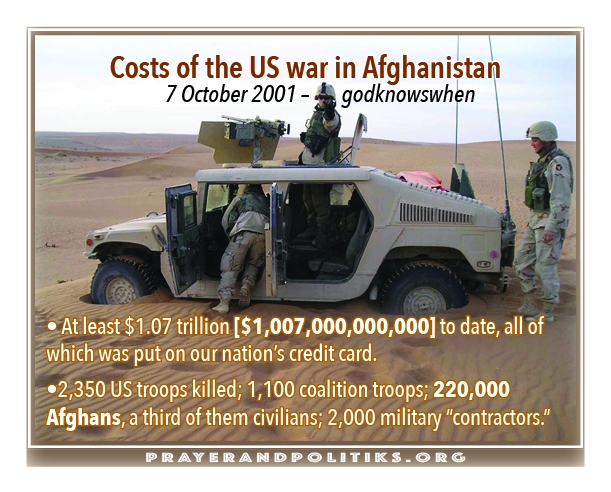
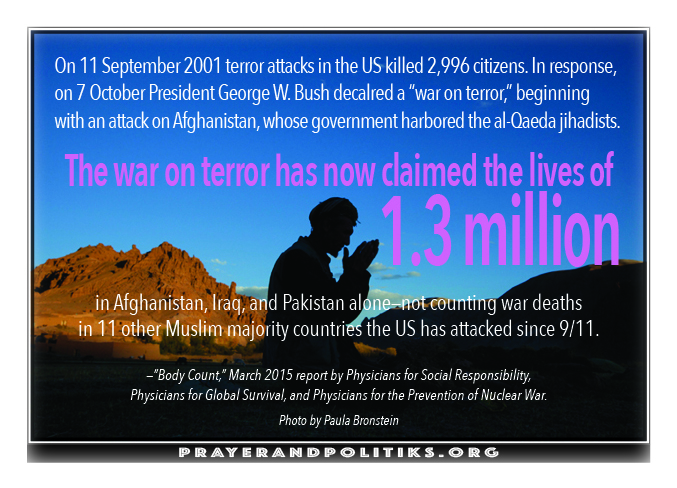
        To restore honor and avenge the loss of nearly 3,000 precious lives on 9/11, the U.S. launched a war against Iraq, which had nothing to do with the terrorist attack. The most conservative estimates of Iraqi civilian deaths run into the hundreds of thousands, upwards of a million. For that purpose nearly 5,000 U.S. soldiers have died, another 30,000 wounded, with the national credit card tab in the trillions of dollars. Not to mention Afghanistan. And the meter’s still running.

        During most of the decade past, “God bless America” became the staple benediction to our political leaders’ speeches. Ironically, of its 41 appearances as a verb in the Newer Testament, “bless” as an imperative occurs only twice: “Bless those who curse you,” Jesus taught (Luke 6:28); and similarly, from the Apostle Paul, “Bless those who persecute you” (Romans 12:14).

        “Every war already carries within it the war which will answer it,” wrote the German artist Käthe Kollwitz, censored and threatened by the Nazis. “Every war is answered by a new war, until everything, everything is smashed.” Needless to say, we all want peace. Our problem is that we also want what we cannot get without war. Once loosed, it feeds off its own fury.

        “Who,” asked the Apostle, in another part of his letter to the early church living in the belly of Rome’s imperial rule, “Who can deliver [us] from this body of death?” (Romans 7:24). His response? Disarmed lives, shaped by disarmed hearts, by the power of God and in the manner of Jesus, whose purpose openly contradicted the mighty Caesar’s claim to be the “author of peace” and “lord and savior” of the world. So that all life again may be precious.

#  #  #

©ken sehested @ prayerandpolitiks.org

News, views, notes, and quotes

Signs of the Times  •  21 June 2017  •  No. 124

Processional.We Are Not Alone,” Sharon Mennonite Bible Institute Singers.

Above: "This photograph captures a whale behaviour called ‘spy hopping’, where whales poke their head above the water to take a look around and see what’s happening above the surface.” Photograph off the coast of Queensland, Australia, by Mark Seabury, featured in National Geographic’s 2017 Travel Photograph of the Year Contest.

Imagine a disaster so severe that everybody in three of our most populous states—Texas, Florida and New York—were suddenly forced from their homes and made to run for their lives. That’s how many refugees are on the move today.
        Or imagine 630 school buses being filled, every day, half of them children, to be transported to who knows where, over hostile roads and drowning waters, arriving where they are unwanted—considered a burden or even a threat.
        War, persecution, or severe food shortages—sometimes all three, each cause compounding the others—are currently forcing 65 million people from their homes. Ours is the worst refugee crisis in written history. —more background at “World Refugee Day: What you should know,” CNN
        For more information about World Refugee Sunday, see last week’s “Signs of the Times” column. Each year 20 June is designated by the United Nations as World Refugee Day. Many churches mark the occasion on the Sunday before or after. But any time is a good time.

Invocation. “One day at a time sweet Jesus / That's all I'm askin' from You / Just give me the strength / To do everyday what I have to do." —Judy Collins, “One Day At a Time

Good news. Recently three Indonesian soccer players (football, to most of the globe) made an unusual political statement after scoring a goal: Each assumed a traditional prayer position associated with Hinduism, Christianity, and Islam. The photo (right) was posted on the team’s Facebook page with the following comment: “Because different beliefs will not prevent us from achieving the same goals.”
        The photo comes at a particularly important time in Indonesian history, as the rise of less tolerant Islamist political factions in the country in recent months has threatened Indonesia’s more moderate and secular government.Siasat

Call to worship. "Keep knocking, and the joy inside will eventually open a window and look out to see who’s there." —Rumi

Not so good news. If you missed it, catch Trevor Noah’s Daily Show commentary (3:02 video) on the acquittal of the police officer who killed Philando Castile during a traffic stop in a St. Paul, Minn. suburb.  For a transcript of his comments—particularly his skewering of the NRA, see Caroline Framke, Vox.

Take this brief survey (1:38 video) of the historically high number of refugees. You’ll be surprised to know who’s hosting most of them. —AJ+ (Thanks Harold.)

Hymn of praise.Behold Our God,” Praise and Harmony Singers.

On Monday 19 June, Senate Majority Leader Mitch McConnell (R-KY) refused to confirm that his colleagues would have as much as 10 hours to read, debate and propose amendments to the American Health Care Act (AHCA), narrowly approved, 217-213, by the House of Representatives. Its purpose is to replace President Obama’s Affordable Care Act (ACA).

“Obamacare” was originally a pejorative term for the “Patient Protection and Affordable Care Act.” It was signed by President Obama on 23 March 2010, The legislation was debated in multiple committees, as well as full floor debates, in both the House and the Senate for 12 months, during which time 161 Republican amendments were approved. It then survived legal challenges in the US Court of Appeals and the Supreme Court. As of April 2017, 55% of the American population approved of Obamacare; 42% disapproved.

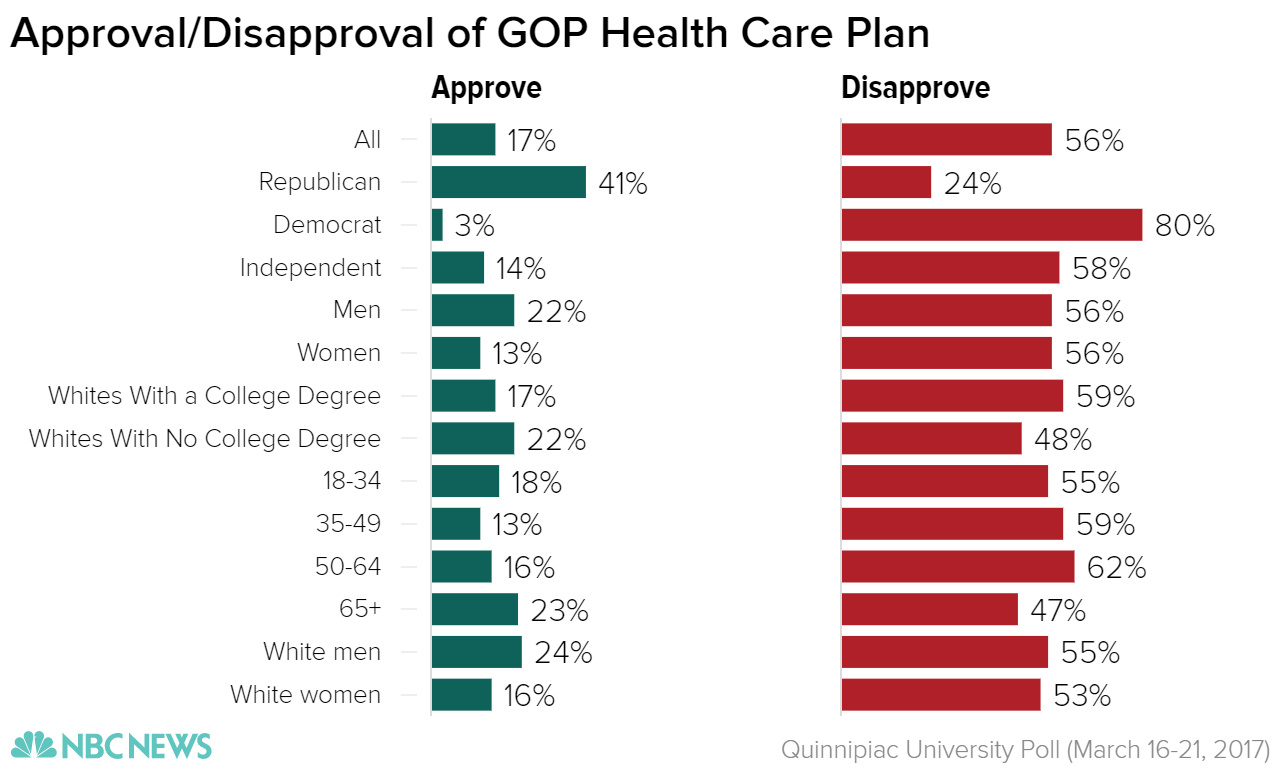
¶ “According to new results released [23 March] by Quinnipiac University Polling, only 17% of Americans are in support of Donald Trump and Paul Ryan's American Health Care Act (AHCA). Most of those polled—56%—were outright against the AHCA, and 26 percent were undecided.” SFGate

Though he led a victory party in the White House Rose Garden with Republican leaders after the AHCA’s approval, saying the bill was “incredibly well crafted.” Trump later referred to the legislation as “mean” and needed to be “more generous” in a private lunch with Senate leaders. Bob Bryan, Associated Press

Confession. “The pain of suffering and of longing, which can often be felt even physically, must be there, and we cannot and need not talk it away. But it needs to be overcome every time, and thus there is an even holier angel than the one of pain; that is, the one of joy in God.” —Dietrich Bonhoeffer

See John Oliver’s humorous take on the Senate’s version of the American Healthcare Act (3:48 video).

Hymn of supplication. “Holy Mother, where are you? / Tonight I feel broken in two. / I've seen the stars fall from the sky. / Holy mother, can't keep from crying. / Oh I need your help this time, / Get me through this lonely night. / Tell me please which way to turn / To find myself again.” —Eric Claption & Luciano Pavarotti, “Holy Mother

Among the differences between the Affordable Care Act (aka “Obamacare”) and the new American Health Care Act (aka “Trumpcare”) is the word “American.” This is one of the ways Congress will Make America Great Again.

Words of assurance. “Give thanks and rejoice you storm-tossed pilgrims: the Stiller of Storms is at your mast, hushing the wind and calming the waves. Listen now you barking jackals: A diligent Voice will sever your tongue and seal your mouth forever. Give thanks, you orphan and widow; rejoice, you refugee.” —continue reading “Let Wisdom’s Way Endure,” a litany for use on Refugee Sunday

Professing our faith. “We are God’s odd ones. And according to the Jesus story, God is more taken with the agony of the earth than with the ecstasy of heaven. Connecting the purpose of Jesus with the drama of Creation is the heart of Christian confession. Everything else is footnote.” —continue reading “Wade in the water: Baptism as political mandate

Left: Art by Ricardo Levins Morales, ©RLM Art Studio

In a poll of 2,000 Americans, the media company Morning Consult found that 35% of responders did not know that Obamacare and the Affordable Care Act are the same thing. Kyle Dropp & Brendan Nyhan, New York Times

For more background on health care legislation, see:
        •special issue of “Signs of the Times” on health care.
        •”Health care as a fundamental human right.”

One new story, two new essays:

§ “Jonathan & ee cummings: The secret of freedom
        Recently, when Nancy picked up our 3-year-old grandson Jonathan from preschool, out of the blue he said, “Ja-Ja (her grandmotherly nickname), ee cummings wrote poem.”
        “Did you learn that at school, Jay?” Nancy asked. “No,” he said from the back seat.
        “Did your Mama teach you that?” “Yes.”
        “Is it the one that begins with ‘i thank you God for this most amazing day’? she asked. At which point he began quoting the rest of that verse with her.
        Neither could remember the second stanza, but Nancy began the third, with Jay keeping up: “I who have died am alive again today. . . .”
                 "how should tasting hearing seeing
                 breathing any — lifted from the no of
                 all nothing — human merely being
                 doubt unimaginable You?”
        “Ja-Ja,” he said. ‘You left out ‘touching. . . .’” (click the title to continued reading)

§ “God and stuff: Lawnmowers, banking boodle, and the Spirit’s traffic in human affairs
      When you stick it to your neighbor, you’re sticking it to the Abba of Jesus. When you shorten the breath of those on the margin, you are simultaneously constricting the Breath of the Spirit in your own lungs. In vivid Pauline language, greed is synonymous with idolatry (Colossians 3:5); when your belly (e.g., your desires, your security demands) becomes your god, you are the “enemy of the cross” (Philippians 3:18-19). I can assure you, those texts are never read in White House prayer breakfasts. . . . (click the title to continued reading)

§ “Is an attack on one an attack on all? The brutal consequences of our nation’s gun fetish
      We are a nation awash in guns, increasingly inured to violence that doesn’t happen on our street or zip code or time zone, and increasingly addicted to militarized response to threat at home and, especially, abroad. The recent shooting of legislators in a public park, of those practicing for a charity baseball game, could be a teachable moment in how we might disentangle ourselves from these deathly habits.
       Will it?
       I wish I were more hopeful that lessons will be learned, penitence declared, restoration initiated, communal bonds recovered. People of faith, however, know that hope’s foundation lies deeper than present circumstances permit, however unfavorable. . . . (click the title to continued reading)

When only the blues will do. Fredrik Strand Halland, 12 year-old Norwegian, plays Stevie Ray Vaughan’s “Texas Flood.”

Preach it. “Remember, you were a slave in Egypt. . . .”  (Deut. 24:17-18) is at the core of biblical faith. Memory fosters fidelity; amnesia leads to ruin. The witnesses who testify to one or the other are the immigrant, the orphan, and the widow, signifying those most at risk in the unfettered market’s madness. —kls

Can’t makes this sh*t up. Only days after President Trump accused the nation of Qatar of being “a funder of terrorism, and at a very high level,” Trump then signed off on a $12 billion deal to sell them US jet fighters. Margaret Brennan & Kylie Atwood, CBS News

Call to the table. “Break the bread of belonging / Welcome the stranger in the land / We have each been a stranger / We can try to understand.” —Gary Rand, “Breaking the Bread of Belonging

The state of our disunion. “We aren’t stupid.” (Republican aide, explaining why Senate Majority Leader Mitch McConnell invoked a parliamentary rule allowing the American Health Care Act to skip committee hearings and go straight to the floor for a vote.) —Dana Wilbank, "What Republicans are doing while you’re distracted by Sessions and Comey,” Washington Post

For the beauty of the earth. Meet the deepest place on earth—the Mariana Trench, in the western Pacific Ocean—and some of its inhabitants. Sandbrero (1:22 video. Thanks David.)

Altar call.The Creed,” Alexander Gretchaninoff, performed by the Russian Metropolitan Church Choir, Paris.

Benediction. “Child the time has come for you to go / You will never be alone / Every dream that you have been shown / Will be like living stone / Building you into a home / A shelter from the storm.” —Josh Garrels, “White Owl

Recessional.Adagio for Strings,” op. 11 by Samuel Barber, performed by the Los Angeles Philharmonic, conducted by Leonard Bernstein.

Lectionary for this Sunday. “Jump for joy, oh people! For amid the screaming commercials and blithering campaign ads, the Redeemer has heard our aching voice.” —continue reading “Bounty and abundance,” a litany for worship inspired by Psalm 116

Lectionary for Sunday next. “This is a large work I’ve called you into, but don’t be overwhelmed by it. It’s best to start small. Give a cool cup of water to someone who is thirsty, for instance. The smallest act of giving or receiving makes you a true apprentice.” —Matthew 10:42, The Message

Just for fun. It took a builder 25 hours to construct a massive triple spiral structure using 15,000 dominoes—less than 1.5 minutes to come down in precise order. (1:47 video. Thanks Oliver.)

#  #  #

Featured this week on prayer&politiks

• “Let Wisdom’s Way Endure,” a litany for use on Refugee Sunday

• “Jonathan & ee cummings: The secret of freedom,” a grandparent’s story

• “God and stuff: Lawnmowers, banking boodle, and the Spirit’s traffic in human affairs,” an essay

• “Is an attack on one an attack on all? The brutal consequences of our nation’s gun fetish,” an essay 

Left: Mural art in Az’atari Syrian Refugee Camp in Jordan, 2013, in collaboration with children and the organizations AptART and ACTED.

©Ken Sehested @ prayerandpolitiks.org. Language not otherwise indicated above is that of the editor, as are those portions cited as “kls.” Don’t let the “copyright” notice keep you from circulating material you find here (and elsewhere in this site). Reprint permission is hereby granted in advance for noncommercial purposes.

Your comments are always welcomed. If you have news, views, notes or quotes to add to the list above, please do. If you like what you read, pass this along to your friends. You can reach me directly at kensehested@prayerandpolitiks.org.

Jonathan & ee cummings

The secret of freedom

by Ken Sehested

Recently, when Nancy picked up our 3-year-old grandson Jonathan from preschool, out of the blue he said, “Ja-Ja (her grandmotherly nickname), e e cummings wrote poem.”

“Did you learn that at school, Jay?” Nancy asked. “No,” he said from the back seat.

“Did your Mama teach you that?” “Yes.”

“Is it the one that begins with ‘i thank you God for this most amazing day'?" she asked. At which point he began quoting the rest of that verse with her.

Neither could remember the second stanza, but Nancy began the third, with Jay keeping up: “I who have died am alive again today. . . .”

     "how should tasting hearing seeing
     breathing any — lifted from the no 
of
     all nothing — human merely being
     doubt unimaginable You?”

“Ja-Ja,” he said. ‘You left out ‘touching.’”

So, indeed. Never leave out touching.

After another pause, then “Ja-Ja?”

“Yes,” Nancy said.

“ee cummings dead.”

A couple weeks before, he had been absorbed with the death of one of the family’s chickens, his first up-close and personal encounter with dying. It's an awareness we mostly avoid, though it's hard to dodge when gathered around a coffin or urn of a loved one, friend, or acquaintance. The more beloved they were, the more precarious the experience.

The poet concluded with parenthetical emphasis, intentionally understated as if a secret to be whispered only to the attentive:

     “(now the ears of my ears awake and
     now the eyes of my eyes are opened).”

The contemplation of breath’s brevity—of others and, one day, our own—offers the opportunity to peep through death’s fearsome shroud, however momentarily, to learn that nothing, finally, is lost; to the knowledge that both serene composure and exuberant joy accompany mortal awareness; to confidence that the grave is no longer a threat.

Such is the secret to freedom.

©ken sehested @ prayerandpolitiks.,org

Is an attack on one an attack on all?

The brutal consequences of our nation’s gun fetish

by Ken Sehested

       We are a nation awash in guns, increasingly inured to violence that doesn’t happen on our street or zip code or time zone, and increasingly addicted to militarized response to threat at home and, especially, abroad. The recent shooting of legislators in a public park, of those practicing for a charity baseball game, could be a teachable moment in how we might disentangle ourselves from these deathly habits.

       Will it?

       I wish I were more hopeful that lessons will be learned, penitence declared, restoration initiated, communal bonds recovered. People of faith, however, know that hope’s foundation lies deeper than present circumstances permit, however unfavorable.

       You know the aphorism: What you see depends on where you stand. A slightly more sophisticated way of saying it might be: What you see depends on your personal “risk factor” and your “boundary of relevance.”

       Those are terms journalists know, along with an inherited tradition of careful thought in deciding newsworthiness.[1] “If it bleeds, it leads” still determines much of the news cycle—not unlike the way we are entranced, at least momentarily, by a car crash scene; or the way the tongue keeps returning to a newly-broken tooth—even though countless courageous, truth loving journalists wish it otherwise. (The skyrocketing number of journalists killed in conflict regions is testimony to the savage ransom demanded by desperate rage.[2])

       Here’s an example of a newsworthiness decision. On the same day of the Alexandria shooting, a more deadly rampage erupted in San Francisco, at a United Parcel Service facility, when a disgruntled employee killed three of his co-workers, wounded two others, before committing suicide.

       Unfortunately, in the calculus of real world journalism—given the concentration of press surrounding our nation’s governing institutions—the San Francisco tragedy drew the short straw. Risk factors and boundaries of relevance prevail.

       Ponder for a moment our current political climate when it comes to the risks of refugees and guns.

       “In the four decades between 1975 and 2015,” wrote columnist Nicholas Kristof, “terrorists born in the seven nations in Trump’s travel ban killed zero people in America. In that same period, guns claimed 1.34 million lives in America.”[3]

       Including this week’s tally, 154 mass shootings (defined as four or more people wounded or killed per incident) have occurred in the US—just since the start of the year. Which means we're averaging 6.7 per week.[4]

       The risk factors shrink, and the boundaries of relevance constrict. The stock market and sales flyers catch our eyes. Outrage fatigue sets in. Consider, for instance, the fact that, just this year, more than 3,100 civilians have been killed by US air strikes in Iraq and Syria.[5] It’s very hard to stretch our boundaries that far, to faces we’ve never seen and voices we’ve never heard, in circumstances far beyond our horizon. The risks and relevance don't register.

       After the the 2012 massacre of school children in Newton, Ct., Shannon Watts, a stay-at-home mother of five children, began organizing mothers to speak out against gun violence. “I was wholly unprepared for the blowback headed my way,” she writes this week in the Washington Post.[6]

Right: "Our Lady Mother of Ferguson and All Those Killed by Gun Violence." Icon by Mark Dukes.

       “Within hours of speaking out about our nation’s lax gun laws, I received threats of sexual violence and death . . . my phone throbbed with angry texts and calls. I started getting letters mailed to my home—complete with cut-outs from magazines to spell out threat to my life.

       Her email was hacked; her Facebook photos were distributed publicly; her phone number and home address were shared online; her children’s social media accounts were hacked and the names of their schools shared online.

       “Just weeks ago," she writes, “a meeting of Moms Demand Action volunteers in a Kentucky public library was crashed by men who openly carried guns, waltzed in and sat in the front row.”

       In November 2015, Dallas, Tx., Mayor Mike Rawlings was asked to discuss the political controversy over admitting Syrian refugees to the US. He told MSNBC News, “I am more fearful of large gatherings of white men that come into schools, theaters and shoot people up, but we don’t isolate young white men on this issue.”[7]

       Our nation’s gun fetish, and its lethal consequences, is abundantly documented. US citizens own nearly half the globe’s privately owned guns.[8] Our gun-related murder rate is 25 times higher than 22 other high-income nations. Though our population is less than half the total of those other countries, gun deaths in the US account for 82% of the combined number.[9]

       Nevertheless, the House of Representatives is currently considering a loosening of gun regulations (under the specious title “Sportsmen’s Heritage Protection Act”), including a provision to legalize gun silencer sales, under the subheading of “Hearing Protection Act.” Columnist Dana Wilbank comments, “That’s like calling legislation that expands the availability of machine guns the 'Carpal Tunnel Protection Act’ because it spares would-be shooters the repetitive motion of trigger pulling.”[10]

       In case you need a sobering reminder, it was almost exactly this time a year ago that Sen. Rand Paul tweeted, “Why do we have a Second Amendment? It’s not to shoot deer. It’s to shoot at the government when it becomes tyrannical!”

       With many of you, I was inspired by House Leadership Paul Ryan’s dramatic plea for unity. “We are united in our shock. We are united in our anguish. An attack on one is an attack on all of us.”[11] Obviously, both the risk factor and the boundary of relevance were on full display in our capitol and its environs.

       But if that eloquent appeal to our commonweal—to shared risk and mutual relevance—is to have any meaning, it must be backed by corresponding public policy as well as personal behavior. We must create a culture of peace, not just its slogans and piety. Truth’s consequences will not be mocked.

       “Only those who do the truth,” Jesus said, “come to the light.” (John 3:21) Can I get a witness?

©ken sehested @ prayerandpolitiks.org

Endnotes

[1] See the Wikipedia entry for “News values” for more background.

[2] Not only by those labeled “terrorists.” Defending U.S. military censors’ refusal to release video footage showing Iraqi soldiers being cut in half by cannon fire from helicopters, a Pentagon senior official said: “If we let people see that kind of thing, there would never again be any war.” —quoted in The Christian Century, 11 December 1991, p. 1158

[3] “Husbands Are Deadlier Than Terrorists,” New York Times

[4] Nancy Coleman & Sergio Hernandez, CNN

[5] Sarah Almukhtar, “US Airstrikes on ISIS Have Killed Hundreds, Maybe Thousands of Civilians,” New York Times

[6] “These are the threats you get when you lead a gun-safety group

[7] Jack Jenkins, “Dallas Mayor Says He’s More Fearful Of Armed White Men Than Syrian Refugees,” ThinkProgress

[8] Rebecca Leber, ThinkProgress

[9] Robert Preidt, CBS

[10] "What Republicans are doing while you’re distracted by Sessions and Comey,” Washington Post

[11] Listen to his comment (5:37 video).

News, views, notes, and quotes

Signs of the Times  •  13 June 2017  •  No. 123

Special issue
REFUGEE SUNDAY
18-25 JUNE 2017

Processional.Who We Are,” Gungor (4:05 video. Click the “show more” button to read their commentary).

Above: Full cloud inversion over the Colorado River in the Grand Canyon. Harun Mehmedinovic, Skyglow Project.

Introduction
        On 4 December 2000 the United National General Assembly approved a resolution to inaugurate World Refugee Day, annually on 20 June. Protestant bodies as diverse as the World Evangelical Alliance and the World Council of Churches (which include Orthodox bodies as well) urge member congregation to commemorate World Refugee Sunday each year on the Sunday before or after 20 June. The Roman Catholic Church observes the World Day of Migrants and Refugees in January. —“World Refugee Day,” Wikipedia

¶ “no one leave home unless / home is the mouth of a shark.” —Warsan Shire, “Home

Invocation. “Give thanks and rejoice you storm-tossed pilgrims: the Stiller of Storms is at your mast, hushing the wind and calming the waves. Listen now you barking jackals: A diligent Voice will sever your tongue and seal your mouth forever. Give thanks, you orphan and widow; rejoice, you refugee: Let the least of these join choirs of angels in grateful harmony!” —continue reading “Let Wisdom’s Way Endure,” a litany for use on Refugee Sunday

Making it visual. Immigration animated. Watch the movement of every refugee on earth since the year 2,000.

¶ “What does it mean to be a refugee?” an excellent brief video (5:42) summary. —Benedetta Berti & Evelien Borgman

Call to worship.For the Immigrants (Get to Know Me)”, Fred Bogert. (3:27 video Thanks Joe.)

This is pretty amazing. “Clarkston, a small town in Georgia, has received over 40,000 refugees over the past 25 years. They come from every corner of the globe. This year there are more Congolese than Syrians; past waves of refugee resettlement have brought Bhutanese, Eritreans, Ethiopians, Somalis, Sudanese, Liberians, Vietnamese. All have landed in an otherwise unremarkable city in the Deep South, population 13,000.” Katy Long, The Guardian. Pictured above is Malek Alarmash who works at Refuge Coffee in Clarkston, GA. The company is run by a Christian couple and hires newly arrived refugees. Photo by Matthew Bell .

Never before has the world seen such a dramatic increase in the number of refugees.
       •Last year, 24 people per minute were displaced by conflict or persecution.
       •More than half of the world’s refugees are children under the age of 18, and three quarters are women and children.
       •Worldwide, less than 1% of the world’s refugees get the opportunity to be resettled in a developed country.
       •Poorer countries are hosting over 85% of the world’s refugees.  —watch this 0:58 video from the International Rescue Committee

Hymn of praise. “I got two hands / I want to clap my hands together / I got two legs / I want to dance to heavens door / I got one heart / I gonna fill it up with up Jesus / And I ain't gonna think about trouble anymore.” —Towness Van Zandt, “Two Hands

¶ “Where are the Syrian refugees?” —The Facts on Immigration Today: 2017 Edition,” Michael D. Nicholson, The Gapminder Foundation

A recent CNN poll found “ that a whopping 90% favor allowing [undocumented immigrants] who have been working here ‘for a number of years,’ know English, and are willing to pay back taxes to stay and eventually apply for citizenship. Only 9% want them deported.” Greg Sargent, Washington Post

Confession. “We live in a fretful land, anxious over the ebbing away of privilege, fearful that strangers are stealing our birthright, aliens breaching borders, refugees threatening security.” —continue reading “You shall also love the stranger,” a litany for worship using texts on immigrant

The singular reason immigration reform is stalled is because our economy heavily depends on cheap labor—it’s a can’t-live-with them, can’t-live-without them” reality. Watching this “What would a city look like without undocumented immigrants” video (3:41.) —The Guardian

Words of assurance. “Jesus, Savior, pilot me / Over life’s tempestuous sea; / Unknown waves before me roll, / Hiding rock and treacherous shoal. / Chart and compass come from Thee; / Savior, pilot me.” —The Lower Lights, “Jesus, Savior, Pilot Me

Left: Syria refuges depicted in pebble. Syrian Artist Nizar Ali Badr. See more about the artist  and more of his artwork.

¶ “Books to Help Kids Understand What It’s Like to Be a Refugee,” Olugbemisola Rhuday-Perkovich, Brightly. (Thanks Kristin.)

¶ “Speaking to MSNBC on Saturday morning, Dallas Mayor Mike Rawlings was asked to discuss the growing anxiety over Syrian refugees entering the United States. . . . He responded, ‘I am more fearful of large gatherings of white men that come into schools, theaters and shoot people up, but we don’t isolate young white men on this issue.’” Jack Jenkins, ThinkProgress

¶ “We've all heard the old saying, ‘Give a man a fish and he eats for a day, but teach him to fish and he eats for a lifetime.’ The truth of this was clearly demonstrated one day last year when hungry Cambodians lined up in a refugee camp for food rations. Hundreds of the refugees waited in silence as their shares were distributed. But when fish nets were passed out, the crowds cheered.” —Coretta Scott King, CNN

¶ “Look hard for ways, for opportunities to make little moves against destructiveness.” —André Trocmé, along with his wife Magda, are a French couple named in Israel’s “Righteous Among the Nations” memorial for their community’s work in hiding Jews from the Nazis in Le Chambon-sur-Lignon. Philip Paul Hallie reports the town’s inspiring story in his book, Lest Innocent Blood Be Shed. Read Dan Buttry’s profile of Trocmé on ReadTheSpirit.

¶ “The number of churches that are actively offering refuge—and where immigrants are taking them up on it— is unclear. But since Trump was elected in November, the number of churches in the United States expressing willingness to offer sanctuary has doubled to 800, according the Rev. Noel Anderson, national grassroots coordinator at Church World Service." —Jason Hanna, “Can churches provide legal sanctuary to undocumented immigrants?” CNN

¶ “How Cities Are Using Sanctuary to Build Moral Muscle: The bottom line is that no local policy can actually prevent Immigration and Customs Enforcement agents from conducting raids, making arrests, or deporting undocumented immigrants. But the sanctuary movement is not without power. Importantly, it serves as a public statement, and this public commitment has powerful political and moral impact.” Mary Turck, Yes! magazine

When only the blues will do.Baghdad Blues,” Beverly “Guitar” Watkins.

Short story. This is one example of how lasting ecumenical and interfaith engagement starts. “In rural Canada, churches that once shunned one another open their hearts to Syrian refugees.”  Bobby Ross Jr., Religion News Service

By the numbers. In fiscal 2016, the highest number of refugees from any nation came from the Democratic Republic of Congo. The Congo accounted for 16,370 refugees followed by Syria (12,587), Burma (aka Myanmar, with 12,347), Iraq (9,880) and Somalia (9,020). —“Key facts about refugees to the US,” Pew Research Center

Preach it. “You shall also love the stranger [immigrant], for you were strangers in the land of Egypt.” —Deuteronomy 10:19. See “Strangers and aliens” for a collection of biblical texts relating to immigrants.

¶ "Immigration is the sincerest form of flattery." —Jack Parr

Can’t makes this sh*t up. “We’ve never in the history of this country passed any laws or done anything based on race or religion.” So said Nikki Haley, then governor of South Carolina (now US ambassador to the UN), responding to President Obama’s 2016 State of the Union Address. But what about:
       •The Naturalization Act of 1790, which extended citizenship to “any alien, being a free white person. . . .”?
       •Or the Chinese Exclusion Act of 1882?
       •Or the Immigration Act of 1917, which banned immigration from East Asia and the Pacific?
       •Or Ozawa v. US, the 1922 Supreme Court decision which declared that Japanese immigrants could not be naturalized?
       •Or US v. Bhagat Singh, the 1923 high court ruling which said people from India—like Gov. Haley’s parents—could not be become naturalized citizens? —Leonard Pitts, “Haley’s fairy tale ignores our history

Call to the table. “Remember, you were a slave in Egypt. . . .”  (Deut. 24:17-18) is at the core of biblical faith. Memory fosters fidelity; amnesia leads to ruin. The witnesses who testify to one or the other are the immigrant, the orphan, and the widow, signifying those most at risk in the unfettered market’s madness. —kls

¶ “If humanitarianism is what motivated the U.S. in Syria, it would take in massive numbers of refugees, but it hasn’t.” —Glenn Greenwald, “The Spoils of War: Trump Lavished With Media and Bipartisan Praise for Bombing Syria” The Intercept

¶ “There are 2.8 million Syrian refugees in Turkey alone. Only about 18,000 Syrians have been resettled in America since 2011.” Angelina Jolie, the move star who is also the special envoy of the UN High Commissioner for Refugees, New York Times

The state of our disunion. “Consider two critical issues: refugees and guns. Trump is going berserk over the former, but wants to ease rules on the latter. So let’s look at the relative risks. In the four decades between 1975 and 2015, terrorists born in the seven nations in Trump’s travel ban killed zero people in America. In that same period, guns claimed 1.34 million lives in America.” —Nicholas Kristof, “Husbands Are Deadlier Than Terrorists,” New York Times

Best one-liner. “Why we should not forget the role our endless wars over the last sixteen years have played in creating the refugee crisis we now so earnestly decry.” —Jerry Lembcke, “The Great American ‘Welcoming’ Breakout: What’s Not to Like?” CommonDreams

Right: Zaatari refugee camp in Jordan, opened in 2012 to host Syrians fleeing that country’s civil war. Some 80,000 refugees now live there, making it Jordan’s 4th largest city. Less than 13,000 Syrian refugees were admitted to the US in 2016.

Altar call. Susan Fiske, a psychologist at Princeton University and a leading expert on prejudice, “has studied how immigrants and refugees are uniformly discriminated against the world over. She’s conducted neuroscience research that shows when we dehumanize others, the regions of our brain associated with disgust turn on and the regions associated with empathy turn off.” —Brian Resnick, “The dark psychology of dehumanization, explained,” Vox

For the beauty of the earth. “Stunning timelapse video (2:53) captures cloud 'waves' in Grand Canyon.”

Benediction.Go In Peace,” Sam Baker.

Recessional. “O courage my soul / and let us carry on. / For the night is dark, / and I am far from home. / Thanks be to God / The morning light appears.” —Detroit Mass Choir, “The Storm Is Passing Over

Lectionary for this Sunday. “Jump for joy, oh people! For amid the screaming commercials and blithering campaign ads, the Redeemer has heard our aching voice. God hears! God knows! This is our assurance against all blistering deceit.” —continue reading “Bounty and abundance,” a litany for worship inspired by Psalm 116

Lectionary for Sunday next. “For succor and strength, confine to the Shadow; / there abide, reside, whatever betide. / In the fullness of time the Call will be sounded; / the pathway of peace, reveal and confide.” —continue reading “Abiding in the shadow,” a litany for worship inspired by Psalm 17 and other text references to “shadow”

New essay. “When you stick it to your neighbor, you’re sticking it to the Abba of Jesus. When you shorten the breath of those on the margin, you are simultaneously constricting the Breath of the Spirit in your own lungs. In vivid Pauline language, greed is synonymous with idolatry (Colossians 3:5); when your belly (e.g., your desires, your security demands) becomes your god, you are the ‘enemy of the cross(Philippians 3:18-19). I can assure you, those texts are never read in White House prayer breakfasts.” —continue reading Ken Sehested’s essay, “God and stuff: Lawnmowers, banking boodle, and the Spirit’s traffic in human affairs

Just for fun.Long Hot Summer Days,” Sara Watkins

#  #  #

Featured this week on prayer&politiks

• “God and stuff: Lawnmowers, banking boodle, and the Spirit’s traffic in human affairs

50+ new annotated book reviews in “What are you reading and why?”

• “Let Wisdom’s Way Endure,” a litany for use on Refugee Sunday

• “Abiding in the shadow,” a litany for worship inspired by Psalm 17 and other text references to “shadow”

• “Baptized into death,” a Father’s Day sermon rooted in Genesis 21:8-21; Psalm 86:1-10; Jeremiah 20:7-13; Romans 6:10-11; Matthew 10:24-39

Refugee Sunday resources

• See World Refugee Day “Worship resources” from Church World Service. Many denominational bodies have special resources—do a web search with the name of your body + “world refugee Sunday.”

• “You shall also love the stranger,” a litany for worship using texts on immigrants

• “Strangers and aliens,” a collection of biblical texts relating to immigrants and refugees

• “Strangers we were,” a litany for worship inspired by Ephesians 2:11-12

• “Out of the House of Slavery: Bible Study on Immigration

• “Songs about immigrants and refugees,” a listing for reference

©Ken Sehested @ prayerandpolitiks.org. Language not otherwise indicated above is that of the editor, as are those portions cited as “kls.” Don’t let the “copyright” notice keep you from circulating material you find here (and elsewhere in this site). Reprint permission is hereby granted in advance for noncommercial purposes.

Your comments are always welcomed. If you have news, views, notes or quotes to add to the list above, please do. If you like what you read, pass this along to your friends. You can reach me directly at kensehested@prayerandpolitiks.org.