Recent

News, views, notes, and quotes

Signs of the Times  •  25 April 2017  •  No. 117

Processional.Testimony,” Voices of Hope, acclaimed women's choir made up of inmates at Lee Arrendale State Prison in Georgia.

Above: Wisteria tree, Kawachi Fujien Wisteria Garden, Japan, photo by Peter Lourenco.

Special theme issue
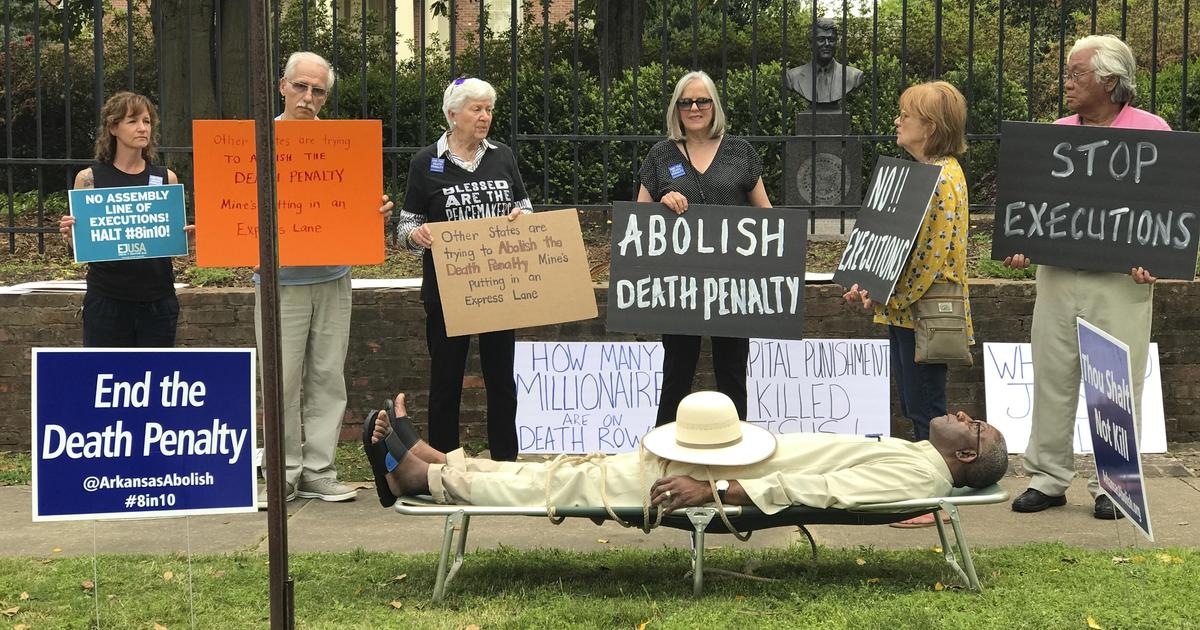
DEATH PENALTY

Invocation. "[God] raised Jesus, not as an invitation to us to come to heaven when we die, but as a declaration that He himself has not established permanent residence on earth. The resurrection places Jesus on this side of the grave, here and now, in the midst of this life. The Good News of the resurrection is not that we shall die and go home with him but that he is risen and comes home with us, bringing all his hungry, naked, thirsty, sick, prisoner brothers with him." —Clarence Jordan

¶ Good news.When was the last time you heard a tourism expert talk about land redistribution and debt forgiveness?" TV travel program host Rick Steves donates $4 million apartment complex for homeless women and children.” Read Steves’ remarkable commentary and watch this video (2:49) on his travel blog.  —news commentary by Ken Sehested

Photo at right. TV travel program host Rick Steves with some of the new residents of the housing complex he donated for use by single moms coming out of recovery and reuniting with their children.

Call to worship. “You can never hold back spring / You can be sure that I will never / Stop believing / The blushing rose will climb / Spring ahead or fall behind / Winter dreams the same dream / Every time / Even though you've lost your way / The world keeps dreaming of spring.” —Tom Waits, “You Can Never Hold Back Spring

¶ “Arkansas on Monday night executed two inmates in back-to-back lethal injections, carrying out the country’s first double execution since 2000.” Mark Berman, Washington Post

Hymn of praise.Ndaive Mbava,” Harare [Zimbabwe] Central Prison Gospel Choir.

¶ “Support for death penalty lowest in more than four decades.Pew Research Center, September 2016

This is big. “The pharmaceutical giant Pfizer announced that it had imposed sweeping controls on the distribution of its products to ensure that none are used in lethal injections, a step that closes off the last remaining open-market source of drugs used in executions. More than 20 American and European drug companies have already adopted such restrictions, citing either moral or business reasons. Nonetheless, the decision from one of the world’s leading pharmaceutical manufacturers is seen as a milestone.” Erik Eckholm New York Times (Thanks, Hillary.)

¶ “You can release an innocent man from prison, but you can’t release him from the grave.—Freddie Lee Pitts, who was exonerated from Florida’s death row for a crime he did not commit

¶ “Police chiefs consider the death penalty one of the least effective tools for halting violent crime and the least effective use of taxpayer money, according to a nationwide poll of police chiefs released today.” Gabrielle Banks, Pittsburgh Post-Gazette

Three organizations working on death penalty issues:

        • “The National Coalition to Abolish the Death Penaltys mission is to abolish the death penalty in the United States and support efforts to abolish the death penalty worldwide.”

        • “The Innocence Project's mission is to free the staggering number of innocent people who remain incarcerated, and to bring reform to the system responsible for their unjust imprisonment.”

        • “The Death Penalty Information Center is a national non-profit organization serving the media and the public with analysis and information on issues concerning capital punishment.”

Recommended long read.The Death of the Death Penalty: Why the era of capital punishment is ending,” David von Drehle, Time.

Since 1973, 158 people on death row have been exonerated. —see Death Penalty Information Center

Confession. “No more, my Lord, / No more, my Lord, / Lord, I'll never turn back no more. / I found in / Him a resting place, / And He have made me glad. / Jesus, the Man I am looking for, / Can you tell me where He's gone? / Go down, go down, among flower yard, / And perhaps you may find Him there.” —“No More, My Lawd,” Negro Prison Blues and Songs

Prayer on the eve of execution. “God of justice and mercy, we gather as people of conscience and as people of faith. In our rich diversity, we assemble tonight in one spirit and with one purpose. We convene our hearts, our hopes and our voices. Break us, remake us, from blinded might to the Light that foreshadows the Dawn of Delight. Gracious Host, we acknowledge the frailty of human judgment. We acknowledge that our highest institutions are fallible, are plagued by racism and blindness, as are we." —read the “Litany of lament and longing: Public prayer vigil on the evening of Troy Davis’ execution.”

¶ “Had it not been for slavery, the death penalty would have likely been abolished in America. Slavery became a haven for the death penalty.” —Angela Davis

Hymn of lamentation. “The search light in the big yard / Swings round with the gun / And spotlights the snowflakes / Like the dust in the sun / It's Christmas in prison / There'll be music tonight / I'll probably get homesick / I love you. Goodnight.” —John Prine, “Christmas in Prison

¶ “An evil deed is not redeemed by an evil deed of retaliation.—Coretta Scott King

Words of assurance. “Hold on, just a little while longer. Everything’s gonna be alright.” —Sounds of Blackness, “Hold On Just a Little While Longer

¶ “From this day forward, I shall no longer tinker with the machinery of death. For more than twenty years I have endeavored—indeed, I have struggled—along with a majority of this court to develop procedural and substantive rules that would lend more than the mere appearance of fairness to the death penalty endeavor. Despite the effort . . . the death penalty remains fraught with arbitrariness, discrimination, caprice and mistake. I feel morally and intellectually obligated simply to concede that the death penalty experiment has failed.—former Supreme Court Associate Justice Justice Harry Blackmun

¶ “I think this country would be much better off if we did not have capital punishment. . . . We cannot ignore the fact that in recent years a disturbing number of inmates on death row have been exonerated.” —former Supreme Court Associate John Paul Stevens

¶ “Capital punishment is the most premeditated of murders.” —Albert Camus, French philosopher

¶ “It can be argued that rapists deserve to be raped, that mutilators deserve to be mutilated. Most societies, however, refrain from responding in this way because the punishment is not only degrading to those on whom it is imposed, but it is also degrading to the society that engages in the same behavior as the criminals.” —Stephen Bright, human rights attorney

Testify.Harmony In Hard Time,” trailer (3:26) for movie about the Voice of Hope Choir, inmates at Lee Arrendale State Prison in Georgia.

¶ “I've been haunted by the men I was asked to execute in the name of the state of Florida. This is premeditated, carefully thought out ceremonial killing.” —Ron McAndrew, former prison warden in Florida

¶ “The reality is that capital punishment in America is a lottery. It is a punishment that is shaped by the constraints of poverty, race, geography and local politics.” —Bryan Stevenson, founder and director of Equal Justice Initiative

¶ “The most glaring weakness is that no matter how efficient and fair the death penalty may seem in theory, in actual practice it is primarily inflicted upon the weak, the poor, the ignorant and minorities.” —California Governor Pat Brown

Hymn of resolution. “Circle round for freedom / Circle round for peace / For all of us imprisoned / Circle for release.” —San Diego Women’s Chorus, “Circle Chant

¶ “As if one crime of such nature, done by a single man, acting individually, can be expiated by a similar crime done by all men, acting collectively.” —Lewis Lawes, warden of Sing Sing prison in NY in the 1920s and 30s

¶ “I have yet to see a death case among the dozen coming to the Supreme Court on eve-of-execution stay applications in which the defendant was well represented at trial. . . . People who are well represented at trial do not get the death penalty." —Supreme Court Associate Justice Ruth Bader Ginsburg

Hymn of intercession.Sunny Day,” Death Row Choir–Uganda.

¶ “The forfeiture of life is too absolute, too irreversible, for one human being to inflict it on another, even when backed by legal process. And I believe that future generations, throughout the world, will come to agree.” —Kofi Annan, former Secretary General of the United Nations

¶ “When once a certain class of people has been placed by the temporal and spiritual authorities outside the ranks of those whose life has value, then nothing comes more naturally to men than murder.” —Simone Weil

When only the blues will do.Black Woman,” Negro work songs recorded at the Mississippi and Louisiana State Penitentiaries by Alan Lomax.

By the numbers. “A 2014 report by the National Academy of Sciences estimated that 1 in every 25 people given a death sentence are in fact innocent of the crime for which they are sentenced. Moreover, we know that more than 150 people have been exonerated since the death penalty’s return in 1976. Because of such problems, public confidence in the fairness of the death penalty process is eroding. Thus, a 2013 Gallup poll found that only 52% of the American public believed that the death penalty was administered fairly.” Austin Sarat, Guardian

Preach it. “With every cell of my being, and with every fiber of my memory, I oppose the death penalty in all forms. I do not believe any civilized society should be at the service of death. I don’t think it’s human to become an Angel of Death.” —Elie Wiesel, Holocaust survivor and Nobel Peace Prize winner

Can’t makes this sh*t up. “Arizona to death-row inmates: Bring your own execution drugs.” Fox News

Wait . . . what? “Society needs to execute those criminals who cannot live under its rules and recognize the sanctity of human life.” —pastor in North Carolina, in a letter to the editor, Winston-Salem Journal

Call to the table.Theme Song from Schindler’s List,” performed by Itzhak Perlman.

The state of our disunion. “[R]ace of victim was found to influence the likelihood of being charged with capital murder or receiving the death penalty, i.e., those who murdered whites were found to be more likely to be sentenced to death than those who murdered blacks. This finding was remarkably consistent across data sets, states, data collection methods, and analytic techniques.” —The U.S. General Accounting Office, “Death Penalty Sentencing: Research Indicates Pattern of Racial Disparities”

Best one-liner. “I’ll believe corporations are people when Texas executes one.”

For the beauty of the earth. In my neck of the woods, each spring the Smoky Mountains National Park has one of the country’s greatest light shows. Lampyridae, a family of insects in the beetle order Coleoptera. They are winged beetles, commonly called fireflies or lightning bugs. (0:52 video)

Altar call. Go Down, Moses,” Gospel rendition featuring Louis Armstrong.

Benediction. "Pass Me Not, O Gentle Savior,” The Craguns. (This hymn is among the most popular among inmates.)

Recessional. “If you get worried, what you ought to do is sing.” —The Wood Brothers, “Sing About It

Lectionary for this Sunday. “One empty tomb poses no threat / to present entanglements, / any more than annual and / specially-adorned sanctuary crowds / encroach on Easter morn. / It’s Easter’s aftermath / resurrectus contagio, / contagious resurrection / that threatens entombing empires / with breached sovereignty.” —continue reading Ken Sehested’s “Easter’s aftermath,” a poem inspired by Luke 24:13-35 and Matthew 25:1-13

Lectionary for Sunday next. “Following the dramatic response to Peter’s sermon on the Day of Pentecost, the text reports that the newly-formed People of the Way devoted themselves to listening and learning, to lingering in each other’s presence, to potluck dinners, and to prayer—with praise and pintos, songs and salads, received and given ’round the Bountiful Table. Hands and hearts, bound together, loosed for life and Love’s consent.” —continue reading Ken Sehested’s “Loosed for life and love’s consent,” a litany for worship inspired by Acts 2:42-47

Just for fun. Comedic juggling by Michael Davis.

#  #  #

Featured this week on prayer&politiks

• “Loosed for life and love’s consent,” a litany for worship inspired by Acts 2:42-47 

• “Easter’s aftermath,” a poem inspired by Luke 24:13-35 and Matthew 25:1-13

• “Litany of lament and longing: Public prayer vigil on the evening of Troy Davis’ execution.”

• “When was the last time you heard a tourism expert talk about land redistribution and debt forgiveness? TV travel program host Rick Steves donates $4 million apartment complex for homeless women and children.” 

©Ken Sehested @ prayerandpolitiks.org. Language not otherwise indicated above is that of the editor, as are those portions cited as “kls.” Don’t let the “copyright” notice keep you from circulating material you find here (and elsewhere in this site). Reprint permission is hereby granted in advance for noncommercial purposes.

Your comments are always welcomed. If you have news, views, notes or quotes to add to the list above, please do. If you like what you read, pass this along to your friends. You can reach me directly at kensehested@prayerandpolitiks.org.

When was the last time you heard a tourism expert talk about land redistribution and debt forgiveness?

TV travel program host Rick Steves donates $4 million apartment complex for homeless woman and children

by Ken Sehested

        Years ago, when I first heard Rick Steves’ squeaky voice, channel flipping late on night, I thought it was satire. This being my last resort of delaying bedtime, I continued watching. And then later, in my night owl habit of TV diversion to put my brain in neutral to (hopefully) coast toward sleep, I would stumble across his show again. Over time, I actually began to look for the “Rick Steves’ Europe” program.

        Why? I don’t remember exact details now, but interspersed with touristy stuff, he actually made a few honest comments about some of the history that had occurred in that place which the local chamber of commerce doesn't mention, the kinds of things travel brochures will never say.

        Then there’s his talking about travel as an education in global awareness (and not just voyeurism), talking about “Travel as a Spiritual Act”  and as a “political” act, about the way travels helps us “challenge truths we were raised to think were self-evident and God-given,” and his desire that travel help us “become better citizens of our planet.” He has initiated multiple fundraising efforts to support things like Habitat for Humanity, and is an active member in his hometown Lutheran Church.

        But Steves’ vision and commitment go beyond simple charity.

        “I traveled in Central America, where I learned civil wars that I thought were between communists and capitalists were actually between obscenely rich oligarchs and landless peasants. I hung out with poor Christians who took the Biblical Jubilee Year (the notion that every fifty years the land is to be re-divided and debts are to be forgiven) seriously . . . even though rich Christians assumed God must have been kidding.”

        Just goes to show you never know in advance when kindred spirits will emerge in the most unlikely of places. That’s why healthy spiritual communities emphasize paying attention in all things. There is no secular space. There are only sacred spaces and desecrated spaces. Jesus had a marked proclivity for being in the latter.

        Our confidence in claiming to track the coordinates of when, where and how the Spirit will show up is often misplaced. More often we are surprised, and even make us look foolish. So don’t be afraid of feeling foolish. Foolishness is Spirit’s middle name; surprise, Her nickname.

#  #  #

Read Steves’ commentary, “Travel, Budget Beds, and the Homeless.”
©ken sehested @ prayerandpolitiks.org


Loosed for life and love’s consent

A litany for worship inspired by Acts 2:42-47

by Ken Sehested

Following the dramatic response to Peter’s sermon on the Day of Pentecost, the text reports that the newly-formed People of the Way devoted themselves to listening and learning, to lingering in each other’s presence, to potluck dinners, and to prayer—with praise and pintos, songs and salads, received and given ’round the Bountiful Table.

Hands and hearts, bound together, loosed for life and Love’s consent.

The Promised Pardon freeing furrowed brow and anxious gaze alike.

Hands and hearts, bound together, loosed for life and Love’s consent.

The Spirit’s grip brought all together and broke the spell of stingy response.

Hands and hearts, bound together, loosed for life and Love’s consent.

Led beside still waters, seated amid green meadows, fretful hearts and frail hands revive in pledged allegiance to the Commonwealth of Creation.

Hands and hearts, bound together, loosed for life and Love’s consent.

Sisters and brothers, this is our marketing plan—this is our strategy for growth:

Hands and hearts, bound together. Praise, to God; and peace, for the earth!

©ken sehested @ prayerandpolitiks.org

News, views, notes, and quotes

Signs of the Times  •  18 April 2017  •  No. 116

Special theme issue
Earth Day

Processional.For the Beauty of the Earth,” Mormon Tabernacle Choir.

Above: The spiral Sombrero galaxy. Thick dust lanes encircle the brilliant white core of the galaxy, which is 50,000 light-years across and 28 million light-years from Earth. For more astounding photos, see “Hubble's Greatest Hits. Pictures from the space telescope have dazzled us for 25 years.”

Invocation. “Creation is not simply the props and drops, / the costumes and orchestra, / the catwalks and footlights / on the stage of salvation’s drama. / Rather, creation is an active part / in history’s narration. / Without the cosmos, / Salvation’s story / cannot be comprehended.” —continue reading Ken Sehested’s “Earth’s habitus: A meditation on creation"

¶ “If you defile the land, it will vomit you out(Leviticus 18:28).

Call to worship.Earth Day,” Immediate Music-Believe, Aleksandar Dimitrijevic. (3:19 video)

Awesome news. “A small-town Iowa newspaper has won a Pulitzer Prize for taking on powerful agricultural companies over farm pollution.
        “Art Cullen, who owns the Storm Lake Times with his brother John, acknowledged it wasn’t easy taking on agriculture in a state like Iowa where you see hundreds of miles of farm fields in every direction. The Cullens lost a few friends and a few advertisers, but never doubted they were doing the right thing.
        “‘We’re here to challenge people’s assumptions and I think that’s what every good newspaper should do,” he said.” The Guardian

Earth day strategies. Think of the now-familiar trilogy of recommendations: reduce, reuse, recycle. Then add a fourth observation: refuse—break habits of mindless consumption. And to undergird it all, a fifth: rejoice—fostering a vision of Creation's blessedness granted at the beginning: "God saw everything that was made, and indeed, it was delightful" (Genesis 1:31—the English words "very good" fail to convey the outright glee of the Hebrew text). —continue reading “Covenant-making on Earth Day

 ¶ “The Trump administration plans to take a sledgehammer to the Environmental Protection Agency. Thursday’s proposal by the White House would slash the EPA’s budget by 31% from its current level of $8.1 billion to $5.7 billion. It would cut 3,200 positions, or more than 20% of the agency’s current workforce of about 15,000.” Brady Dennis & Juliet Eilperin, Washington Post

In case you need a reminder, in light of the threatened gutting of the Environmental Protection Agency. “This is why we need the EPA.” (50-second video. Thanks Lisset.)

Left: A Pakistani Christian woman prays during an Easter service at Catholic Sacred Heart Cathedral church in Lahore, Pakistan, Sunday, April 16, 2017. Photo by K.M. Chaudary, The Associated Press. See more photos in “Photos: Easter Around the World 2017.” —Denver Post

Hymn of praise. “In colors, / In colors the fields are dressed / In the springtime / In colors, / Colorful are the little birds / That come from far away / In colors, / Colorful is the rainbow / That we see shine / And that is why the great loves / of many colors are pleasing to me(English translation). —Joan Baez, “De Colores

You know you’re down the rabbit hole when the CEOs of fossil fuel icons ExxonMobil and General Electric join “in slamming the White House’s environmental environmental policies.” Bess Levin, Vanity Fair (Thanks Kristen.)

Creative resistance. The Alt National Park Service is “a growing coalition of 59 National Park Service employees from nine different National Parks. We formed to ensure the protection of the environment for future generations to come. We were forced into a media blackout, hiring freeze, policy changes, and possible reduction in funding. We are here to stand up and speak out against the current administration. We all refuse to be silenced while we watch everything we love crumble. Join the movement.” Alt National Park Service,  (Thanks Lenora.)

¶ “For Texas, this most Republican-dominated, oil-rich and fracking-friendly of states, has found itself with the improbable status of being a national leader in this growing form of renewable energy. . . . [A]ccording to the federal Bureau of Labor Statistics, wind turbine technician is by far the nation’s fastest-growing occupation.” —Tom Dart & Oliver Milman, The Guardian

Climate change “at a rate faster than at any time since the end of the ice age—change too fast perhaps for life to adapt, without severe dislocation”. That was the startling warning issued by the oil giant Shell more than a quarter of a century ago. The company’s farsighted 1991 film, titled Climate of Concern, set out with crystal clarity how the world was warming and that serious consequences could well result.” Damian Carrington & Jelmer Mommers, The Guardian

¶ "All the light of the Earth / everyone shall see / through the window / of the drop of a tear." —Mexican poet León Felipe

Confession. “For 200 years we've been conquering nature. Now we're beating it to death.” —Tom McMillan

¶ “The Breathing Earth.” (1:40 video)

Hymn of lamentation. “And daddy won't you take me back to Muhlenberg County / Down by the Green River where Paradise lay / Well, I'm sorry my son, but you're too late in asking / Mister Peabody's coal train has hauled it away.” —John Prine, “Paradise

Words of assurance. ““There is not one blade of grass, there is no color in this world that is not intended to make us rejoice.” ―John Calvin

Professing our faith. “This ‘world’ is not my home; but this earth is. / We are not drifters: directionless, detached, / disaffected, suffering neither loves nor longings, / risking no hopes, claimed by no promises. / We are in fact squatters, occupying the land / and waters whose only trustworthy deed / challenges every indenturing creed, every / realty’s lien which privileges the few at the / expense of the many. We seek no flight to / another terrain for it is this very domain— / every meadow’s shadow, every peak’s brow, / every river’s careen, every furrow’s plough— / which asserts heaven’s riposte to Hades’ advance.” —continue reading Ken Sehested’s “Pacem in terris: Easter. Earth Day, and Pentecost’s promise

One thing Jesus did not say: “You are the sugar of the earth.”

¶ “What the earth would look life if all the ice melted,” produced by Alex Kuzoian. (2:44 video)

Hymn of resolution. “And all the trees of the field will clap their hands! As you go out with joy.” —“Trees of the Field” (cf. Isaiah 55:12) performed by Cantate Domino of the congregation of Our Lady of Perpetual Succour, Singapore

By the numbers. “Global biodiversity is declining at an alarming rate, putting the survival of other species and our own future at risk. The Living Planet Index reveals that global populations of fish, birds, mammals, amphibians and reptiles declined by 58% between 1970 and 2012. We could witness a two-thirds decline in the half-century from 1970 to 2020—unless we act now to reform our food and energy systems and meet global commitments on addressing climate change, protecting biodiversity and supporting sustainable development.” World Wildlife Federation

The earth, and human presumption, in perspective. Carl Sagan, “Pale Blue Dot”. (3:45 video)

Right: Ricardo Levins Morales, ©RLM Art Studio

Hymn of intercession.Trees of the Field,” Winfield Bennett Marine.

Call to Earth—A message from the world’s astronauts to the 2015 United Nations Climate Change Conference in Paris. (8:03 video)

¶ “Spirituality is not to be learned by flight from the world, or by running away from things, or by turning solitary and going apart from the world. Rather, we must learn an inner solitude wherever or with whomsoever we may be. We must learn to penetrate things and find God there.” ―Meister Eckhart

Offertory. Lucia Micarelli, “To Love You More.”

¶ “The ultimate test of your conscience may be your willingness to sacrifice something today for future generations whose words of thanks will not be heard.” —Gaylord Nelson, founder of Earth Day

Short story. A brief profile of Senator Gaylord Nelson, founder of Earth Day.

Preach it. “It is striking how the earliest Christians, like mainstream rabbis of the period, clung to the twin doctrines of creation and judgment: God made the world and made it good, and one day he will come and sort it all out. Take away the goodness of creation, and you have a judgment where the world is thrown away as so much garbage, leaving us sitting on a disembodied cloud playing disembodied harps. Take away judgment, and you have this world rumbling on with no hope except the pantheist one of endless cycles of being and history. Put creation and judgment together, and you get new heavens and new earth, created not ex nihilo but ex vetere, not out of nothing but out of the old one, the existing one." —N. T. Wright

¶ "When the well's dry, we know the worth of water." —Benjamin Franklin

Can’t makes this sh*t up. “A new law in Michigan will prohibit local governments from banning, regulating or imposing fees on the use of plastic bags and other containers. You read that correctly: It’s not a ban on plastic bags — it’s a ban on banning plastic bags.” Chelsea Harvey, Washington Post

Call to the table.Ô Sang et eau” (“O blood and water”), Chant de la communauté de l' Emmanuel.
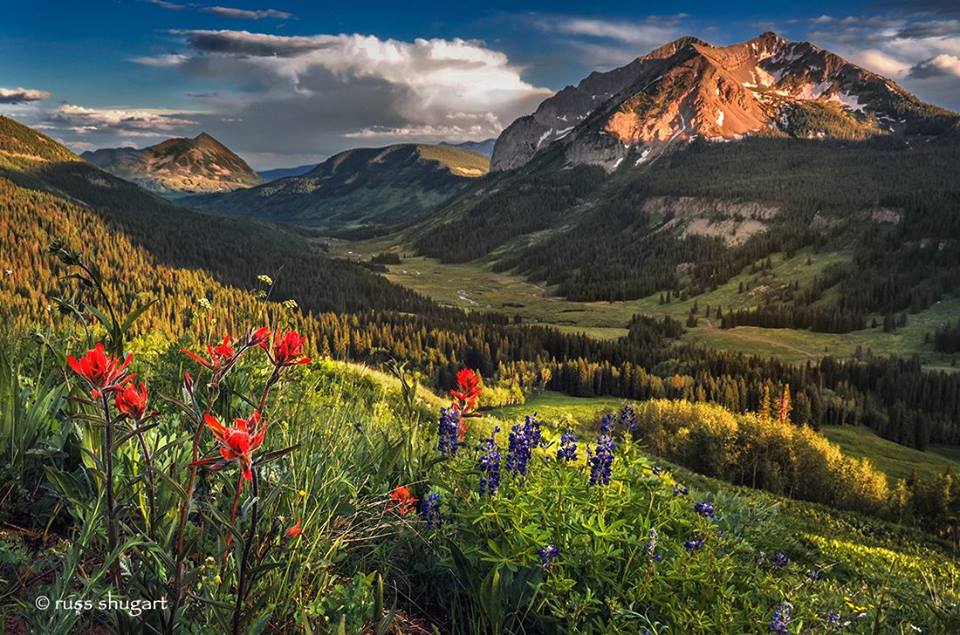
¶ “When one tugs at a single thing in nature, one finds it attached to the rest of the world.” —John Muir

For the beauty of the earth. “A stunning new map (left) shows the complex network of rivers and streams in the contiguous US. Created by Imgur user Fejetlenfej, a geographer and GIS analyst with a ‘lifelong passion for beautiful maps,’ it highlights the massive expanse of river basins across the country.” —see more details, and an animated video, at Cheyenne MacDonald & Mark Prigg, “The veins of America: Stunning map shows every river basin in the US,” Daily Mail (Thanks Marti.)

The state of our disunion. “Briarwood Presbyterian Church in Vestavia Hills [a wealthy suburb of Birmingham, Alabama] is trying to establish its own police force.”  Lauren Walsh, ABC News

Best one-liner. “If the environment were a bank, it would have been saved by now.” —Senator Bernie Sanders

Altar call. “Leave the field and leave the fire / And find the flame of your desire / Set your heart on this far shore / And sing your dream to me once more.” —English translation of lyrics to “Mo Ghille Mear,” performed by UCD Choral Scholars

Benediction. “Farewell, my friends, I'm bound for Canaan, / I'm trav'ling through the wilderness; / Your company has been delightful, / You, who doth leave my mind distressed. / I go away, behind to leave you, / Perhaps never to meet again, / But if we never have the pleasure, / I hope we'll meet on Canaan's land.” —Second Ireland Sacred Harp Convention (2012), “Parting Friends.”   (Thanks Chris. If you’re unfamiliar with sacred harp/shape note singing, the song is first sung using names of the “shape” of the note. Here is a site with more info on Sacred Harp singing.)

Recessional.Sing, Sing, Sing,” Benny Goodman Orchestra, featuring the dance of Ginger Rogers and Fred Astaire.

Lectionary for this Sunday. A breathtaking, breathgiving, statement. “‘As the Abba has sent me, so I send you.’ When [Jesus] had said this, he breathed on them and said, ‘Receive the Holy Spirit. If you forgive the sins of any, they are forgiven them; if you retain the sins of any, they are retained.’” —John 20:21-23

Lectionary for Sunday next. “One empty tomb poses no threat / to present entanglements, / any more than annual and / specially-adorned sanctuary crowds / encroach on Easter morn. / It’s Easter’s aftermath / resurrectus contagio, / contagious resurrection / that threatens entombing empires / with breached sovereignty.” —continue reading Ken Sehested’s “Easter’s aftermath,” a poem inspired by Luke 24:13-35 and Matthew 25:1-13

Just for fun.Astronaut Tips: How to Wash Your Hair in Space.” (2:57 video)

#  #  #

Featured this week on prayer&politiks

• “Earth Day resourcesfor local congregations

• “Easter’s aftermath,” a poem inspired by Luke 24:13-35 and Matthew 25:1-13

• “Pacem in terris: Easter. Earth Day, and Pentecost’s promise,” a meditation on our lectionary journey

• “I arise today,” a litany for worship inspired by Acts 2:25-28, Psalm 16:8-11, and “The Deer’s Cry,” anonymous 8th century poem often attributed to St. Patrick

©Ken Sehested @ prayerandpolitiks.org. Language not otherwise indicated above is that of the editor, as are those portions cited as “kls.” Don’t let the “copyright” notice keep you from circulating material you find here (and elsewhere in this site). Reprint permission is hereby granted in advance for noncommercial purposes.

Your comments are always welcomed. If you have news, views, notes or quotes to add to the list above, please do. If you like what you read, pass this along to your friends. You can reach me directly at kensehested@prayerandpolitiks.org.


Holy Saturday 2017

by Ken Sehested

Betwixt and between. Jesus’ disciples and followers are bereft and adrift. The world seems to be coming apart.

As are we.

North Korea’s Kim Yong-un, among whose titles is “Fate of the Nation,” has finished his nation’s 15 April “Day of the Sun” founding day parade with its “North Korea First” bluster; and US “Fate of the Nation” Donald Trump—who requested but was denied tanks and missile launchers in his inauguration parade—is ensconced in his luxury resort, fresh off his “mother of all bombs” strike in Afghanistan, following our heightened entanglement with the escalated cycle of violence in Syria.

Children everywhere, playing with fire, oblivious to the risks.

As a child, on those few occasions when I watched shoot-em-up TV shows with my grandfather, he would laugh sarcastically at each casualty and say “meat on the table!” I don’t know if he was aware of it, but he gave me my first lessons in mocking the myth of redemptive violence—the myth which turns Easter’s claim into retail opportunity. (Wall Street has already declared this weekend a success.)

But there’s nothing silly about the armada of US warships now prowling the Korean peninsula’s coast. We know for certain (this time) that North Korea has nuclear weapons. But, by God, we got more. Both nations’ leaders are known for their impulsive decisions. Some 75 million are in harm’s way.

Holy Saturday. Betwixt and between, asking “was Jesus on a fool’s errant, or what?” Did Caiaphas and Pilate have a firmer grasp on reality? A clearer vision of the future?

Time will tell. An Easter inferno is not out of the question.

But it will require far more than that, we trust, to keep the tomb’s stone in place and resurrection’s power at bay.

#  #  #

©ken sehested @ prayerandpolitiks.org

Funeral songs

by Ken Sehested

When I was in seminary I remember thinking that all of us, as part of our final year of study, should be required to build our own casket, hauling it around as a storage chest wherever we lived, until the day for its final use. Odd as it sounds, the “remember you are dust” charge provokes an intensity and a freedom to the living of our days, chipping away at the anxiety that too often drives our frenetic habits.

Along that same line, one element of our congregation’s seven-week Lenten reflection group was beginning and ending each meeting by listening to songs participants’ want at their funeral service, in keeping with the season’s invitation to reflect on our own mortality.

Below is our list. Feel free to add your own suggestion, in the “comment” section at the page’s bottom or by sending it directly to me: kensehested@prayerandpolitiks.org (I’ll add it to the list on an ongoing basis.) These are in random order.

§ “How Can I Keep From Singing,” Judy Collins

§ “Symphony of Sorrowful Songs,” Henryk Górecki (1st movement, second part)

§ “Morning Has Broken,” Cat Stevens

§ “Who Will Watch The Home Place,” Laurie Lewis and Her Bluegrass Pals

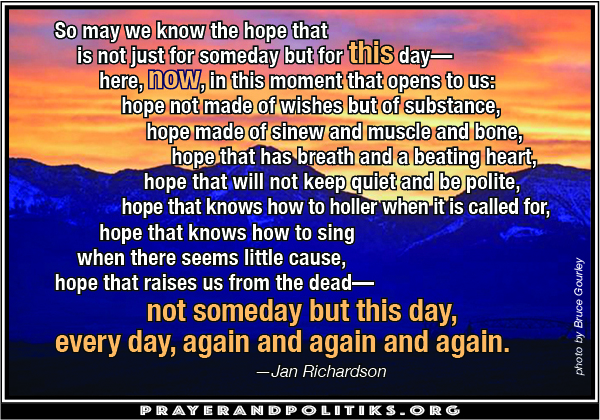
§ “So May We All,” Charlie King & Bright Morning Star

§ “Psalm 23,” Bobby McFerrin

§ “Song of Peace (Finlandia),” Indigo Girls, with Michelle Malone

§ “Largo in D Flat” (“Going Home”), music by Antonin Dvorak, New World Symphony, piano

§ "Largo in D flat" (“Going Home"), music by Antonin Dvorak, performed by Libera

§ “Come Sunday,” Mahalia Jackson

§ “The Deer’s Cry,” (aka “St. Patrick’s Breastplate”), Rita Connolly, with the Curtlestown Choir

§ “In the Arms of An Angel,” Sarah McLachlan

§ “Lone Wild Bird,” Lynda Poston-Smith

§ “Ain’t No Grave [Can Hold My Body Down],” Johnny Cash

§ “O Love That Will Not Let Me Go,” Westminster Chorus

§ “It Is Well With My Soul,” Zero8 Chorus

And one special mention, this one full of levity, which also helps us stare death in the face without flinching: “Funeral Food,” Kate Campbell.

#  #  #

Readers add to this list.

§ “Gabriel’s Oboe” [from “The Mission”], performed by Henrik Chaim Goldschmidt (from Michael S. Mulberry)

§ "What a Wonderful World," Louis Armstrong

§ “Foinn Bhriotáineacha,” Tríona Ní Dhomhnaill

§ "Long Time Traveller," Wailin’ Jennys

§ “Glory Bound,” Wailin’ Jennys

§ “I’m Coming Home,” Staples Singers

§ “Parting Friends,” Second Ireland Sacred Harp Convention (2012)

§ “Ashokan Farewell,” Jay Ungar and Molly Mason Family Band

§ “Precious Lord Take My Hand,” Aretha Franklin

§ “In My Time of Dyin’,” Bob Dylan

§ "Why Me, Lord?" Ray Charles & Johnny Cash

§ “Now the Day Is Over,” Mormon Tabernacle Choir

§ “Tell Heaven,” Staples Singers

§ “Children of the Heavenly Father,” Concordia Choir

§ “I’m Not Afraid to Die,” Gillian Welch

§ “Wayfaring Stranger,” Rhiannon Giddens

§ “Blue Skies,” Ella Fitzgerald

§ “In My Life,” John Lennon

§ “Pressing On,” Bob Dylan

§ “Pussywillows, Cat Tails,” Gordon Lightfoot

§ “I’ll See You In My Dreams,” Joe Brown

§ “Keep Me In Your Heart,” Warren Zevon

§ “Imagine,” John Lennon

§ “Am I Born to Die,” Solas

§ "The Best Is Yet to Come," Frank Sinatra

§ “We Shall Walk Through the Valley in Peace,” Cantus/Chanticleer 

§ “Sit Down, Servant/Plenty Good Room,” Chanticleer

§ “Get Away, Jordan,” Take Six 

§ “Mary,” Take Six 

§ “A Gaelic Blessing,” John Rutter 

§ “The Lord Bless You and Keep You,” John Rutter 

§ “A Clare Benediction,” John Rutter, Cambridge Singers 

§ “We Shall Behold Him,” Sandi Patty 

§ “All Day Dinner,” Reba Rambo Gardner

§ "All Day Dinner," Allison Speer

§ “What a Day,” Phil Keaggy

§ “The Land of Oohs and Ahs / Somewhere Over the Rainbow,” Reba Rambo

§ “The Lord Is My Shepherd,” Keith Green

§ “The Lord Is My Shepherd,” John Rutter

§ “Lux Aeterna,” John Rutter

§ “Sheep May Safely Graze,” J.S. Bach (many versions—here is a lovely piano transcription by Georgian pianist Khatia Buniatishvili)

The United States at War

There have been only 17 years that the US has not been involved in a war since 1776

“We’re at War!”
And We Have Been Since 1776: 214 Years of American War-Making

Danios, loonwatch.com blog, 20 December 2011

Year-by-year Timeline of America’s Major Wars (1776-2011)

1776 – American Revolutionary War, Chickamagua Wars, Second Cherokee War, Pennamite-Yankee War

1777 – American Revolutionary War, Chickamauga Wars, Second Cherokee War, Pennamite-Yankee War

1778 – American Revolutionary War, Chickamauga Wars, Pennamite-Yankee War

1779 – American Revolutionary War, Chickamauga Wars, Pennamite-Yankee War

1780 – American Revolutionary War, Chickamauga Wars, Pennamite-Yankee War

1781 – American Revolutionary War, Chickamauga Wars, Pennamite-Yankee War

1782 – American Revolutionary War, Chickamauga Wars, Pennamite-Yankee War

1783 – American Revolutionary War, Chickamauga Wars, Pennamite-Yankee War

1784 – Chickamauga Wars, Pennamite-Yankee War, Oconee War

1785 – Chickamauga Wars, Northwest Indian War

1786 – Chickamauga Wars, Northwest Indian War

1787 – Chickamauga Wars, Northwest Indian War

1788 – Chickamauga Wars, Northwest Indian War

1789 – Chickamauga Wars, Northwest Indian War

1790 – Chickamauga Wars, Northwest Indian War

1791 – Chickamauga Wars, Northwest Indian War

1792 – Chickamauga Wars, Northwest Indian War

1793 – Chickamauga Wars, Northwest Indian War

1794 – Chickamauga Wars, Northwest Indian War

1795 – Northwest Indian War

1796 – No major war

1797 – No major war

1798 – Quasi-War

1799 – Quasi-War

1800 – Quasi-War

1801 – First Barbary War

1802 – First Barbary War

1803 – First Barbary War

1804 – First Barbary War

1805 – First Barbary War

1806 – Sabine Expedition

1807 – No major war

1808 – No major war

1809 – No major war

1810 – U.S. occupies Spanish-held West Florida

1811 – Tecumseh’s War

1812 – War of 1812, Tecumseh’s War, Seminole Wars, U.S. occupies Spanish-held Amelia Island and other parts of East Florida

1813 – War of 1812, Tecumseh’s War, Peoria War, Creek War, U.S. expands its territory in West Florida

1814 – War of 1812, Creek War, U.S. expands its territory in Florida, Anti-piracy war

1815 – War of 1812, Second Barbary War, Anti-piracy war

1816 – First Seminole War, Anti-piracy war

1817 – First Seminole War, Anti-piracy war

1818 – First Seminole War, Anti-piracy war

1819 – Yellowstone Expedition, Anti-piracy war

1820 – Yellowstone Expedition, Anti-piracy war

1821 – Anti-piracy war (see note above)

1822 – Anti-piracy war (see note above)

1823 – Anti-piracy war, Arikara War

1824 – Anti-piracy war

1825 – Yellowstone Expedition, Anti-piracy war

1826 – No major war

1827 – Winnebago War

1828 – No major war

1829 – No major war

1830 – No major war 

1831 – Sac and Fox Indian War

1832 – Black Hawk War

1833 – Cherokee Indian War

1834 – Cherokee Indian War, Pawnee Indian Territory Campaign

1835 – Cherokee Indian War, Seminole Wars, Second Creek War

1836 – Cherokee Indian War, Seminole Wars, Second Creek War, Missouri-Iowa Border War

1837 – Cherokee Indian War, Seminole Wars, Second Creek War, Osage Indian War, Buckshot War

1838 – Cherokee Indian War, Seminole Wars, Buckshot War, Heatherly Indian War

1839 – Cherokee Indian War, Seminole Wars

1840 – Seminole Wars, U.S. naval forces invade Fiji Islands

1841 – Seminole Wars, U.S. naval forces invade McKean Island, Gilbert Islands, and Samoa

1842 – Seminole Wars

1843 – U.S. forces clash with Chinese, U.S. troops invade African coast

1844 – Texas-Indian Wars

1845 – Texas-Indian Wars

1846 – Mexican-American War, Texas-Indian Wars

1847 – Mexican-American War, Texas-Indian Wars

1848 – Mexican-American War, Texas-Indian Wars, Cayuse War

1849 – Texas-Indian Wars, Cayuse War, Southwest Indian Wars, Navajo Wars, Skirmish between 1st Cavalry and Indians

1850 – Texas-Indian Wars, Cayuse War, Southwest Indian Wars, Navajo Wars, Yuma War, California Indian Wars, Pitt River Expedition

1851 – Texas-Indian Wars, Cayuse War, Southwest Indian Wars, Navajo Wars, Apache Wars, Yuma War, Utah Indian Wars, California Indian Wars

1852 – Texas-Indian Wars, Cayuse War, Southwest Indian Wars, Navajo Wars, Yuma War, Utah Indian Wars, California Indian Wars

1853 – Texas-Indian Wars, Cayuse War, Southwest Indian Wars, Navajo Wars, Yuma War, Utah Indian Wars, Walker War, California Indian Wars

1854 – Texas-Indian Wars, Cayuse War, Southwest Indian Wars, Navajo Wars, Apache Wars, California Indian Wars, Skirmish between 1st Cavalry and Indians

1855 – Seminole Wars, Texas-Indian Wars, Cayuse War, Southwest Indian Wars, Navajo Wars, Apache Wars, California Indian Wars, Yakima War, Winnas Expedition, Klickitat War, Puget Sound War, Rogue River Wars, U.S. forces invade Fiji Islands and Uruguay

1856 – Seminole Wars, Texas-Indian Wars, Southwest Indian Wars, Navajo Wars, California Indian Wars, Puget Sound War, Rogue River Wars, Tintic War

1857 – Seminole Wars, Texas-Indian Wars, Southwest Indian Wars, Navajo Wars, California Indian Wars, Utah War, Conflict in Nicaragua

1858 – Seminole Wars, Texas-Indian Wars, Southwest Indian Wars, Navajo Wars, Mohave War, California Indian Wars, Spokane-Coeur d’Alene-Paloos War, Utah War, U.S. forces invade Fiji Islands and Uruguay

1859 Texas-Indian Wars, Southwest Indian Wars, Navajo Wars, California Indian Wars, Pecos Expedition, Antelope Hills Expedition, Bear River Expedition, John Brown’s raid, U.S. forces launch attack against Paraguay, U.S. forces invade Mexico

1860 – Texas-Indian Wars, Southwest Indian Wars, Navajo Wars, Apache Wars, California Indian Wars, Paiute War, Kiowa-Comanche War

1861 – American Civil War, Texas-Indian Wars, Southwest Indian Wars, Navajo Wars, Apache Wars, California Indian Wars, Cheyenne Campaign

1862 – American Civil War, Texas-Indian Wars, Southwest Indian Wars, Navajo Wars, Apache Wars, California Indian Wars, Cheyenne Campaign, Dakota War of 1862,

1863 – American Civil War, Texas-Indian Wars, Southwest Indian Wars, Navajo Wars, Apache Wars, California Indian Wars, Cheyenne Campaign, Colorado War, Goshute War

1864 – American Civil War, Texas-Indian Wars, Navajo Wars, Apache Wars, California Indian Wars, Cheyenne Campaign, Colorado War, Snake War

1865 – American Civil War, Texas-Indian Wars, Navajo Wars, Apache Wars, California Indian Wars, Colorado War, Snake War, Utah’s Black Hawk War

1866 – Texas-Indian Wars, Navajo Wars, Apache Wars, California Indian Wars, Skirmish between 1st Cavalry and Indians, Snake War, Utah’s Black Hawk War, Red Cloud’s War, Franklin County War, U.S. invades Mexico, Conflict with China

1867 – Texas-Indian Wars, Long Walk of the Navajo, Apache Wars, Skirmish between 1st Cavalry and Indians, Snake War, Utah’s Black Hawk War, Red Cloud’s War, Comanche Wars, Franklin County War, U.S. troops occupy Nicaragua and attack Taiwan

1868 – Texas-Indian Wars, Long Walk of the Navajo, Apache Wars, Skirmish between 1st Cavalry and Indians, Snake War, Utah’s Black Hawk War, Red Cloud’s War, Comanche Wars, Battle of Washita River, Franklin County War

1869 – Texas-Indian Wars, Apache Wars, Skirmish between 1st Cavalry and Indians, Utah’s Black Hawk War, Comanche Wars, Franklin County War

1870 – Texas-Indian Wars, Apache Wars, Skirmish between 1st Cavalry and Indians, Utah’s Black Hawk War, Comanche Wars, Franklin County War

1871 – Texas-Indian Wars, Apache Wars, Skirmish between 1st Cavalry and Indians, Utah’s Black Hawk War, Comanche Wars, Franklin County War, Kingsley Cave Massacre, U.S. forces invade Korea

1872 – Texas-Indian Wars, Apache Wars, Utah’s Black Hawk War, Comanche Wars, Modoc War, Franklin County War

1873 – Texas-Indian Wars, Comanche Wars, Modoc War, Apache Wars, Cypress Hills Massacre, U.S. forces invade Mexico

1874 – Texas-Indian Wars, Comanche Wars, Red River War, Mason County War, U.S. forces invade Mexico

1875 – Conflict in Mexico, Texas-Indian Wars, Comanche Wars, Eastern Nevada, Mason County War, Colfax County War, U.S. forces invade Mexico

1876 – Texas-Indian Wars, Black Hills War, Mason County War, U.S. forces invade Mexico

1877 – Texas-Indian Wars, Skirmish between 1st Cavalry and Indians, Black Hills War, Nez Perce War, Mason County War, Lincoln County War, San Elizario Salt War, U.S. forces invade Mexico

1878 – Paiute Indian conflict, Bannock War, Cheyenne War, Lincoln County War, U.S. forces invade Mexico

1879 – Cheyenne War, Sheepeater Indian War, White River War, U.S. forces invade Mexico

1880 – U.S. forces invade Mexico

1881 – U.S. forces invade Mexico

1882 – U.S. forces invade Mexico

1883 – U.S. forces invade Mexico

1884 – U.S. forces invade Mexico

1885 – Apache Wars, Eastern Nevada Expedition, U.S. forces invade Mexico

1886 – Apache Wars, Pleasant Valley War, U.S. forces invade Mexico

1887 – U.S. forces invade Mexico

1888 – U.S. show of force against Haiti, U.S. forces invade Mexico

1889 – U.S. forces invade Mexico

1890 – Sioux Indian War, Skirmish between 1st Cavalry and Indians, Ghost Dance War, Wounded Knee, U.S. forces invade Mexico

1891 – Sioux Indian War, Ghost Dance War, U.S. forces invade Mexico

1892 – Johnson County War, U.S. forces invade Mexico

1893 – U.S. forces invade Mexico and Hawaii

1894 – U.S. forces invade Mexico

1895 – U.S. forces invade Mexico, Bannock Indian Disturbances

1896 – U.S. forces invade Mexico

1897 – No major war

1898 – Spanish-American War, Battle of Leech Lake, Chippewa Indian Disturbances

1899 – Philippine-American War, Banana Wars

1900 – Philippine-American War, Banana Wars

1901 – Philippine-American War, Banana Wars

1902 – Philippine-American War, Banana Wars

1903 – Philippine-American War, Banana Wars

1904 – Philippine-American War, Banana Wars

1905 – Philippine-American War, Banana Wars

1906 – Philippine-American War, Banana Wars

1907 – Philippine-American War, Banana Wars

1908 – Philippine-American War, Banana Wars

1909 – Philippine-American War, Banana Wars

1910 – Philippine-American War, Banana Wars

1911 – Philippine-American War, Banana Wars

1912 – Philippine-American War, Banana Wars

1913 – Philippine-American War, Banana Wars, New Mexico Navajo War

1914 – Banana Wars, U.S. invades Mexico

1915 – Banana Wars, U.S. invades Mexico, Colorado Paiute War

1916 – Banana Wars, U.S. invades Mexico

1917 – Banana Wars, World War I, U.S. invades Mexico

1918 – Banana Wars, World War I, U.S invades Mexico

1919 – Banana Wars, U.S. invades Mexico

1920 – Banana Wars

1921 – Banana Wars

1922 – Banana Wars

1923 – Banana Wars, Posey War

1924 – Banana Wars

1925 – Banana Wars

1926 – Banana Wars

1927 – Banana Wars

1928 – Banana Wars

1930 – Banana Wars

1931 – Banana Wars

1932 – Banana Wars

1933 – Banana Wars

1934 – Banana Wars

1935 – No major war

1936 – No major war

1937 – No major war

1938 – No major war

1939 – No major war

1940 – No major war

1941 – World War II

1942 – World War II

1943 – Wold War II

1944 – World War II

1945 – World War II

1946 – Cold War (U.S. occupies the Philippines and South Korea)

1947 – Cold War (U.S. occupies South Korea, U.S. forces land in Greece to fight Communists)

1948 – Cold War (U.S. forces aid Chinese Nationalist Party against Communists)

1949 – Cold War (U.S. forces aid Chinese Nationalist Party against Communists)

1950 – Korean War, Jayuga Uprising

1951 – Korean War

1952 – Korean War

1953 – Korean War

1954 – Covert War in Guatemala

1955 – Vietnam War

1956 – Vietnam War

1957 – Vietnam War

1958 – Vietnam War

1959 – Vietnam War, Conflict in Haiti

1960 – Vietam War

1961 – Vietnam War

1962 – Vietnam War, Cold War (Cuban Missile Crisis; U.S. marines fight Communists in Thailand)

1963 – Vietnam War

1964 – Vietnam War

1965 – Vietnam War, U.S. occupation of Dominican Republic

1966 – Vietnam War, U.S. occupation of Dominican Republic

1967 – Vietnam War

1968 – Vietnam War

1969 – Vietnam War

1970 – Vietnam War

1971 – Vietnam War

1972 – Vietnam War

1973 – Vietnam War, U.S. aids Israel in Yom Kippur War

1974 – Vietnam War

1975 – Vietnam War

1976 – No major war

1977 – No major war

1978 – No major war

1979 – Cold War (CIA proxy war in Afghanistan)

1980 – Cold War (CIA proxy war in Afghanistan)

1981 – Cold War (CIA proxy war in Afghanistan and Nicaragua), First Gulf of Sidra Incident

1982 – Cold War (CIA proxy war in Afghanistan and Nicaragua), Conflict in Lebanon

1983 – Cold War (Invasion of Grenada, CIA proxy war in Afghanistan and Nicaragua), Conflict in Lebanon

1984 – Cold War (CIA proxy war in Afghanistan and Nicaragua), Conflict in Persian Gulf

1985 – Cold War (CIA proxy war in Afghanistan and Nicaragua)

1986 – Cold War (CIA proxy war in Afghanistan and Nicaragua)

1987 – Conflict in Persian Gulf

1988 – Conflict in Persian Gulf, U.S. occupation of Panama

1989 – Second Gulf of Sidra Incident, U.S. occupation of Panama, Conflict in Philippines

1990 – First Gulf War, U.S. occupation of Panama

1991 – First Gulf War

1992 – Conflict in Iraq

1993 – Conflict in Iraq

1994 – Conflict in Iraq, U.S. invades Haiti

1995 – Conflict in Iraq, U.S. invades Haiti, NATO bombing of Bosnia and Herzegovina

1996 – Conflict in Iraq

1997 – No major war

1998 – Bombing of Iraq, Missile strikes against Afghanistan and Sudan

1999 – Kosovo War

2000 – No major war

2001 – War on Terror in Afghanistan

2002 – War on Terror in Afghanistan and Yemen

2003 – War on Terror in Afghanistan, and Iraq

2004 – War on Terror in Afghanistan, Iraq, Pakistan, and Yemen

2005 – War on Terror in Afghanistan, Iraq, Pakistan, and Yemen

2006 – War on Terror in Afghanistan, Iraq, Pakistan, and Yemen

2007 – War on Terror in Afghanistan, Iraq, Pakistan, Somalia, and Yemen

2008 – War on Terror in Afghanistan, Iraq, Pakistan, and Yemen

2009 – War on Terror in Afghanistan, Iraq, Pakistan, and Yemen

2010 – War on Terror in Afghanistan, Iraq, Pakistan, and Yemen

2011 – War on Terror in Afghanistan, Iraq, Pakistan, Somalia, and Yemen; Conflict in Libya (Libyan Civil War)

20 February 2015 update WashingtonsBlog

In most of these wars, the U.S. was on the offense. Danios admits that some of the wars were defensive.   However, Danios also leaves out covert CIA operations and other acts which could be considered war.

Let’s update what’s happened since 2011:

2012–2017 – War on Terror in Afghanistan, Iraq, Somalia, Syria and Yemen

So we can add 6 more years of war. That means that for 224 out of 241 years – or 93% of the time – America has been at war. (We can quibble with the exact numbers, but the high percentage of time that America has been at war is clear and unmistakable.)

•Using statistics compiled by the Federation of American Scientists, Gore Vidal has listed 201 overseas military operations between the end of World War II and September 11, 2001, in which the US struck the first blow. . . . It should be noted that since 1947 . . . in no instance has democratic government come about as a direct result.” —Chalmers Johnson, “Nemesis: The Last Days of the American Republic”

•“The United States [as a national-state, i.e., not counting the War of Independence] has formally declared war on only five occasions: the War of 1812, the Mexican-American War, the Spanish-American War, World War I and World War II. Yet it has sent its armed forces abroad over 300 times ‘for other than normal peacetime purposes,’ according to a congressional report issued in 2010.” Jesse Greenspan, History.com

ken sehested @ prayerandpolitiks.org

Follow-up on the 50th anniversary of Dr. Martin Luther King Jr.’s “Beyond Vietnam” speech.

by Ken Sehested

¶ Connecting the dots—or, as we now say, intersectionality. “But when, exactly, did the post-civil rights era begin? Arguably it was fifty years ago today when in a speech [‘Beyond Vietnam: A Time to Break the Silence,’ aka ‘Declaration of Independence From the War in Vietnam’] at Harlem’s Riverside Church Martin Luther King Jr. definitively broke ranks with the liberals he once considered allies. . . .
         “The very liberals who supported and signed civil rights legislation while waging war in Vietnam would wind up in the years ahead being the chief promulgators of new laws that criminalized the daily lives of the urban poor and authorized the militarization of municipal police forces. The 1968 Safe Streets Act, signed by Johnson, poured hundreds of millions of dollars into building up law enforcement and the criminal justice apparatus—astronomically more than was ever spent on the same president’s anti-poverty programs. This legislation would lead to a slew of other law-and-order policies that together helped lead us into the age of mass incarceration.” —Eric Tang, “‘A Society Gone Mad on War’: The Enduring Importance of Martin Luther King’s Riverside Speech,” The Nation

¶ Can’t turn back now. “At first blush it may seem counterintuitive to elevate [the ‘Beyond Vietnam’] speech above the watershed ‘I Have a Dream’ speech delivered four years earlier, or the "[I Have Been to the] Mountaintop’ speech he would give on the eve of his death. But if King's address at the March on Washington for Jobs and Freedom made him into an American icon, his Riverside Church speech announced him as a genuine prophet for social justice, one who willingly sacrificed his hard-won status to defy an empire.” —Peniel Joseph, “This speech made Martin Luther King Jr. revolutionary,” CNN

¶ “‘The March on Washington was a powerful speech,’ [Congressman John] Lewis said to me recently, over the phone. Lewis was present for that one, too: he spoke on the steps of the Lincoln Memorial minutes before King did. ‘It was a speech for America, but the speech he delivered in New York, on April 4, 1967, was a speech for all humanity—for the world community. . . .’
        “‘The cross may mean the death of your popularity,’ [King] said at a conference the following month [after the “Beyond Vietnam” speech]. Even so, he added, ‘take up your cross and just bear it. And that’s the way I have decided to go. Come what may, it doesn’t matter now.’” —Benjamin Hedin, “Martin Luther King, Jr.’s Searing Antiwar Speech, Fifty Years Later,” The New Yorker

¶ The “dream” is now a bit dreamy. “Dr. King’s Riverside Church address exemplified how, throughout his final 18 months of life, he repeatedly rejected the sunny optimism of his 1963 “I Have a Dream” speech and instead mourned how that dream had “turned into a nightmare.” But the speech also highlighted how for Dr. King, civil rights was never a discrete problem in American society, and that racism went hand in hand with the fellow evils of poverty and militarism that kept the country from living up to its ideals. Beyond signaling his growing radicalism, the Riverside speech reflected Dr. King’s increasing political courage—and shows why, half a century later, he remains a pivotal figure in American history.” —David J. Garrow, “When Martin Luther King Came Out Against the Vietnam,” New York Times

¶ Spied. Over the course of several years, Dr. King was subjected to intense surveillance by the Federal Bureau of Investigation, the National Security Agency, and the US Army Intelligence and Security Command. Most of it was illegal.

¶ Dr. William Barber’s sermon at Riverside. You can view online the 2 April 2017 worship service at The Riverside Church in New York City commemorating King’s speech in 1967. Guest preacher Dr. William Barber’s sermon, “When Silence Is Not An Option,” begins in the 48th minute.

¶ “Likely” a conspiracy. “The United States House of Representatives Select Committee on Assassinations (HSCA) was established in 1976 to investigate the assassinations of John F. Kennedy and Martin Luther King, Jr. . . . In its 1978 report, the Committee concluded in its report that while King was killed by one rifle shot from James Earl Ray, ‘there is a likelihood’ that it was the result of a conspiracy.” Wikipedia
        You can read some of the declassified documents from the FBI files at American Radio Works, “The FBI’s War on King.”

¶ Hard conclusion. “[The angry young men I’ve talked to] in the ghettos of the North . . . asked if our own nation wasn’t using massive doses of violence to solve its problems, to bring about the changes it wanted. Their questions hit home, and I knew that I could never again raise my voice against the violence of the oppressed without having first spoken clearly to the greatest purveyor of violence in the world today—my own government.” —Martin Luther King Jr., “Beyond Vietnam”

¶ Preparation for Palm Sunday & Holy Week. “I Have Been to the Mountaintop,” King speaking at Mason Temple in Memphis, Tenn., 3 April 1968, the night before his assassination.

        •Complete speech (43:14 audio)

        • Excerpts (22:14) of the speech along with photos, video clips and commentary from some of his colleagues.

        •Brief excerpt of the speech’s key lines. (2:37 video)

©ken sehested @ prayerandpolitiks.org

News, views, notes, and quotes

Signs of the Times  •  4 April 2017  •  No. 115

Processional. “Mother Mary, full of grace, awaken. / All our homes are gone, our loved ones taken. / Taken by the sea – / Mother Mary, calm our fears, have mercy. / Drowning in a sea of tears, have mercy. / Hear our mournful plea. / Our world has been shaken, / we wander our homelands, forsaken.” —Eliza Gilykson, “Requiem,” written after the 26 December 2004 earthquake in the Indian ocean, creating a tsunami which struck Indonesia, killing over 260,000 (Thanks Steve.)

Above: Kalbyris Forest in Denmark placed first in nature and wildlife, photographed using a drone, by Michael B Rasmussen. See more in “The best drone photography of 2016” at The Guardian.

Invocation. “From the depths of distress, every sail sagged and limp, / my mutinous lips offer insurrecting sighs. / With heart-aching hope doth my voice still rejoice. / Incline us, consign us, to steadfast Embrace.” —continue reading Ken Sehested’s “Mutinous lips,” a litany inspired by Psalm 118

Call to worship. “Shepherd me, O God, beyond my wants, beyond my fears, from death into life.” —John Michael Talbot, “Shepherd Me, O God”

Historic anniversary. On 4 April 1887, Susanna Madora Salter (2 March 2 1860 – 17 March 17 1961) became the first woman elected to the office of mayor, of Argonia, Kansas. See portrait at right. —for more see Wikipedia

Good news. “20 Good News stories you may not have heard about.” —Curiosity (3:08 video. Thanks Kristen.) 

Hymn of praise. It Is Well With My Soul,” Zero8 Chorus. (Thanks, Karen.)

Confession. “The Rock of the Righteous is our God: / Who marks the boundaries between justice and vengeance; / Who blazes the Way from enmity to peace; / Who causes the wicked to stumble in their folly / But protects the weak against howling storms of contempt.” —continue reading Ken Sehested’s “By Thy might,” a litany inspired by Psalm 31

[Artwork by Ella Kaye]

Historic speeches anniversaries. “I am convinced that if we are to get on the right side of the world revolution, we as a nation must undergo a radical revolution of values. When machines and computers, profit and property rights are considered more important than people, the giant triplets of racism, materialism, and militarism are incapable of being conquered. —Martin Luther King Jr., “Beyond Vietnam” speak, 4 April 1967, Riverside Church, New York City

Left: “Martin Luther King Jr., “I have been to the mountaintop,” art by Ella Kaye

        Two significant anniversaries of Dr. Martin Luther King Jr.’s speeches occur this week. Monday, 3 April 1968, was his “I’ve been to the mountaintop” speech in Memphis the night before his assassination. Tuesday, 4 April 1967, is the 50th anniversary of his “Beyond Vietnam: A Time to Break the Silence” speech where he stated his full-throated opposition to the war in Vietnam, linking the roots of racism, materialism, and militarism.

        King’s “Mountaintop” speech is an instructive way to prepare for Holy Week; “Beyond Vietnam,” for Eastertide, when present realities come into sharp relief by Resurrection’s promise.

“I Have Been to the Mountaintop,” Mason Temple in Memphis, Tenn., 3 April 1968, the night before his assassination.
        •Complete speech (43:14 audio)
        • Excerpts (22:14) of the speech along with photos, video clips and commentary from some of his colleagues.
        •Brief excerpt of the speech’s key lines. (2:37 video)

Beyond Vietnam” speech
        •Full speech (audio, 53+ minutes)
        •22-minute excerpt from the speech
        •7:50 minute excerpt

        You will be surprised at how many paragraphs in “Beyond Vietnam” that are relevant, with little or no editing, to current realities.
        For more background, see “When the dream gets a bit dreamy: On the 50th anniversary of Dr. Martin Luther King’s 'Beyond Vietnam'” speech.”

Hymn of lamentation. "Death hath deprived me of my dearest friend," Thomas Weelkes, a eulogy on the death of Thomas Morley in 1602, performed by Vox Luminis.

¶ “He took control of Egypt. And he really took control of it.” Trump’s statement about visiting Egyptian President Abdel Fattah el-Sisi was a compliment. “We agree on so many things,” Trump continued.
        In case you forgot, it was then-General el-Sisi who came to power in a military coup in 2011, deposing democratically-elected President Mohamed Morsi (not to our liking), killing hundreds of street protestors and jailing thousands of others, including several American citizens. In 2015 President Obama blocked US military aid for Egypt because of these human rights abuses. —see Peter Baker & Declan Walsh, New York Times

Words of assurance. No, Never Alone,” Sister Rosetta Tharpe. (Click the “show more” button for the lyrics.)

Kaiser Family Foundation poll. “When survey respondents are told that only about 1% of the federal budget is spent on foreign aid, the share saying the US spends too little more than doubles (from 13% to 28%), while the share saying we spend too much drops in half (from 61% to 30%).”
        The average citizen thinks foreign aid is 28% of the US budget. Only 4% of those polled knew non-military foreign aid is less than 1% of the national budget.

¶ “As Secretary James Mattis said while commander of US Central Command, ‘If you don’t fully fund the State Department, then I need to buy more ammunition.’ The military will lead the fight against terrorism on the battlefield, but it needs strong civilian partners in the battle against the drivers of extremism—lack of opportunity, insecurity, injustice, and hopelessness.” —Jeffrey D. Sachs, “The Ethics and Practicalities of Foreign Aid,” CommonDreams

¶ “Foreign Aid 101: A quick and easy guide to understanding US Foreign Aid (Third Edition),” OxfamAmerica

It is a myth “that the United States carries the aid burden while other governments shirk their responsibility. This is plain wrong. The US spends less as a share of our income than other countries spend as a share of their income. US aid is now just 0.17 percent of US Gross National Income (GNI), roughly $32 billion in aid out of a GNI of $18 trillion. The average aid spending by other donor governments is more than twice the US share, around 0.38%.” Jeffrey D. Sachs, Professor of Sustainable Development, Columbia University

The bulk of humanitarian foreign aid requires that recipient nations purchase from US companies and ship on US vessels. It is, in effective, a subsidy for the US economy. —for more information, see Anup Shah, Global Issues

Professing our faith. Scripture’s gravitational pull always returns to the question of idolatry. Here is one example of what that entails: “A king is not saved by his great army; a warrior is not delivered by his great strength. The war horse is a vain hope for victory, and by its great might it cannot save” (Psalm 33:16-17). Is it any wonder that any who heed this warning risk being indicted for treason? —kls

Short story. Can’t you just read the front page headline in newspapers in countries unfriendly to ours:

        “Repressive state agents arrest compassionate man in the US State of Florida for feeding starving people.” Subhead: “New wave of Western . . . capitalistic/militarized police force . . . infidel’s coercive treatment of its citizens [pick one] caught on camera.”

        What triggered this tirade?

        “When 90-year-old Florida resident Arnold Abbott said following his arrest on Sunday that police couldn’t stop him from feeding the homeless, he apparently meant it. Abbott was charged again on Wednesday night for violating a new city law in Ft. Lauderdale that essentially prevents people from feeding the homeless.

        “‘I expected it’ he said in a Sun Sentinel report. ‘At least this time they let us feed people first.’ Officers lingered in the area for about 45 minutes during which time Abbott and volunteers with the Love Thy Neighbor charity he founded handed out more than 100 plates of hot chicken stew, pasta, cheesy potatoes and fruit salad to homeless men and women.

        “If he’s found guilty of violating city ordinance laws, he faces 60 days in jail or a $500 fine.”

        Cheers for the police allowing him to finish the distribution. They did not make the city ordinance.

        Now for the lesson: Next time you read of something similarly terrific reported here from another country (particularly if its an “unfriendly”), remember the story above and ask yourself, “I wonder what really happened?—story by Marc Weinreich, New York Daily News

Hymn of intercession.We Found Love (In a Hopeless Place),” Rihanna, performed by Choir! Choir! Choir!

Preach it. “What makes Christians Christian is their willingness to look for redemption by fighting for justice even if redemption is not evident and even when justice does not readily come. The world cannot survive Christians pussyfooting around those pursuits in expectation that redemption and justice will arrive as a matter of course. Neither can anyone claiming to be Christian.” —Stanley Hauerwas & Jonathan Tran, “Sanctuary Politics: Being the Church in the Time of Trump,” Religion and Ethics

When only the blues will do. The Thrill Is Gone,” Bonnie Raitt, Gary Clark Jr., and the B.B. King Blues Band.

Can’t makes this sh*t up.Trump Sends Hate Group to Represent US at UN Women's Rights Conference" —Nika Knight, Common Dreams

Call to the table. “The most common way people give up their power is by thinking they don’t have any.” —Alice Walker

The state of our disunion. Our Commander in Mischief’s herky-jerky behavior makes him a prime source of betting pools. Dublin-based Paddy Power Betfair has had to hire a full-time bookmaker to handle traffic from gamblers in Britain and Ireland. Currently, odds are 3-1 that Trump will be impeached this year, 25-1 that Mexico will fund the border wall, 100-1 that he will commission adding his face to Mt. Rushmore. Kim Hjelmgaard & Jane Onyanga-Moara, msn

Best one-liner. “Dance like no one is watching; email like it may one day be read aloud in a deposition.”

For the beauty of the earth. This dramatic video of glacier calving (3:24 video—go into “full screen” mode for this one) at Viedma Glacier, Patagonia, Argentina, is both awesome and ominous.

Altar call. “We don't see things as they are, we see them as we are.” —Anaïs Nin

Benediction. “There is nothing / a blessing / is better suited for / than an ending, / nothing that cries out more / for a blessing / than when a world / is falling apart.” —Jan Richardson

Recessional.The Lord Bless You and Keep You,” St. Paul Cathedral Choir.

Lectionary for this Sunday. “Is there no song to be sung, no bell to be rung, no laughter from the fields at play with their yield? Would that my mouth be formed and my lips unleashed to speak a word, a true and hearty word, to all grown deaf with grief.” —continue reading Ken Sehested’s “Sustain the weary with a word,” a litany for worship inspired by Isaiah 50:4-9a

Good Friday.Dueling Psalms,” a litany with texts contrasting Psalms 22 & 23.

Easter special. On numerous occasions our congregation has done a choral reading of John 20:1-18 in a prison service on Easter morning and then in our own service Sunday evening. With just a little practice, this can be an especially animating way to hear John’s dramatic resurrection story. —see “Choral reading of John 20:1-18,” a script for eight voices

Lectionary for Sunday next. Turning from darkness (death) to light (life) is a major theme in Scripture. But there is also a minority report, where darkness and shadow are the place of God’s abiding Presence.
        “Hear a just cause, O Lord; attend to my cry; give ear to my prayer from lips free of deceit. Guard me as the apple of the eye; hide me in the shadow of your wings.” (Psalm17:1, 8)
        “How precious is your steadfast love, O God! All people may take refuge in the shadow of your wings.” (Psalm 36:7)
        “Be merciful to me, O God, be merciful to me, for in you my soul takes refuge; in the shadow of your wings I will take refuge, until the destroying storms pass by.” (Psalm 57:1) —continue reading Ken Sehested’s “Refuge in the shadow," a litany for Holy Week

Just for fun. 100 years of fashion in 100 seconds.”

#  #  #

Featured this week on prayer&politiks

• “Palms, Passion, Politics and Prayer,” a Palm Sunday sermon

• “Refuge in the shadow,” a collection of Scripture for Holy Week, on “darkness” and “shadow” as the place of God’s abiding presence

• “By Thy might,” a litany for worship inspired by Psalm 31

• “Sustain the weary with a word,” a litany for worship inspired by Isaiah 50:4-9a

 
Other features
• “Dueling Psalms,” a litany for Good Friday, with texts contrasting Psalms 22 & 23

• “Choral reading of John 20:1-18a script for eight voices

©Ken Sehested @ prayerandpolitiks.org. Language not otherwise indicated above is that of the editor, as are those portions cited as “kls.” Don’t let the “copyright” notice keep you from circulating material you find here (and elsewhere in this site). Reprint permission is hereby granted in advance for noncommercial purposes.

Your comments are always welcomed. If you have news, views, notes or quotes to add to the list above, please do. If you like what you read, pass this along to your friends. You can reach me directly at kensehested@prayerandpolitiks.org.

News, views, notes, and quotes

Signs of the Times  •  28 March 2017  •  No. 114

Processional. Japanese drum line.

Above: Photo by Philip Marazzi

Themed issue
Military spending

Invocation.Down By the Riverside,” Playing for Change.

Call to worship. “Can these bones live?” asks the Lord of Hosts. / “Only you know,” say our doubt-tendered lips. / “Prophesy, you raggedy-ann human!” came the reply.  / “Prophesy to the wind. Demand Heaven’s own Breath!” / Behold: comes the shaking, bone fit to bone. / Followed by sinews, knitting each to all.” —continue reading Ken Sehested’ “Dry bones,” a litany for worship inspired by Ezekiel 37:1-14

Hymn of praise. ““Peace Will Come,” Tom Paxton.

Here’s your Lenten meditation. Watch this video (8:37) about Noah Patton, a young man from Flint, Michigan who turned his life around and is helping to shape the future of his community.” Dana Romanoff, The Guardian

News you likely didn’t hear. “Women formed a human chain along Westminster Bridge [in London] to remember the victims of the attack on March 22.” Jen Mills, Metro.co.uk. Photo at right by Reuters.

Confession. “We do everything we can to limit civilian casualties / ‘This isn’t Sunday school(one politician’s actual words) / Didn’t have those children in our sights / Impossible to see, at 10,000 feet, whether Kalashnakovs are present / Smart bombs aren’t flawless / Flawed intelligence (as if a test score were at stake).—continue reading Ken Sehested’s “Sorry, sorry, sorry: The political meaning of “collateral damage” repentance

¶“Believing that ‘standing armies in time of peace are inconsistent with the principles of republican governments [and] dangerous to the liberties of a free people,” the U.S. legislature disbanded the Continental Army following the Revolutionary War, except for a few dozen troops guarding munitions at West Point, New York, and Fort Pitt, Pennsylvania.” Jesse Greenspan, History.com

¶ “The US has been continuously engaged in or mobilized for war since 1941. Using statistics compiled by the Federation of American Scientists, Gore Vidal has listed 201 overseas military operations between the end of World War II and September 11, 2001, in which the US struck the first blow. . . . It should be noted that since 1947 . . . in no instance has democratic government come about as a direct result.” —Chalmers Johnson, “Nemesis: The Last Days of the American Republic”

After World War II, the Department of War was renamed Department of Defense.

Fast forward to the present. “9/11 has taught us that terrorism against American interests ‘over there’ should be regarded just as we regard terrorism against America ‘over here.’ In this same sense, the American homeland is the planet.” —The 9/11 Commission Report (2004)

Hymn of lamentation.Death Don’t Have No Mercy,” Rev. Gary Davis. (Thanks Peter.)

¶ “The United States has formally declared war on only five occasions: the War of 1812, the Mexican-American War, the Spanish-American War, World War I and World War II. Yet it has sent its armed forces abroad over 300 times ‘for other than normal peacetime purposes,’ according to a congressional report issued in 2010.” Jesse Greenspan, History.com

¶ “Why does the US have 800 military bases around the world?—excellent 3:59 video summary by Vox

The ever-expanding network of US foreign military bases [see the graphic at right] “involves a world’s worth of new missions for the US military, which is fast becoming the ‘global cavalry’ of the twenty-first century.” —Thomas Donnelly and Vance Serchuk, American Enterprise Institute

The US controls 95% of military bases outside national borders. The UK has seven; France, five; Russia, eight; South Korea, India, Chile, Turkey and Israel each have one; as now does China, building its first foreign base, in Djibouti. —see David Vine, "The United States Probably Has More Foreign Military Bases Than Any Other People, Nation, or Empire in History: And it’s doing us more harm than good,” The Nation

Despite lowering US troop levels in Afghanistan and Iraq, President Obama managed to spend more money on the Pentagon that George W. Bush did in his eight years in office. William Hartung, huffingtonpost

One key reason for maintaining high levels of military spending is because of what former Pentagon analyst Franklin Spinney calls “political engineering,” where states vie to get and keep bases and military supply manufacturing, creating economic incentive to ignore efficient planning.

 ¶ “Worldwide, the military runs more than 170 golf courses.” Dave Gilson, Mother Jones

¶ “Rarely does anyone ask if we need hundreds of bases overseas or if, at an estimated annual cost of perhaps $156 billion or more, the United States can afford them.” —David Vine, The United States Probably Has More Foreign Military Bases Than Any Other People, Nation, or Empire in History: And it’s doing us more harm than good,” The Nation

At the end of World War II Lockheed President Robert Gross was terrified by the war’s end. In a 1947 letter to a friend he said “As long as I live I will never forget those short, appalling weeks” of the postwar period. . . . “We had one underlying element of comfort during the war. We knew we’d get paid for anything we built.  Now we are almost entirely on our own.” —quoted in William Hartung, huffingtonpost

As of 2011 “the US had publicly acknowledged Status of Force Agreements [legal arrangements allowing the US to station troops] with 93 countries, also some are so embarrassing to the host nation that they are kept secret . . .  [T]he true number of existing SOFA’s remains publicly unknown.” —Chalmers Johnson, “Nemesis: The Last Days of the American Republic”

Words of assurance. “Though the nations rage from age to age, we remember who holds us fast; / God’s mercy shall deliver us from the conqueror’s crushing grasp. / This saving word that our forebears heard is the promise which holds us bound, / Till the spear and rod can be quelled by God who is turning the world around.” — Gary Daigle, Rory Cooney & Theresa Donohoo, “Canticle of the Turning

¶ “[A]lthough it’s required to by law, the Department of Defense has never had an audit, something every American person, every company and every other government agency is subject to. The result is an astounding $10 trillion in taxpayer money that has gone unaccounted for since 1996.” Thomas Hedges, The Guardian

¶ “The Pentagon employs 3 million people, 800,000 more than Walmart,” the world’s wealthiest company. Dave Gilson, Mother Jones

¶ “In 2015, according to Special Operations Command spokesman Ken McGraw, US Special Operations forces deployed to a record-shattering 147 countries—75% of the nations on the planet. On any day of the year, in fact, America’s most elite troops can be found in 70 to 90 nations.” Nick Turse, TomDispatch

Short story. Harry Emerson Fosdick, among the great preachers in US history, volunteered to serve as a military chaplain in World War I. The brutality so devastated him that he began a spiritual journey toward pacifism, first publicly announced in his sermon, “Unknown Soldier,” on Armistice Day 1933. He also authored the majestic hymn, “God of Grace and God of Glory” (see below).

Hymn of resolution. “Cure thy children's warring madness; / bend our pride to your control; / shame our wanton, selfish gladness, / rich in things and poor in soul.” —Kate Campbell performs Harry Emerson Fosdick’s “God of Grace and God of Glory

Until President Obama curtailed the practice in May 2015, many local police departments around the nation were given surplus military equipment. In 2011 alone the price tag was more than $500 million. Robert Johnson, Business Insider

¶ “The Department of Defense uses 4,600,000,000 US gallons of fuel annually, an average of 12,600,000 gallons per day.” Wikipedia

Hymn of intercession.Lay Down Your Arms,” written by Doron Levinson, a wounded Israeli veteran. The Hebrew words are drawn from Isaiah 2:4 “They shall beat their swords into ploughshares and their spears into pruning hooks. Nation shall no longer raise up arms against nation, neither shall they teach their children war anymore."

Preach it. Reflecting on the meaning of the Holocaust, Rabbi Abraham Joshua Heschel wrote, “We have failed to offer sacrifices on the altar of peace; now we must offer sacrifices on the altar of war. . . . In our everyday life we worshipped force, despised compassion, and obeyed no law but our unappeasable appetite.” —“The Meaning of This War [World War II]”

The military’s new F-35 fighter jet’s original 2001 development cost was $233 billion. That figure is now $1 trillion. Jaason Slotkin, NPR

Can’t makes this sh*t up. The US Secret Service requested $60 million in additional funding for the next year to protect the Trump family, including protecting Trump’s sons as they travel the world promoting Trump properties. —Drew Harwell & Amy Brittain, Washington Post

Call to the table. “We want to bathe in the blood of the dragon and drink from the blood of the Lamb at the same time. But the truth is that we have to choose.” —Dorothee Sölle

¶ “70% of the value of the federal government’s $1.8 trillion in property, land and equipment belongs to the Pentagon.” Dave Gilson, Mother Jones

The reason many US army helicopters are named after native-American tribes is because the first US Air Force bases were located on native reserves. helis.com

The state of our disunion. “We may think [our foreign military] bases have made us safer. In reality, they’ve helped lock us inside a permanently militarized society that has made all of us—everyone on this planet—less secure, damaging lives at home and abroad.   —David Vine, "The United States Probably Has More Foreign Military Bases Than Any Other People, Nation, or Empire in History: And it’s doing us more harm than good,” The Nation

Best one-liner. “When America is no longer a threat to the world, the world will no longer threaten us.” —Harry Browne

The famous prayer reportedly said by Captain Jack Hays of the Texas Rangers during the Mexican-American War, shortly before leading his troops into battle at Palo Alto:
      "O, Lord, we are about to join battle with a vastly superior number of the enemy, and, Heavenly Father, we would mightily like for you to be on our side and help us. But if You can't do it, for Christ's sake don't go over to the Mexicans, but just lay low and keep in the dark, and You will see one of the dangest fights you've ever seen. Charge!"

For the beauty of the earth.Finalists of the Comedy Wildlife Photography Awards." (Thanks Patti.)

This George W. Bush-era policy assertion is still operative (though in recent months a few federal judges have pushed back). “The Commander in Chief’s pursuit of national security cannot be constrained by any laws passed by Congress, even when he [sic] is acting against US citizens.” —Massimo Calabresi, “Wartime Power Play,” Time

Altar call.Study War,” Moby.

Benediction. “May you grow up to be righteous / May you grow up to be true / May you always know the truth / And see the lights surrounding you.” —Joan Baez’s rendition of Bob Dylan’s “Forever Young

Recessional. “There will be a jubilee / Oh my lord oh my lord / There will be a jubilee / When the children all go free / Yeah they'll lay down their swords / They'll study war no more / There'll be a great big jubilee.” —The Devil Makes Three, “There’ll Be a Jubilee

Lectionary for this Sunday. “With haggard hearts each voice imparts this plea for constancy. / Draw near, dispel confounding fear, with Heaven’s clemency.” —continue reading Ken Sehested’s “Draw Near,” a litany for worship inspired by Psalm 130

Lectionary for Sunday next. “[In the Matthew 21 text for today,] Jesus was engaging in some dramatic liturgy and risky political theatre. Liturgy and politics are always connected. Liturgy is the symbolic expression of our highest hopes for the future. It’s how we communicate about what the future should look like. Politics is the mechanism we humans use to decide how to live together, of who gets what, when, where and how. What the future should look like, and how the present is actually shaped, are irrevocably linked in our faith.” —continue reading Ken Sehested’s “Palms, Passion, Politics and Prayer,” A Palm Sunday sermon

Just for fun. Playtime: the window washer and the cat.

#  #  #

Featured this week on prayer&politiks

• “Palms, Passion, Politics and Prayer,” a Palm Sunday sermon

• “Sorry, sorry, sorry,” a poem on the political meaning of “collateral damage” repentance

 
Other features

• “Dry bones,” a litany for worship inspired by Ezekiel 37:1-14

• “Amnesty,” a litany for worship inspired by Psalm 130

• “Health Care as a fundamental human right,” a short essay

©Ken Sehested @ prayerandpolitiks.org. Language not otherwise indicated above is that of the editor, as are those portions cited as “kls.” Don’t let the “copyright” notice keep you from circulating material you find here (and elsewhere in this site). Reprint permission is hereby granted in advance for noncommercial purposes.

Your comments are always welcomed. If you have news, views, notes or quotes to add to the list above, please do. If you like what you read, pass this along to your friends. You can reach me directly at kensehested@prayerandpolitiks.org.